Artwork
Mamaia
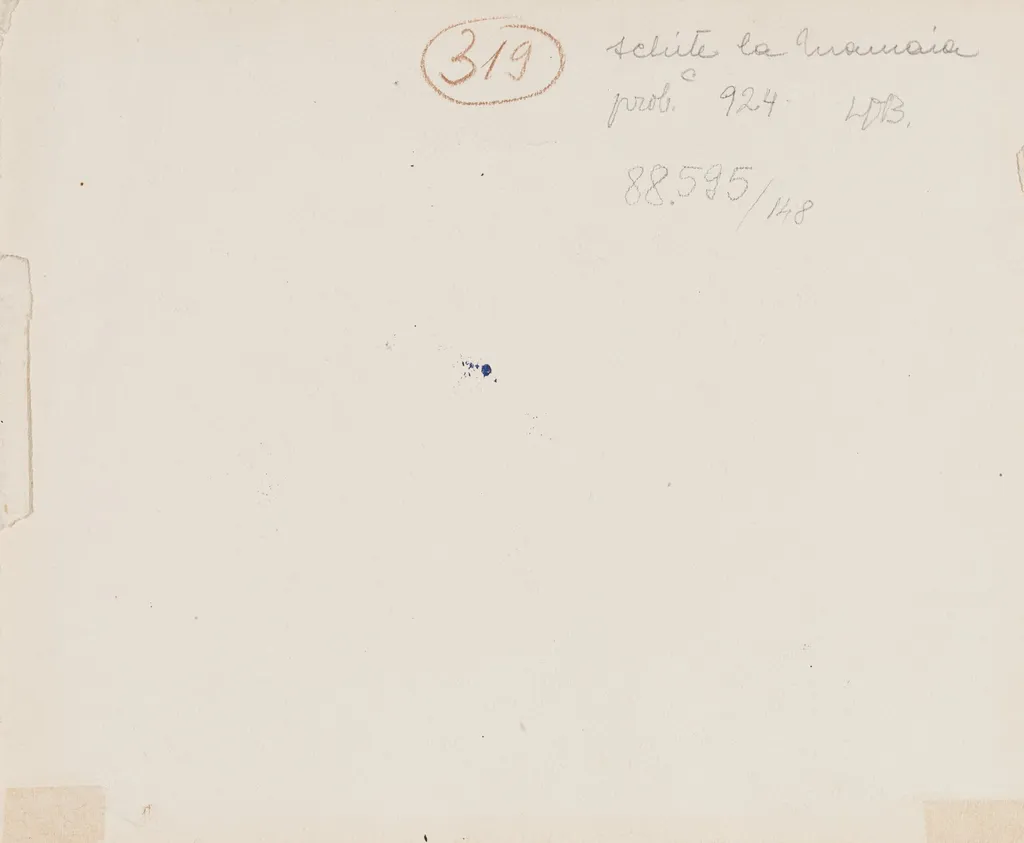
Mamaia is an unspecified painting by Lucia Dem-Bălăcescu. It dates from 1850 and is held in the collection of the National Museum of Art of Romania.
About this work
Overview
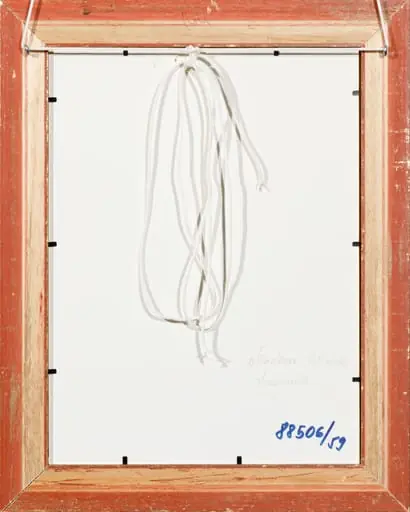
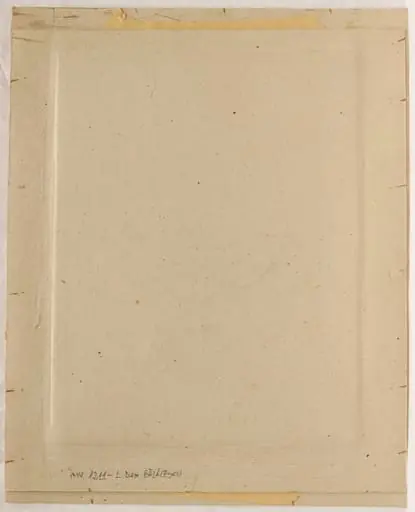
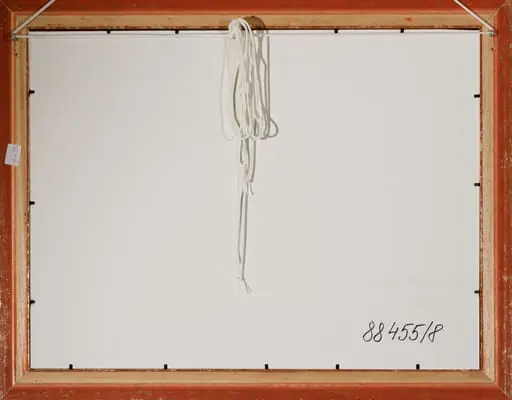
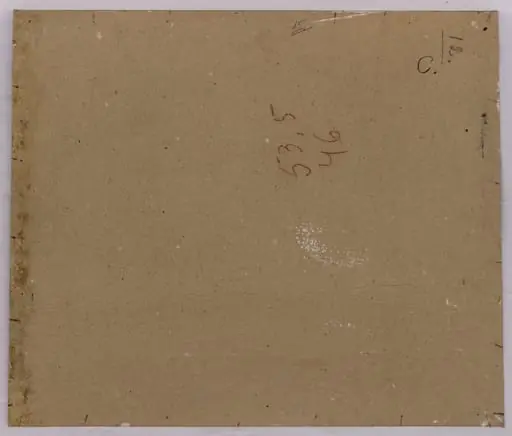
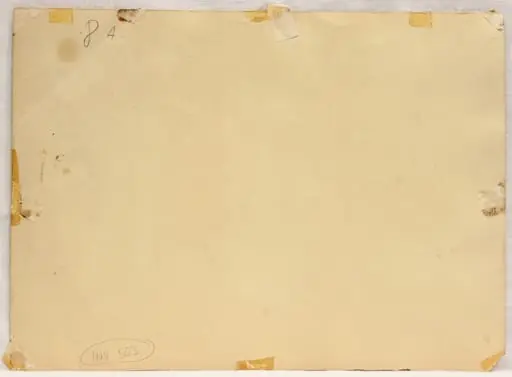
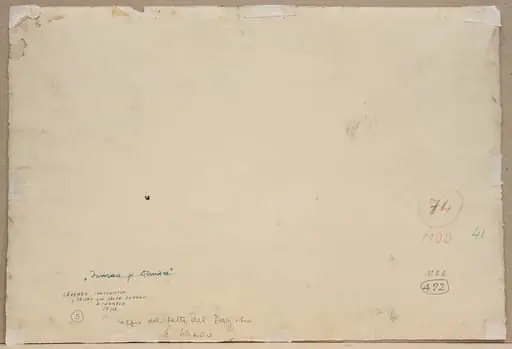
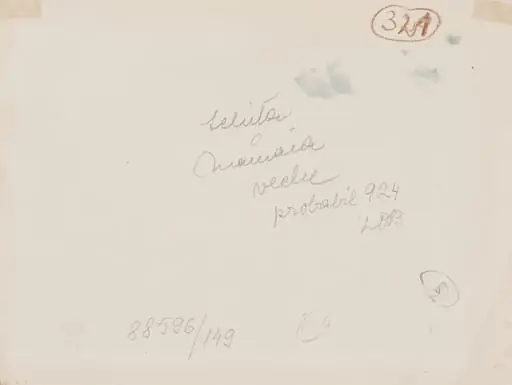
Mamaia is an undated work attributed to Lucia Dem-Bălăcescu, likely from around 1850. The surface is uniformly light in tone, devoid of pictorial elements. Faint handwritten annotations in the upper corners appear to be inventory markings, possibly added during cataloging. The object is physically present but visually inert, raising questions about its intended function as an artwork.
Subject & Meaning
The title references Mamaia, a coastal area in Romania associated with seaside leisure. Yet the surface holds no visual connection to this location—no waves, sand, or figures. The disconnect between title and image suggests the work may have been intended as a conceptual placeholder, a record of absence, or a deliberate challenge to expectations of representation in 19th-century art.
Technique & Style
The surface is uniformly prepared, with no brushwork, pigment variation, or compositional structure. The lack of visual intervention implies either an unfinished state or a deliberate reduction to bare support. The faint script in the corners, likely in ink or pencil, was applied after the surface was completed, indicating administrative handling rather than artistic gesture.
History & Provenance
The work is documented as held by the Museum of Ethnography, an institution primarily focused on cultural artifacts rather than fine art. Its presence there, alongside ethnographic objects, suggests it may have been collected as a curiosity or as part of a broader documentation effort, possibly linked to regional identity or land use records.
Context
In mid-19th-century Romania, artistic norms favored representational subjects, particularly landscapes and portraiture. A blank canvas with a geographic title stands in stark contrast to these conventions. Its existence may reflect experimental practices, institutional miscataloging, or a private gesture that later entered public collection without clear intent.
Legacy
Mamaia persists as an enigmatic artifact, prompting reflection on the boundaries of art, documentation, and meaning. Its emptiness invites interpretation beyond aesthetics—becoming a silent witness to the processes of collection, classification, and the uncertain line between object and idea.
Artist & collection