Artwork
Gospodărie părăsită
Gospodărie părăsită is a drawing by Mircea Tohătan. It dates from 1950 and is held in the collection of the Gavrila Simion Eco-Museum Research Institute Tulcea.
About this work
The overall appearance of the paper is one of age and wear, with a subtle yellowing of the surface that suggests it may be an older document.
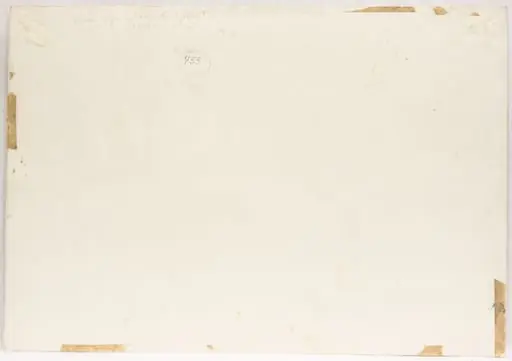
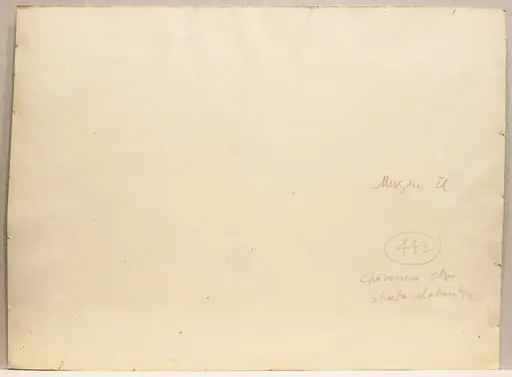
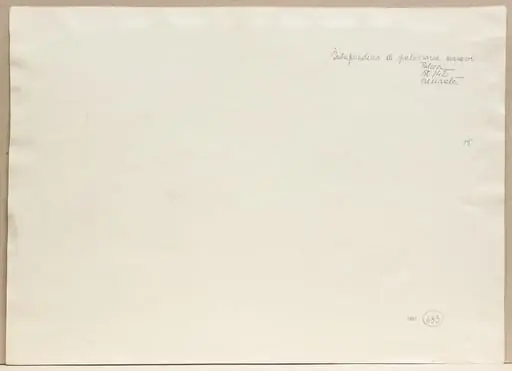
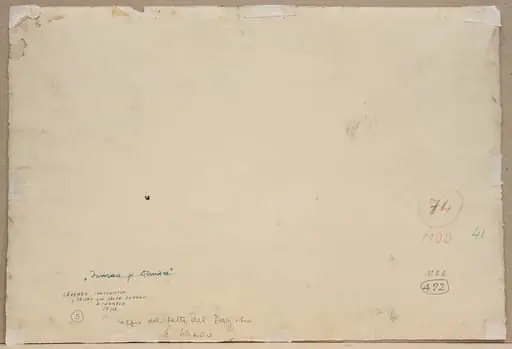
The image shows a blank piece of paper with some handwritten text. The paper is off-white and has a few marks and smudges on it. In the top-left corner, there is a circle with the text "Wt 1w 1015" written inside it. In the top-right corner, there is some cursive writing that appears to be a signature or a title. It reads "Tohătan, Mircea".
The paper has a few creases and folds, suggesting that it may have been handled or stored in a way that caused it to become wrinkled. The overall appearance of the paper is one of age and wear, with a subtle yellowing of the surface that suggests it may be an older document.
If you're interested in learning more about the artist behind this piece, you might want to look up Tohătan, Mircea.
Overview
Gospodărie părăsită is a handwritten document attributed to Mircea Tohătan, dated around 1950. It is preserved in the Museum of Ethnography as part of its archival collection. The item appears as a single sheet of aged paper, bearing minimal visual content but carrying evidentiary weight through its material condition and inscriptions. Its classification as an image reflects its status as a documented artifact rather than a pictorial composition.
Subject & Meaning
The title, Gospodărie părăsită, translates to 'Abandoned Household,' suggesting a record of domestic displacement or rural decline. Though the paper contains no illustrative imagery, the handwritten notes likely document personal or administrative details related to household abandonment during a period of social upheaval in postwar Romania. The work functions as a fragment of lived experience, preserving the quiet aftermath of economic or political change.
Technique & Style
The artifact is composed entirely of handwritten text and marginalia on paper, with no use of ink drawings or graphic elements. The script appears in cursive, with a signature in the top-right corner reading 'Tohătan, Mircea.' The presence of smudges, creases, and yellowing indicates prolonged handling and storage under non-archival conditions. The notation 'Wt 1w 1015' in a circular mark may reference a cataloging system or inventory code.
History & Provenance
The work entered the collection of the Museum of Ethnography in the mid-20th century, likely through donation or acquisition from a regional source. Its condition suggests it was not originally intended as an art object but as a functional document, later recognized for its cultural significance. The absence of detailed provenance records implies it was collected for its contextual value rather than its authorship at the time of acquisition.
Context
Created around 1950, the piece emerges from Romania’s early communist period, when rural populations were displaced by collectivization policies and state-driven modernization. Documents like this often recorded the dissolution of traditional households. Tohătan’s handwriting may represent an individual’s attempt to preserve or report on such changes, making the sheet a quiet witness to broader societal transformation.
Legacy
As a non-illustrative artifact, Gospodărie părăsită resists conventional artistic categorization. Its value lies in its material authenticity and the historical silence it embodies. It contributes to ethnographic understanding by offering tangible evidence of everyday disruption, reminding viewers that cultural memory is often preserved not in grand narratives but in worn, overlooked fragments.
Artist & collection
Artist
Museum
Gavrila Simion Eco-Museum Research Institute Tulcea
Continue through works from the same source collection.