Artwork
STUDIU DE NUD – TORS
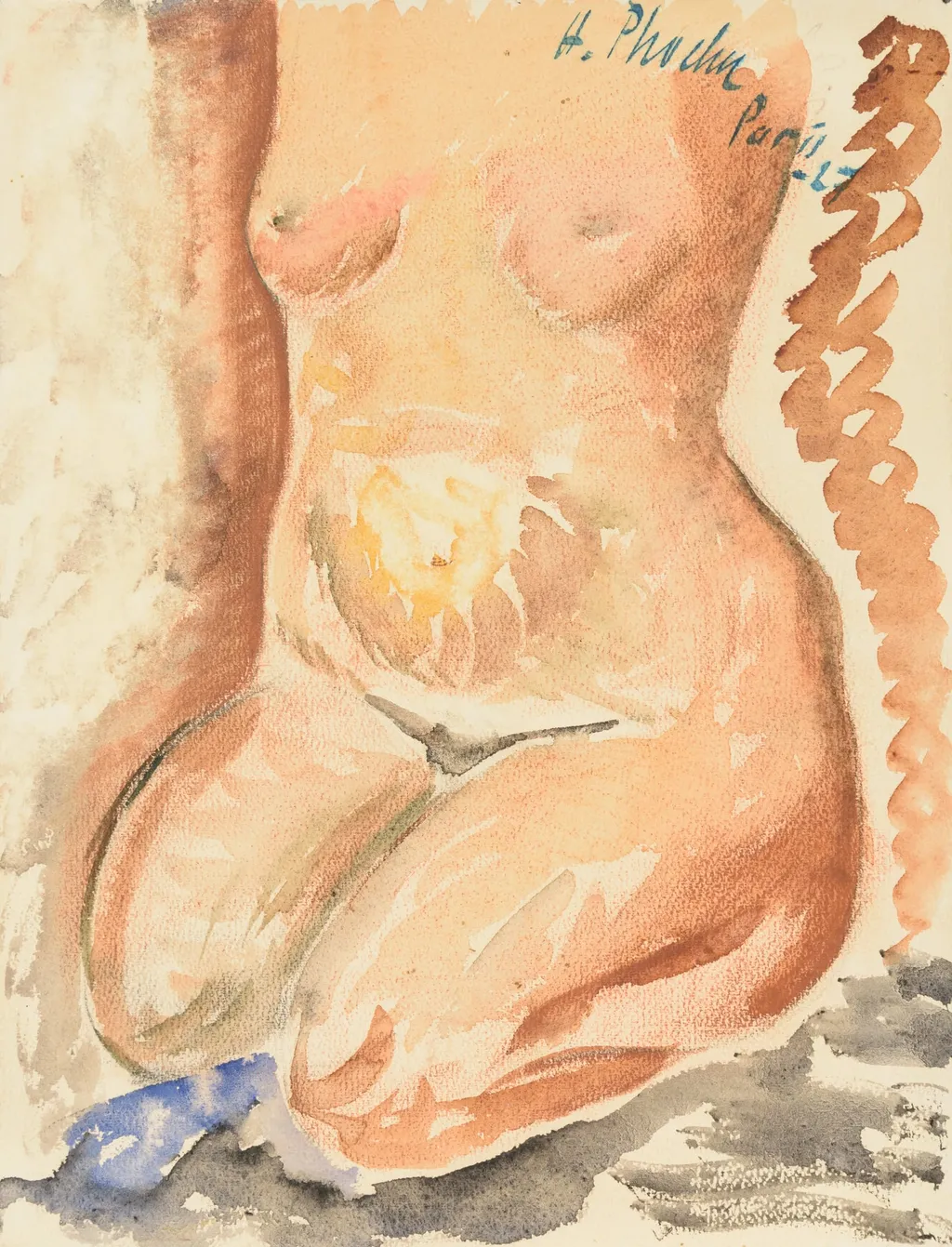
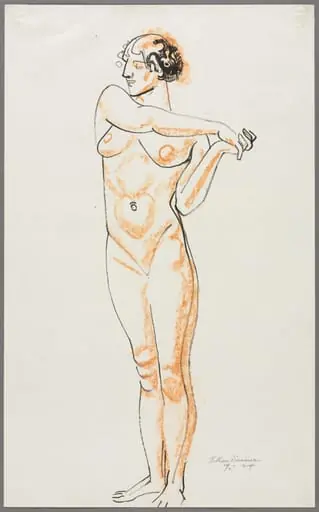
STUDIU DE NUD – TORS is a print by Alexandru Phoebus. It dates from 1927 and is held in the collection of the National Museum of Art of Romania.
About this work
Overview
The signature in the upper right, noting Paris, implies it was produced during a period of travel or residence in the French capital.
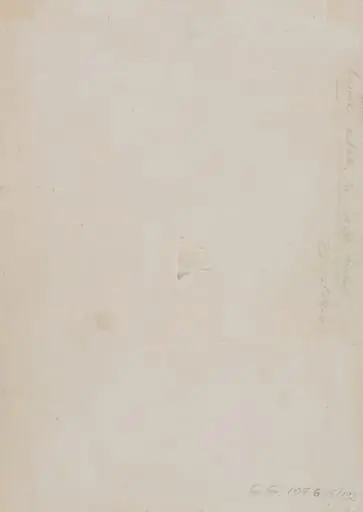
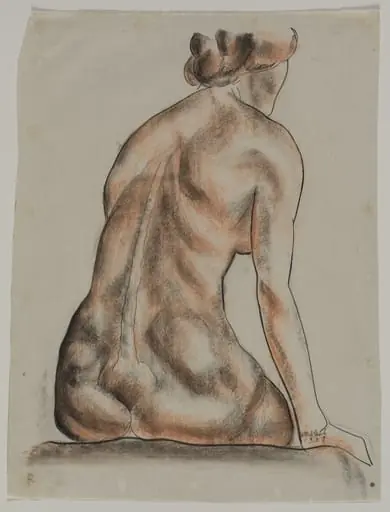
Created in 1927 by Alexandru Phoebus, this drawing is a rapid study of a nude figure viewed from behind. Executed in soft pigments of peach, orange, gray, and touches of blue, it appears on aged paper with uneven, gestural strokes. The work lacks finish, suggesting it was made as an observational exercise rather than a polished composition. The signature in the upper right, noting Paris, implies it was produced during a period of travel or residence in the French capital.
Subject & Meaning
The figure is rendered without idealization, capturing a momentary pose with minimal detail. Focused on the back and shoulders, the study emphasizes form and posture over narrative or emotion. Its immediacy suggests an interest in anatomical structure and movement, typical of artists engaging with the human body as a subject of direct observation. The lack of context or setting reinforces its function as a preparatory exercise.
Technique & Style
Phoebus employed loose, spontaneous lines with varying pressure, creating a sense of motion and urgency. The palette is restrained, using muted earth tones with subtle blue accents at the base, possibly indicating shadow or floor. The paper’s texture and wear contribute to the work’s raw quality. The absence of blending or refinement points to a direct, unmediated approach, characteristic of sketchbook studies rather than exhibition pieces.
History & Provenance
The drawing bears a signature identifying the artist and location: 'Alexandru Phoebus, Paris.' This indicates it was made during his time in the city, likely in the late 1920s when he was part of the expatriate artistic community. Its condition—worn paper, faint pigments—suggests it was handled frequently, possibly kept in a personal sketchbook. No further provenance details are documented beyond its origin and attribution.
Context
In 1927, Paris was a hub for artists experimenting with figuration beyond academic traditions. Phoebus, though Romanian, engaged with this environment, where quick studies of the nude were common among modernists seeking to capture vitality over idealized form. This drawing aligns with practices of contemporaries who valued spontaneity and direct observation, reflecting broader trends in interwar European drawing culture.
Legacy
As a private study, this work offers insight into Phoebus’s process rather than his public output. It remains a quiet example of an artist’s daily engagement with the human form, unmediated by commercial or institutional expectations. While not widely exhibited, it contributes to understanding his development within the context of early 20th-century European drawing practices.
Artist & collection