Artwork
Anne of Austria, Wife of Louis XIII
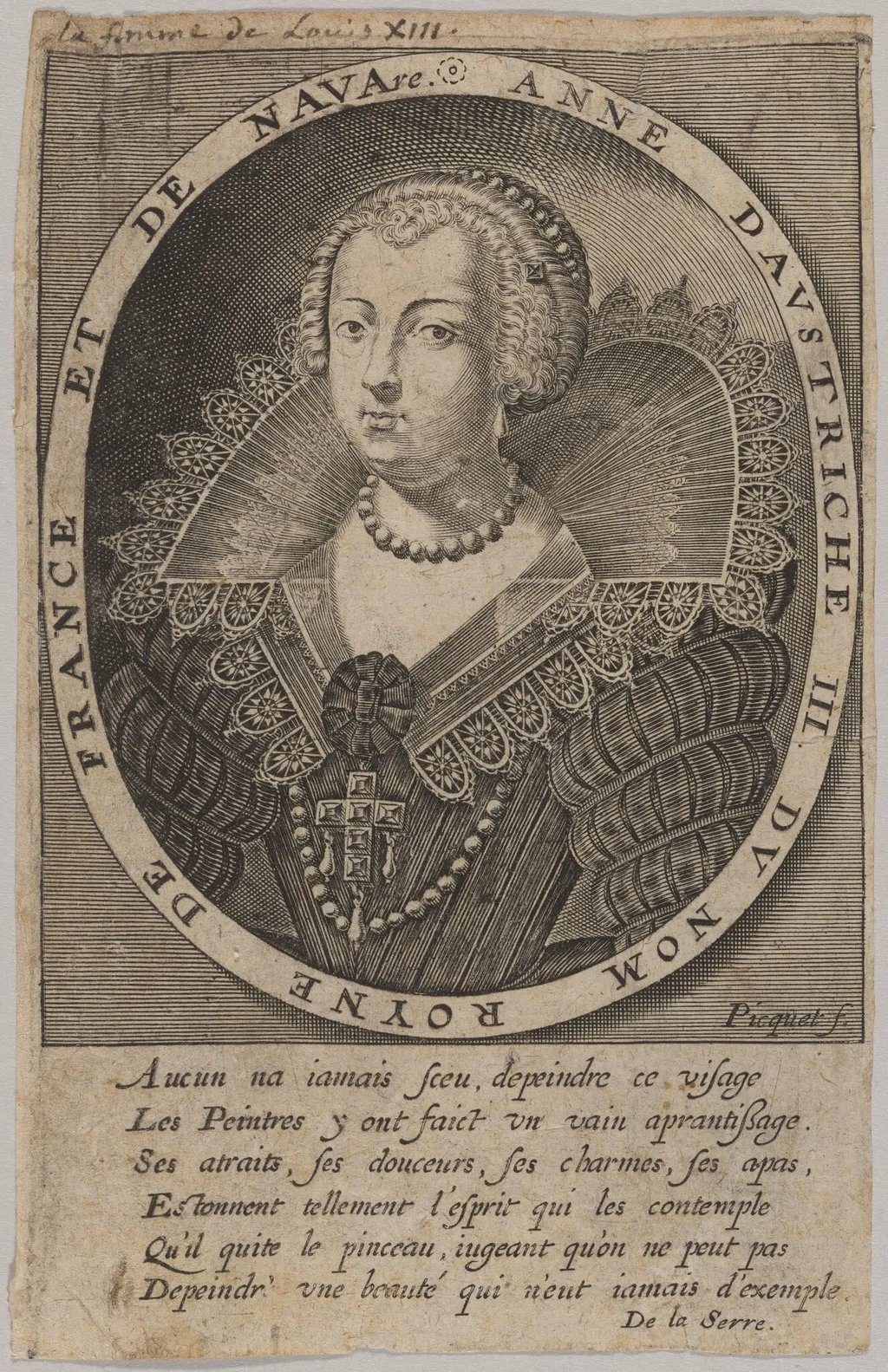
Anne of Austria, Wife of Louis XIII is an ink print by the Baroque artist Jean Picquet. It dates from 1635 and is held in the collection of the National Gallery of Art.
About this work
Overview
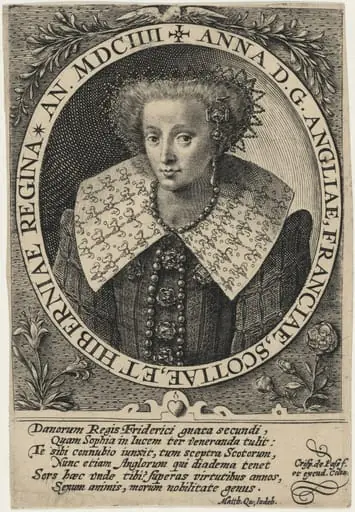
Jean Picquet’s 1635 engraving presents Anne of Austria, consort of Louis XIII, in a formal portrait. Executed on laid paper, the print captures the queen’s dignified bearing through a restrained monochrome palette, emphasizing her status and the conventions of early‑modern court representation.
Subject & Meaning
The figure is identified by surrounding French inscriptions as both queen and Duchess of Montpensier, underscoring her dual titles. Her solemn expression, lace collar, and pearl necklace convey regal authority, while the cross‑shaped pendant signals personal piety, reflecting the intertwining of political and religious identity in 17th‑century French monarchy.
Technique & Style
Picquet employs delicate line work to model the face, creating subtle gradations of tone that suggest volume. The engraving’s fine hatching renders the lace and jewelry with precision, and a darkened background isolates the sitter, enhancing the three‑dimensional effect within the flat medium.
History & Provenance
Produced in 1635, the print belongs to a period when portrait engravings served both as commemorative objects and as means of disseminating royal imagery across Europe. Its survival on laid paper indicates it was likely intended for a limited, elite audience, possibly circulating within courtly circles.
Context
The portrait aligns with contemporary French court portraiture that favored restrained elegance over overt theatricality. By presenting Anne in a sober, dignified manner, the image reinforces the political stability of Louis XIII’s reign and the queen’s role as a visual embodiment of dynastic continuity.
Legacy
As a representative work of early French engraving, Picquet’s portrait contributes to the visual archive of royal iconography. Its technical execution illustrates how line engraving could convey texture and depth, influencing later printmakers who sought to replicate the nuanced realism of painted portraits.
Artist & collection

 Anne of Denmark
 Anne of Denmark
 Anne of Denmark
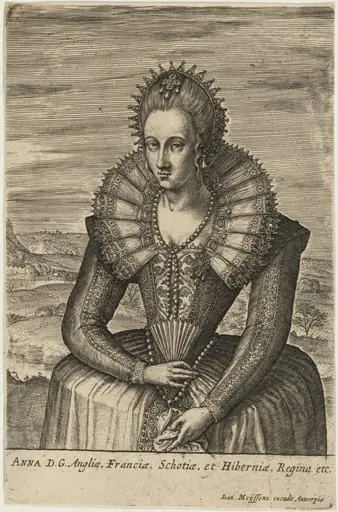 Anne of Denmark
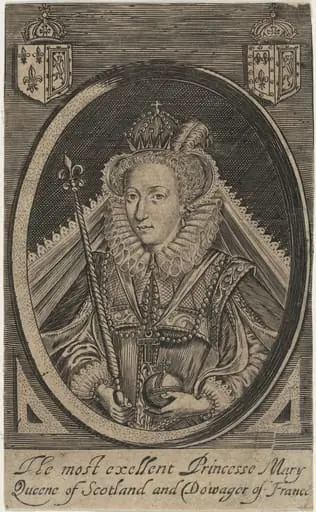 Mary, Queen of Scots
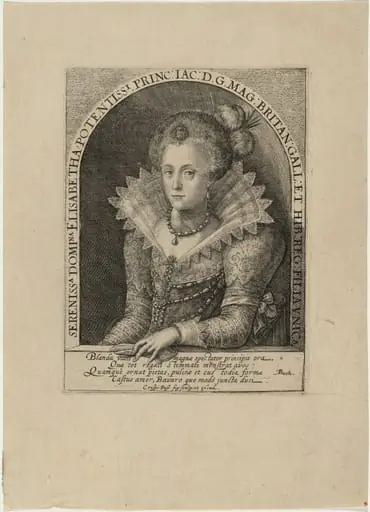 Elizabeth, Princess, Wife of the Elector Palatine Frederick V, King of Bohemia
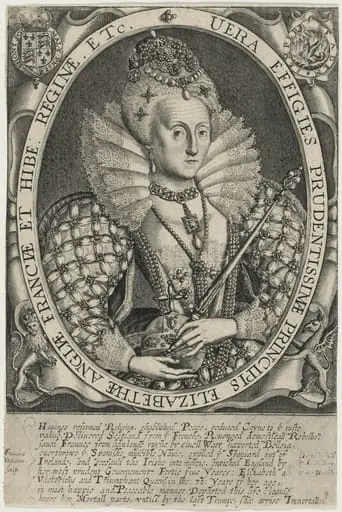 Elizabetha Anglia et Francae et Hibe. Reginae(Queen Elizabeth)
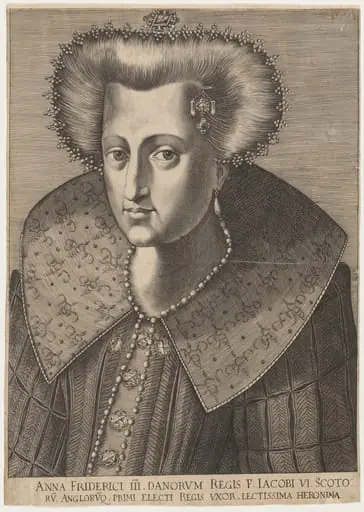 Anne of Denmark
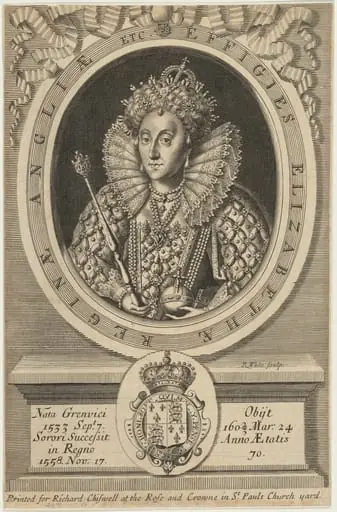 Queen Elizabeth
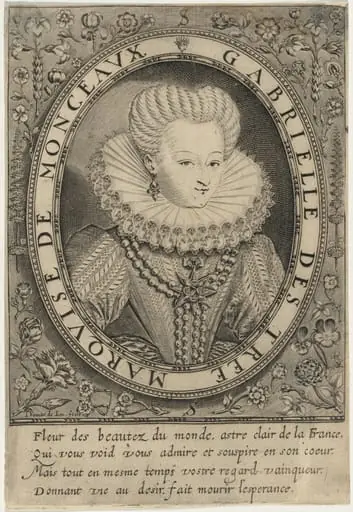 Gabrielle D'Estrees, Marquise de Montceaux
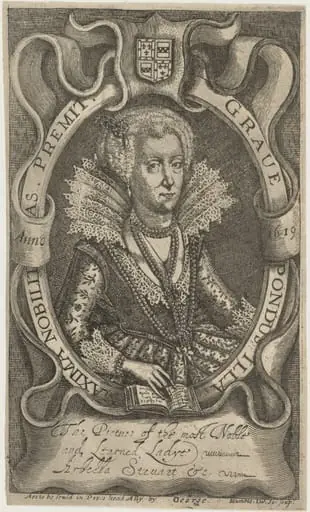 Arabella Stuart
 Anne of England