Artwork
Anne of Denmark
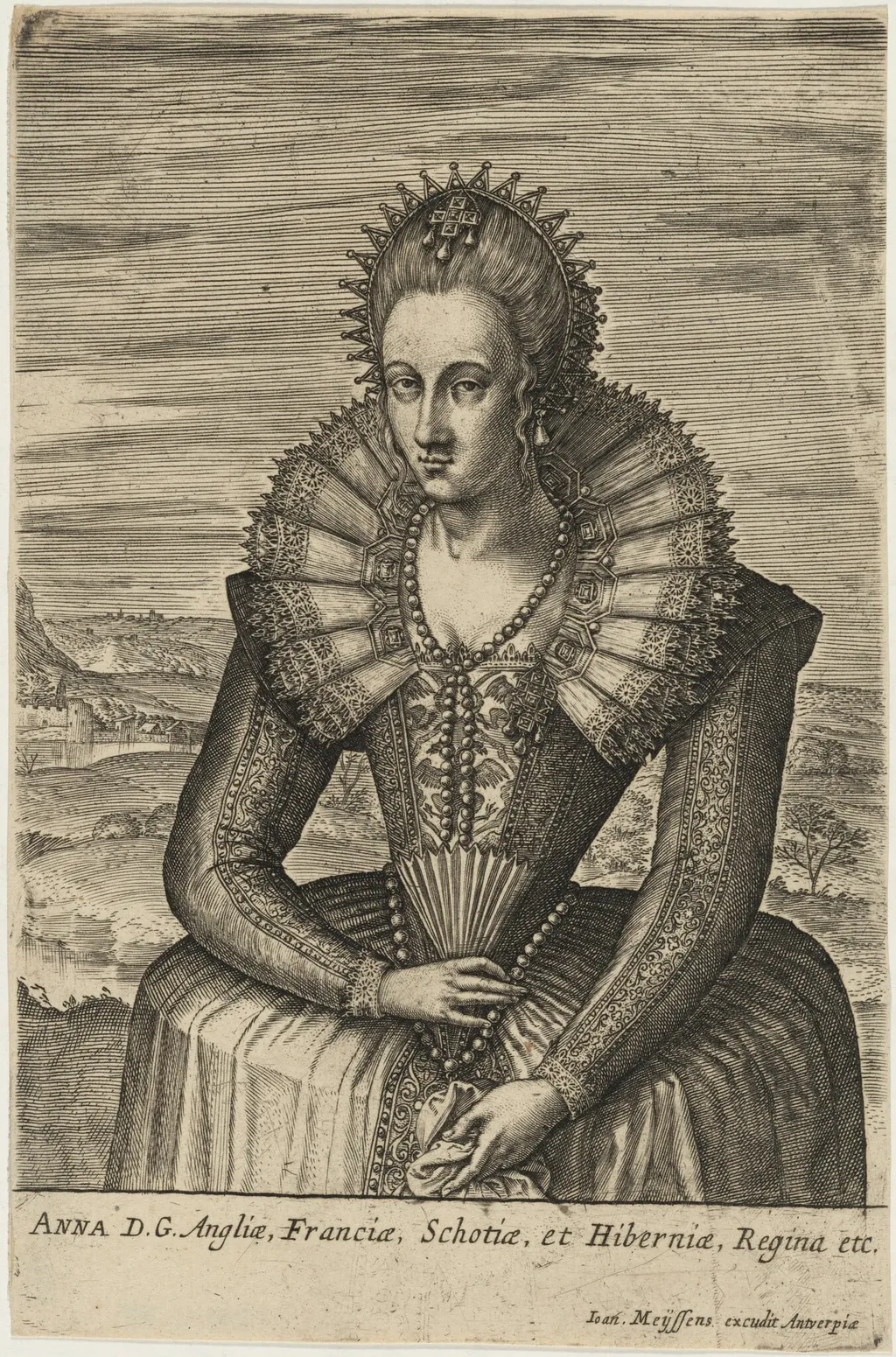
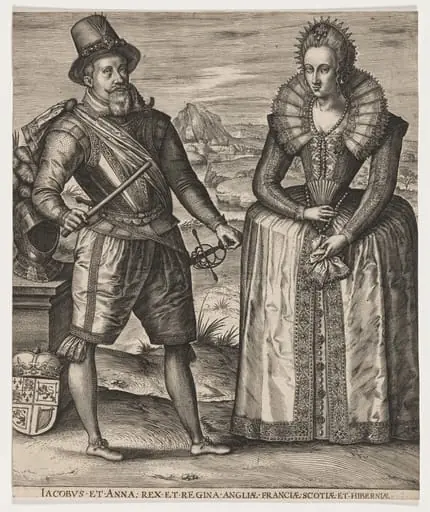
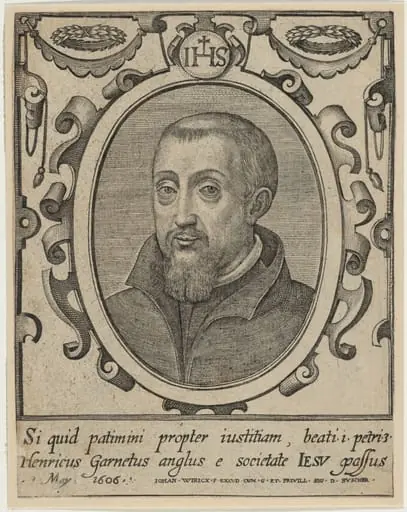
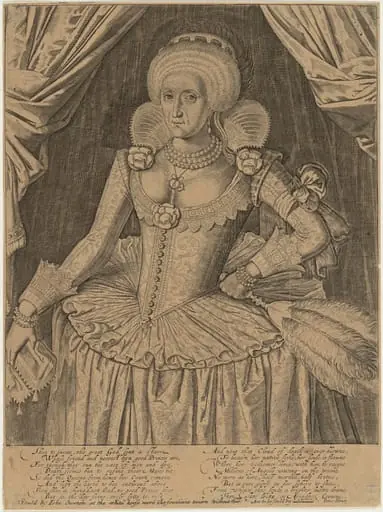
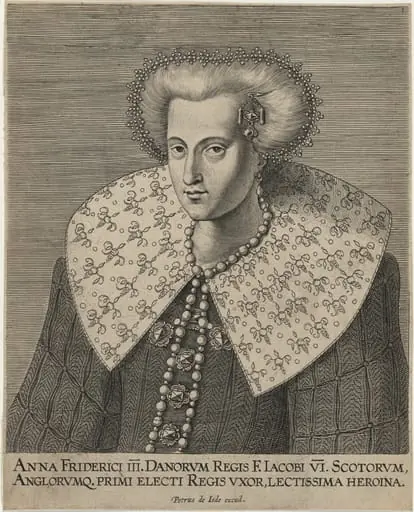
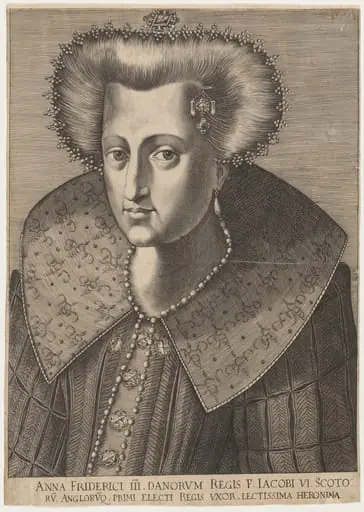
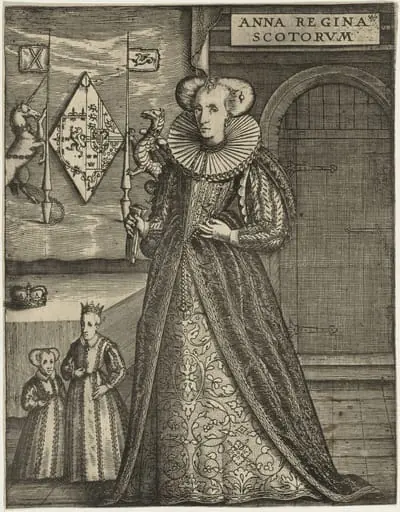
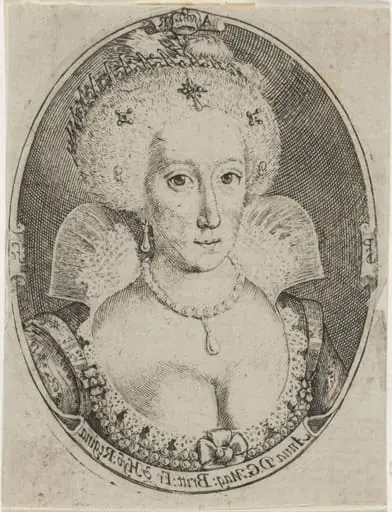
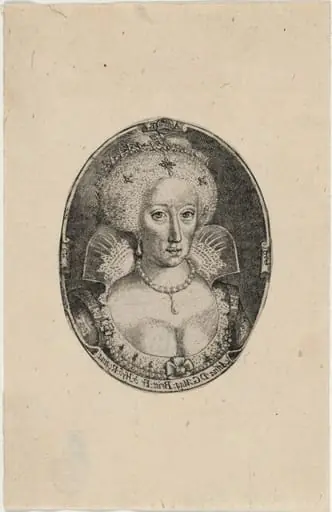
Anne of Denmark is an ink print by the Renaissance artist Johan Wierix. It dates from 1582 and is held in the collection of the National Gallery of Art.
About this work
Overview
Rendered in fine linear detail, the portrait presents her in formal court attire, with a high ruffled collar, pearl jewelry, and a crown.
This black-and-white engraving, produced by Johan Wierix in 1582, depicts Anne of Denmark, queen consort of Scotland and later England. Rendered in fine linear detail, the portrait presents her in formal court attire, with a high ruffled collar, pearl jewelry, and a crown. Her hands hold a fan and an unidentified small object, while a subdued landscape recedes behind her. The inscription 'Anna D.G. Anglie' identifies her royal status, likely referring to her role as queen of England.
Subject & Meaning
The portrait emphasizes Anne’s royal authority through symbolic elements: the crown signifies sovereignty, the pearls denote wealth and purity, and the fan suggests refined composure. The inclusion of a distant landscape may allude to her territorial influence or serve as a neutral backdrop to focus attention on her person. The Latin inscription reinforces her identity as a monarch, aligning the image with diplomatic or propagandistic portraiture common among European royalty.
Technique & Style
Wierix employed the engraving technique, incising precise lines into a copper plate to create tonal gradations. Delicate cross-hatching models the folds of fabric and the sheen of pearls, while fine parallel lines define the texture of the ruff. The background is minimally detailed, contrasting with the intricate rendering of the figure. This method, typical of Northern Renaissance printmaking, prioritized clarity and precision over atmospheric effects.
History & Provenance
Created in 1582, the engraving predates Anne’s marriage to James VI of Scotland by several years, suggesting it may have been made during her early years as a Danish princess or as part of a diplomatic exchange. Wierix, a Flemish artist active in Antwerp and Brussels, often produced portraits for noble patrons. The print likely circulated among elite circles to affirm Anne’s status before her ascent to the English throne.
Context
In late 16th-century Europe, engraved portraits served as tools of political representation, especially for women whose public visibility was limited. Anne’s image, circulated before her marriage to James VI, reflects the importance of visual diplomacy in dynastic alliances. The style echoes contemporary Flemish and Dutch portraiture, where meticulous detail conveyed social standing and moral virtue, aligning with Protestant ideals of decorum and restraint.
Legacy
Though not widely reproduced in later centuries, this engraving remains a rare visual record of Anne of Denmark in her youth, before her role as queen of England. It exemplifies the role of printmaking in shaping royal image-making during a period when portraiture was increasingly used to assert legitimacy. As one of the earliest known depictions of her, it offers insight into how Northern European artists interpreted and disseminated the likeness of foreign royalty.
Artist & collection