Artwork
Vulcan and Aeolus by Piero di Cosimo
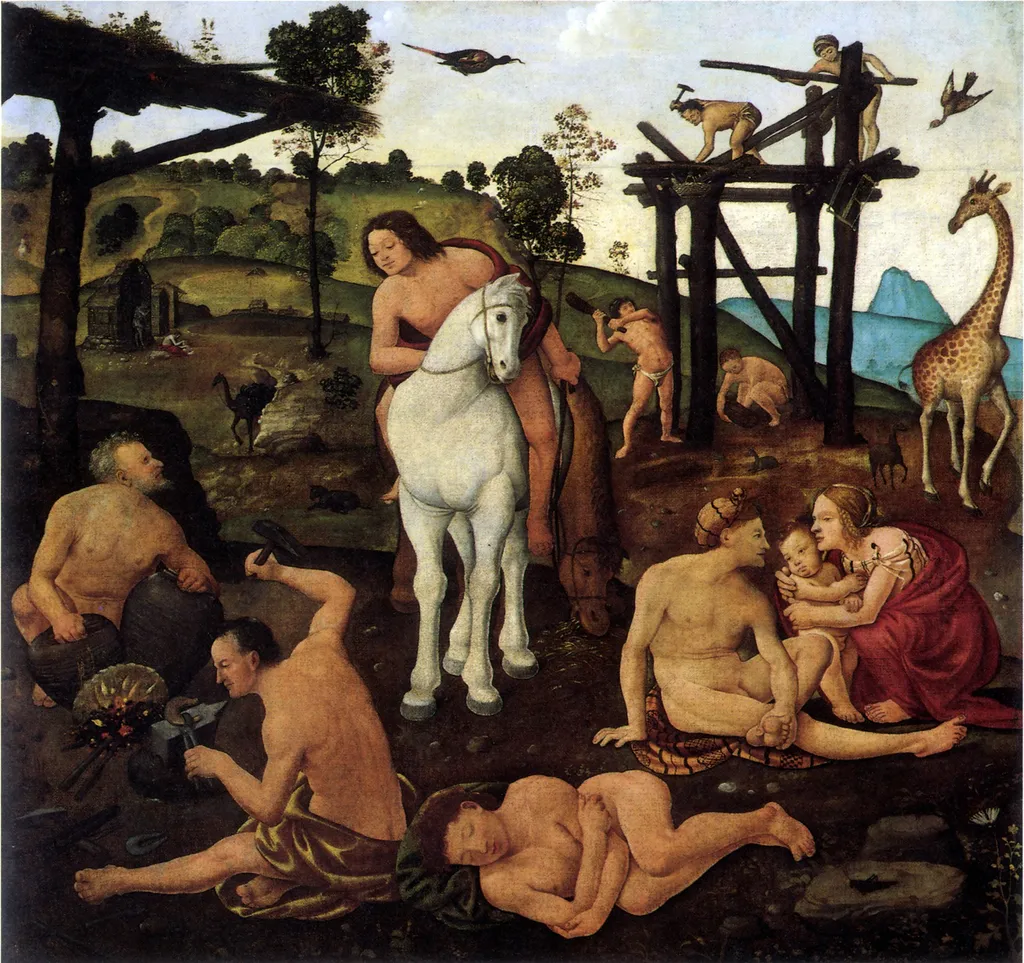
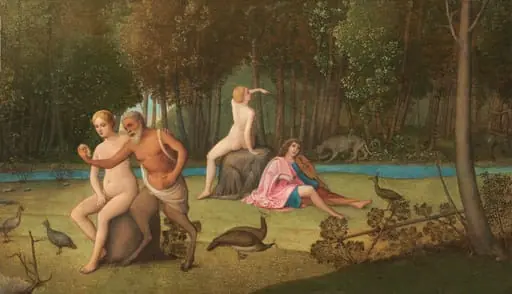
Vulcan and Aeolus by Piero di Cosimo is an oil painting by the Early Renaissance artist Piero di Cosimo. It dates from 1496 and is held in the collection of the National Gallery of Canada.
About this work
Overview
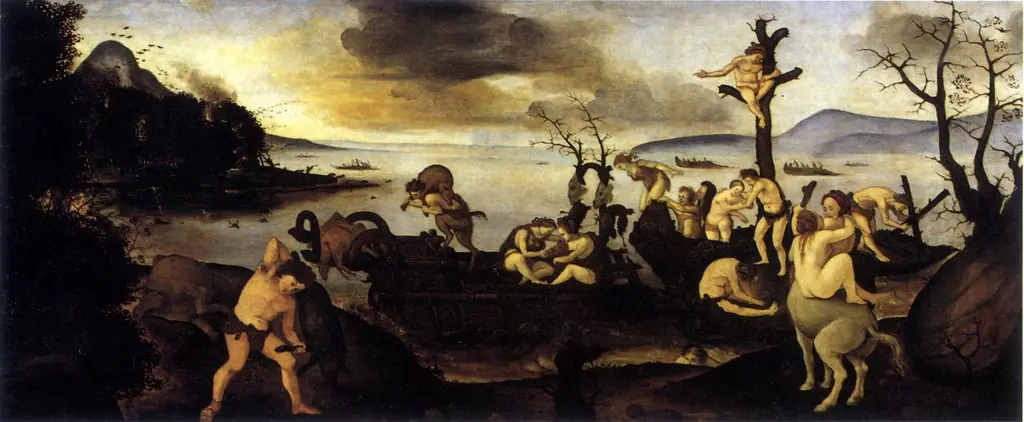
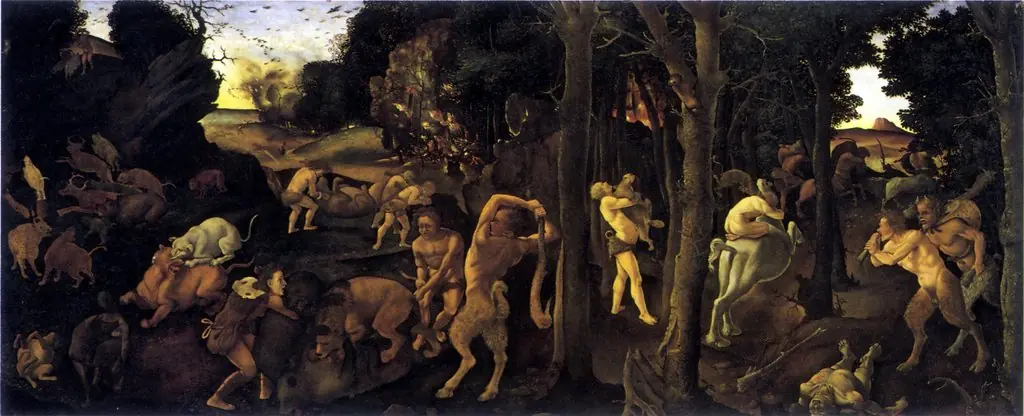
Painted in 1496, Vulcan and Aeolus is an oil-on-panel work by Piero di Cosimo, now in the National Gallery of Canada. The scene blends classical mythology with imaginative detail, portraying figures and animals in a landscape that feels both grounded and surreal. Its composition arranges human and non-human forms in a layered space, suggesting narrative complexity without clear textual precedent.
Subject & Meaning
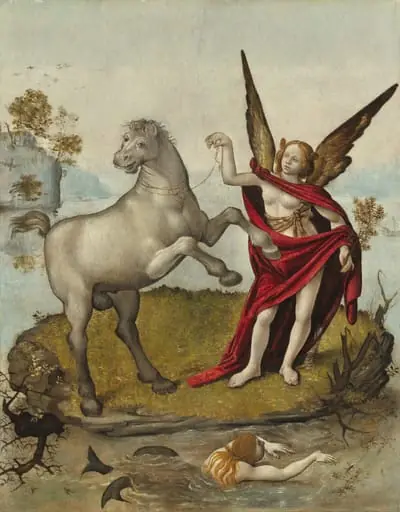
Figures are arranged around tools of labor—a hammer, anvil, and tethered horse—hinting at craftsmanship or divine labor.
The painting likely references Vulcan, the Roman god of fire and metalworking, and Aeolus, keeper of the winds, though their identities are not explicitly marked. Figures are arranged around tools of labor—a hammer, anvil, and tethered horse—hinting at craftsmanship or divine labor. The presence of a giraffe and reclining figures introduces symbolic ambiguity, possibly evoking exoticism, vulnerability, or mythic allegory beyond conventional storytelling.
Technique & Style
Di Cosimo employed fine brushwork to render textures of skin, fur, and metal with meticulous attention. The palette is muted yet nuanced, with earth tones and soft highlights creating subtle depth. Chiaroscuro is used sparingly but effectively to model forms, while the arrangement of figures and animals generates rhythmic movement across the horizontal plane, avoiding rigid symmetry in favor of organic flow.
History & Provenance
The painting entered the National Gallery of Canada’s collection in the 20th century, though its earlier ownership remains undocumented. It was likely commissioned by a Florentine patron during the late 15th century, a period when mythological themes were favored among humanist collectors. Its survival through centuries reflects its enduring appeal despite its obscure narrative.
Context
Created during the High Renaissance, the work diverges from classical harmony in favor of eccentric detail, aligning with di Cosimo’s reputation for fantastical imagery. While contemporaries like Botticelli emphasized idealized forms, di Cosimo incorporated naturalistic animals and unusual settings, reflecting a broader Florentine interest in curiosity, natural philosophy, and the boundaries between myth and reality.
Legacy
Vulcan and Aeolus exemplifies di Cosimo’s distinctive approach to myth, influencing later artists drawn to the uncanny and the hybrid. Though not widely reproduced in his time, its preservation in a major public collection has allowed modern viewers to appreciate his unorthodox vision—a quiet counterpoint to the dominant trends of Renaissance idealism.
Own this work as a print
Artist & collection

Artist
Piero di Cosimo, also known as Piero di Lorenzo, was an Italian Renaissance painter, who continued to use an essentially Early Renaissance style into the 16th century.