Artwork
Paul Cézanne
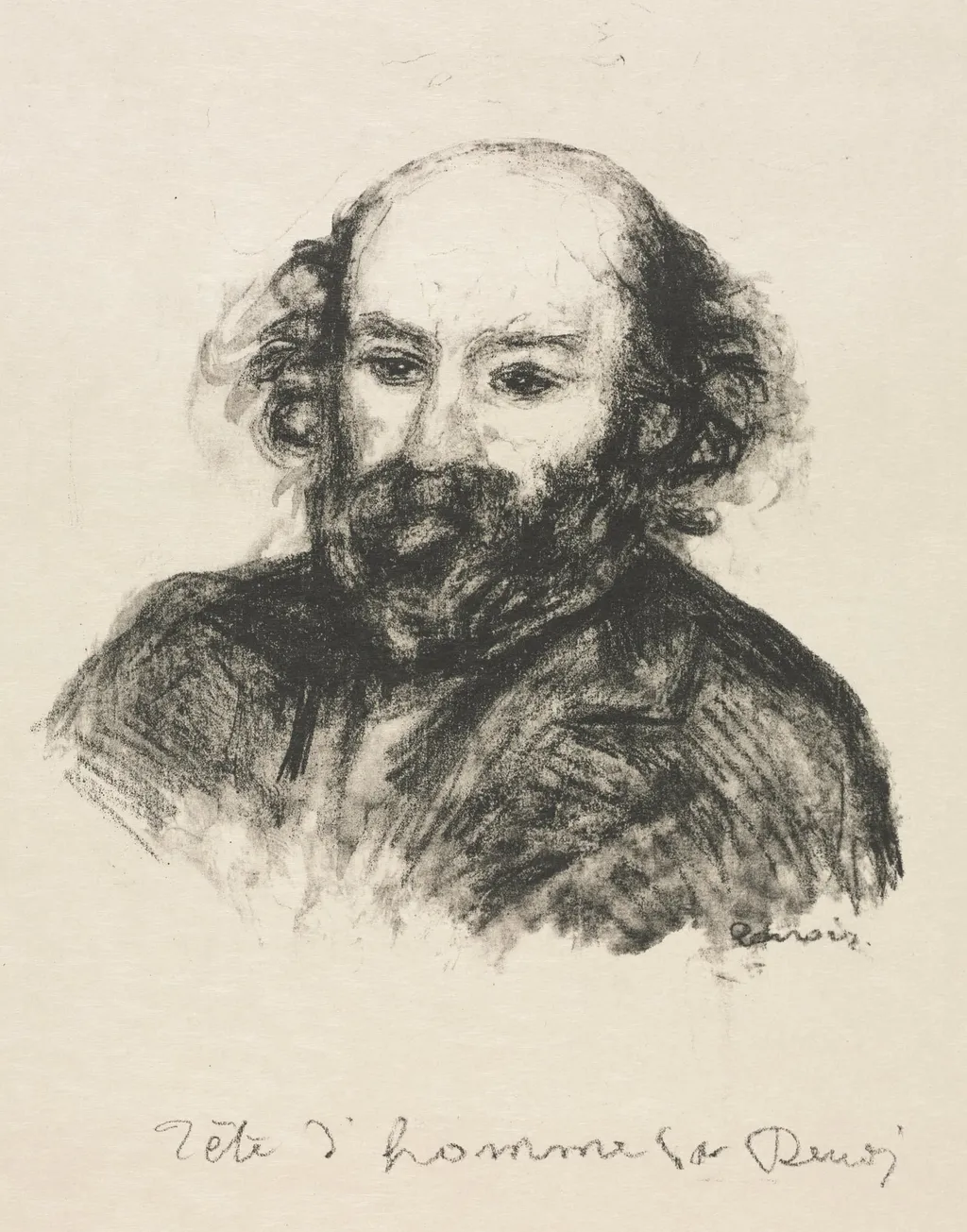
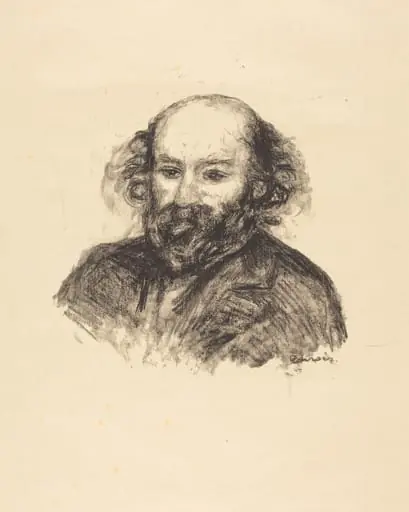
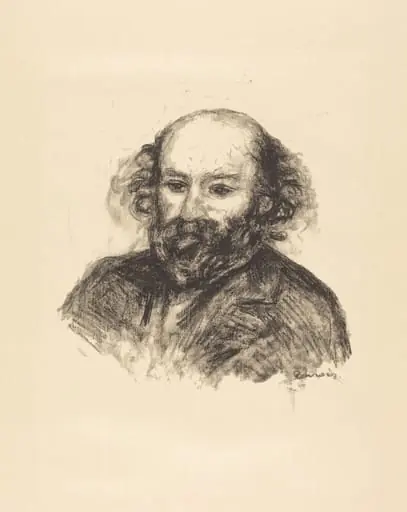
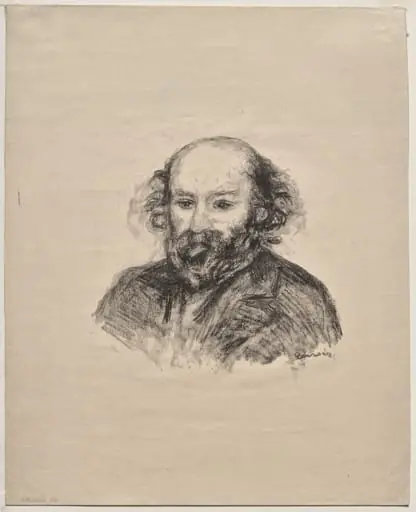
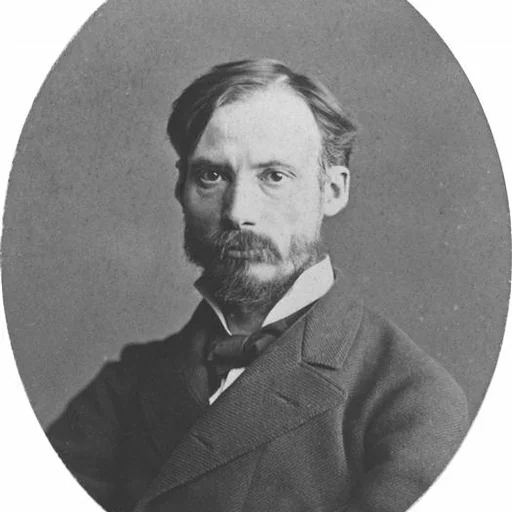
Paul Cézanne is a print by the Impressionist artist Auguste Renoir. It dates from 1902 and is held in the collection of the Cleveland Museum of Art.
About this work
Overview
This drawing, dated around 1902, is a portrait of the painter Paul Cézanne, executed by his contemporary Pierre-Auguste Renoir.
This drawing, dated around 1902, is a portrait of the painter Paul Cézanne, executed by his contemporary Pierre-Auguste Renoir. Executed in ink and wash, it captures Cézanne in a moment of quiet intensity. The work is part of the collection at The Cleveland Museum of Art, where it is preserved as a personal record of artistic exchange between two major figures of late 19th-century French painting.
Subject & Meaning
The subject is Paul Cézanne, a fellow artist known for his structured approach to form and color. Renoir’s depiction emphasizes Cézanne’s distinctive facial features—his beard, curly hair, and focused gaze—conveying a sense of inner gravity. The portrait is not idealized; instead, it reflects a candid recognition of Cézanne’s presence, possibly made during one of their rare personal encounters.
Technique & Style
Renoir employed swift, fluid lines and tonal washes to suggest form without detailed rendering. The face and hair are defined with darker, deliberate strokes, while the clothing and background remain deliberately sketchy and unmodeled. This economy of means reflects Renoir’s preference for capturing immediacy over finish, aligning with his broader practice of working rapidly to preserve a living impression.
History & Provenance
Created near the end of Renoir’s career, the drawing likely originated from one of the few documented meetings between the two artists. It remained in private hands until acquired by The Cleveland Museum of Art. Its survival as a direct, unembellished record of Cézanne offers rare insight into the personal dynamics among Impressionist and Post-Impressionist circles.
Context
Renoir and Cézanne moved in overlapping artistic circles but pursued divergent paths: Renoir favored luminous color and fluid brushwork, while Cézanne sought structural solidity. This portrait, made decades after their early days in Paris, reflects a mutual respect. Though stylistically distinct, both artists valued direct observation, making this drawing a quiet testament to their shared commitment to seeing truthfully.
Legacy
The drawing endures as a personal artifact rather than a public statement. It contributes to the historical record of artist-to-artist relationships in modern French art, illustrating how informal sketches could preserve the character of figures who reshaped painting. Its modest scale and spontaneous execution contrast with the monumental ambitions of both men’s larger works, offering a more intimate dimension to their legacies.
Artist & collection
Artist
Pierre-Auguste Renoir was born on 25 February 1841 in Limoges, the son of a tailor and a seamstress.