Artwork
Paul Verlaine
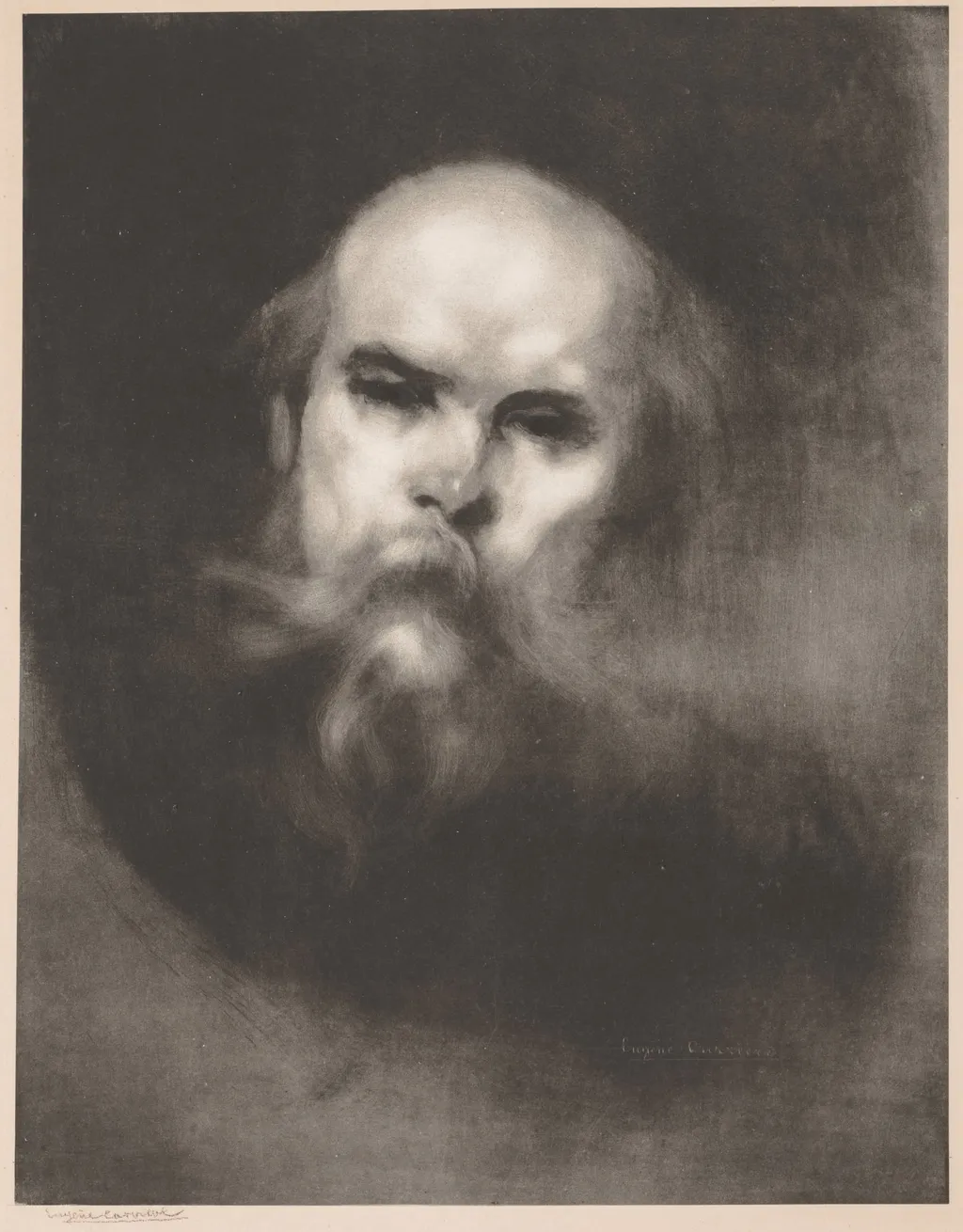
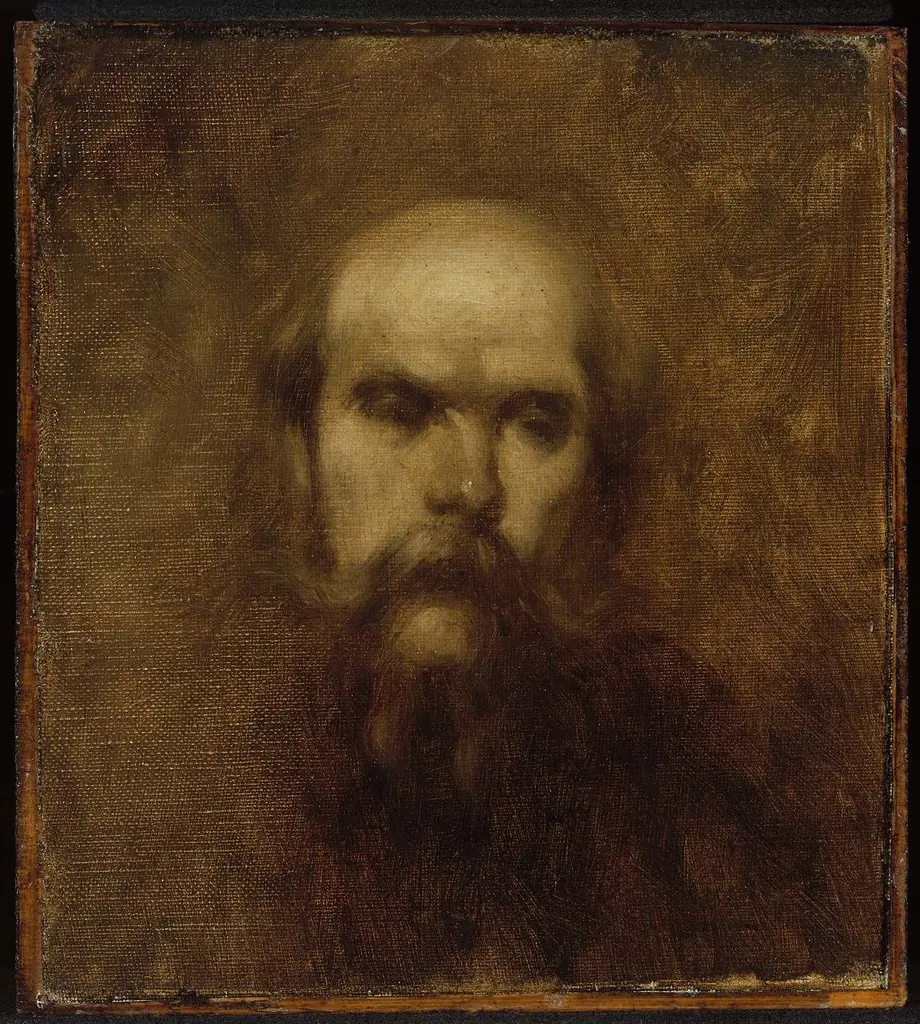
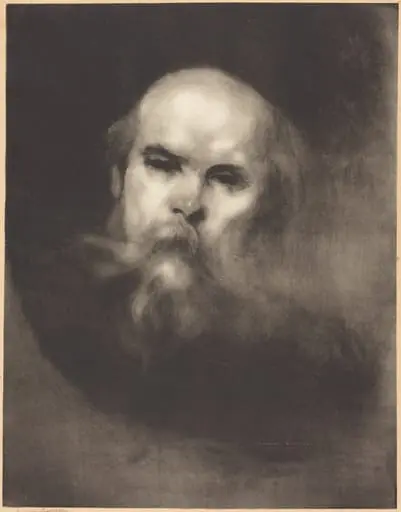
Paul Verlaine is a print by the Impressionist artist Eugène Carrière. It dates from 1896 and is held in the collection of the Cleveland Museum of Art.
About this work
Overview
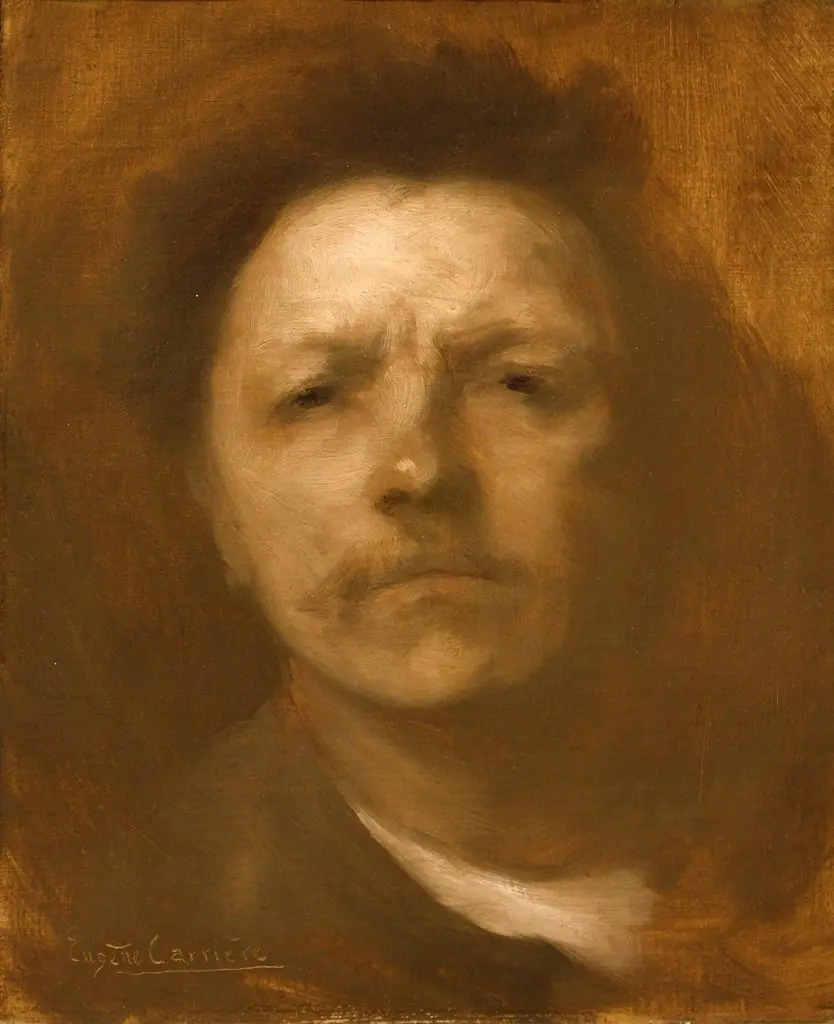
Eugène Carrière’s 1896 portrait of the French poet Paul Verlaine is a monochromatic print capturing the poet in intimate close-up.
Eugène Carrière’s 1896 portrait of the French poet Paul Verlaine is a monochromatic print capturing the poet in intimate close-up. Rendered in soft tones of gray, the image focuses on Verlaine’s face and upper torso, set against a muted, indistinct background. The composition eliminates extraneous detail, drawing attention to the subtle interplay of light and shadow across his features, creating a contemplative, almost ethereal presence.
Subject & Meaning
The portrait depicts Paul Verlaine, a central figure in French Symbolist poetry, known for his introspective verse and turbulent personal life. Carrière presents him not as a public icon but as a private, inward-looking individual. His hands rest lightly on his chest, and his gaze is distant yet composed, suggesting emotional restraint and quiet intensity. The image aligns with Symbolist ideals, prioritizing mood over narrative or physical realism.
Technique & Style
Carrière employed a limited palette of grays and near-monochrome tones, using delicate brushwork to blend light and shadow with minimal contrast. The smooth transitions between tones, reminiscent of chiaroscuro, dissolve edges and soften contours, lending the figure a hazy, dreamlike quality. This technique, developed in the 1890s, reflects Carrière’s interest in evoking psychological depth rather than anatomical precision.
History & Provenance
Created in 1896, the portrait was made during a period when Carrière was deeply engaged with literary circles in Paris. Verlaine, then in his fifties and recovering from years of personal turmoil, sat for the artist as part of a series of portraits of contemporary writers. The work entered The Cleveland Museum of Art’s collection in the 20th century, where it remains a key example of Carrière’s symbolic portraiture.
Context
In late 19th-century France, artists increasingly turned away from academic realism toward expressive, atmospheric approaches. Carrière’s portrait aligns with Symbolist and Decadent movements, which valued suggestion over clarity and inner states over external appearances. His treatment of Verlaine reflects a broader cultural fascination with the poet as a tormented, mystical figure, emblematic of artistic sensitivity.
Legacy
Carrière’s portrait of Verlaine influenced later artists seeking to convey psychological depth through tonal subtlety rather than detail. It stands as a defining image of the Symbolist aesthetic in portraiture, bridging literary and visual culture. Though not widely reproduced in its time, it has since become a reference point for studies of mood, light, and the representation of the modern intellectual in art.
Artist & collection

Artist
Eugène Anatole Carrière was a French Symbolist artist of the fin-de-siècle period.