Artwork
Paul Cezanne
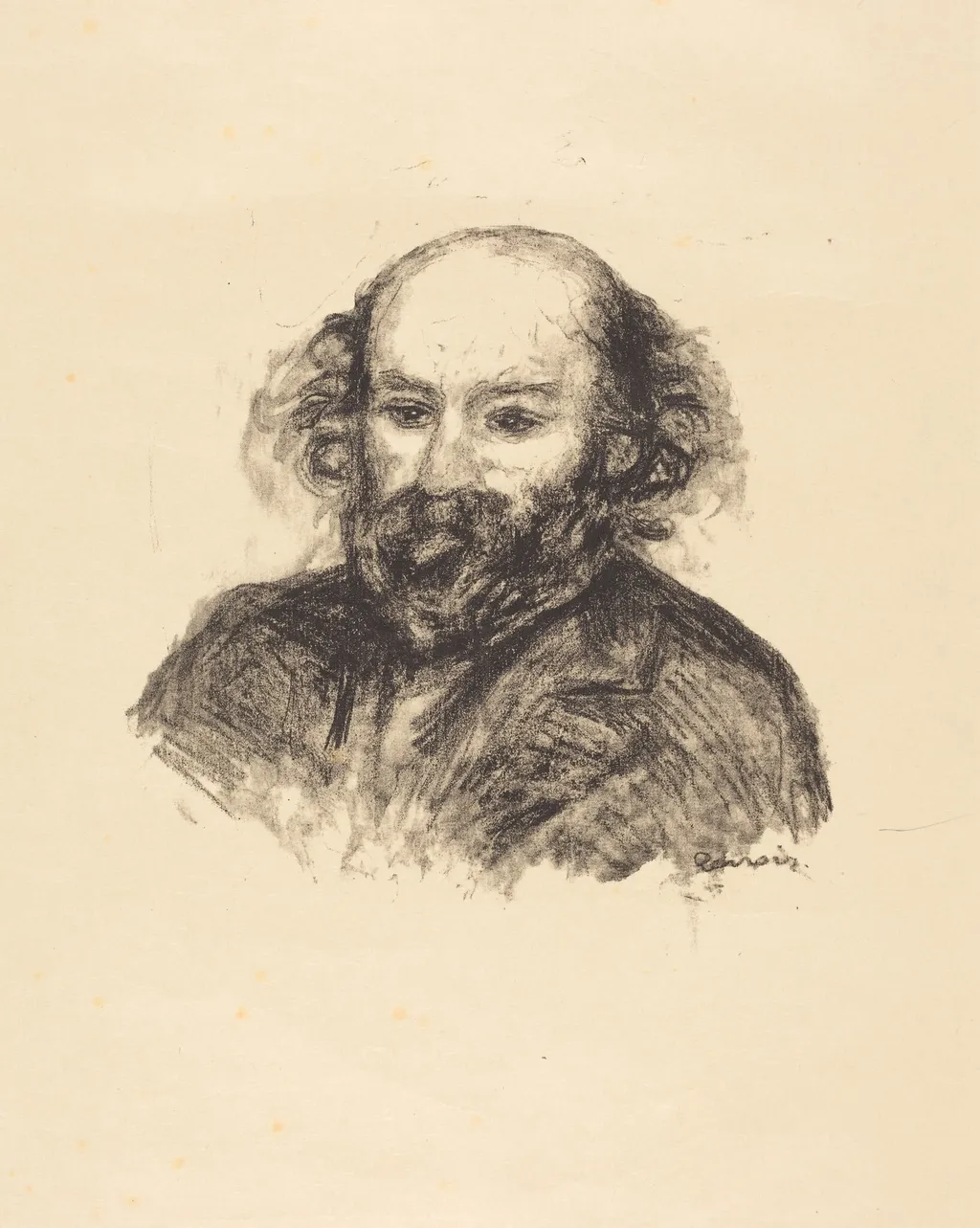
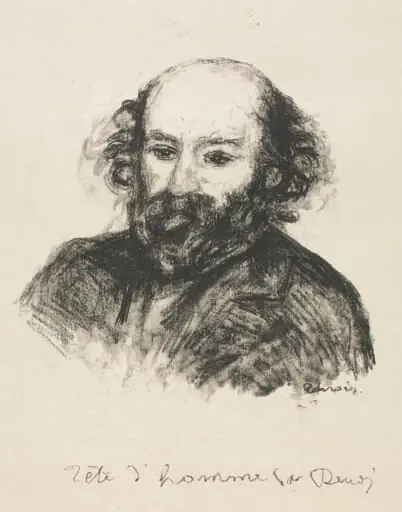
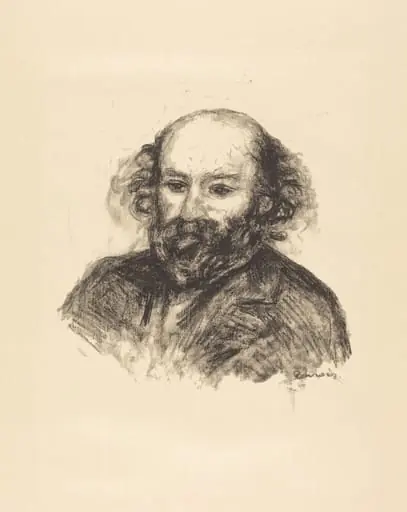
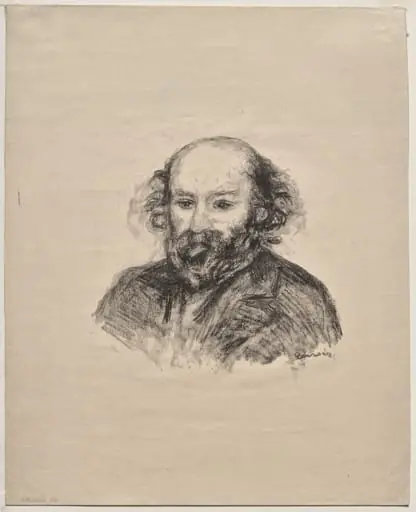
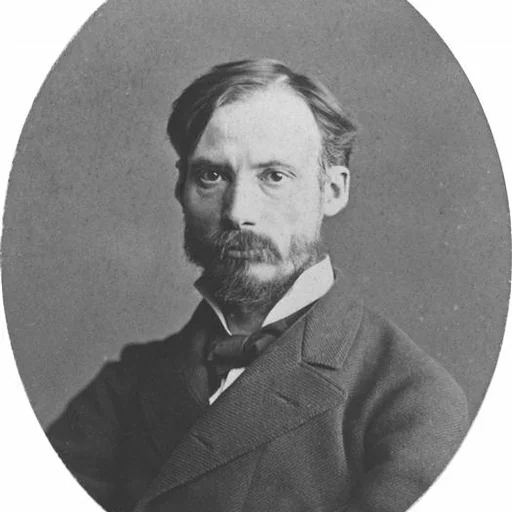
Paul Cezanne is an ink print by the Impressionist artist Auguste Renoir. It dates from 1902 and is held in the collection of the National Gallery of Art. This lithograph, created in 1902, depicts the French painter Paul Cézanne.
About this work
Overview
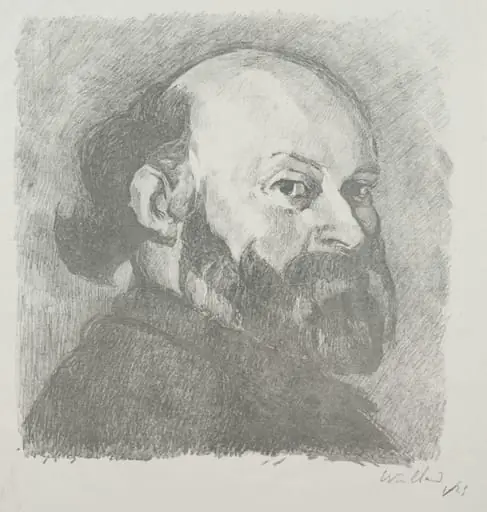
This lithograph, created in 1902, depicts the French painter Paul Cézanne. Though attributed to Auguste Renoir, it is a print made using lithographic technique, not a painting. The image captures Cézanne in profile, with minimal detail and a focus on gesture rather than precision. The medium allows for a tactile, spontaneous quality that distinguishes it from traditional portraiture.
Subject & Meaning
The subject is Paul Cézanne, a fellow artist and contemporary of Renoir. Rendered with a bald head, full beard, and high collar, his expression is introspective and composed. The absence of contextual elements directs attention to his demeanor, suggesting a quiet dignity. The portrait functions less as a formal likeness and more as a contemplative record of presence between peers.
Technique & Style
Unlike polished painted portraits, this work embraces the medium’s inherent texture and imperfection, emphasizing spontaneity over refinement.
Renoir employed lithography, a printmaking process that translates drawn marks onto stone for reproduction. The lines are deliberately loose and smudged, mimicking the immediacy of a sketch. Unlike polished painted portraits, this work embraces the medium’s inherent texture and imperfection, emphasizing spontaneity over refinement. The plain background enhances the focus on the figure’s form and mood.
History & Provenance
Created in 1902, the lithograph emerged during a period of close artistic exchange between Renoir and Cézanne. It was likely made as a personal tribute or study, not for public sale. Few impressions were printed, and surviving examples are held in museum collections, reflecting its status as a rare, intimate record of their relationship rather than a commercial product.
Context
In the early 20th century, lithography was increasingly used by artists for its capacity to convey personal expression. Renoir, known primarily as a painter, turned to printmaking to explore alternative modes of representation. This portrait reflects the mutual respect between two Post-Impressionist figures, one reclusive and the other more socially engaged, bound by shared artistic inquiry.
Legacy
The lithograph endures as a modest but significant document of artistic camaraderie. It illustrates how printmaking allowed painters like Renoir to engage with portraiture in a more immediate, less polished way. While not widely reproduced, it remains a key example of how personal relationships shaped the visual language of late 19th- and early 20th-century French art.
Artist & collection
Artist
Pierre-Auguste Renoir was born on 25 February 1841 in Limoges, the son of a tailor and a seamstress.