Artwork
Nu assis
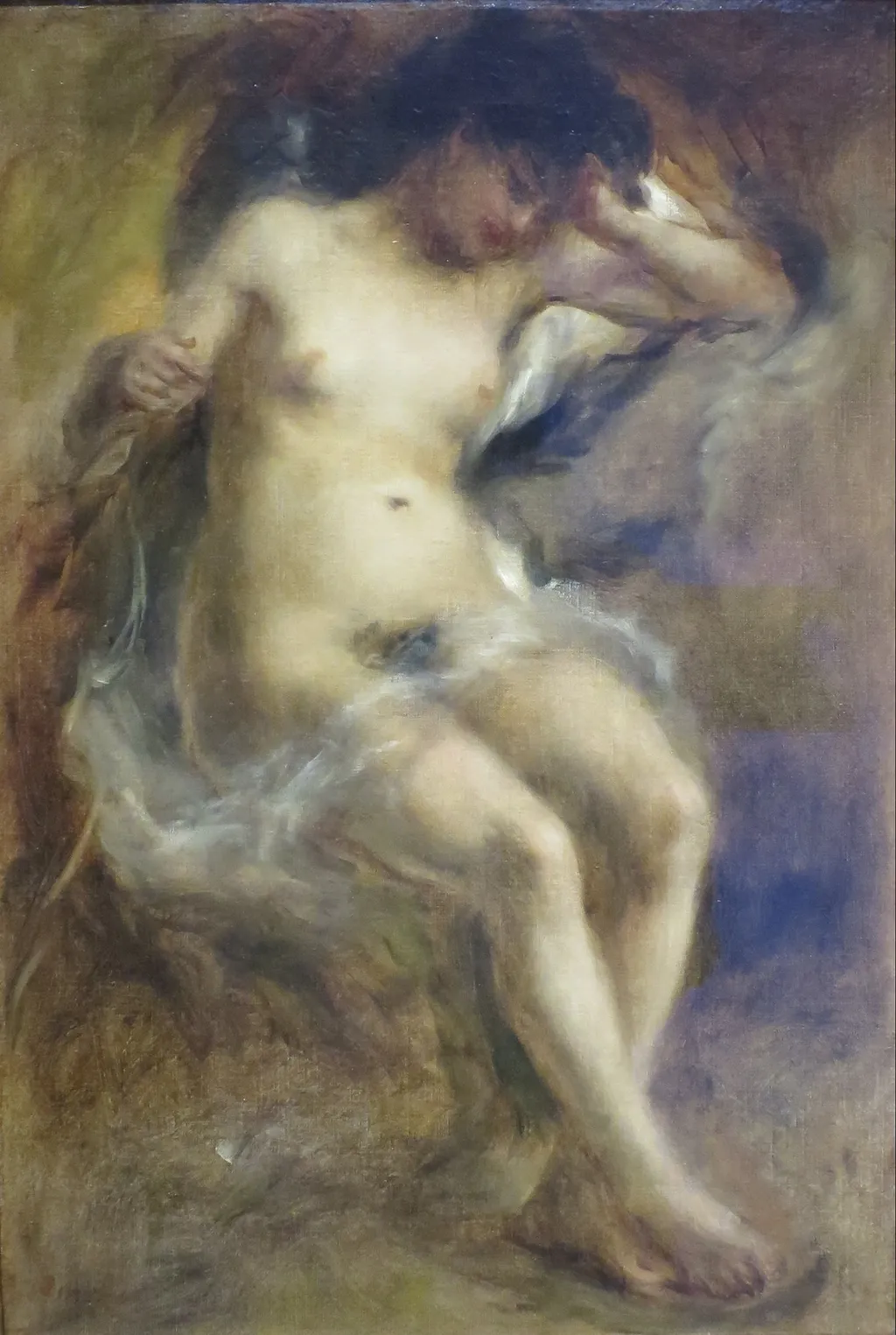
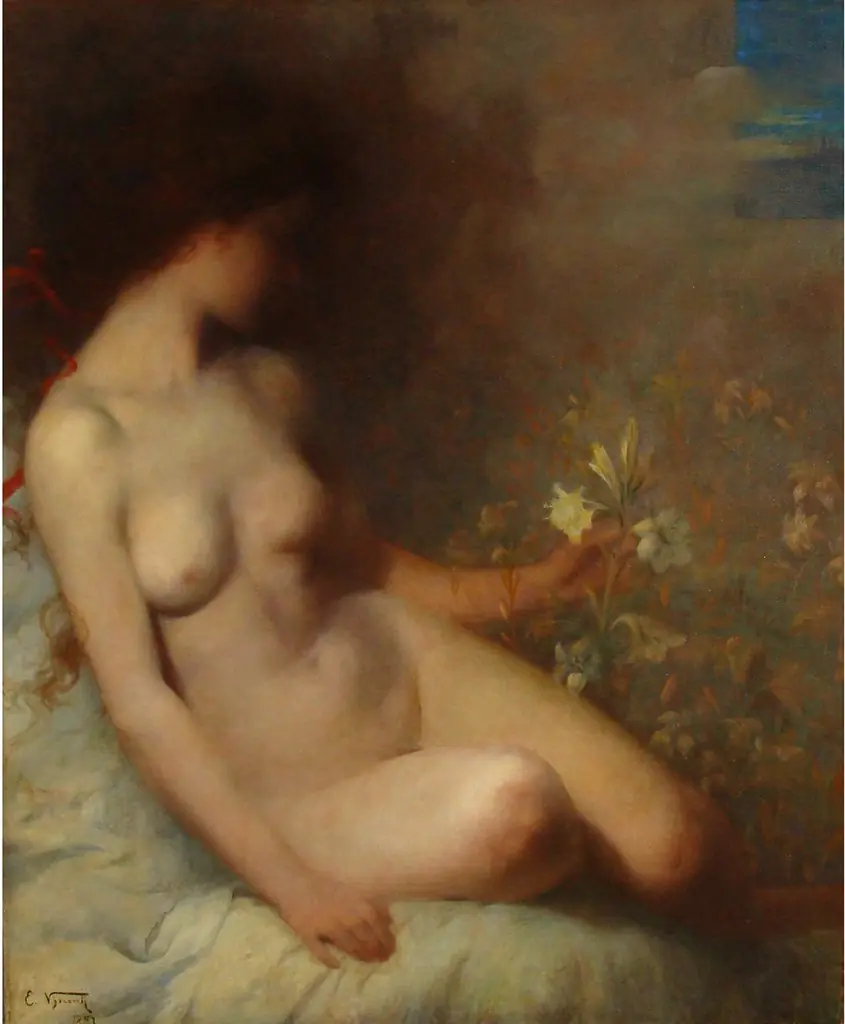
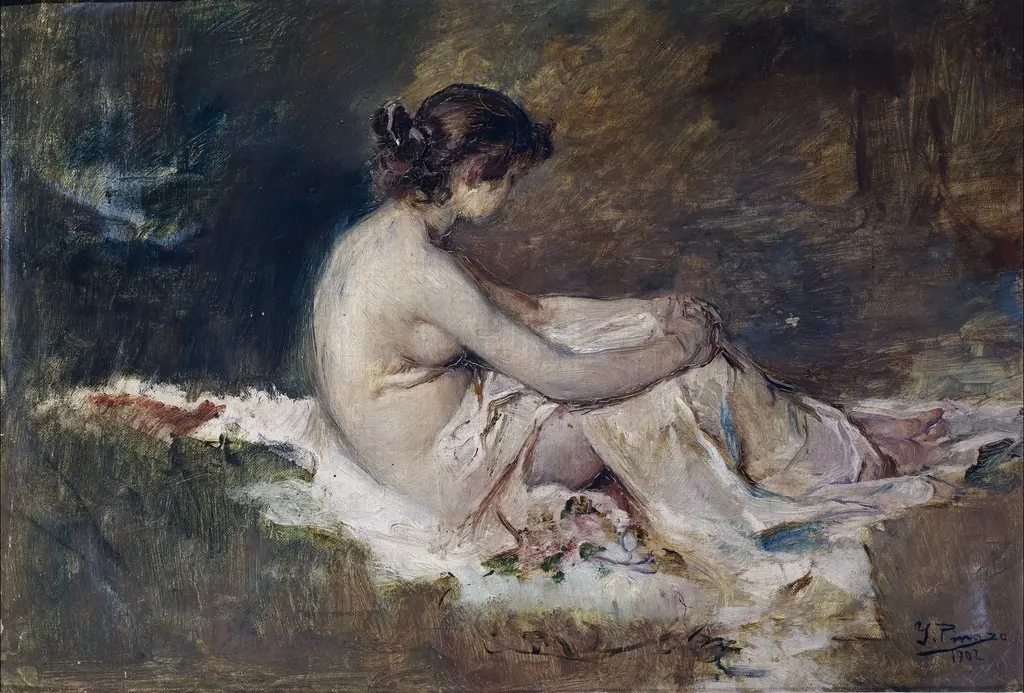
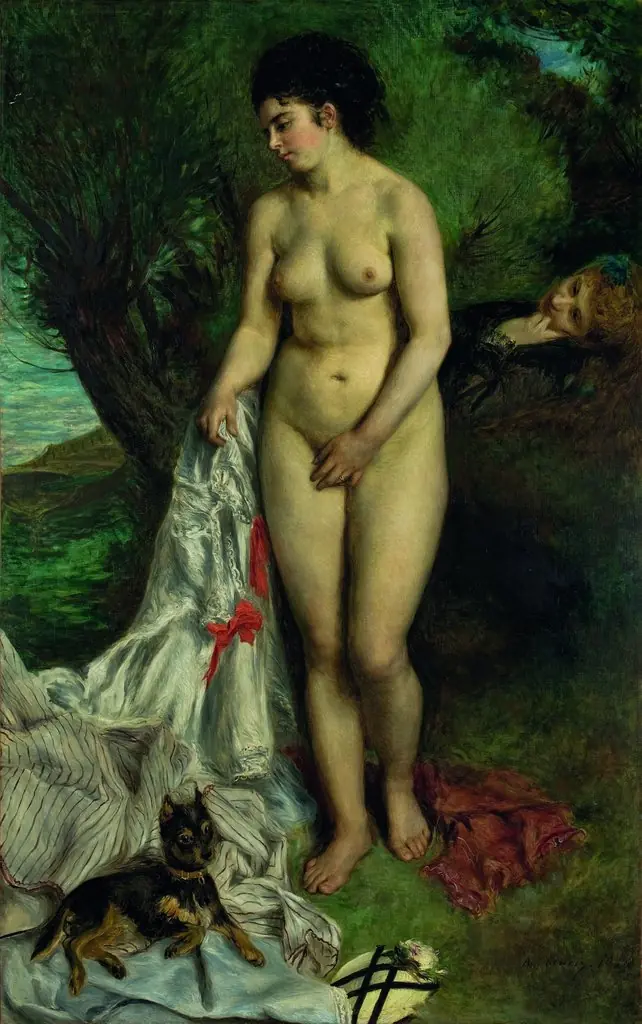
Nu assis is an oil painting by the Impressionist artist Auguste Renoir. It dates from 1872 and is held in the collection of the Norton Simon Museum.
About this work
Overview
It resides in the Norton Simon Museum’s collection and exemplifies Renoir’s early engagement with the human form outside classical or mythological contexts.
Painted in 1872 by Pierre-Auguste Renoir, this oil on canvas work portrays a reclining nude woman in a private, introspective moment. It resides in the Norton Simon Museum’s collection and exemplifies Renoir’s early engagement with the human form outside classical or mythological contexts. The composition emphasizes stillness and naturalism, distinguishing it from the more theatrical nudes of academic tradition.
Subject & Meaning
The figure, a woman with dark hair, sits relaxed on a chair, her gaze lowered and one hand resting gently on her forehead. Her posture suggests quiet contemplation rather than performative allure. The absence of narrative or symbolic elements directs attention to the simplicity of the moment, framing the nude not as an idealized form but as a private, unguarded presence.
Technique & Style
Renoir employs soft, blended brushwork to model the figure’s form, avoiding sharp outlines in favor of subtle transitions between light and shadow. Warm tones dominate the skin and background, while muted greens and browns create a cohesive, intimate atmosphere. The handling of paint conveys texture and volume without heavy modeling, reflecting the artist’s emerging Impressionist sensibility.
History & Provenance
Created during Renoir’s formative years as a painter, the work remained in private hands until acquired by the Norton Simon Museum. Its documented history is modest, with no record of public exhibition prior to the 20th century. The painting’s survival in relatively unchanged condition offers insight into Renoir’s studio practice during the early 1870s.
Context
In the early 1870s, Renoir was exploring the nude as a subject independent of myth or allegory, aligning with broader shifts in French art toward everyday realism. While contemporaries like Manet challenged conventions with starkness, Renoir’s approach softened the gaze, emphasizing tactile warmth and psychological reserve over confrontation or scandal.
Legacy
This painting contributes to Renoir’s evolving exploration of the female form, bridging his academic training with the looser, more personal style of Impressionism. Though less widely known than his later works, it reflects a pivotal moment in his artistic development—where intimacy replaced grandeur, and observation supplanted idealization.
Own this work as a print
Artist & collection
Artist
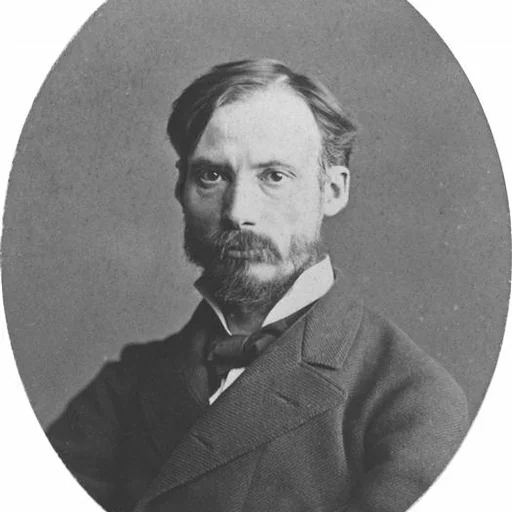
Pierre-Auguste Renoir was born on 25 February 1841 in Limoges, the son of a tailor and a seamstress.