Artwork
Betsabeea
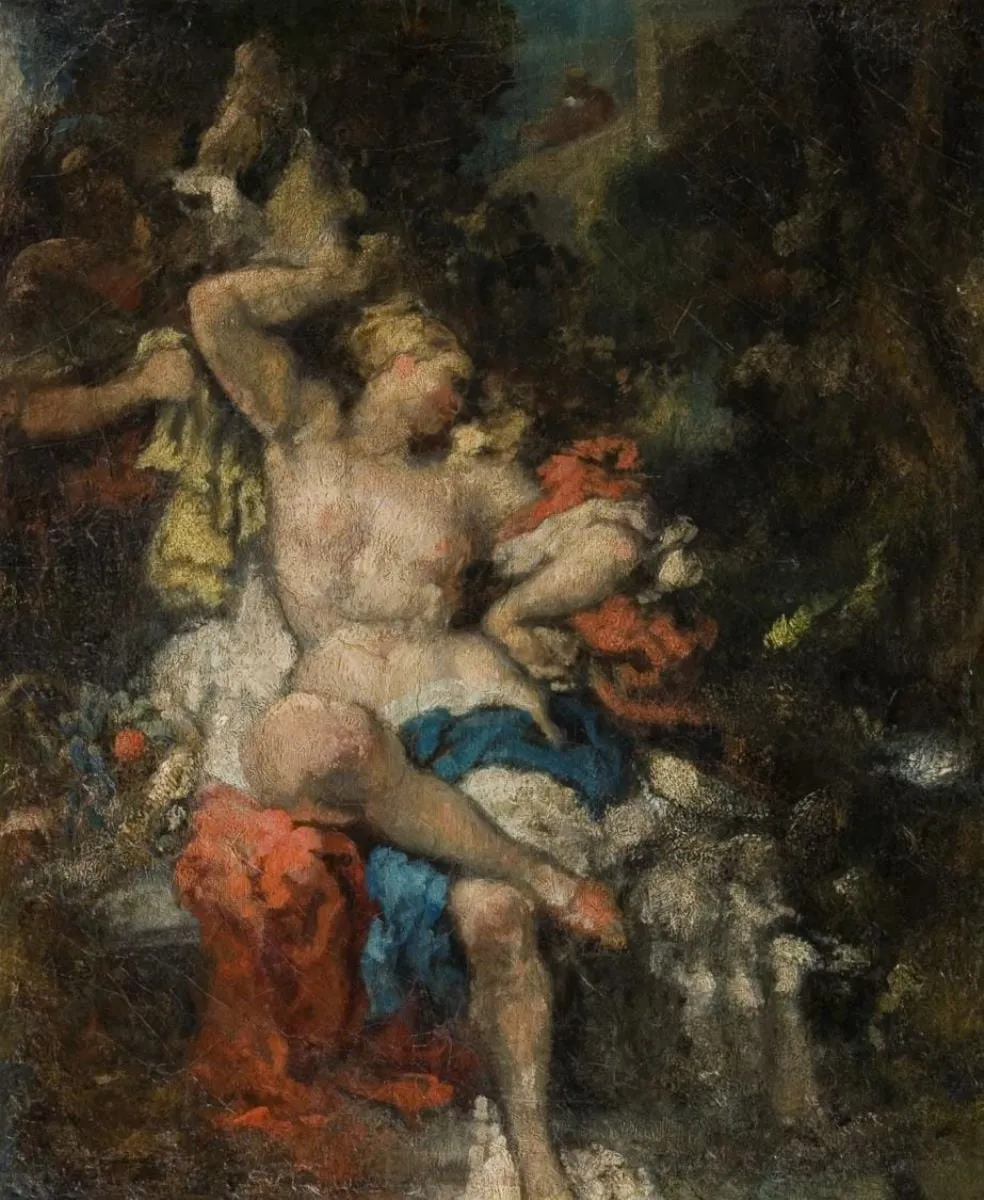
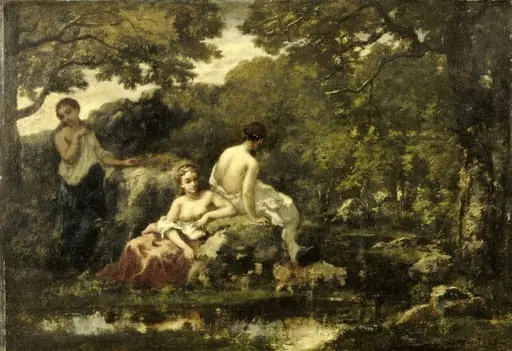
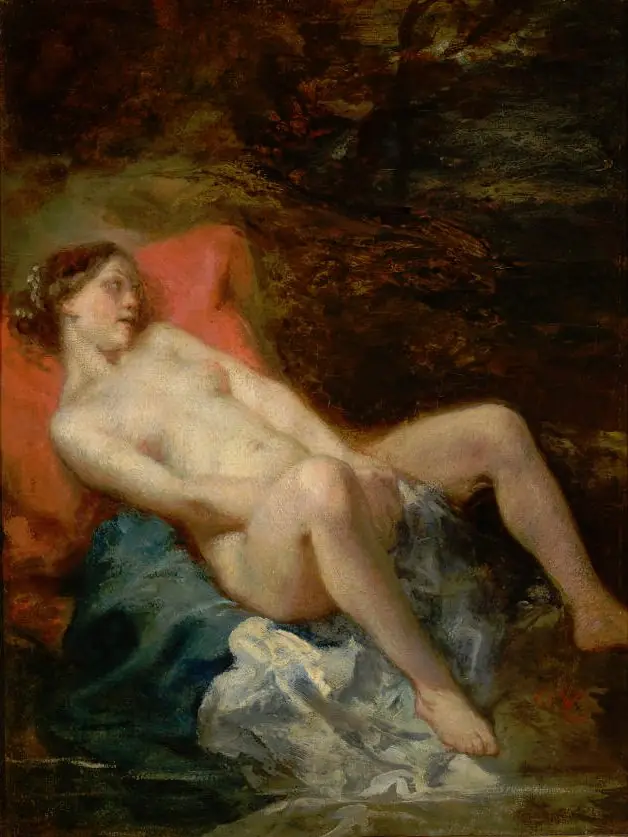
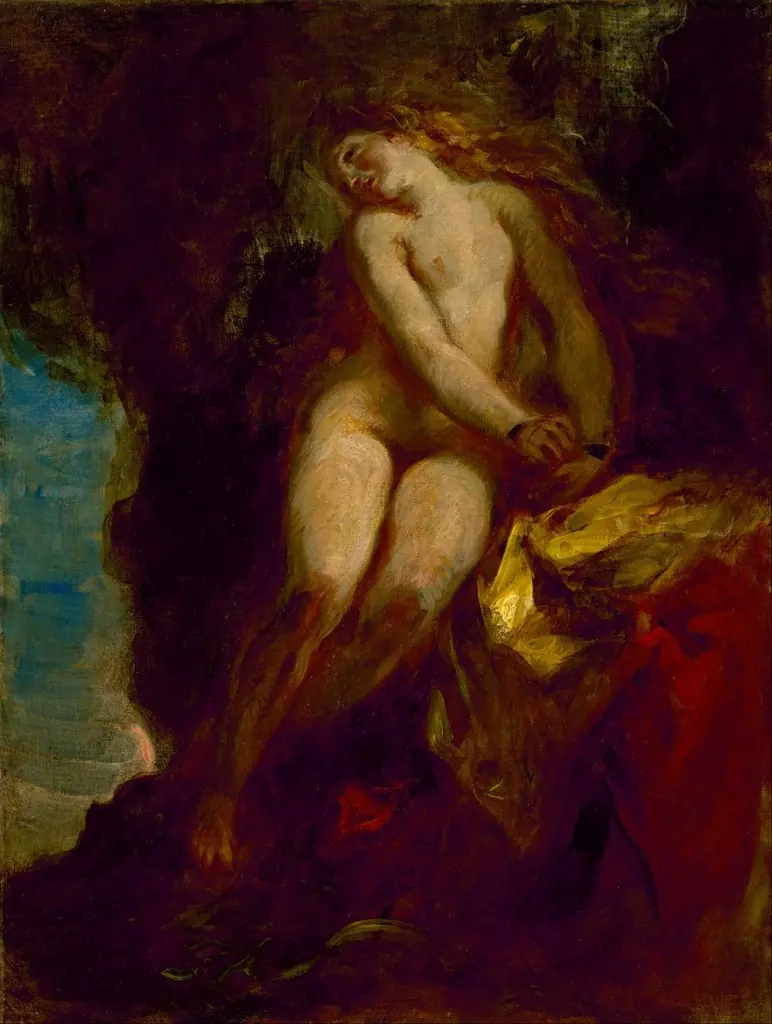
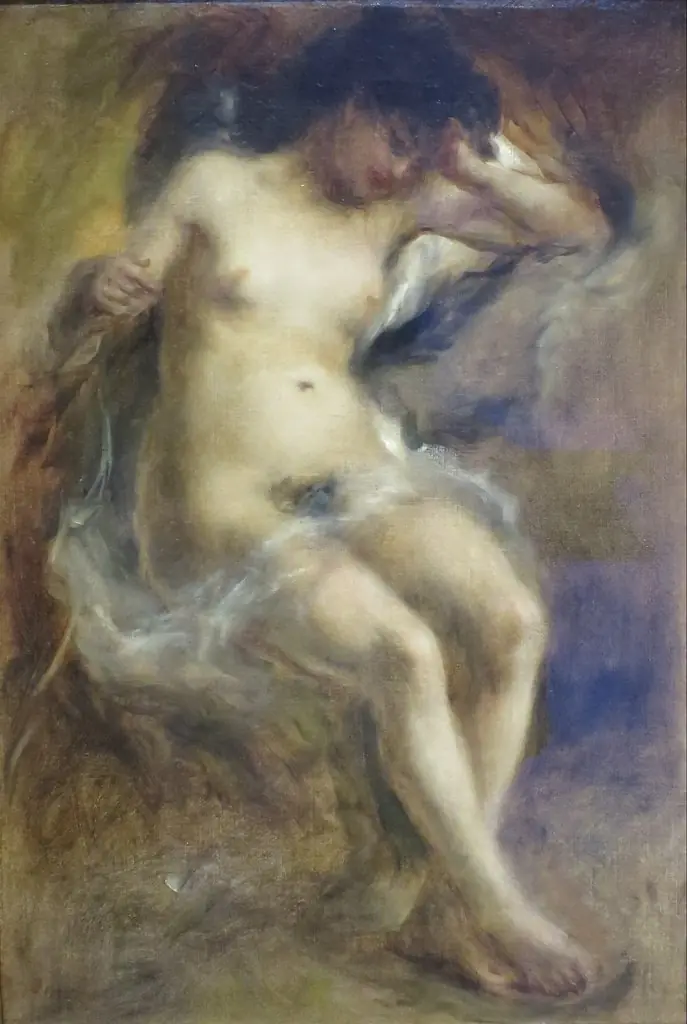
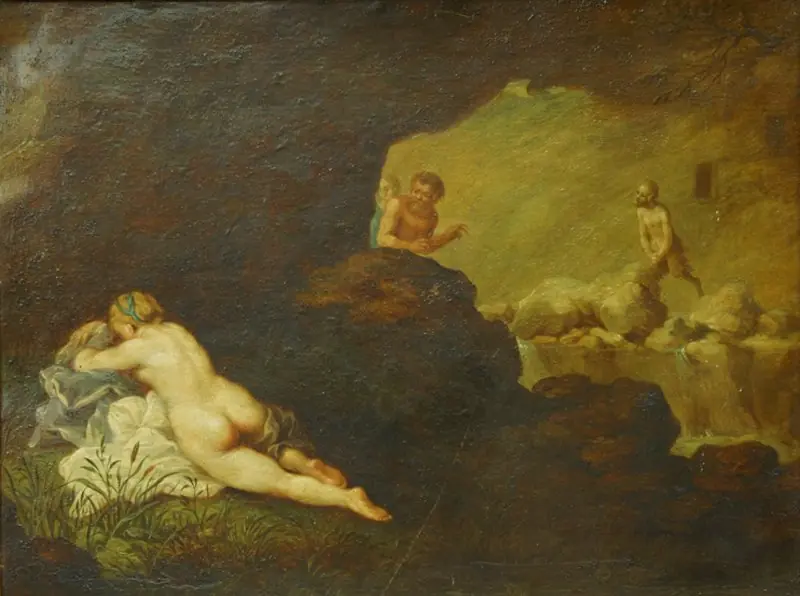
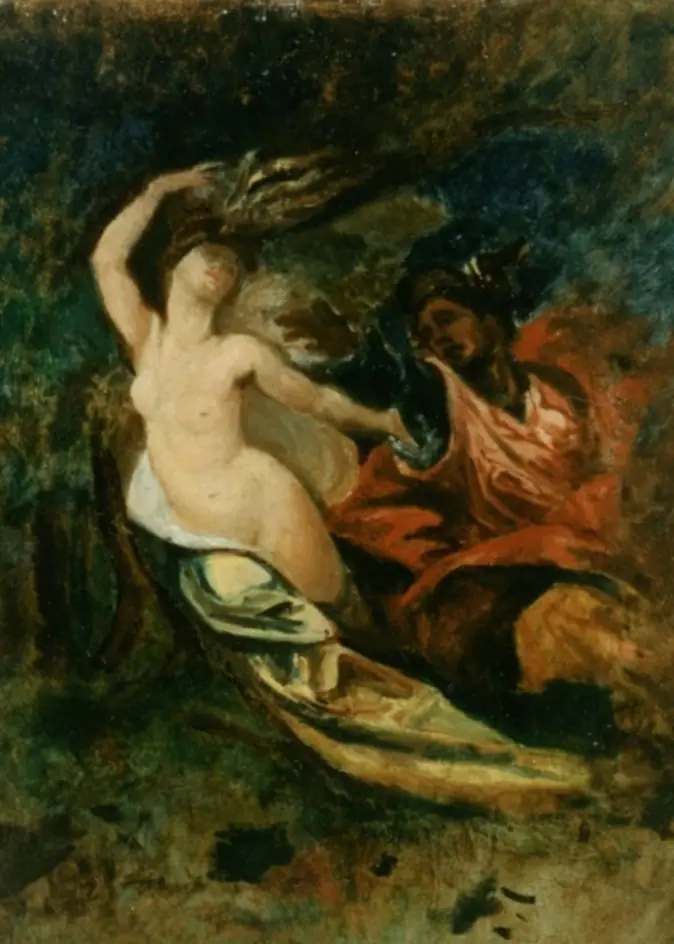
Betsabeea is a print by Narcisse Virgilio Díaz. It dates from 1851 and is held in the collection of the National Museum of Art of Romania. Painted around 1851 by Narcisse-Virgile Díaz de la Peña, this work depicts a reclining female figure in a natural, rugged setting.
About this work
Overview
The figure’s partial nudity and the dynamic interplay of light and shadow suggest a narrative rooted in myth or allegory, though no specific story is confirmed.
Painted around 1851 by Narcisse-Virgile Díaz de la Peña, this work depicts a reclining female figure in a natural, rugged setting. The composition centers on her vulnerable posture amid dark, textured surroundings. The figure’s partial nudity and the dynamic interplay of light and shadow suggest a narrative rooted in myth or allegory, though no specific story is confirmed. The painting’s emotional tone is quiet yet intense, achieved through deliberate contrasts in texture and illumination.
Subject & Meaning
The figure, loosely identified as Betsabeea, is rendered in a moment of stillness, one arm raised as if in surrender or prayer, the other pressed to her chest. The red cloth entwined around her body may symbolize passion, danger, or divine intervention. The absence of clear narrative context invites interpretation, but the pose and lighting evoke introspection and isolation. The setting, ambiguous yet foreboding, reinforces a sense of solitude rather than a specific biblical or literary scene.
Technique & Style
Díaz de la Peña employed thick impasto strokes to model the rocky terrain and deep shadows, giving the background a tactile, almost sculptural quality. In contrast, the figure’s skin and drapery are rendered with smoother, blended brushwork, enhancing their softness against the rough environment. The lighting is sharply directional, casting strong highlights on the figure’s form and deepening the surrounding darkness, creating a dramatic chiaroscuro effect that draws focus to her presence.
History & Provenance
The painting was completed during Díaz de la Peña’s active period in the Barbizon school, a time when artists increasingly turned to naturalistic subjects outside the academic tradition. While its early ownership is undocumented, it entered public collections in the late 19th century. Its attribution to the artist is consistent with his known style and period, though the title 'Betsabeea' appears to be a later scholarly designation rather than an original one.
Context
Created in mid-19th century France, the work reflects the Barbizon painters’ shift toward intimate, emotionally charged landscapes and figures drawn from nature rather than mythology or history. Though Díaz de la Peña was associated with Romanticism, this piece leans toward realism in its unidealized portrayal of the human form. The emphasis on texture and atmosphere aligns with broader trends in French painting that valued sensory experience over narrative clarity.
Legacy
The painting contributes to the evolving representation of the female figure in 19th-century art, moving away from classical idealism toward psychological nuance. Its textured surfaces and dramatic lighting influenced later artists exploring light and materiality. Though not widely exhibited, it remains a significant example of how Barbizon painters merged naturalism with emotional resonance, bridging Romantic sensibility and emerging Realist concerns.
Artist & collection
Artist
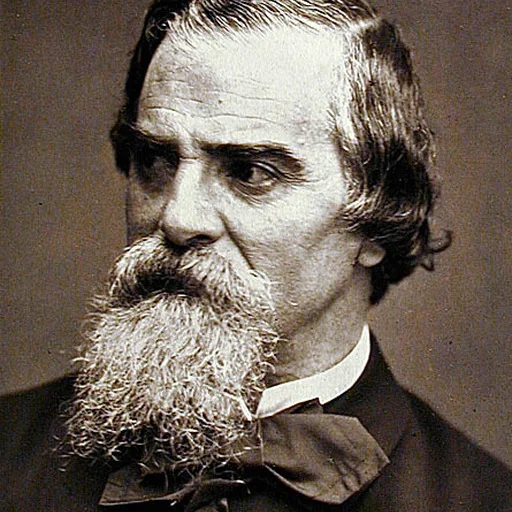
Narcisse Virgilio Díaz (1807–1876) was a French artist, born in Bordeaux.