Artwork
Standing Philosopher and Two Other Figures
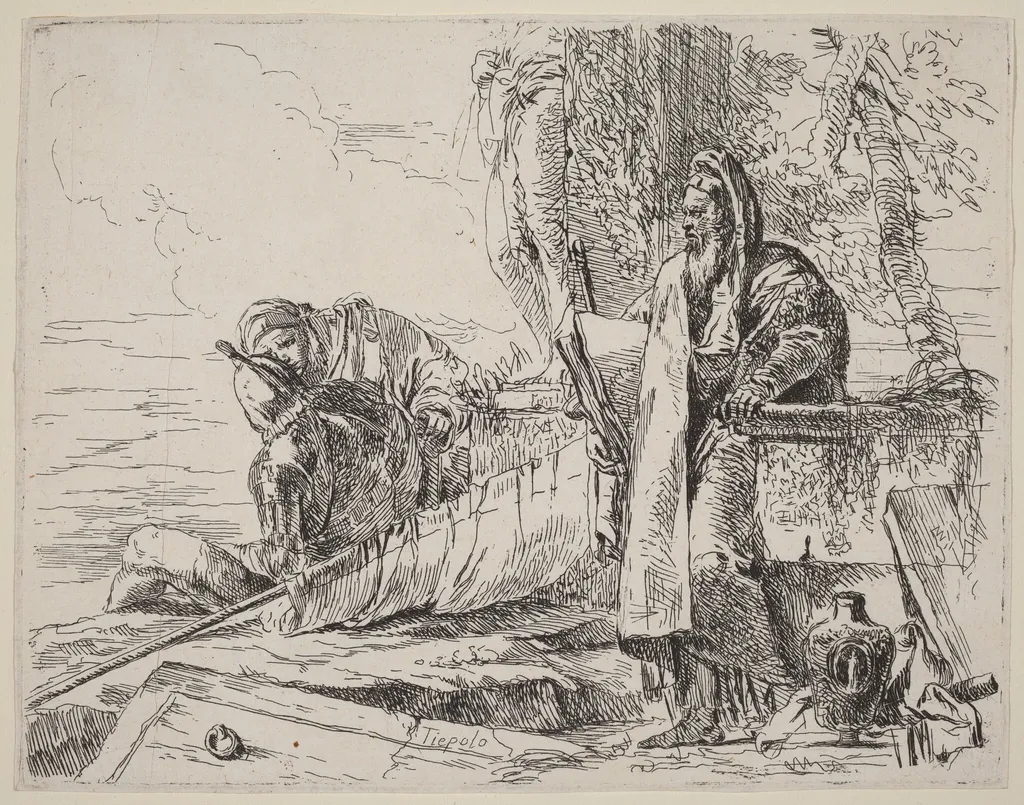
Standing Philosopher and Two Other Figures is an ink print by the Baroque artist Giovanni Battista Tiepolo. It dates from 1741 and is held in the collection of the National Gallery of Art.
About this work
Overview
Standing Philosopher and Two Other Figures is an etching on laid paper by Giovanni Battista Tiepolo, dating to circa 1741. Characteristic of the artist's Rococo style, the work showcases his mastery of figural composition.
Subject & Meaning
The print depicts a somber scene with three figures: a standing philosopher holding a scroll, a kneeling figure looking up, and a third slumped on the ground. The narrative, though unclear, conveys a sense of contemplation and distress through the contrasted postures.
Technique & Style
Tiepolo employed a sharp tool to scratch the design into the paper, resulting in deep, uneven lines that fill the space with dynamic textures, evoking trees, robes, and shadows. This approach imbues the image with a sense of urgency and spontaneity, akin to a rapid study.
History & Provenance
Created during Tiepolo's prolific period, this etching is part of his broader output of prints, complementing his painted works. Tiepolo's practice spanned Italy, Germany, and Spain, influencing the 18th-century Venetian school.
Artist & collection

Artist
Giovanni Battista Tiepolo, also known as Giambattista Tiepolo, was an Italian painter and printmaker from the Republic of Venice who painted in the Rococo style, considered an important member of the 18th-century Venetian school.

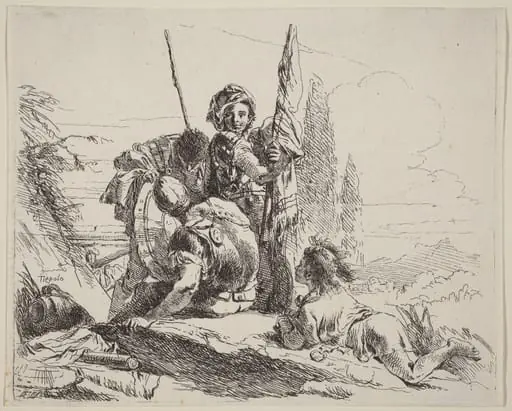 Three Soldiers and a Youth
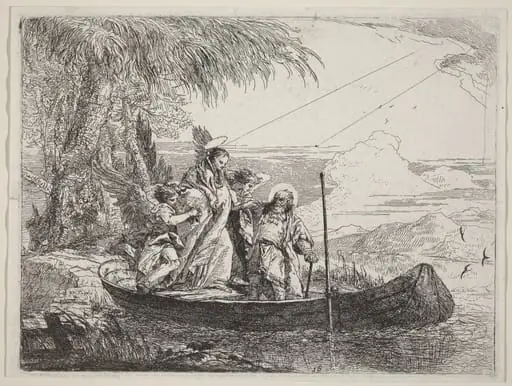 The Madonna, Child, and Angels Entering the Boat
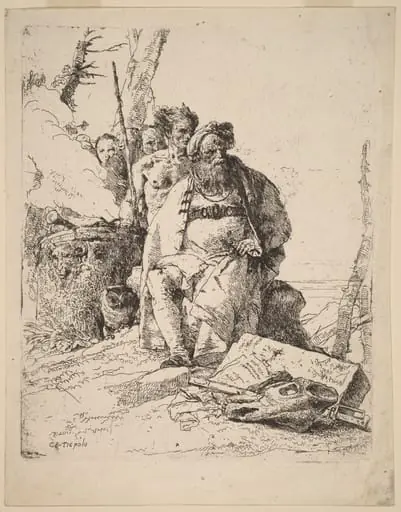 Seated Magician with Other Figures beside an Altar
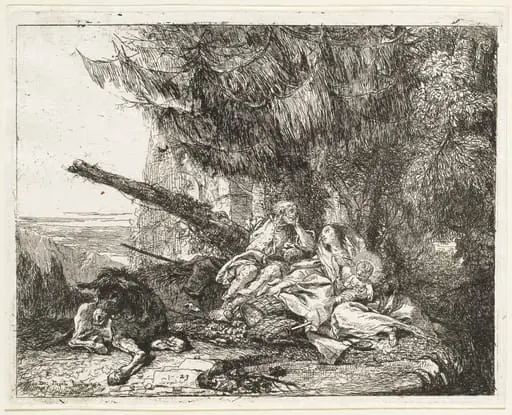 The Rest on the Flight, with Holy Family under a Tree
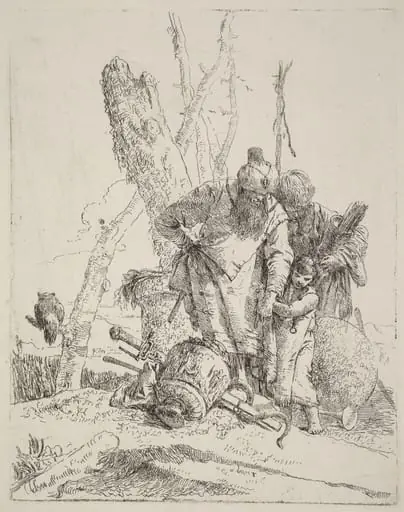 Two Turbaned Magicians and a Boy
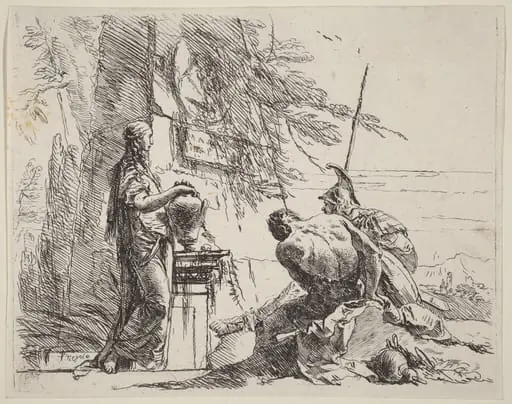 Standing Woman and Seated Men before an Obelisk
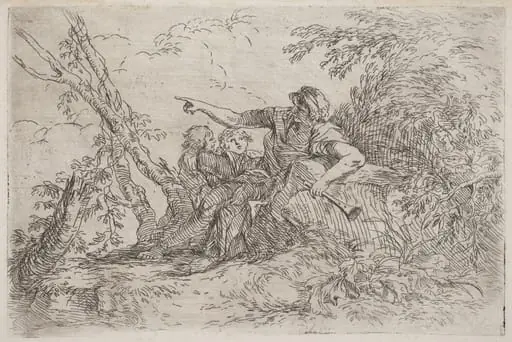 Shepherd in a Landscape
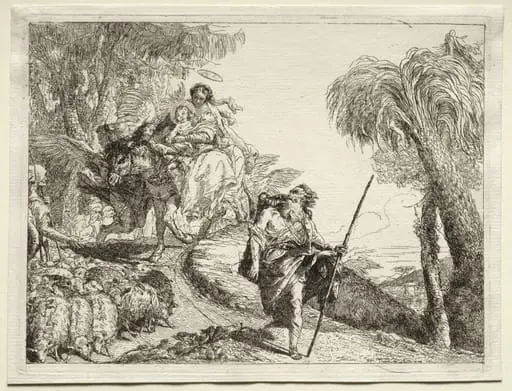 Flight into Egypt: The Holy Family and the Flock of Sheep
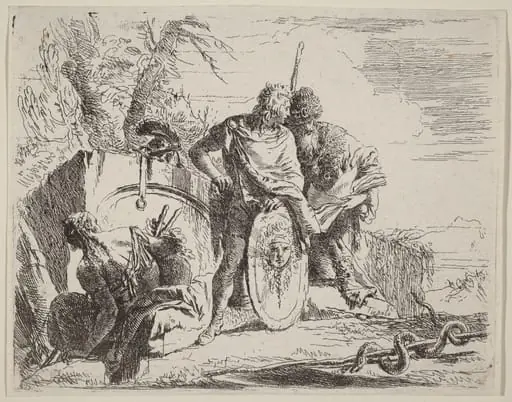 Young Soldier with Philosopher and Seated Woman