Artwork
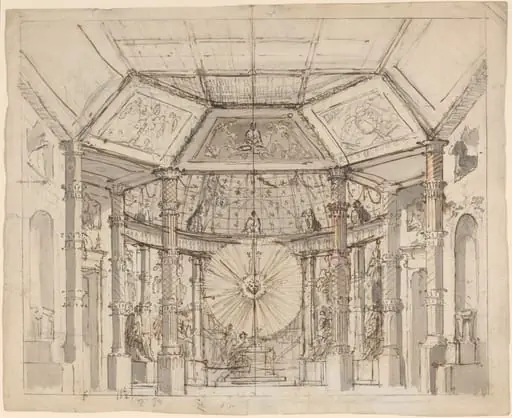
Decoration Executed for the Birthday of His Majesty the King of Westphalia
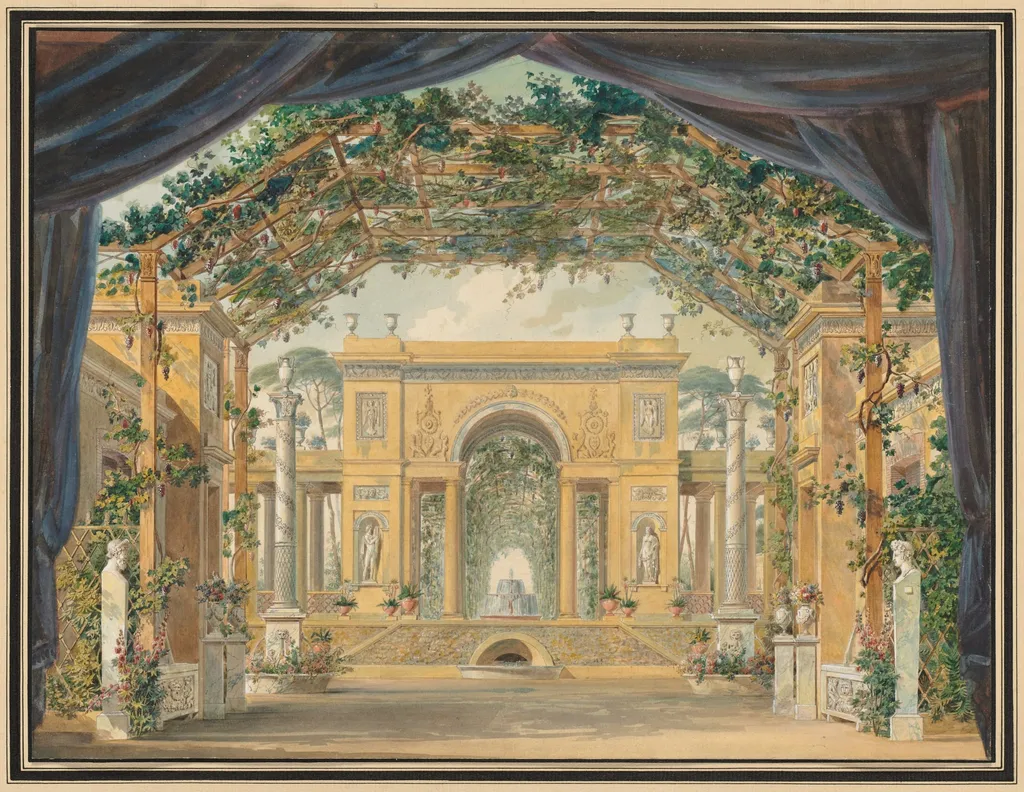
Decoration Executed for the Birthday of His Majesty the King of Westphalia is a drawing by the Romanticist artist Pierre-Luc-Charles Cicéri. It dates from 1811 and is held in the collection of the Cleveland Museum of Art.
About this work
If you like this kind of fancy design, check out Pierre-Luc-Charles Cicéri (French, 1782–1868).
This painting shows a fancy stage decoration with bright colors and gold details. It was made for a party celebrating the birthday of Jérôme Bonaparte, Napoleon’s brother. The artist, Cicéri, worked for the Paris Opera and knew how to design dramatic scenes.
The event was a big deal in 1811. Westphalia was a new kingdom created by Napoleon, and this artwork helped celebrate its power. The gold and red colors make it look royal and important.
If you like this kind of fancy design, check out Pierre-Luc-Charles Cicéri (French, 1782–1868).
Overview
This drawing by Pierre-Luc-Charles Cicéri was created as a stage design for a celebratory performance in 1811, honoring Jérôme Bonaparte, King of Westphalia. Commissioned by Antoine-André Bruguière, the kingdom’s theater superintendent, the work reflects the ceremonial ambitions of Napoleon’s satellite state. Cicéri, a seasoned scenic designer for the Paris Opera, employed theatrical conventions to convey imperial grandeur through architectural symbolism and ornamental detail.
Subject & Meaning
The design features a triumphal arch, Corinthian columns, and classical statues, evoking Roman imperial imagery to legitimize Jérôme Bonaparte’s rule. These elements were chosen not for historical accuracy but to associate the new kingdom with the authority and permanence of antiquity. The absence of a known performance title suggests the decoration served as a symbolic backdrop rather than a narrative setting, reinforcing political identity through visual rhetoric.
Technique & Style
Executed in watercolor and ink with gold highlights, the drawing combines precision with theatrical flourish. Cicéri rendered architectural elements with linear clarity while using rich reds and metallic accents to suggest opulence under stage lighting. The composition is symmetrical and densely layered, typical of operatic scene design, where spatial depth and visual impact were prioritized over realism to captivate an audience from a distance.
History & Provenance
Created for the court of Westphalia in Kassel, the drawing was part of a series of ephemeral stage designs produced for royal celebrations. Its survival is unusual, as most such works were discarded after performances. The inscription naming Bruguière confirms its official commission, linking it directly to the administrative apparatus of the Napoleonic client state. The drawing likely remained in royal or ministerial archives before entering public collections.
Context
Westphalia, established in 1807, was a political experiment by Napoleon to consolidate control over former Prussian territories. The birthday celebration in 1811 was one of many efforts to cultivate loyalty and cultural legitimacy. Cicéri’s design, imported from Paris, exemplifies how French artistic institutions were deployed to project imperial influence across satellite states, blending spectacle with state-building.
Legacy
Though the performance it served has faded from memory, the drawing endures as a material trace of Napoleonic ceremonial culture. It illustrates how stage design functioned as political propaganda, using classical aesthetics to naturalize new regimes. Cicéri’s work here reflects a broader trend in early 19th-century theater, where spectacle and state power were inextricably intertwined.
Artist & collection

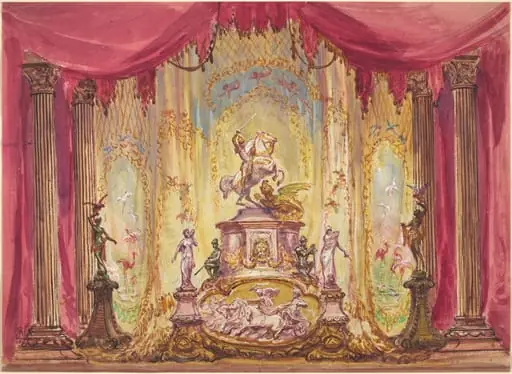 Stage Set with a Statue Of Saint George Slaying the Dragon
 Landscape
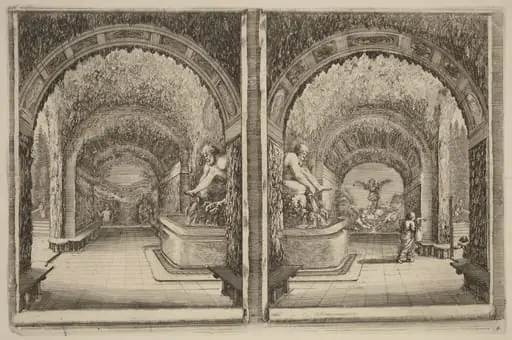 A Grotto Seen from Two Different View Points
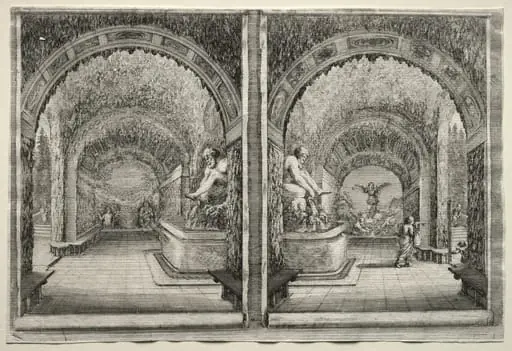 Views of the Villa of Pratolino: Two Views of the Grotto
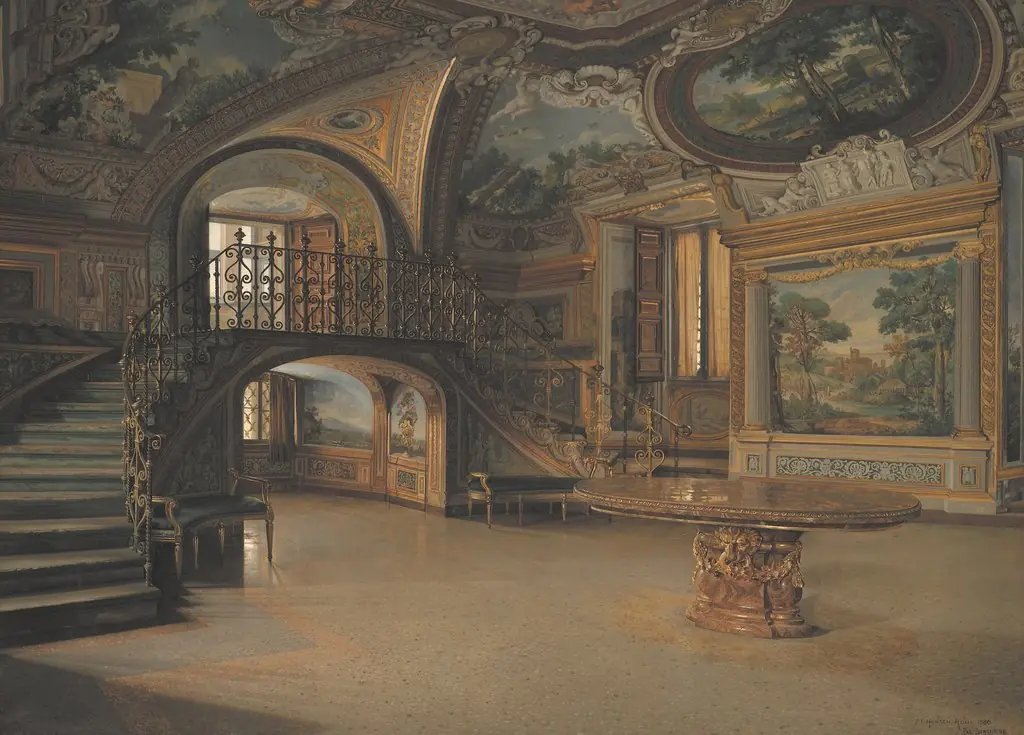 En sal i Palazzo Borghese
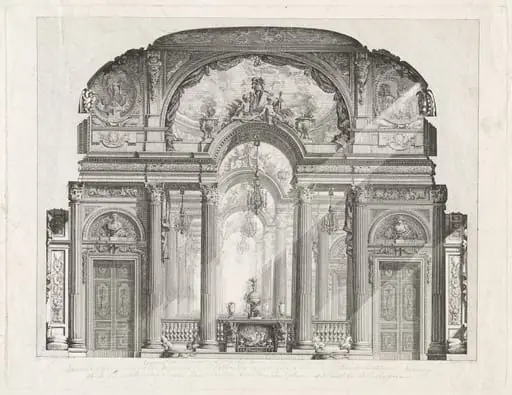 Cross Section of the Salon of the Palazzo Spinola, Genoa
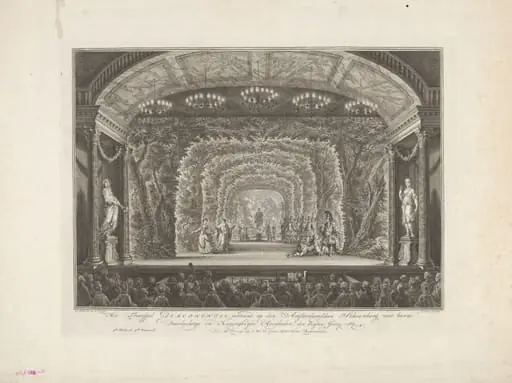 H Beard Print Collection
 Stage Design for a Domed Temple Interior with a Sun Disk above the Altar
![Design for a Wall of a Music Room [recto], by Italian 18th Century](https://artifactworldgallery.com/img/italian-18th-century--design-for-a-wall-of-a-music-room-recto--1582534309a804bd-w320.webp) Design for a Wall of a Music Room [recto]
Design for a Wall of a Music Room [recto]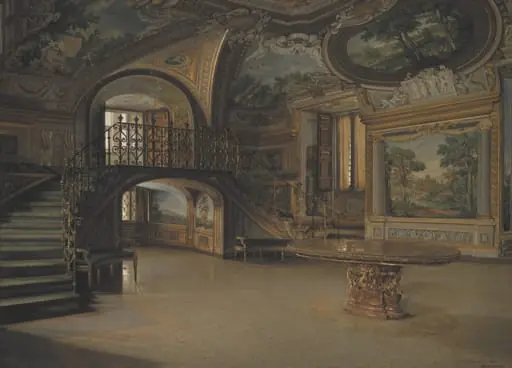 En sal i Palazzo Borghese
 H Beard Print Collection
 H Beard Print Collection