Artwork
Stage Design for a Domed Temple Interior with a Sun Disk above the Altar
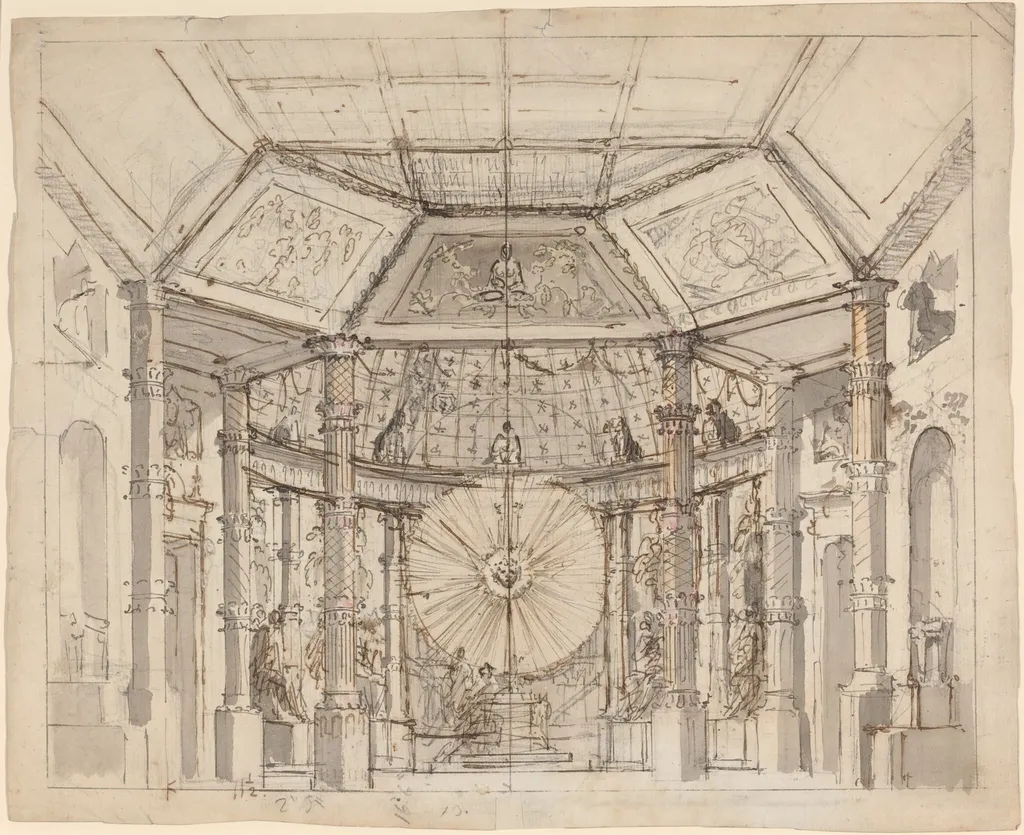
Stage Design for a Domed Temple Interior with a Sun Disk above the Altar is an ink drawing by the Romanticist artist Josef Ignáz Platzer. It dates from 1780 and is held in the collection of the National Gallery of Art.
About this work
Overview
This drawing by Josef Ignáz Platzer, dated 1780, is a theatrical stage design rendered in pen, ink, wash, and watercolor over graphite.
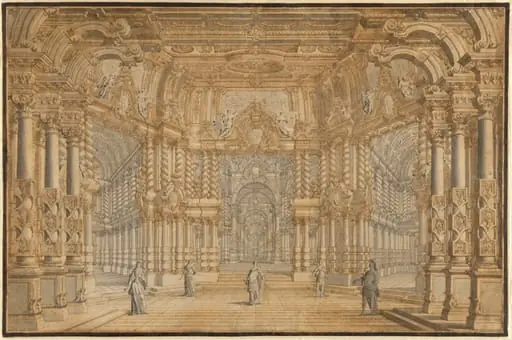
This drawing by Josef Ignáz Platzer, dated 1780, is a theatrical stage design rendered in pen, ink, wash, and watercolor over graphite. It depicts an imagined interior of a domed temple, structured for performance rather than worship. The composition emphasizes spatial depth and luminous atmosphere, characteristic of stage scenery from the late 18th century. Its delicate handling suggests it was intended as a preparatory study for a theatrical setting.
Subject & Meaning
The scene centers on a circular temple interior with a prominent sun disk suspended above an altar, evoking celestial symbolism often used in Enlightenment-era stagecraft. The architectural elements—tall columns, faded wall patterns, and a vaulted ceiling adorned with small figures—convey an idealized sacred space. The design likely served to evoke awe or spiritual contemplation within a theatrical context, aligning with contemporary tastes for allegorical spectacle.
Technique & Style
Platzer employed fine pen lines to define architectural forms, layered with soft gray and brown washes to model volume and shadow. Watercolor was applied thinly to suggest ambient light filtering through unseen windows, enhancing the illusion of depth. The use of graphite underdrawing allowed for adjustments, while the overall tonal restraint reflects a preference for subtlety over boldness, typical of stage designers prioritizing atmospheric effect over literal detail.
History & Provenance
Created in 1780, the drawing originates from Platzer’s work as a stage designer for imperial theaters in Vienna. It was likely produced for a court performance, possibly linked to the Habsburg court’s interest in allegorical and mythological dramas. While its exact theatrical production remains unconfirmed, its survival indicates its value as a working document within the Viennese theatrical workshop tradition of the period.
Context
In late 18th-century Vienna, stage design was a sophisticated art form, blending architecture, optics, and symbolism to enhance narrative drama. Platzer’s work reflects the influence of Enlightenment ideals, where light and geometry conveyed moral or cosmic order. His designs often merged classical architecture with celestial motifs, catering to audiences accustomed to grand, symbolic spectacles in opera and court theater.
Legacy
Platzer’s drawings, including this one, contribute to the understanding of how theatrical illusion was constructed before the advent of electric lighting. Though not widely known today, his work represents a key strand in the history of scenic design, demonstrating how ephemeral stage environments were meticulously planned. These studies remain valuable for scholars examining the intersection of architecture, performance, and visual culture in Enlightenment Europe.
Artist & collection


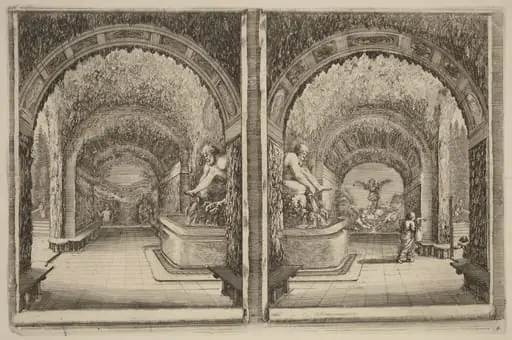 A Grotto Seen from Two Different View Points
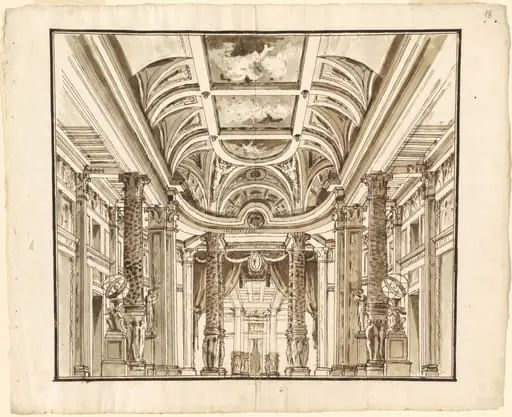 Fantasy of a Great Hall with Basketweave Columns
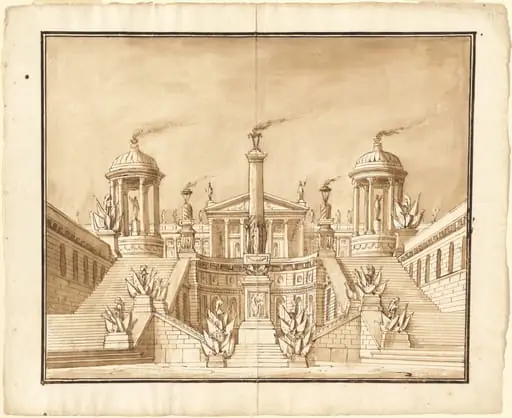 Fantasy of an Ancient Capitol with Trophies and Grand Staircases
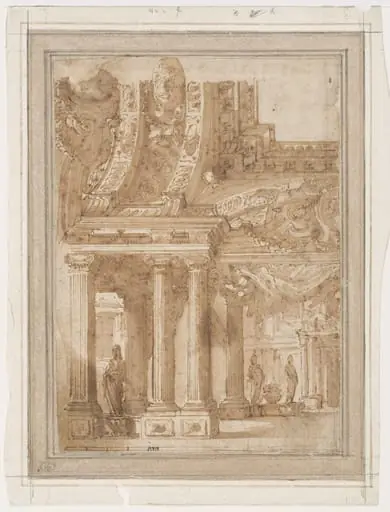 Untitled
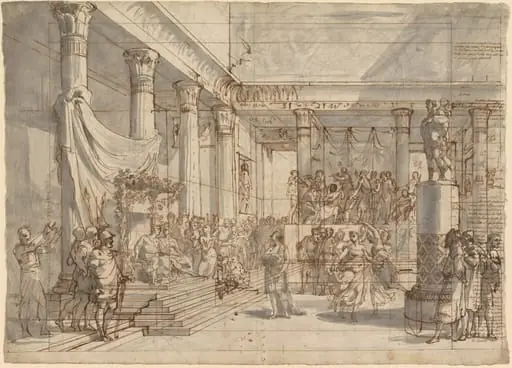 Timotheus Playing the Lyre before Alexander and Thaïs in the Hall of the Palace at Persepolis
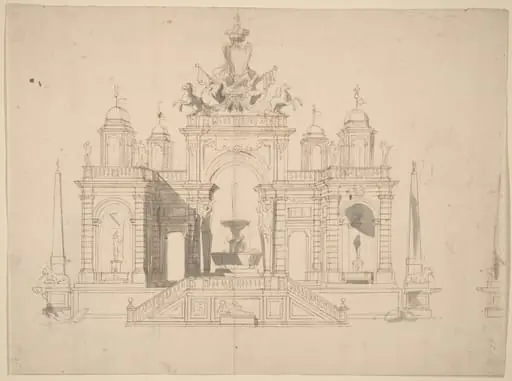 Study for "The Seconda Macchina for the Chinea of 1754: An Allegory of Waterworks"
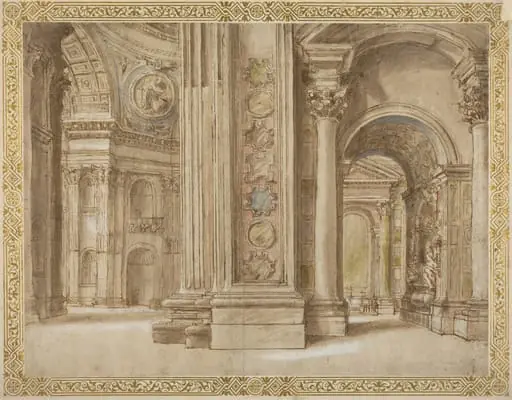 The Interior of Saint Peter's, Rome
 A Stage Design for an Opera with Actors
 Design for a State Bedroom
 Stage Design