Artwork
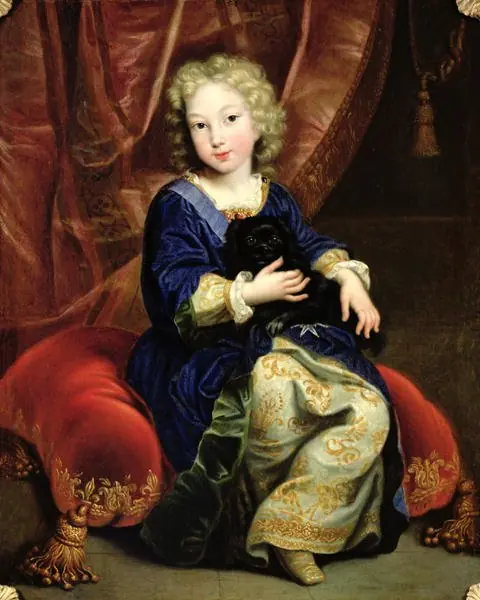
Felipe de Borbón duque de Anjou y futuro Felipe V de España niño
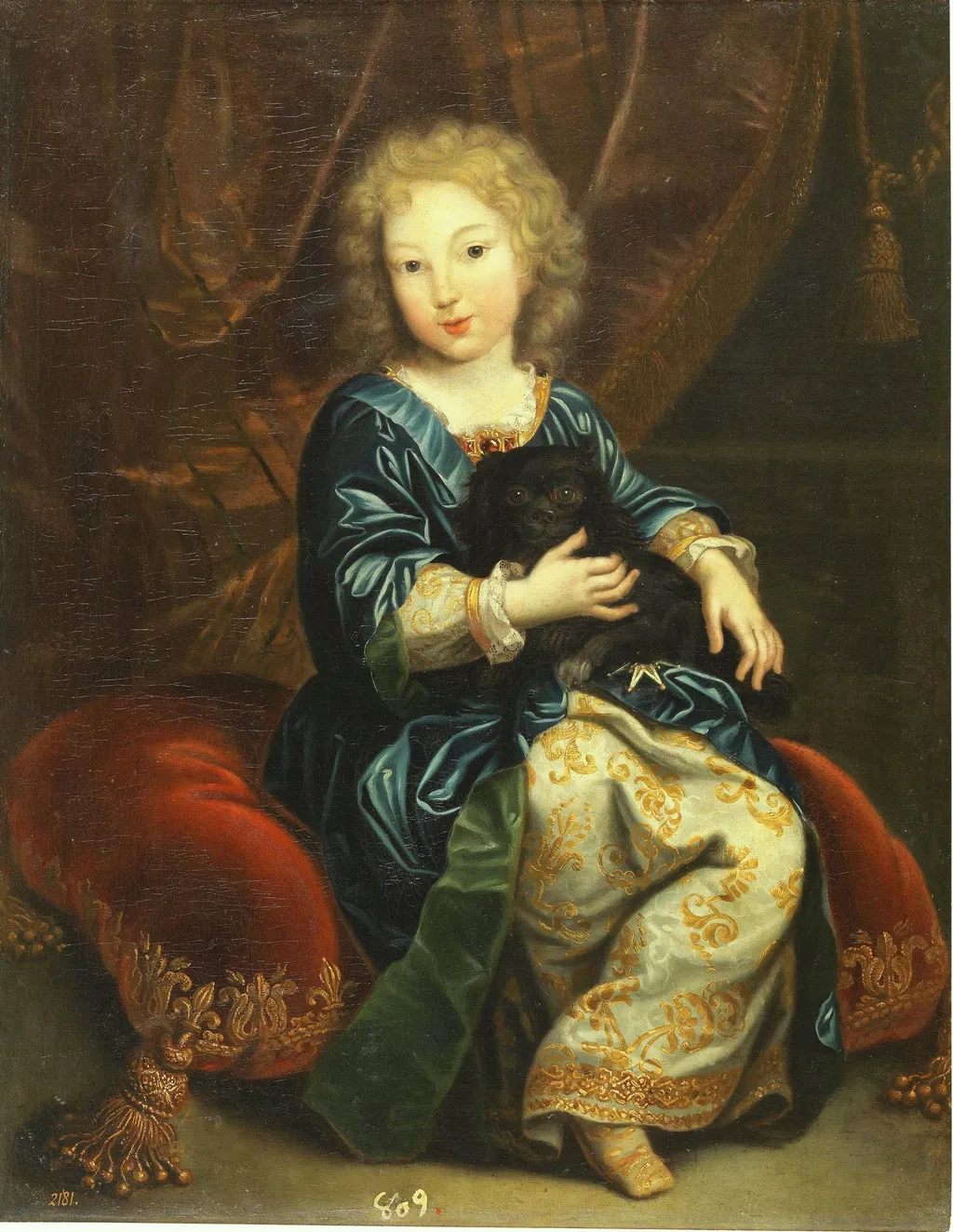
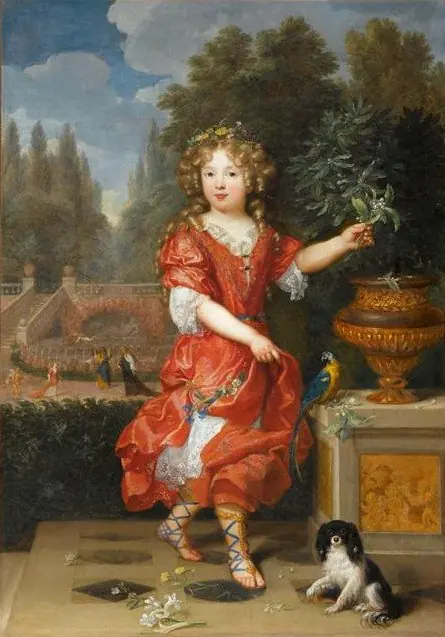
Felipe de Borbón duque de Anjou y futuro Felipe V de España niño is an oil painting by the French Classical Baroque artist Pierre Mignard I. It dates from 1694 and is held in the collection of the Museo del Prado. Pierre Mignard painted a portrait of the young Felipe de Borbón, later King Felipe V of Spain, in 1686 using oil on canvas.
About this work
If you're interested in learning more about the artist's technique, you could look up chiaroscuro.
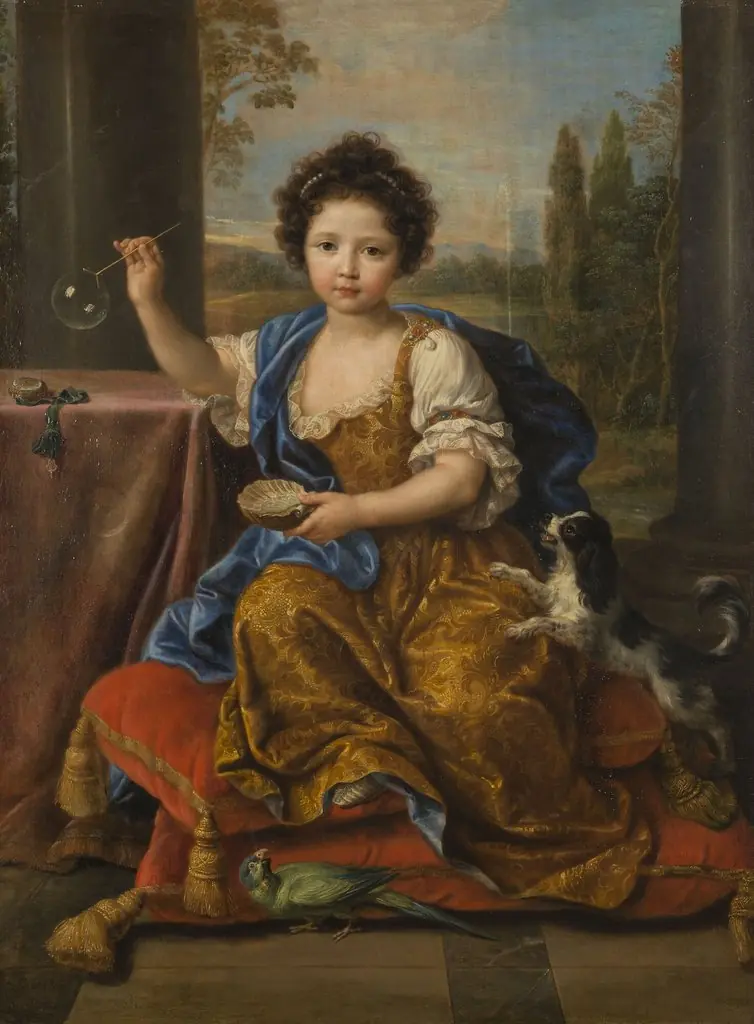
This painting shows a young girl sitting on a red cushion, holding a black dog. She's wearing a blue dress with gold embroidery and a white skirt with gold patterns. The background is dark brown with some gold tassels hanging down.
The girl's hair is curly and blonde, and she's looking straight at the viewer. The dog is small and fluffy, and it's looking up at the girl. The overall mood of the painting is calm and serene.
The artist, Pierre Mignard I, used oil paint to create this portrait in 1686. The painting is now held at the Museo del Prado. If you're interested in learning more about the artist's technique, you could look up chiaroscuro.
Overview
Pierre Mignard painted a portrait of the young Felipe de Borbón, later King Felipe V of Spain, in 1686 using oil on canvas. The work reflects the refined courtly style of French Classical Baroque portraiture. Though often misidentified as a girl, the subject is a boy, heir to the Spanish throne. The painting is part of the Museo del Prado’s collection, where it remains a key example of early Bourbon dynastic imagery.
Subject & Meaning
The child depicted is Felipe de Borbón, aged about four, dressed in elaborate garments signaling his royal status. His direct gaze invites the viewer into a moment of quiet dignity, reinforcing his legitimacy as a future monarch. The small dog at his side, a symbol of loyalty, complements the theme of inherited authority. The composition avoids theatricality, emphasizing composure over spectacle, aligning with Bourbon ideals of restrained power.
Technique & Style
Mignard employed soft modeling and subtle chiaroscuro to render the child’s delicate features and rich textiles. The blue dress with gold embroidery and the white skirt’s intricate patterns are rendered with precision, highlighting material luxury without excess. The dark, muted background isolates the figure, drawing attention to texture and light. Brushwork remains controlled, characteristic of French academic training and Mignard’s preference for clarity over dramatic contrast.
History & Provenance
Commissioned during Felipe’s early childhood, the portrait was likely created to affirm his position in the Spanish succession amid European dynastic tensions. It entered the Spanish royal collection and was later transferred to the Museo del Prado following the 19th-century nationalization of royal artworks. Its survival through political upheavals underscores its role as a stable emblem of Bourbon legitimacy.
Context
Painted in 1686, the portrait coincides with the final years of Charles II of Spain’s reign and the looming War of the Spanish Succession. Mignard, a leading French court painter, was commissioned by the French royal family to depict their grandson, linking French and Spanish Bourbon lines. The image served both personal and political aims: to document the child’s image and to signal dynastic continuity across borders.
Legacy
Mignard’s portrait of the young Felipe V remains a significant record of Bourbon identity before Felipe’s ascension to the Spanish throne in 1700. It exemplifies how portraiture functioned as political tool in early modern Europe, conveying lineage and authority through subtle visual cues. The work continues to inform scholarly understanding of how childhood was represented in royal contexts during the late 17th century.
Own this work as a print
Artist & collection
Artist
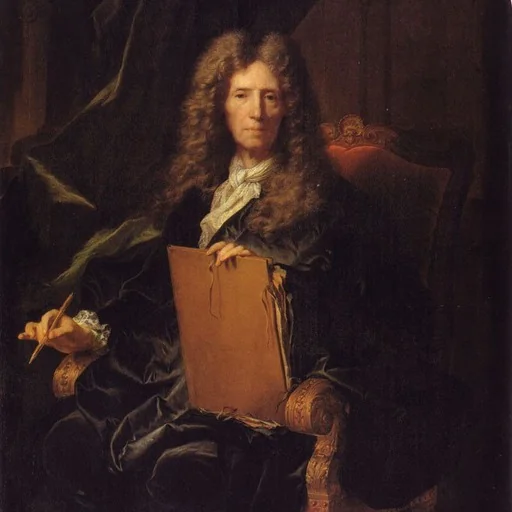
Pierre Mignard or Pierre Mignard I (French pronunciation: ; 17 November 1612 – 30 May 1695), called "Mignard le Romain" to distinguish him from his brother Nicolas Mignard, was a French painter known for his religious and mythological…

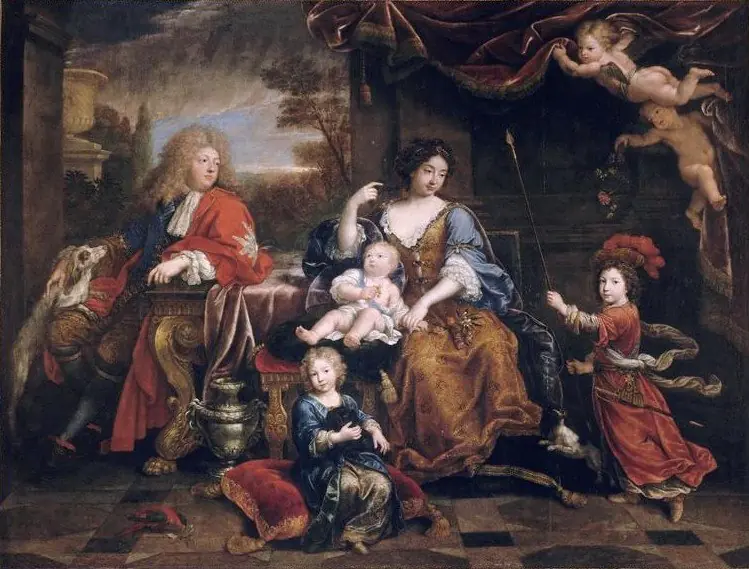
 Portrait of Philippe of France (future Philip V of Spain) as a child
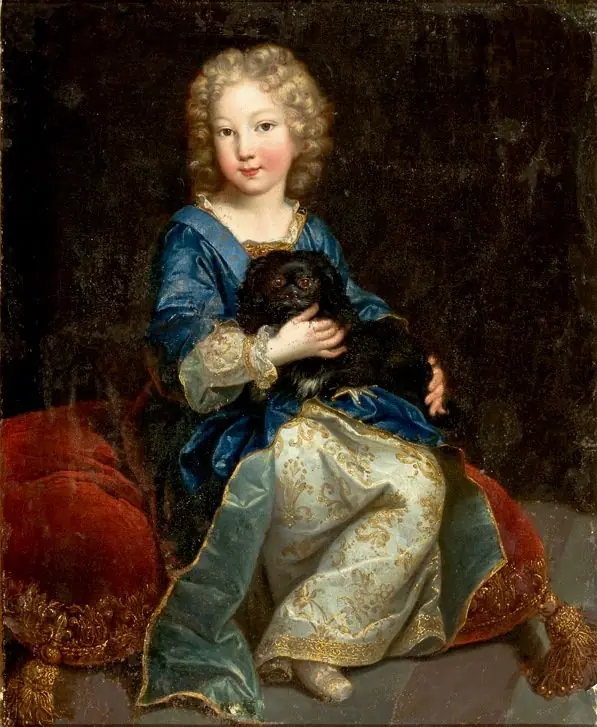 Portrait of Mademoiselle Léomenie Brienne, Marquise de Roualt Gamache
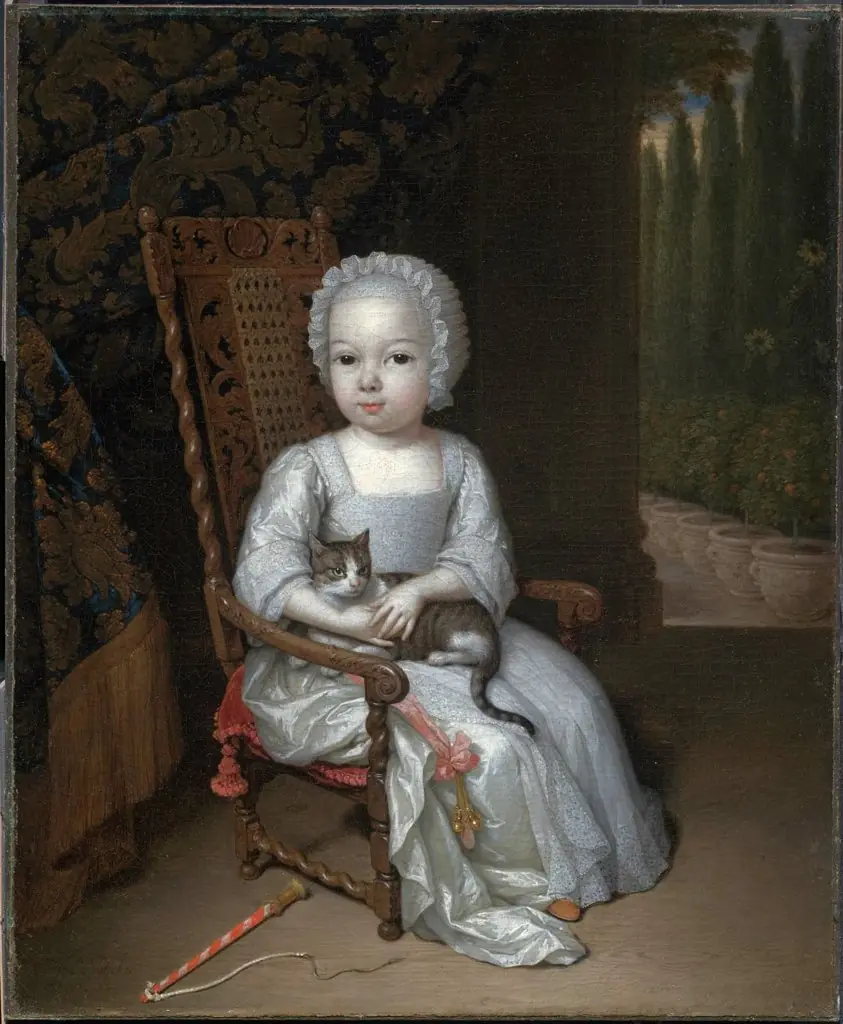 Portrait of a Young Girl Holding a Cat
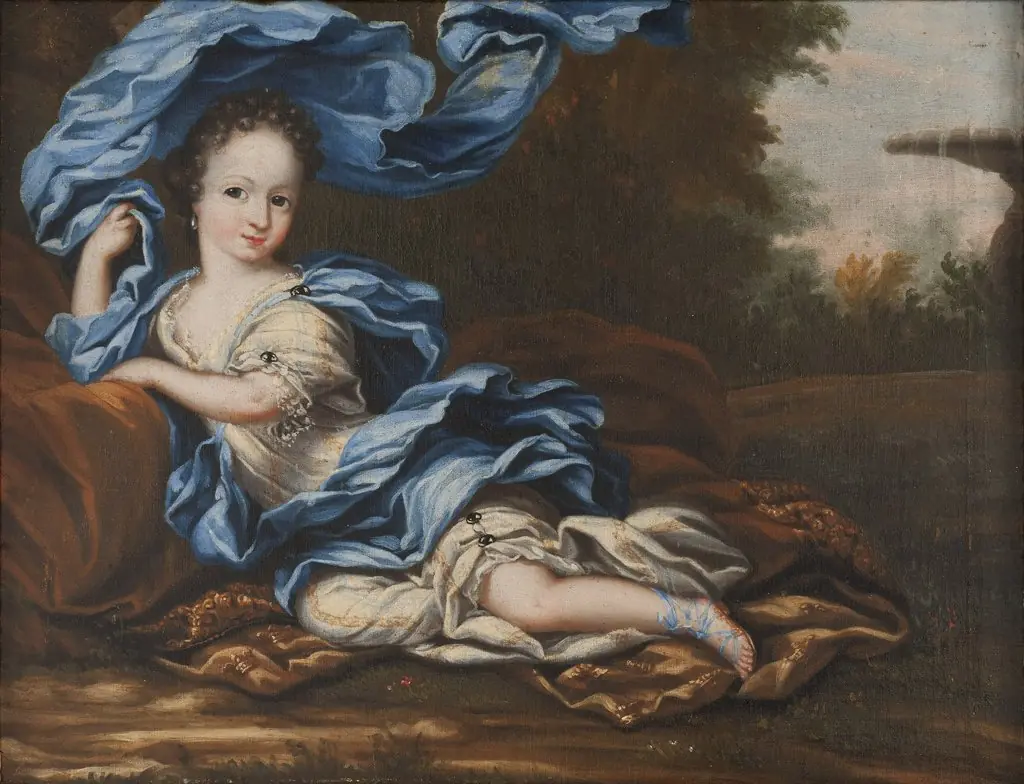 Hedvig Sophia of Sweden (1681–1708), Swedish princess and a Duchess Consort of Holstein-Gottorp, Spouse Frederick IV, Duke of Holstein-Gottorp
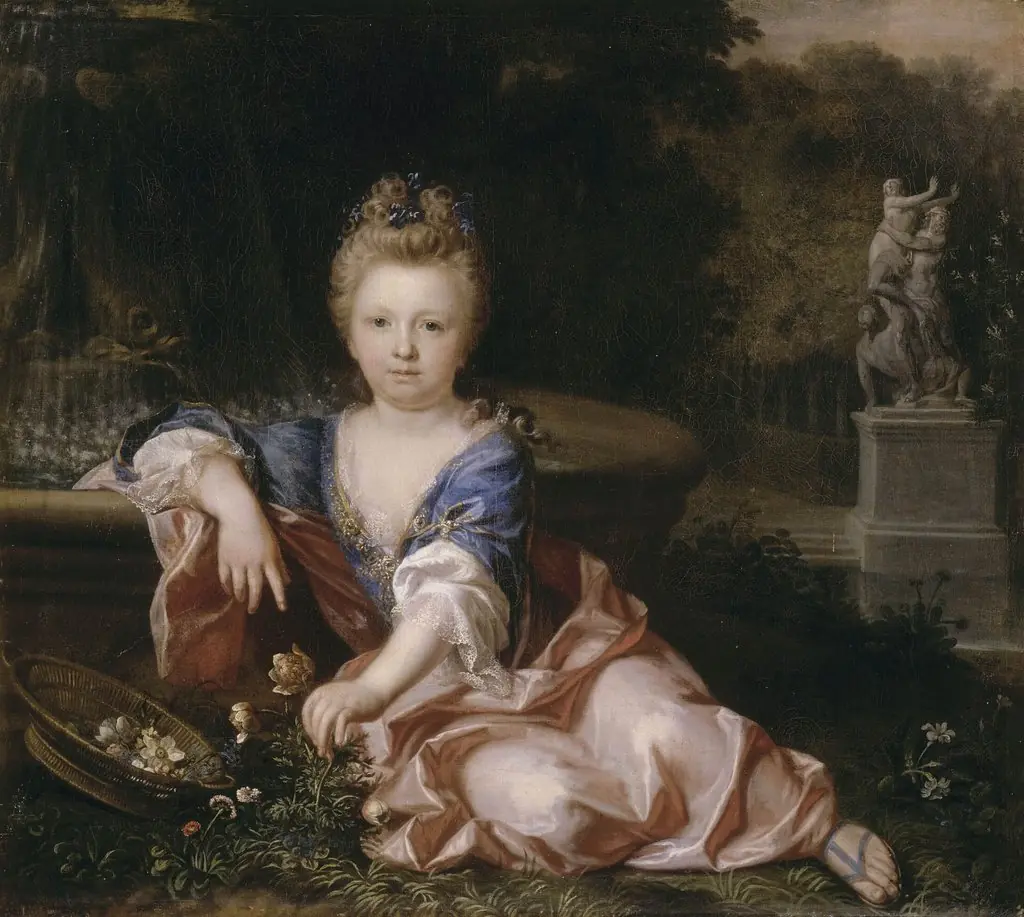 Marie-Anne-Victoire, Infanta of Spain (1718-1781)
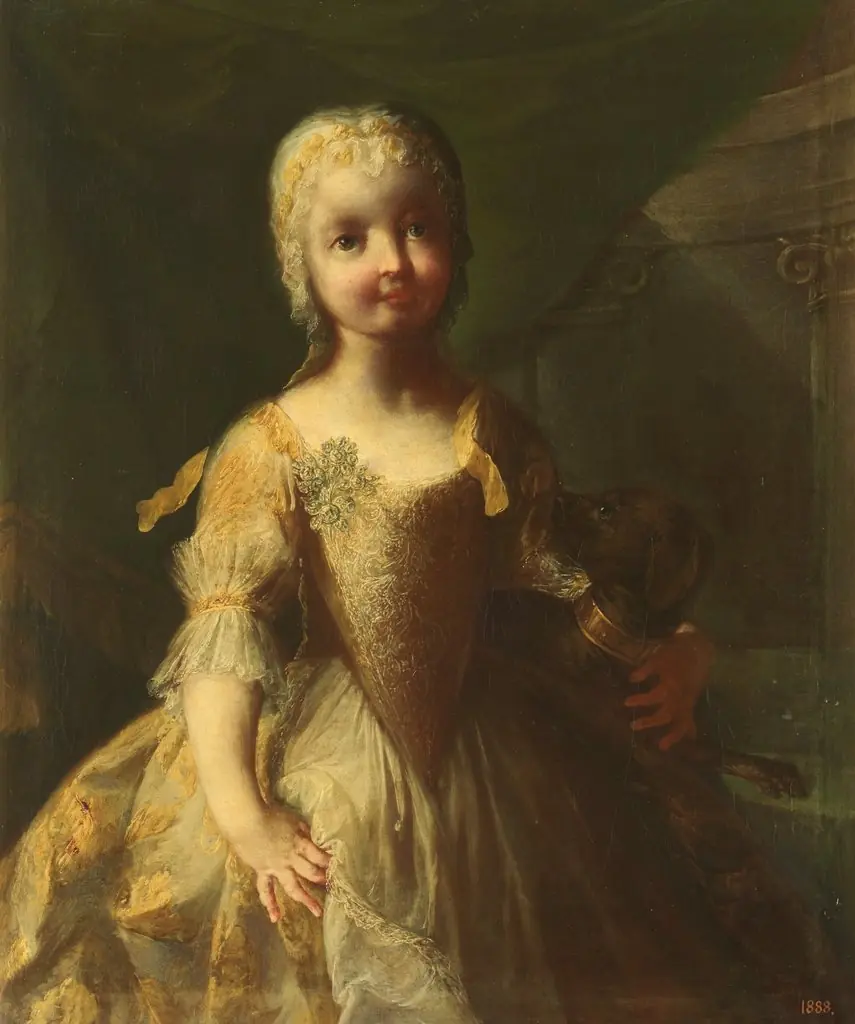 María Isabel of Bourbon and Saxony, Infanta of Naples and Spain
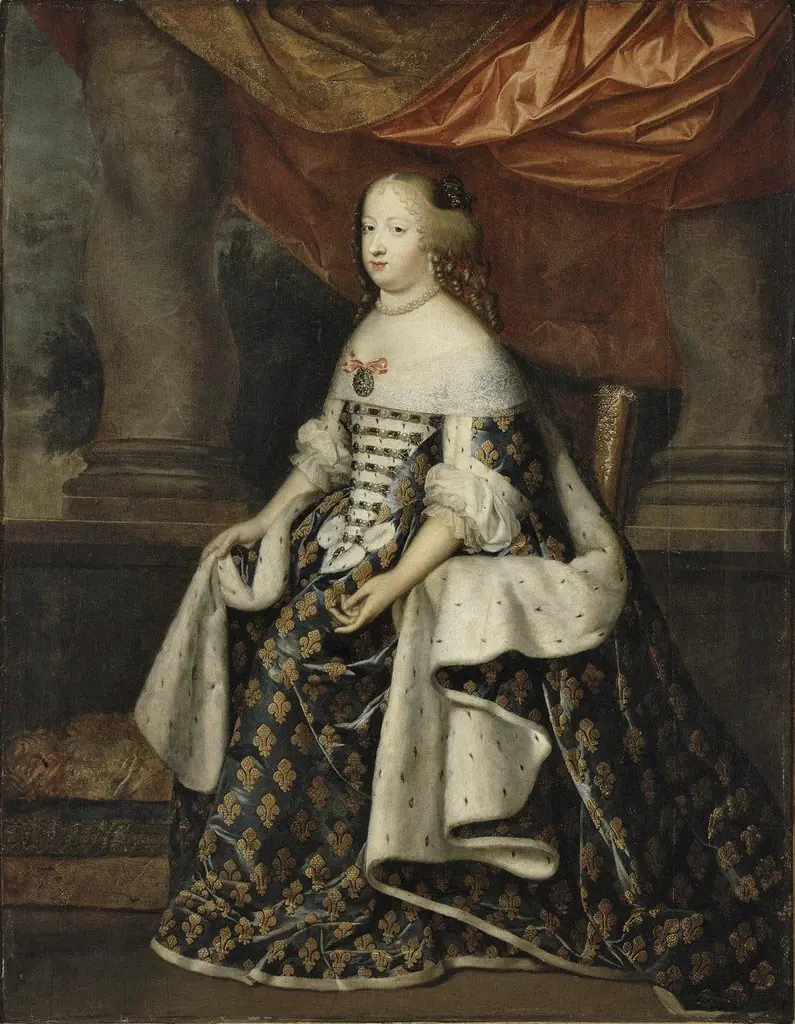 Marie Thérèse of Austria in Royal Costume
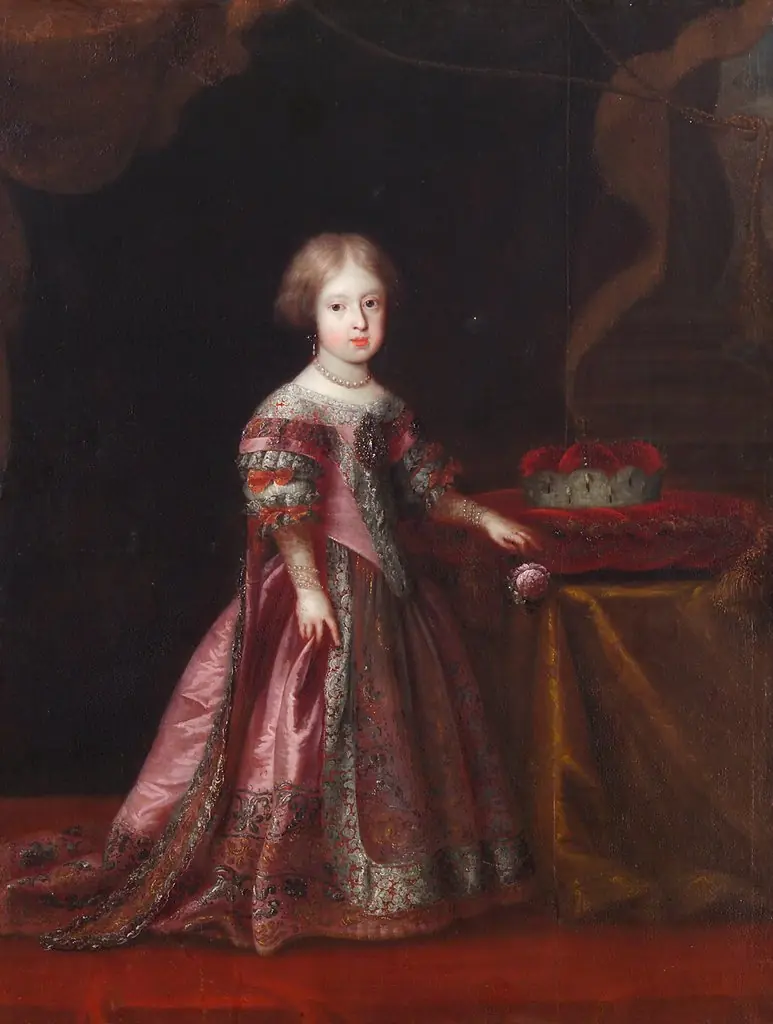 Erzherzogin Maria Elisabeth (1680-1741) im Alter von ca. vier Jahren
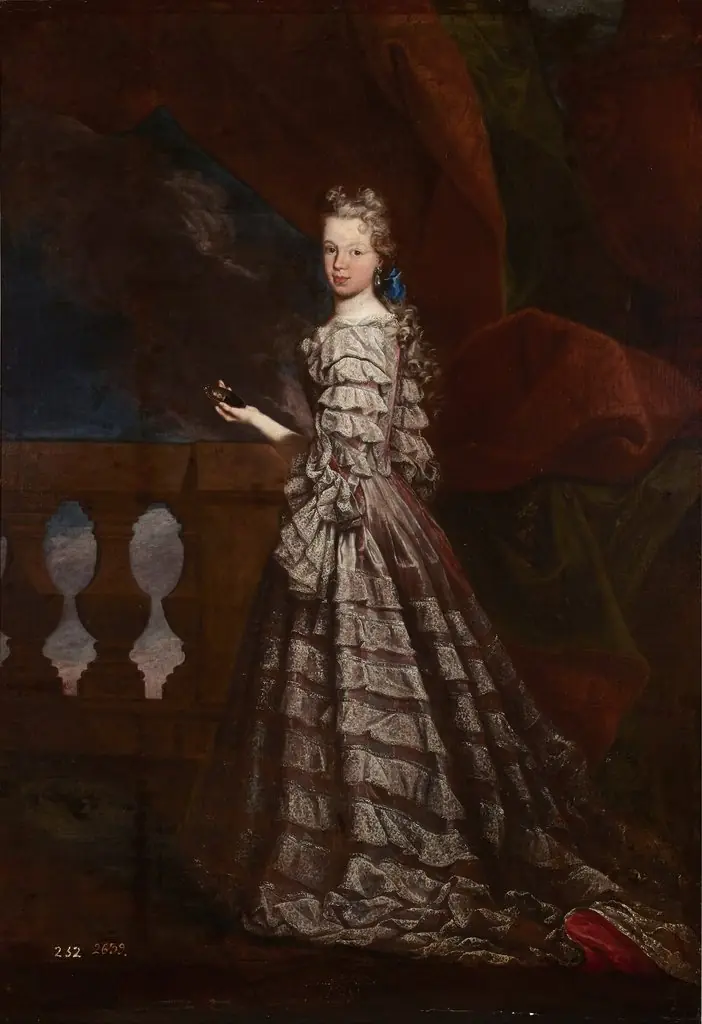 Portrait of Maria Luisa of Savoy, Queen of Savoy