Artwork
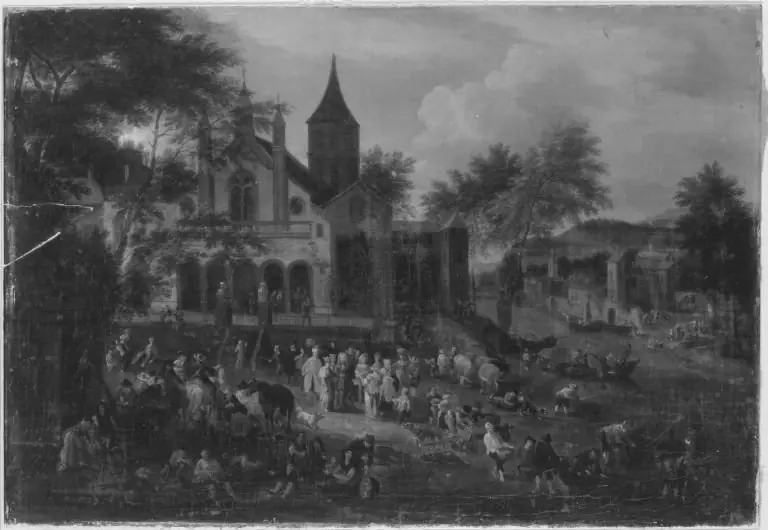
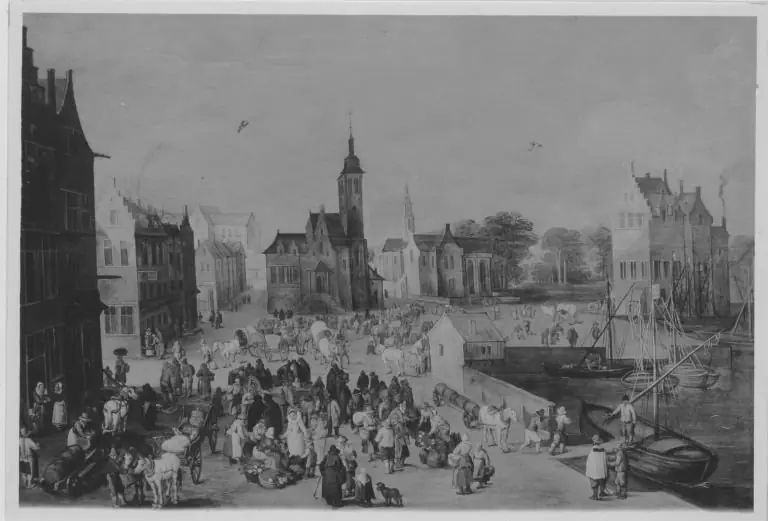
Der Kirchplatz
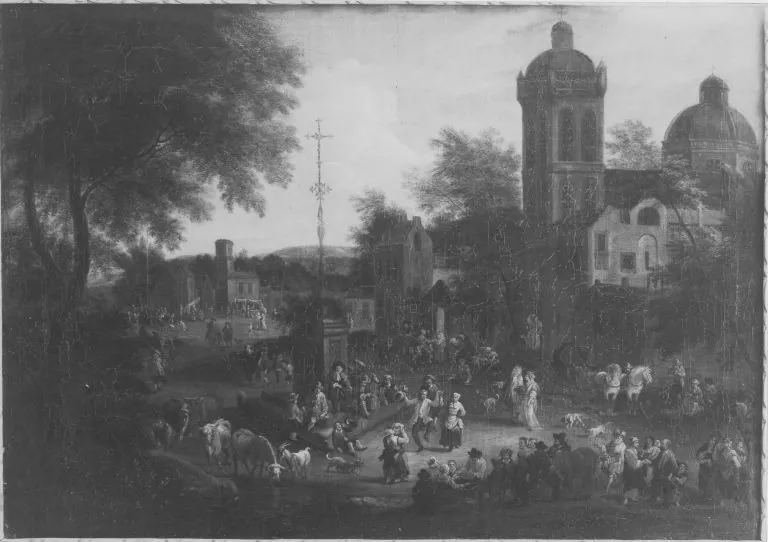
Der Kirchplatz is an unspecified painting by the Dutch Golden Age artist Pieter Bout. It is held in the collection of the Bavarian State Painting Collections.
About this work
Overview
His work focused on architectural landscapes and urban scenes, often capturing everyday life with quiet precision.
Pieter Bout, a Flemish painter active in the late 1600s, completed *Der Kirchplatz* in 1694. His work focused on architectural landscapes and urban scenes, often capturing everyday life with quiet precision. This painting exemplifies his skill in rendering structured environments with naturalistic detail, aligning with broader Flemish traditions while anticipating the tonal softness of later centuries.
Subject & Meaning
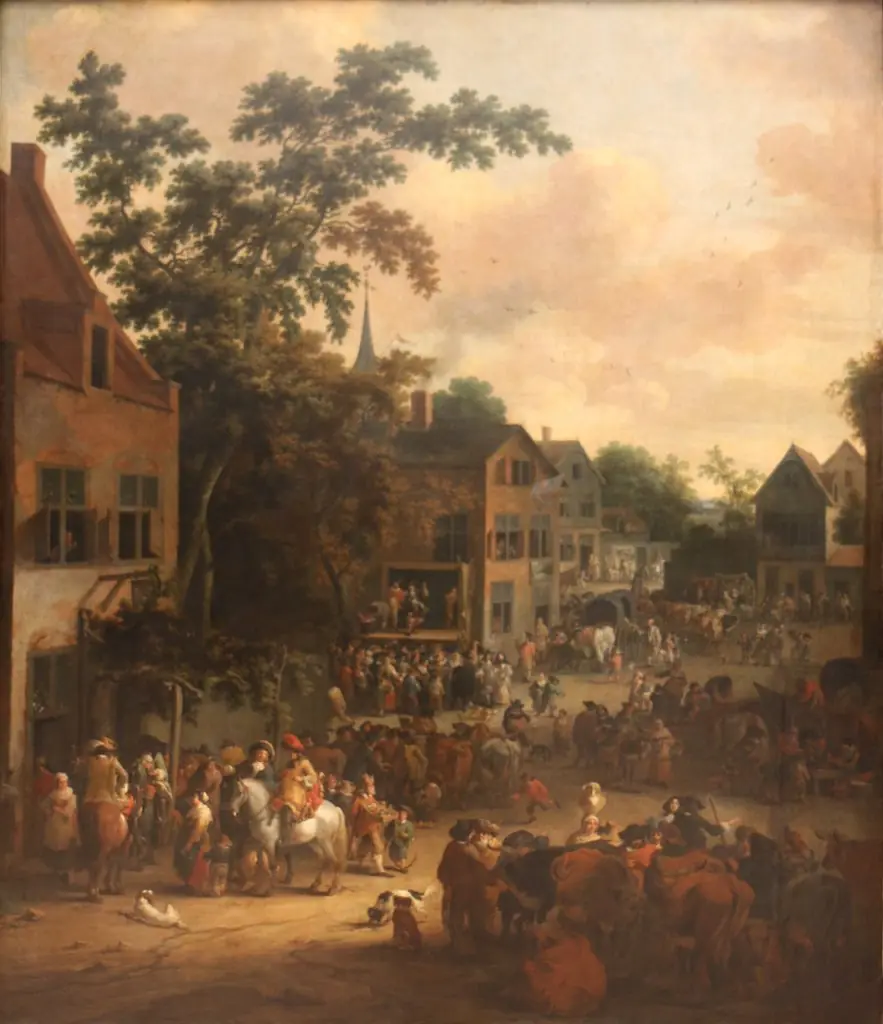
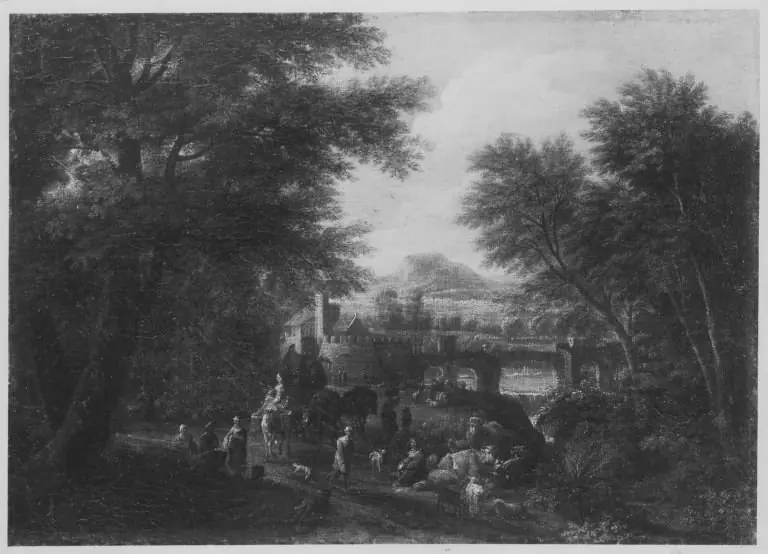
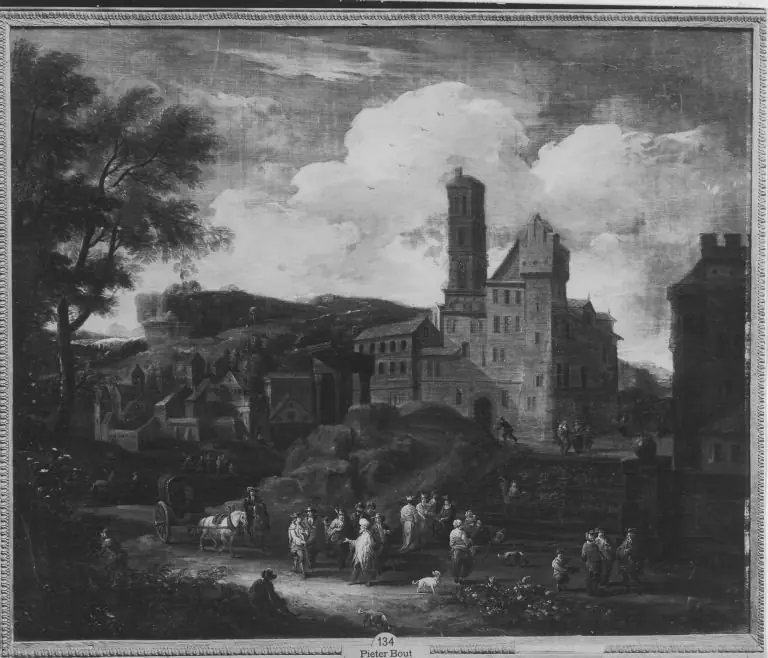
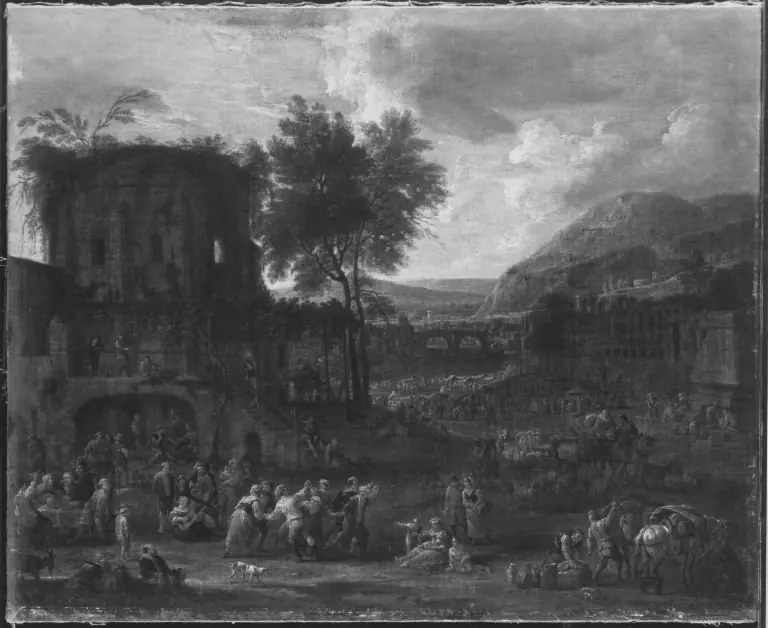
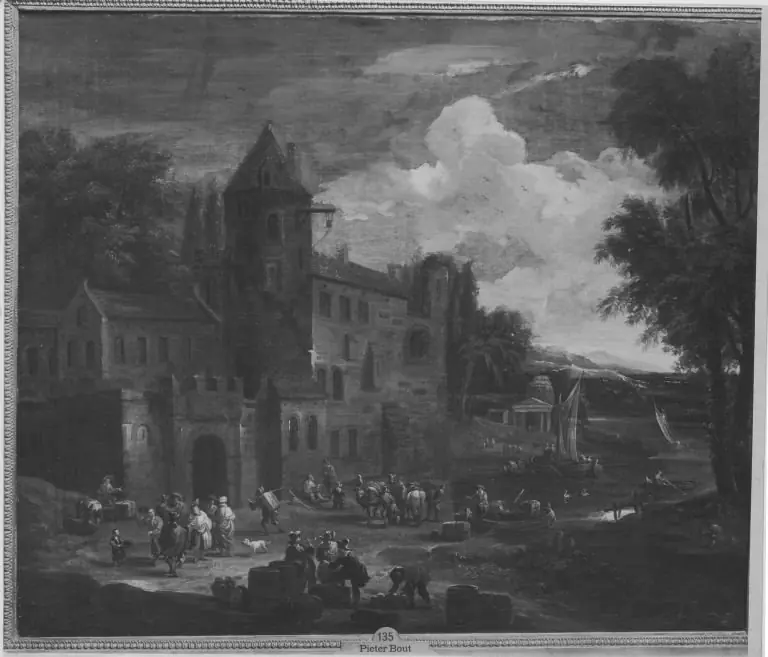
The scene portrays a communal space centered around a substantial building with a tower and dome, likely a church or civic structure. Figures and animals—dogs, horses, and cattle—are scattered across the foreground, suggesting routine activity: market day, worship, or social gathering. The composition conveys a sense of orderly coexistence between humans and their environment, without overt narrative or symbolism.
Technique & Style
Bout employed a restrained, cool palette with delicate atmospheric gradations, emphasizing light over contrast. Brushwork is precise yet unobtrusive, allowing architectural elements to stand clearly against gently modeled foliage. The spatial depth is carefully constructed, with receding planes and scaled figures that guide the viewer’s eye toward the building’s central mass, reflecting a method rooted in Flemish topographical painting.
History & Provenance
The painting entered the collection of the Alte Pinakothek in Munich, where it remains today. While specific ownership history prior to its museum acquisition is not widely documented, its inclusion in a major European collection underscores its recognition among 19th-century curators as a representative example of late 17th-century Flemish landscape painting.
Context
Created during the waning years of the Dutch Golden Age, the work reflects the enduring Flemish interest in topographical accuracy and civic life. Though stylistically distinct from Dutch urban scenes, Bout’s focus on architecture and daily activity aligns with regional trends. His paintings served as visual records of place, appealing to collectors interested in the character of towns and villages beyond grand historical themes.
Legacy
Bout’s work, though not widely celebrated in modern art history, contributed to the continuity of Flemish landscape painting into the 18th century. His attention to architectural detail and quiet observation of public spaces influenced later topographical artists. *Der Kirchplatz* stands as a modest but enduring example of how everyday scenes were preserved with clarity and calm in the late Baroque period.
Artist & collection
Artist
Pieter Bout (between 1640 and 1645 – between 17 June 1689 and 1719) was a Flemish painter, draughtsman and printmaker.