Artwork
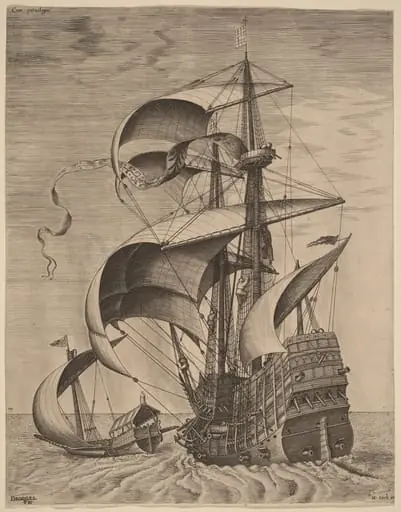
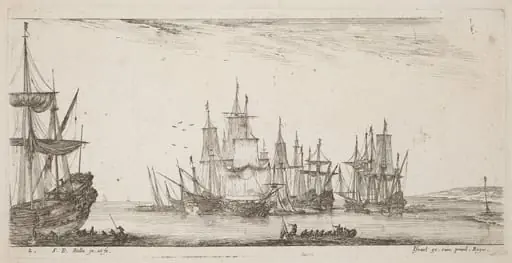
Sailing Vessels: Armed Four-Master Putting Out to Sea
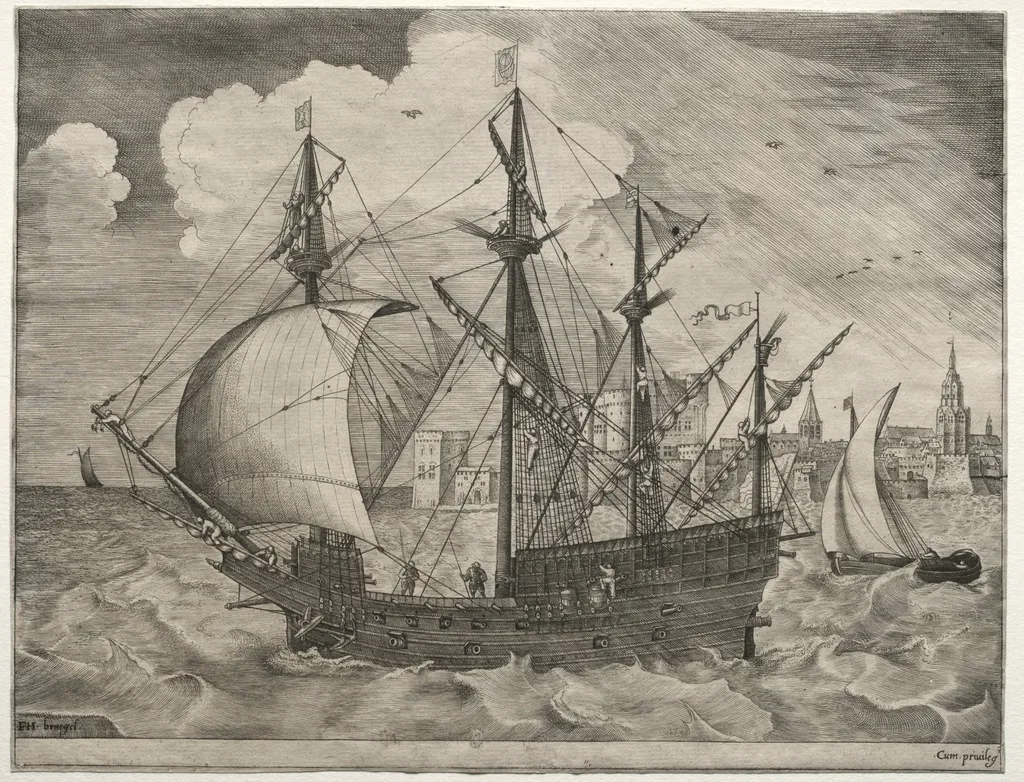
Sailing Vessels: Armed Four-Master Putting Out to Sea is a print by the Renaissance artist Pieter Brueghel the Elder. It dates from 1563 and is held in the collection of the Cleveland Museum of Art. Created in 1563, this print by Pieter Bruegel the Elder captures a large armed four-masted vessel departing from a coastal harbor.
About this work
Overview
The composition emphasizes the ship’s scale against a modest shoreline, suggesting the tension between human endeavor and the sea’s unpredictability.
Created in 1563, this print by Pieter Bruegel the Elder captures a large armed four-masted vessel departing from a coastal harbor. Unlike his more famous peasant scenes, this work focuses on maritime activity, reflecting Bruegel’s interest in everyday life and natural forces. The composition emphasizes the ship’s scale against a modest shoreline, suggesting the tension between human endeavor and the sea’s unpredictability.
Subject & Meaning
The print portrays a heavily rigged merchant or naval vessel leaving port, surrounded by smaller boats and a distant townscape. The presence of armaments implies its dual role in trade and defense, common in 16th-century Northern European waters. The scene conveys neither triumph nor danger, but rather the routine motion of seafaring life—work, weather, and navigation as intertwined elements of coastal existence.
Technique & Style
Bruegel rendered the ship with meticulous attention to rigging, sail tension, and hull detail, demonstrating his skill in depicting mechanical complexity. The water is suggested through rhythmic, fine lines that imply motion without idealization. The background town is rendered in minimal yet recognizable forms, balancing realism with atmospheric depth. The print’s precision reflects engraving techniques of the period, prioritizing clarity over ornamentation.
History & Provenance
Produced during Bruegel’s active years in Antwerp, the print was likely made for distribution among merchants and collectors interested in maritime themes. It circulated widely through print networks, contributing to the popularization of landscape and seascapes in Northern Europe. The work’s survival in institutional collections, including The Cleveland Museum of Art, attests to its enduring documentation of early modern seafaring culture.
Context
In the 1560s, the Low Countries were central to European trade and naval power, with ports like Antwerp bustling with merchant fleets. Bruegel’s depiction aligns with a growing interest in accurate marine representation, influenced by cartographic advances and the region’s economic reliance on shipping. His focus on ordinary vessels, rather than royal or ceremonial ships, reflects a broader cultural shift toward secular, observational art.
Legacy
This print contributed to the development of maritime imagery in Northern European art, influencing later Dutch Golden Age painters who similarly emphasized realism and atmospheric detail. Bruegel’s restrained approach—avoiding heroism or drama—established a model for depicting the sea as a working environment. His attention to structural accuracy and natural forces became a reference point for generations of printmakers and marine artists.
Artist & collection
Artist
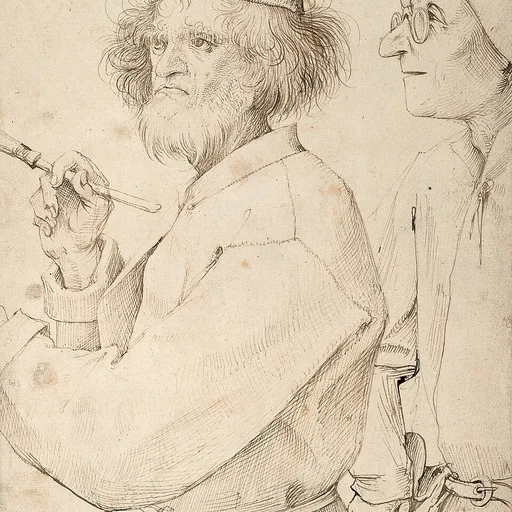
Pieter Bruegel (also Brueghel or Breughel) the Elder ( BROY-gəl, US also BROO-gəl; Dutch: ; c.

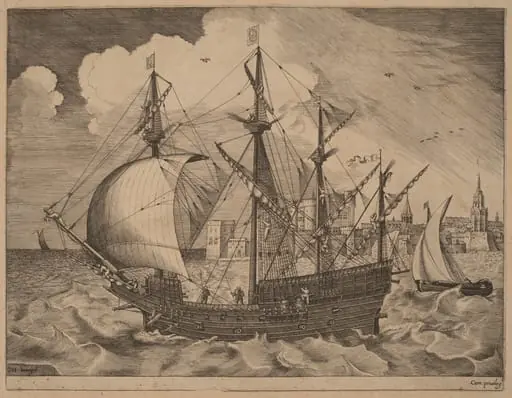 Armed Four-Master Putting Out to Sea
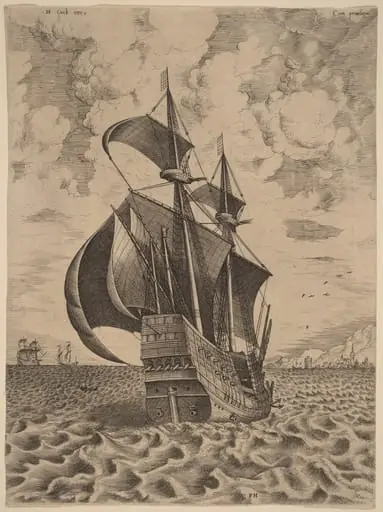 Armed Four-Master Sailing towards a Port
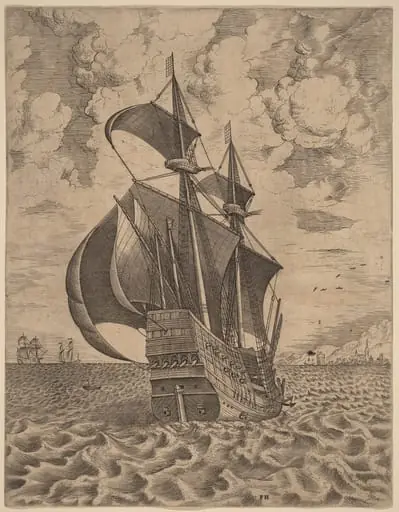 Armed Four-Master Sailing towards a Port
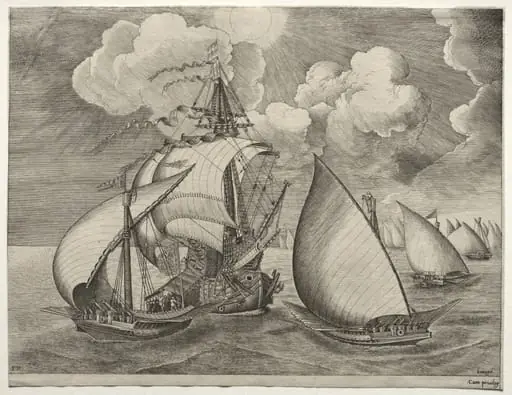 Sailing Vessels: A Fleet of Galleys Escorted by a Caravel
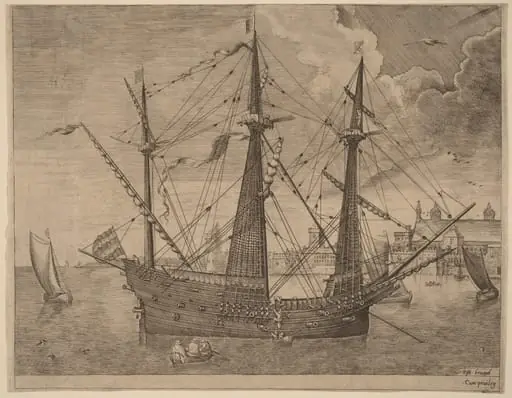 Armed Three-Master Anchored near a City
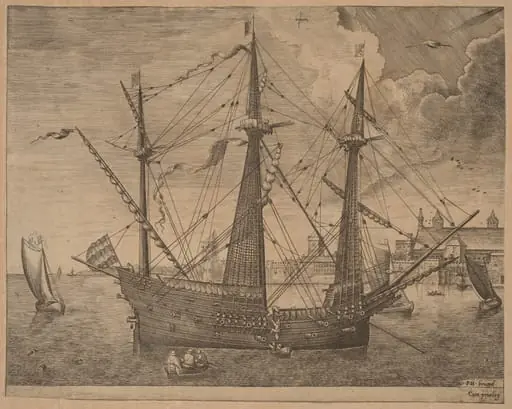 Armed Three-Master Anchored Near a City
 Armed Three-Master on the Open Sea, Accompanied by a Galley
 Ships on the sea
 Three-Masted Sailing Boat on Gently Moving Water
 Sail boats on the sea
 Group of Ships