Artwork
Armed Three-Master Anchored Near a City
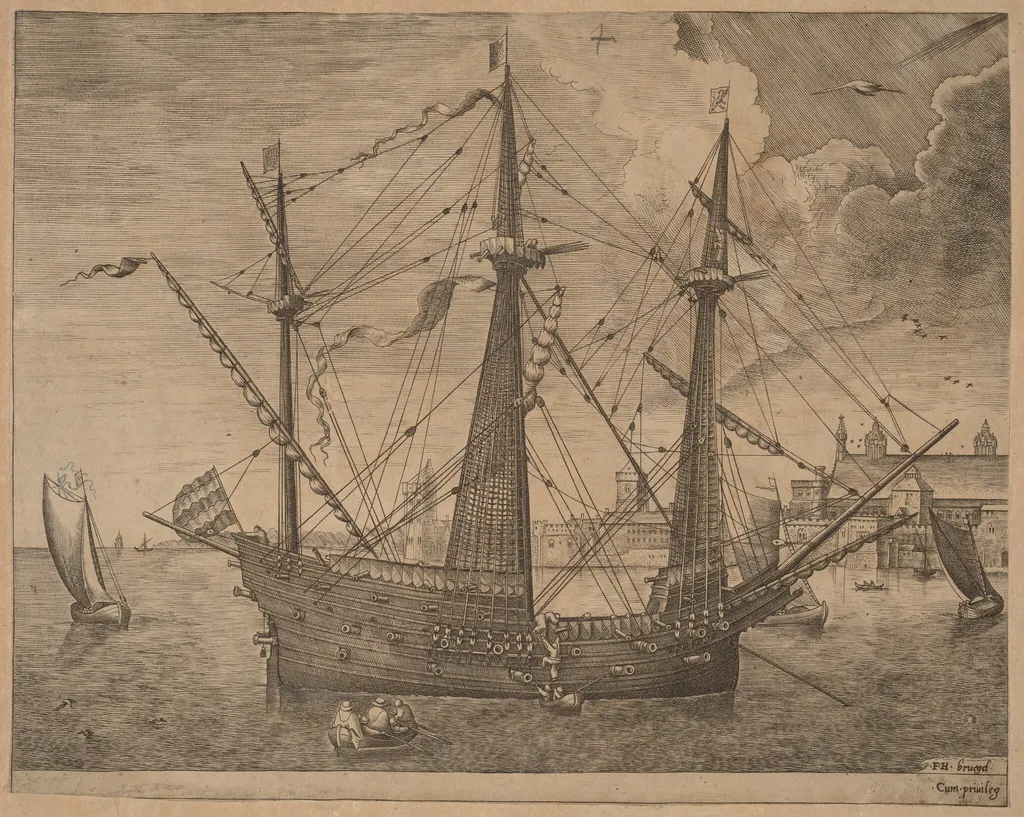
Armed Three-Master Anchored Near a City is an ink print by the Renaissance artist Frans Huys. It is held in the collection of the National Gallery of Art.
About this work
Overview
The composition centers on the ship’s elaborate rigging and numerous flags, set against a distant urban skyline with prominent spires.
Created in 1565 by Frans Huys, this engraving on laid paper depicts a heavily armed three-masted vessel at rest in a bustling harbor. The composition centers on the ship’s elaborate rigging and numerous flags, set against a distant urban skyline with prominent spires. Small boats populate the foreground, while a cloudy sky and scattered birds add subtle motion. The work exemplifies meticulous line work characteristic of mid-16th-century Northern European printmaking.
Subject & Meaning
The vessel, likely a state or merchant warship, reflects the maritime power and commercial activity of its time. Its ornate flags suggest status or official function, while the fortified city in the background implies a center of trade or governance. The scene conveys neither battle nor departure, but a moment of pause—emphasizing control, readiness, and the quiet dominance of seafaring power in a regulated harbor.
Technique & Style
Huys employed fine, controlled engraving lines to render textures of wood, sailcloth, and stone with precision. The ship’s rigging is rendered in dense, intersecting strokes, while the city’s architecture is suggested through simplified yet distinct silhouettes. Atmospheric depth is achieved through graduated line density and the contrast between the detailed foreground and hazy background, typical of Northern Renaissance print traditions.
History & Provenance
The print originates from the mid-1500s, a period when engraved maritime scenes circulated among merchants, navigators, and collectors in the Low Countries. Though specific early ownership records are scarce, its survival in institutional collections suggests it was valued for its technical skill and documentary quality. Huys, active in Antwerp, contributed to a growing genre of topographical maritime prints.
Context
Produced during the height of Habsburg rule in the Netherlands, the image aligns with a surge in maritime documentation driven by expanding trade routes and naval competition. Cities like Antwerp and Bruges thrived as commercial hubs, and ship imagery served both practical and symbolic purposes—celebrating economic strength and technological advancement in an era of global exploration.
Legacy
Huys’s engraving contributes to a broader tradition of Northern European printmaking that documented maritime life with precision. While not widely known today, such works informed later cartographic and naval illustrations. Their legacy lies in their role as visual records of 16th-century seafaring culture, bridging art and utility in an age of expanding horizons.
Artist & collection


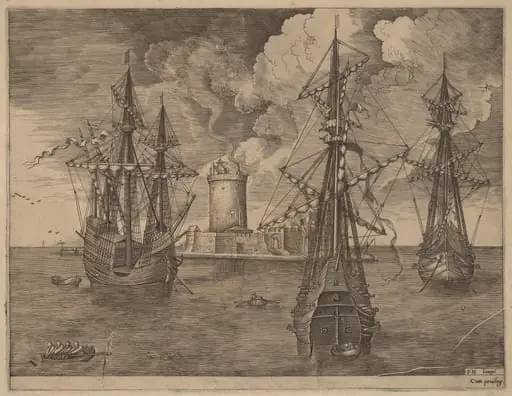 Four-Master (Left) and Two Three-Masters Ancored Near a Fortified Island with a Lighthouse
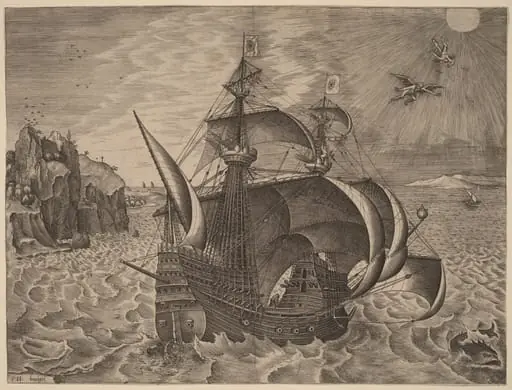 Armed Three-Master with Daedalus and Icarus in the Sky
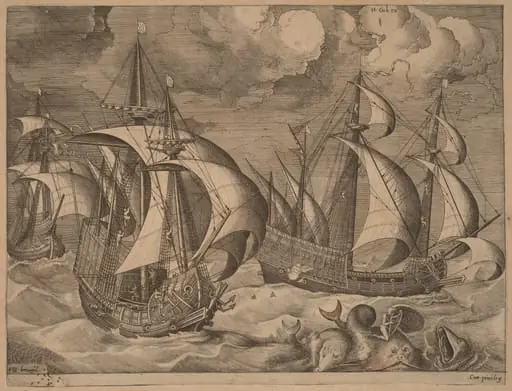 Three Caravels in a Rising Squall with Adrion on a Dolphin
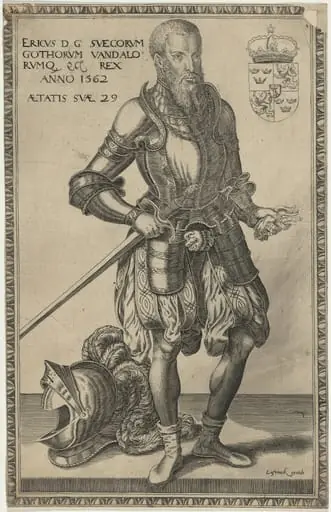 Eric XIV, King of Sweden
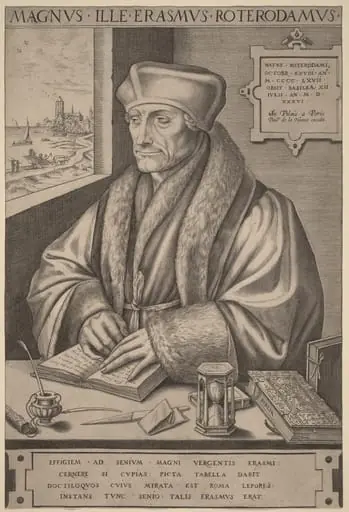 Erasmus of Rotterdam
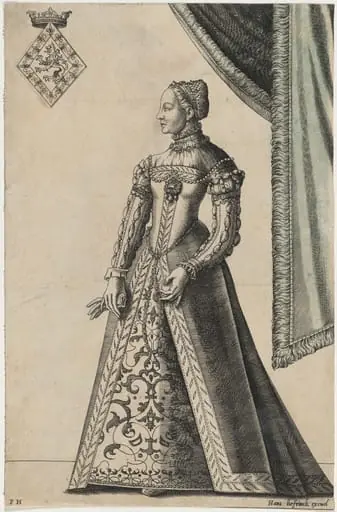 Mary, Queen of Scots
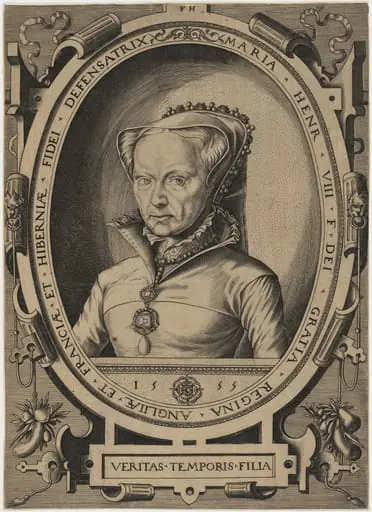 Queen Mary of England
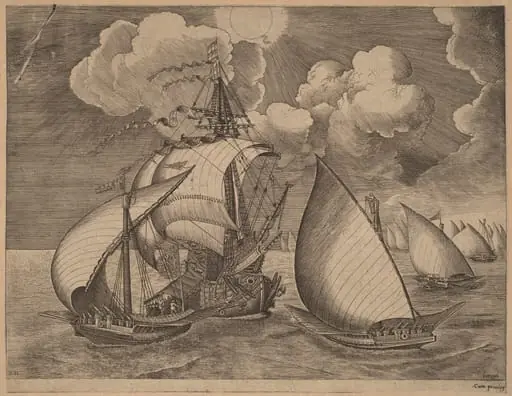 A Fleet of Galleys Escorted by a Caravel
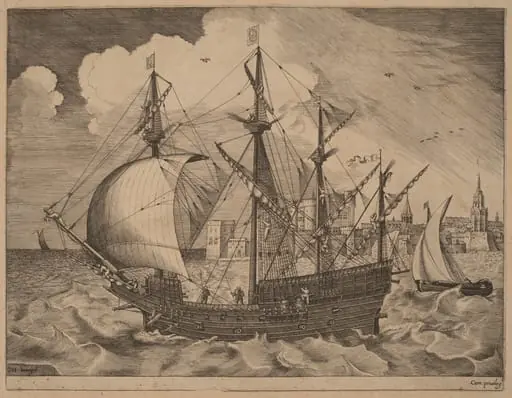 Armed Four-Master Putting Out to Sea
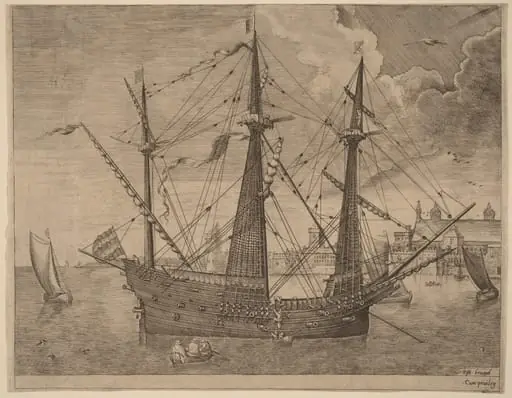 Armed Three-Master Anchored near a City
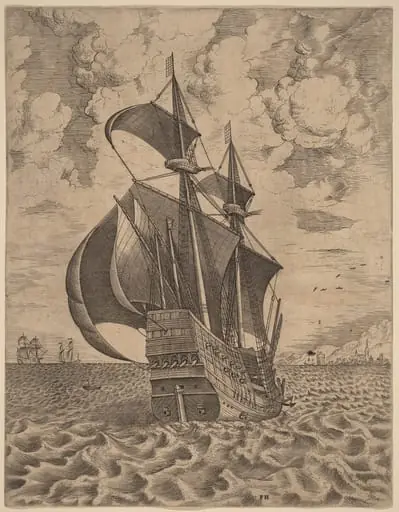 Armed Four-Master Sailing towards a Port
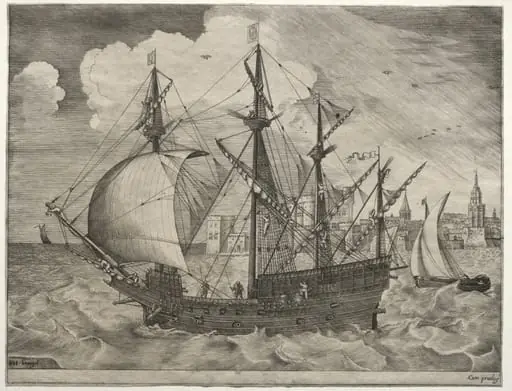 Sailing Vessels: Armed Four-Master Putting Out to Sea
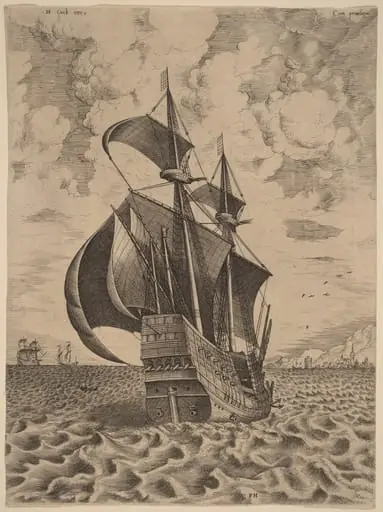 Armed Four-Master Sailing towards a Port
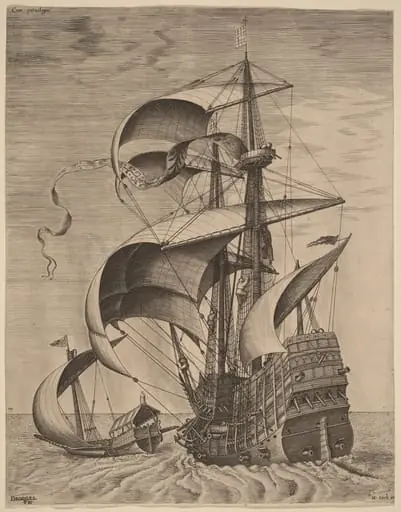 Armed Three-Master on the Open Sea, Accompanied by a Galley
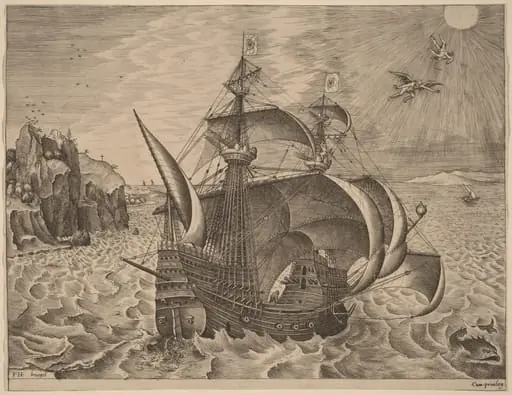 Armed Three-Master with Daedalus and Icarus in the Sky
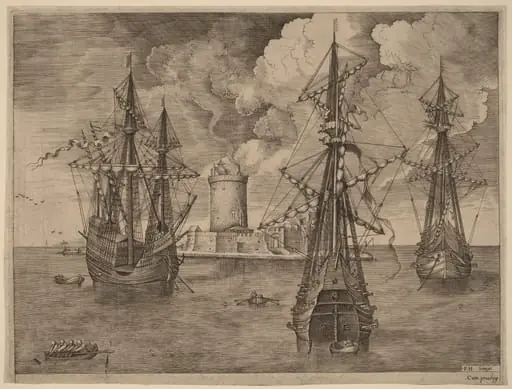 Four-Master (Left) and Two Three-Masters Anchored near a Fortified Island with a Lighthouse