Artwork
Still Life with a Tall Covered Beaker
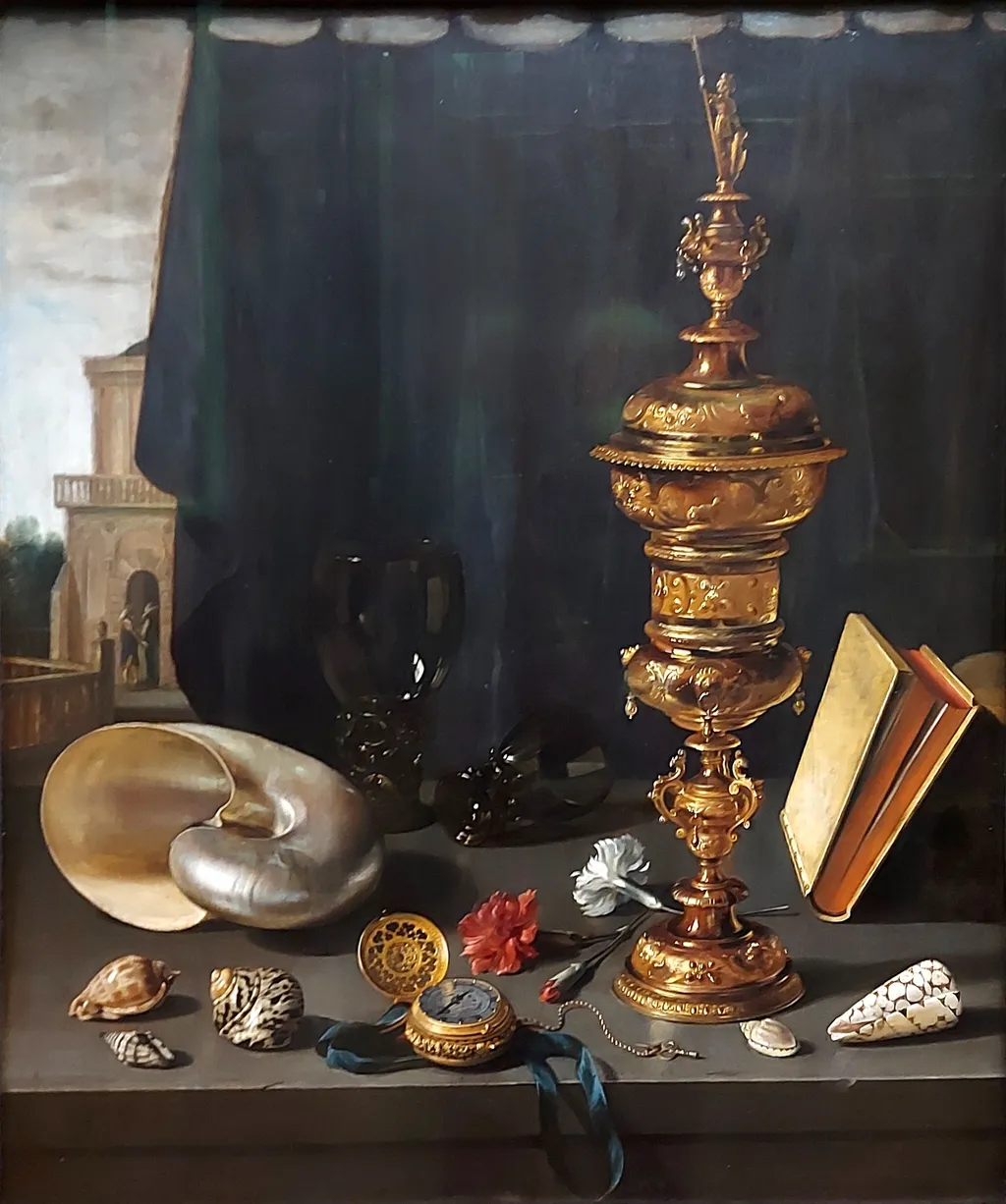
Still Life with a Tall Covered Beaker is an oil painting by the Dutch Golden Age artist Pieter Claesz. It dates from 1624 and is held in the collection of the Staatliche Kunstsammlungen Dresden.
About this work
Overview
Pieter Claesz’s oil painting, executed in 1624, presents a modest arrangement of everyday objects on a tabletop. A tall, covered beaker with an ornate lid and handle stands beside a large nautilus shell, several smaller shells, an open book, a ribbon, and a pocket watch. The composition is set against a dark, draped curtain, illuminated from the left, creating a calm, introspective atmosphere.
Subject & Meaning
The selection of items—a beaker, shells, a book, and a timepiece—reflects the 17th‑century Dutch interest in vanitas themes, subtly reminding viewers of the transience of material wealth and the passage of time. The juxtaposition of natural curiosities with scholarly objects invites contemplation of knowledge, nature, and mortality within a domestic setting.
Technique & Style
The chiaroscuro effect, achieved through a single light source from the left, models each object’s volume and casts soft shadows that enhance spatial depth.
Claesz employs a restrained palette and meticulous brushwork, allowing the textures of metal, glass, and shell to emerge with tactile clarity. The chiaroscuro effect, achieved through a single light source from the left, models each object’s volume and casts soft shadows that enhance spatial depth. The painter’s careful rendering of surface reflections underscores his mastery of still‑life realism.
History & Provenance
Created in the early Dutch Golden Age, the work entered the collection of the Gemäldegalerie Alte Meister, where it remains on display. Its provenance traces back to private Dutch collections before being acquired by the museum in the 20th century, reflecting the continued appreciation of Claesz’s contributions to still‑life painting.
Context
During the 1620s, Dutch artists increasingly explored still‑life subjects as a means to display technical skill and moral reflection. Claesz, a leading figure in this genre, often incorporated objects that symbolized wealth and learning. This painting exemplifies the period’s aesthetic preferences for subdued elegance and intellectual depth, aligning with contemporary trends in Haarlem’s artistic circles.
Artist & collection
Artist
Pieter Claesz was born in 1596 or 1597 in Berchem, near Antwerp, and moved to Haarlem in the Dutch Republic around 1620.

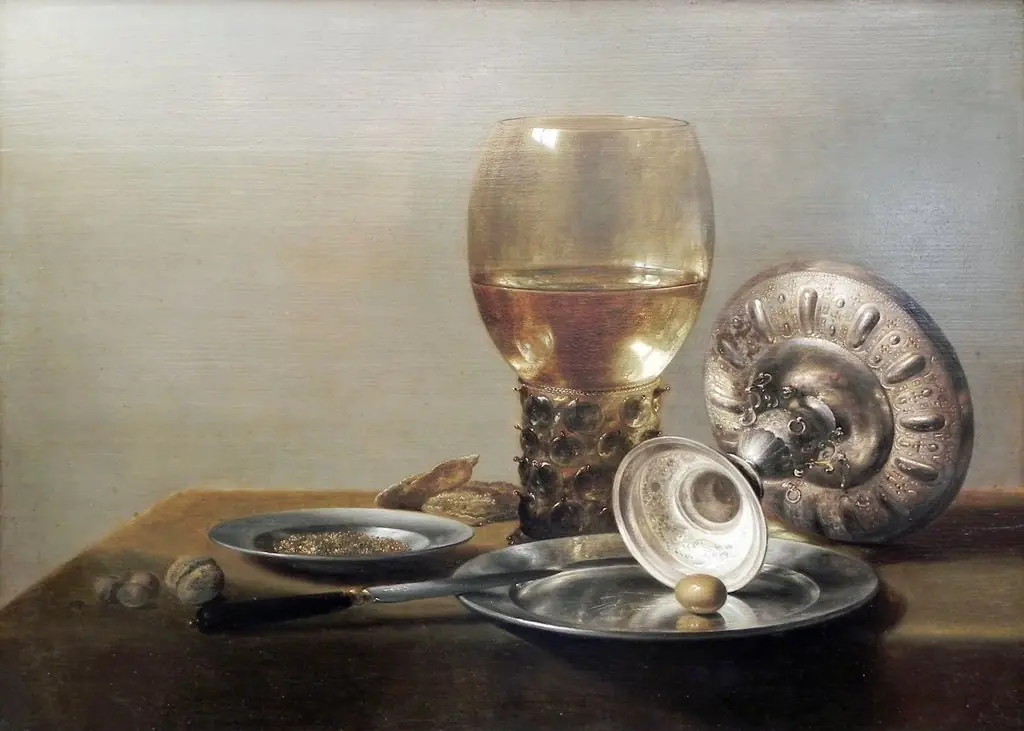
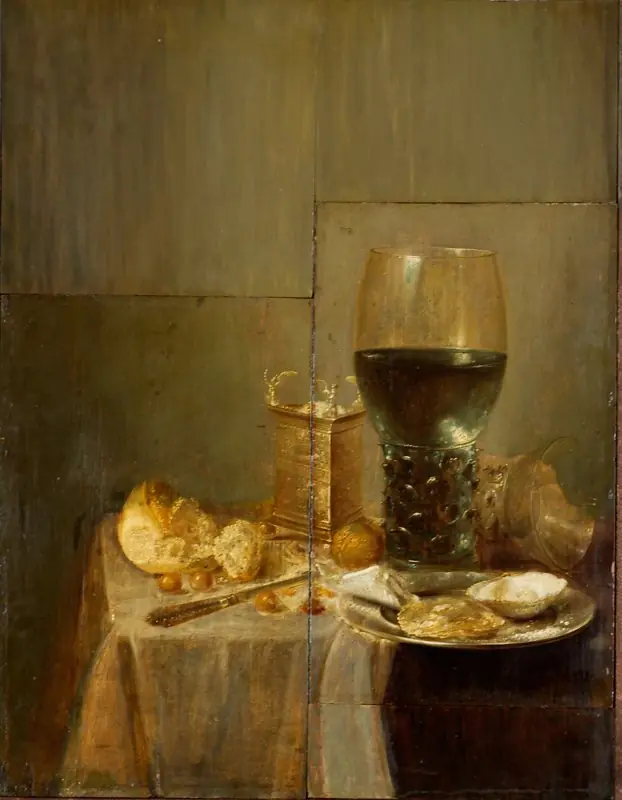
 Still Life with Ostrich Egg Cup and the Whitfield Heirlooms
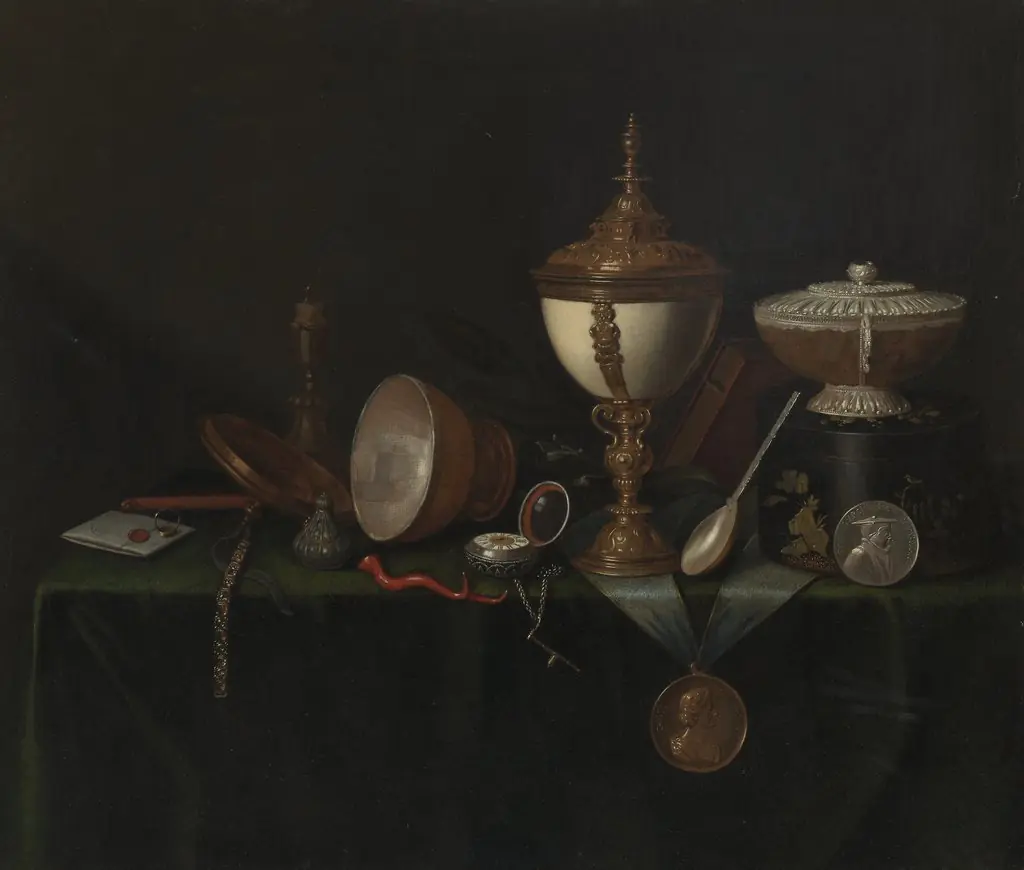 Still Life with Ostrich Egg Cup and the Whitfield Heirlooms
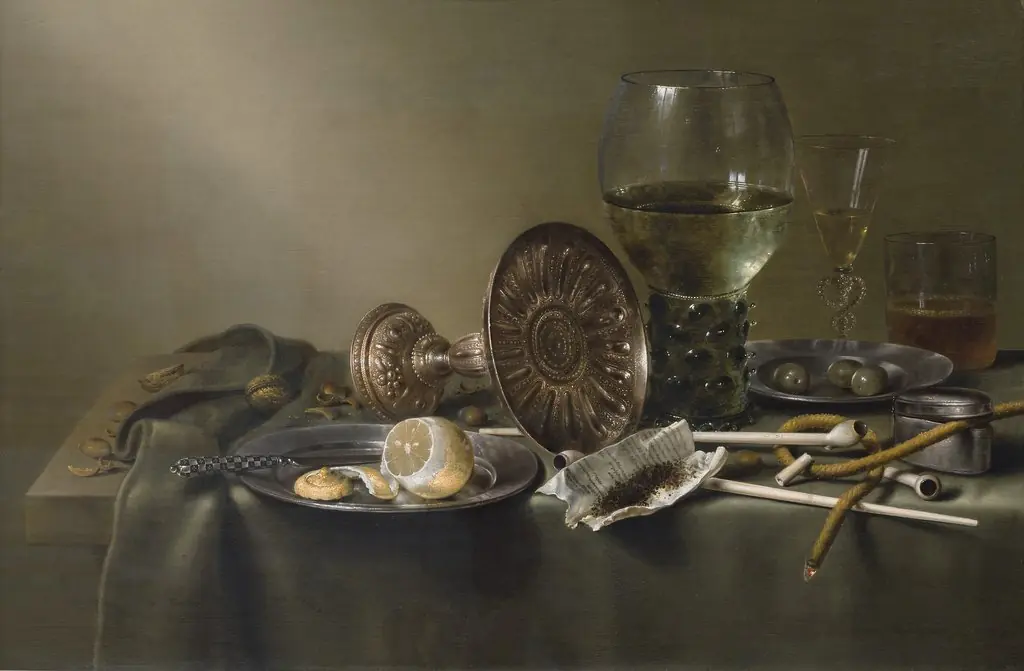 Still Life with Glasses and Tobacco
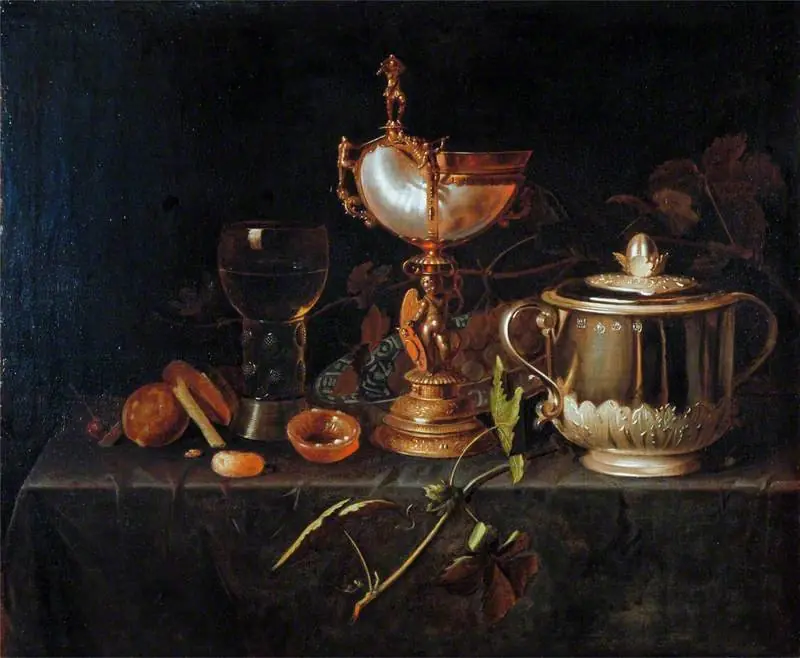 Porringer and Nautilus Cup
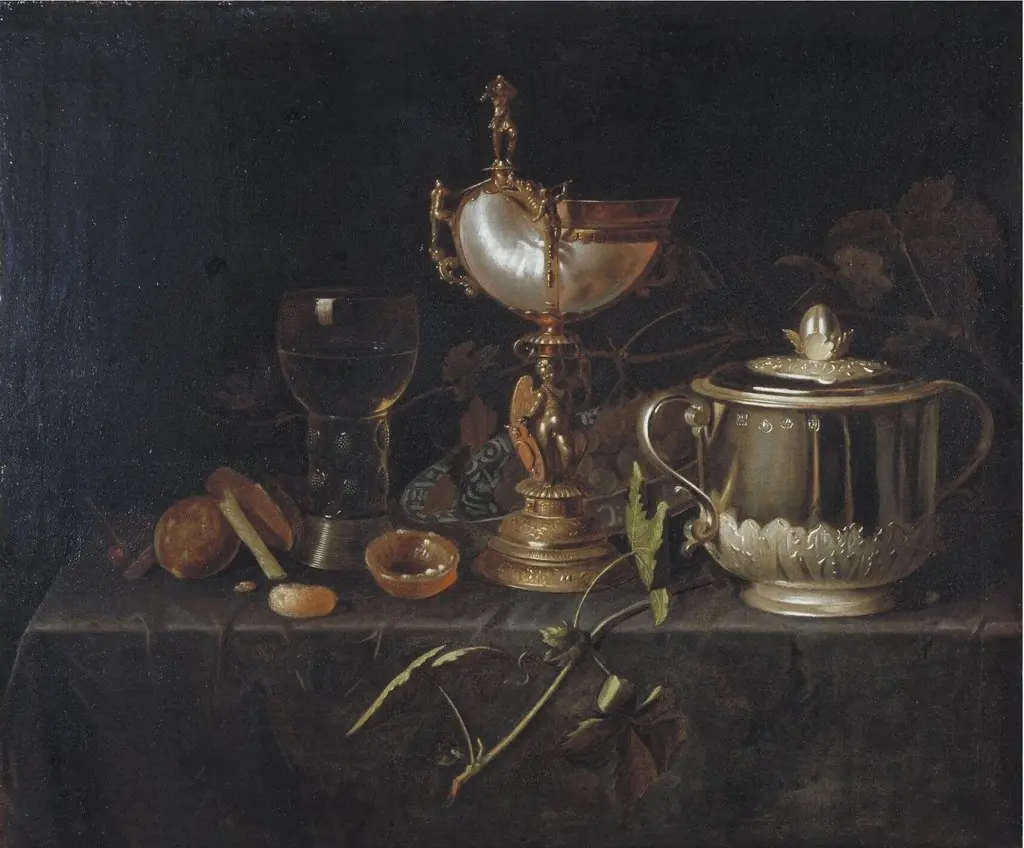 Porringer and Nautilus Cup
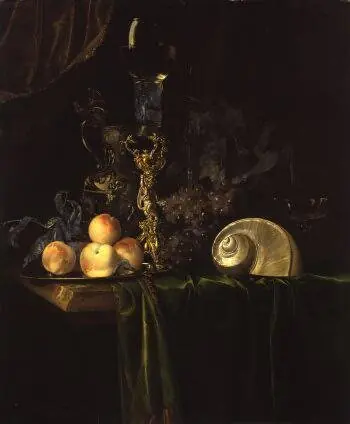 Still life with luxury vessels and fruits on a dark table cloth
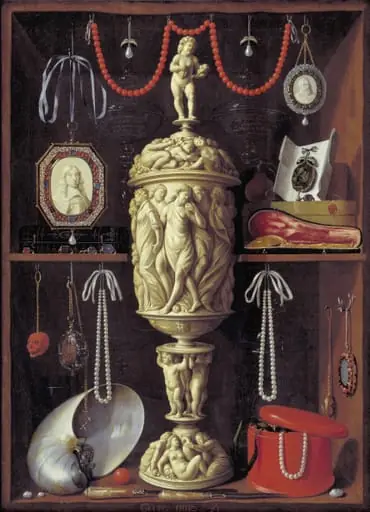 A Cabinet with Objects of Art
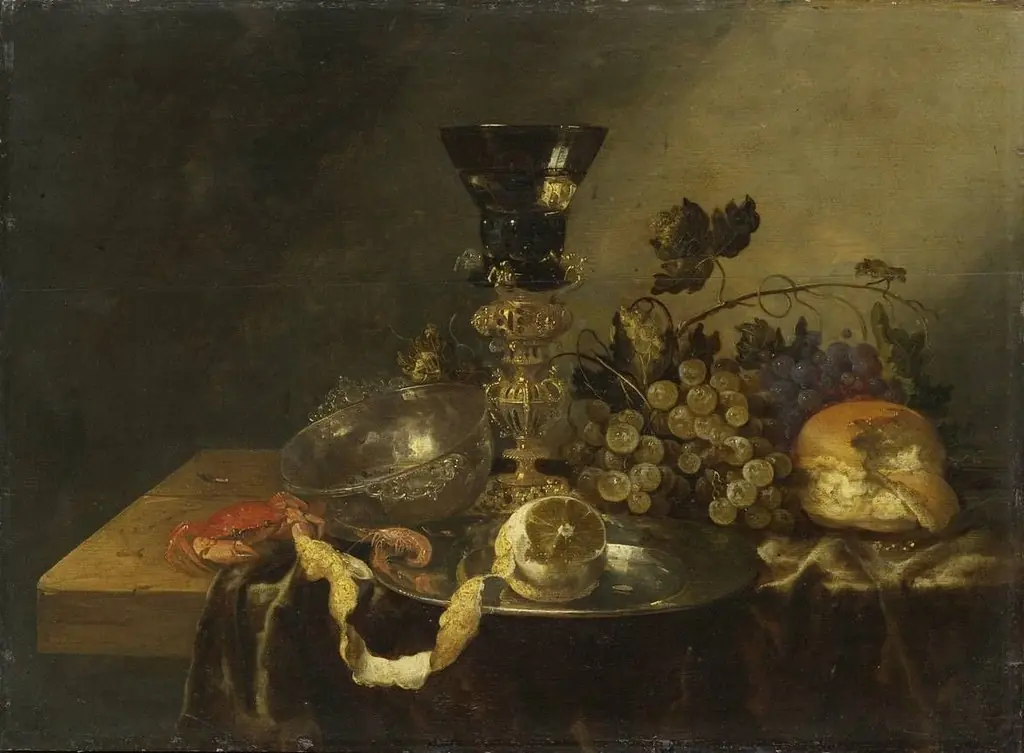 Stillleben mit Silberschale und Becherschraube
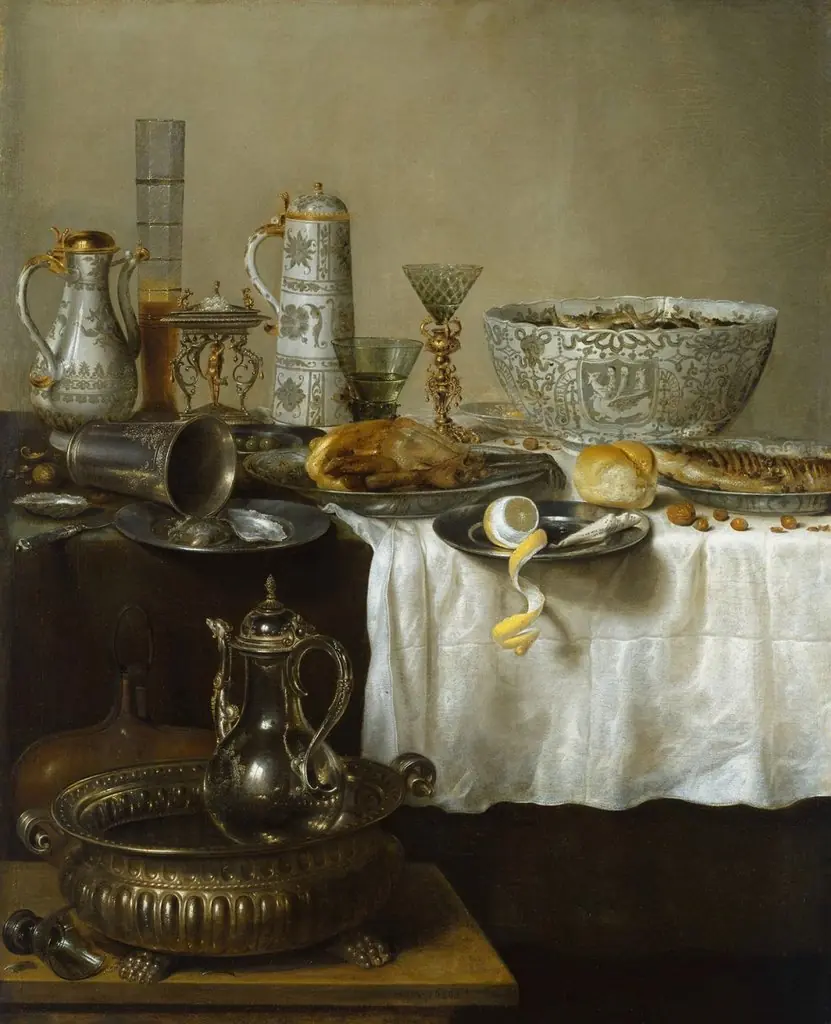 Sumptuous still life