Artwork
Sumptuous still life
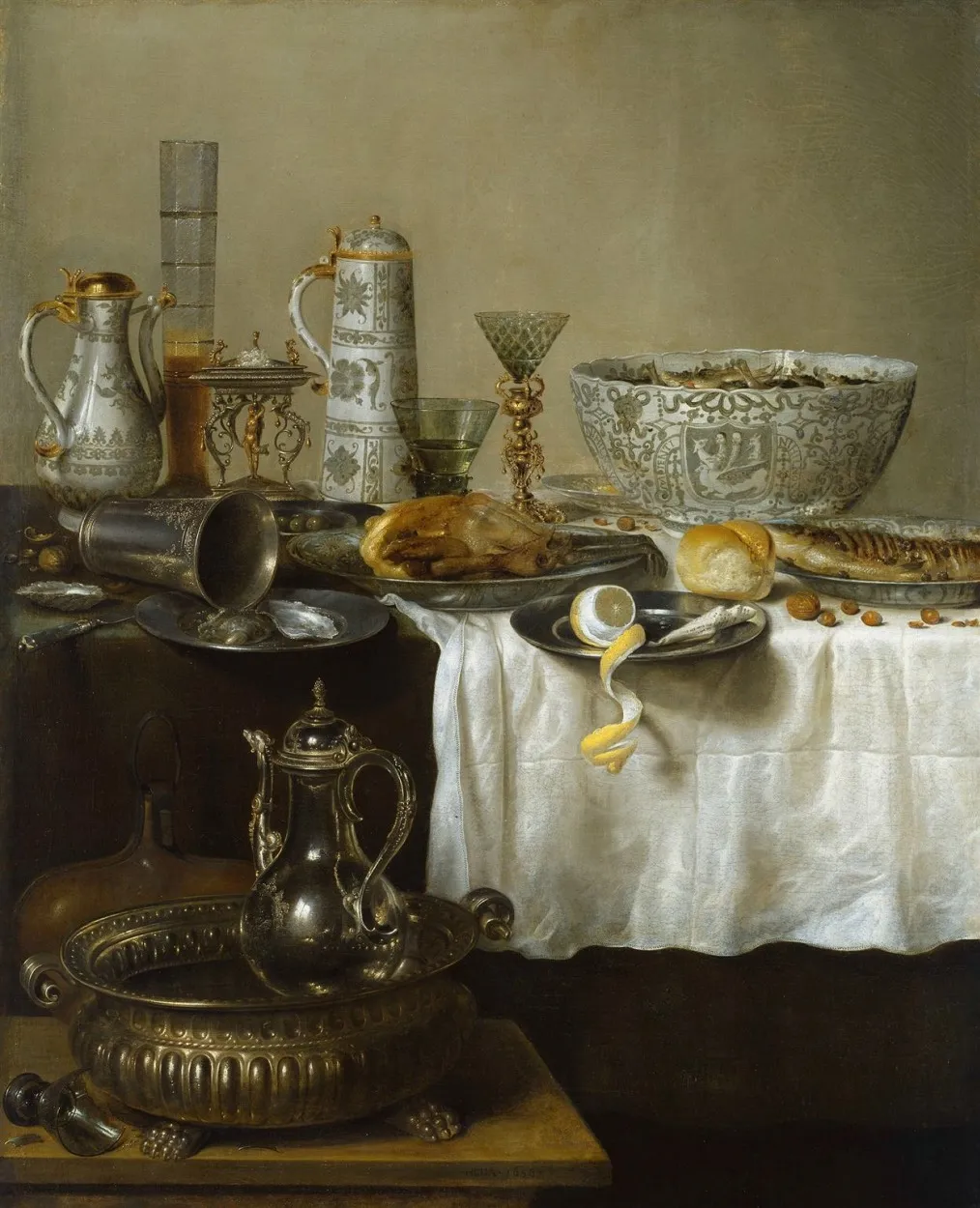
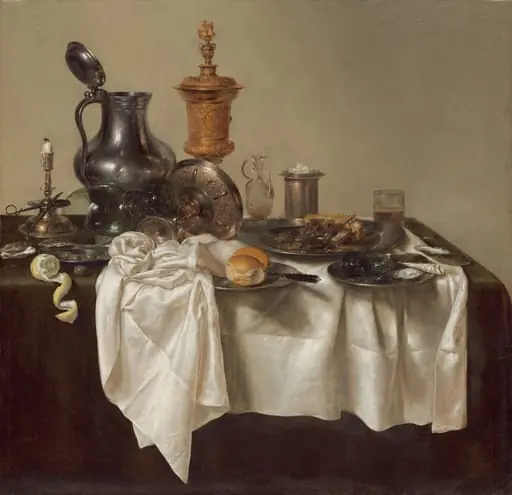
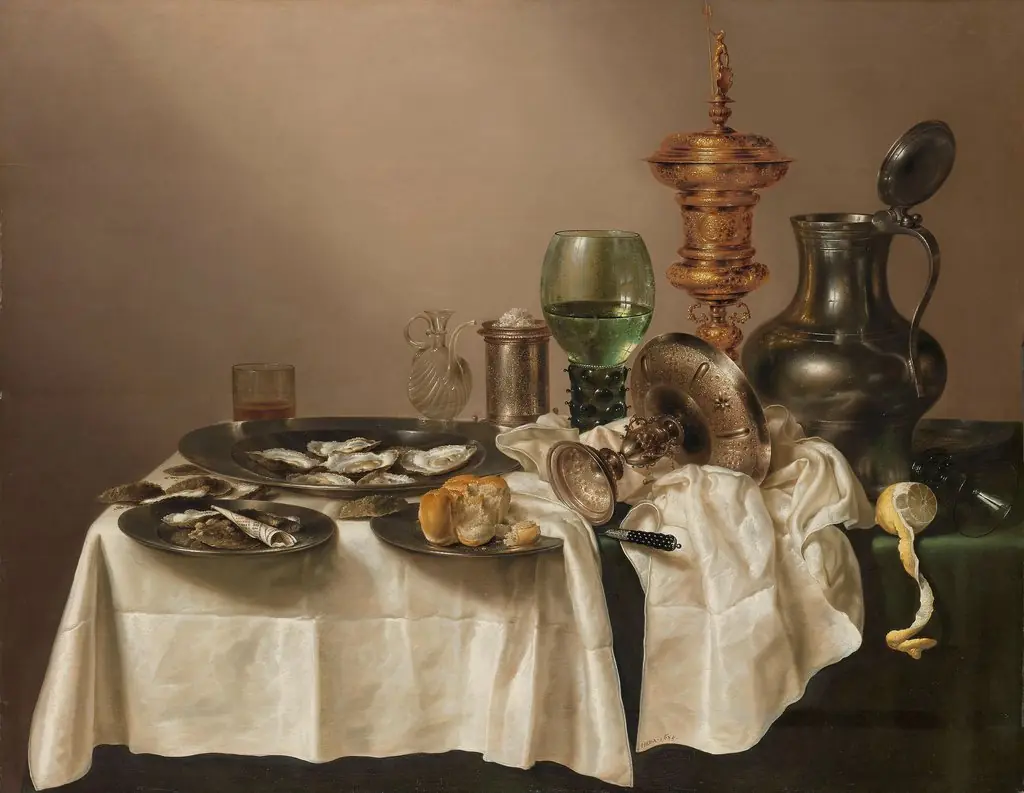
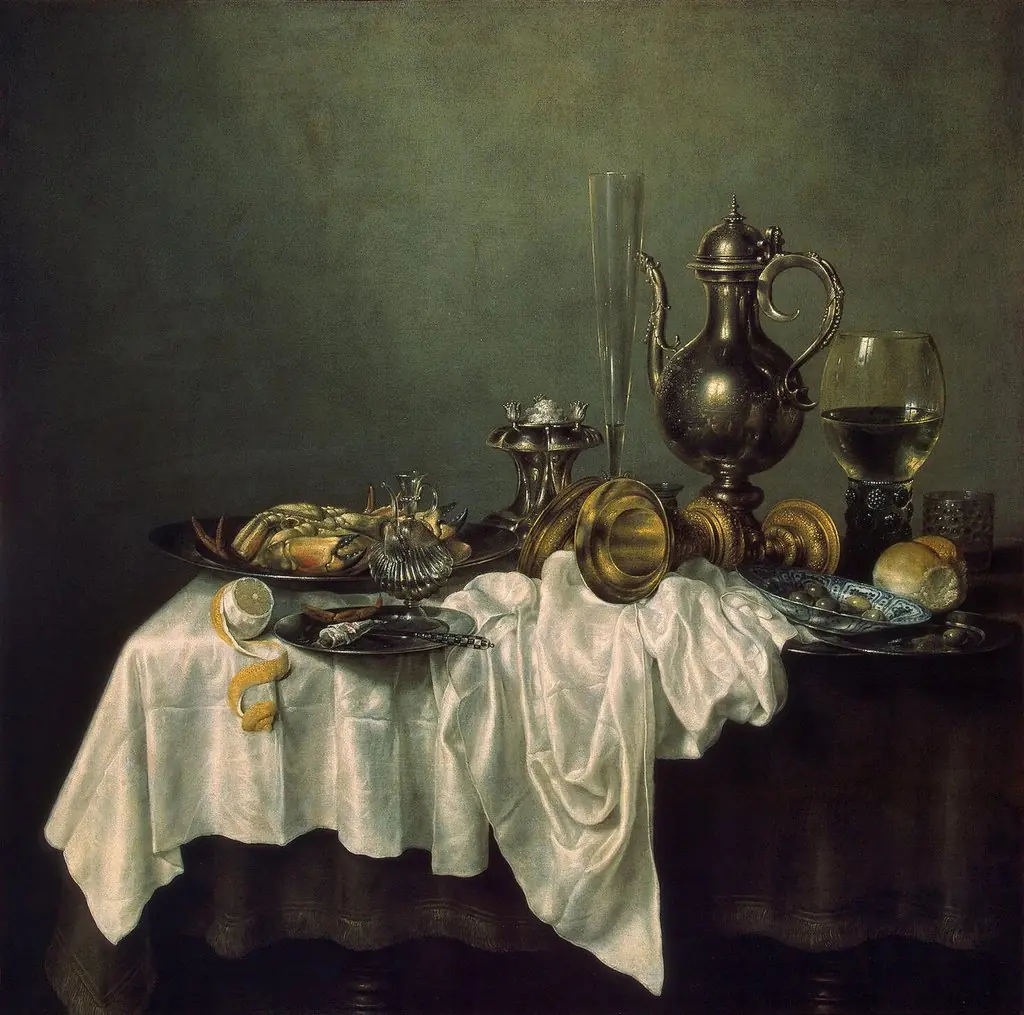
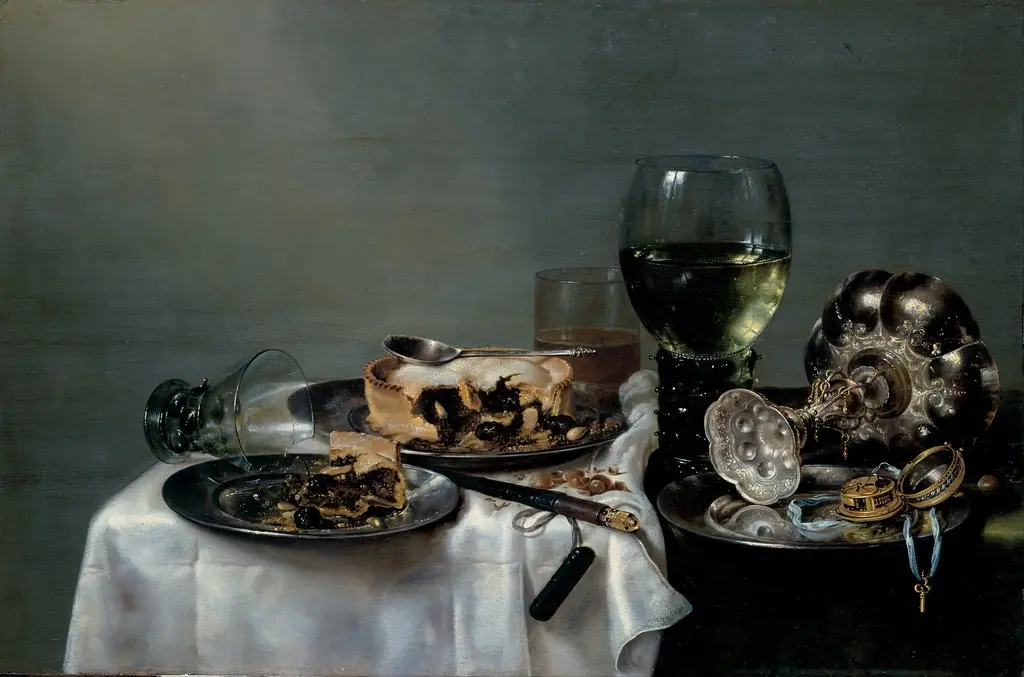
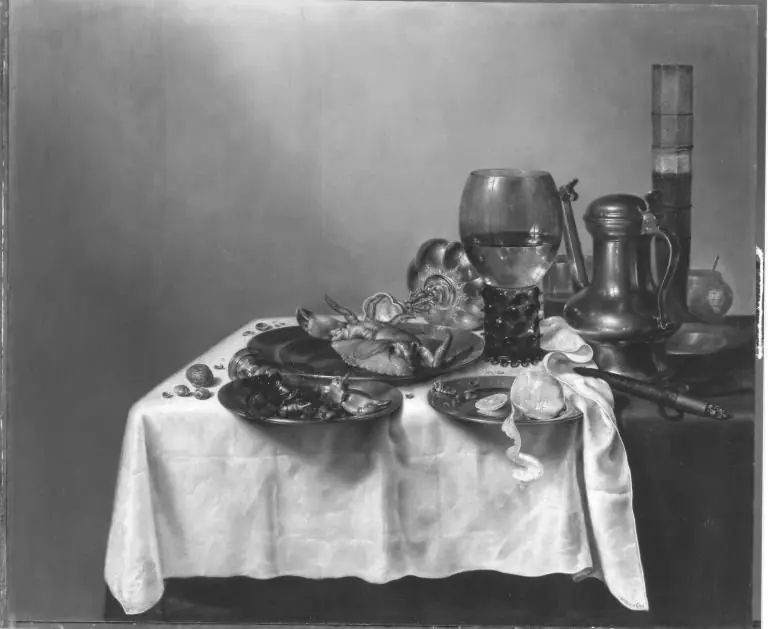
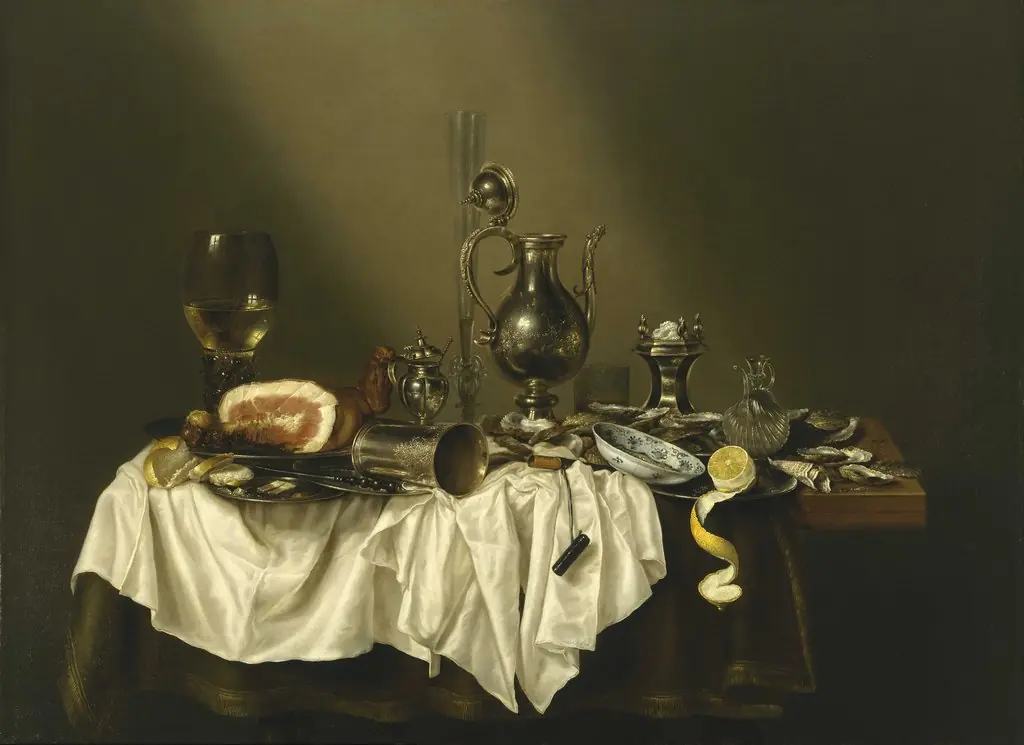
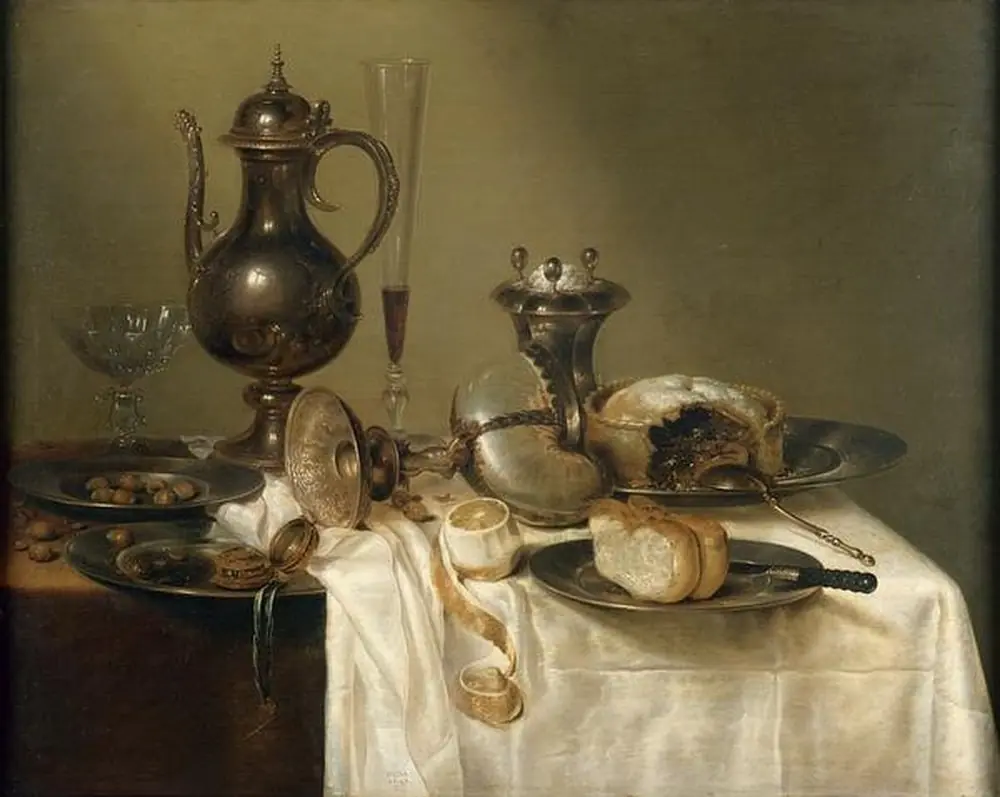
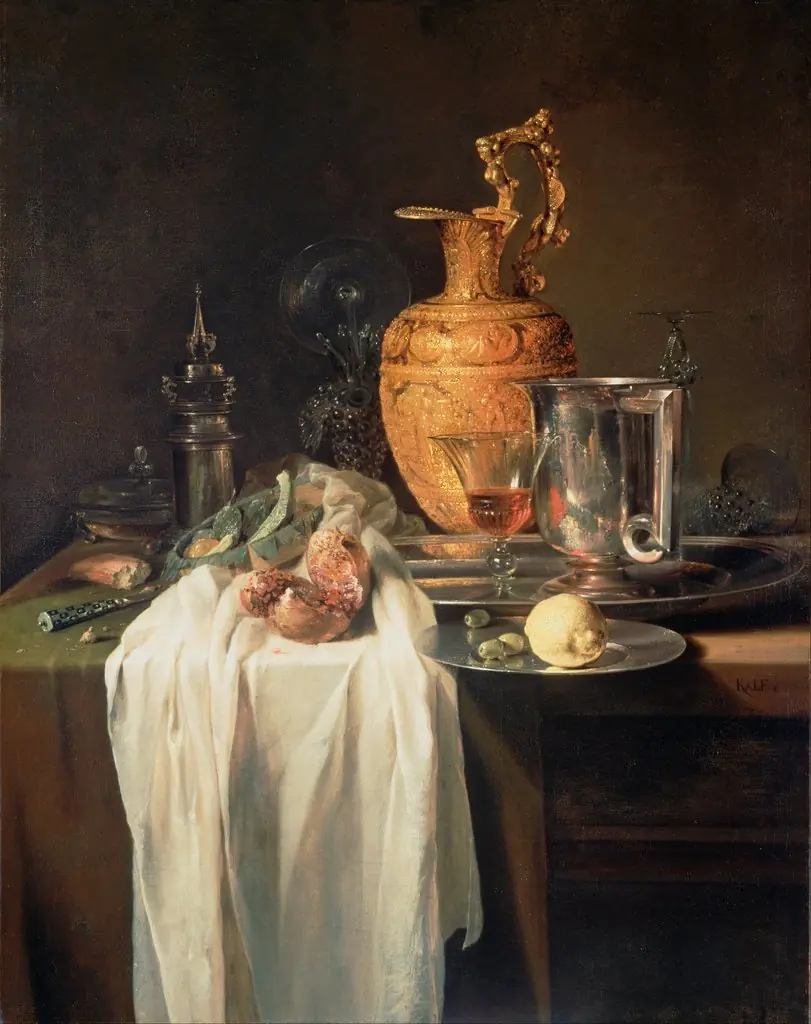
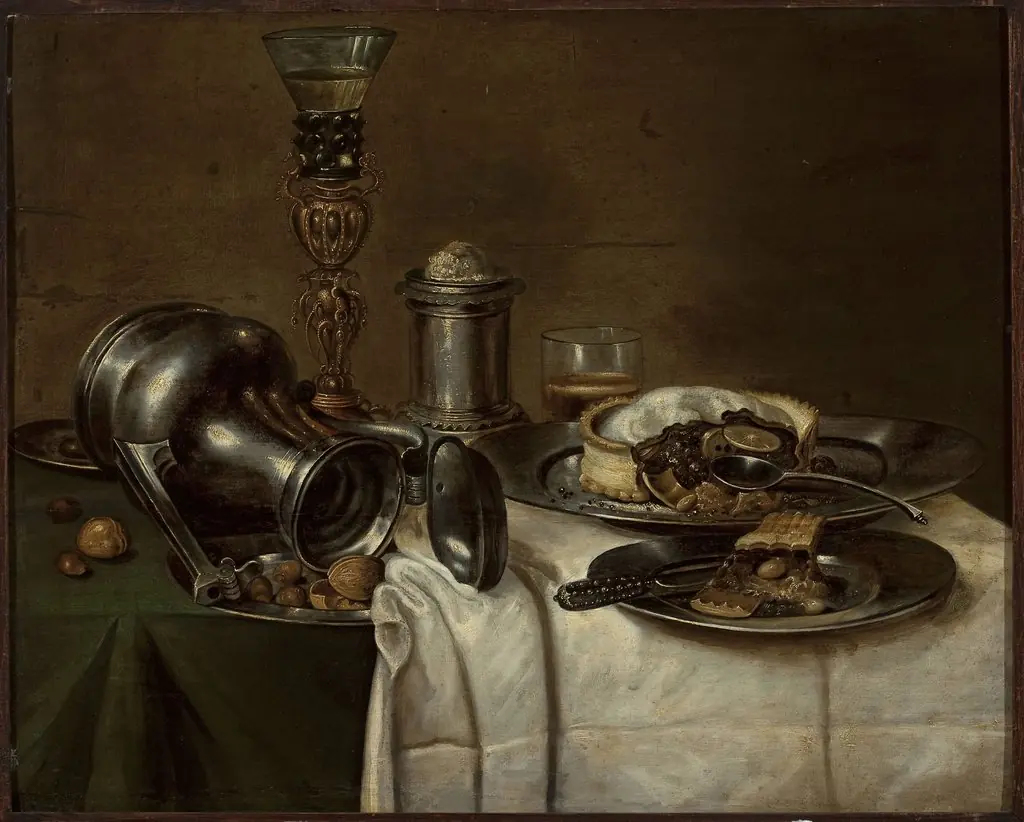
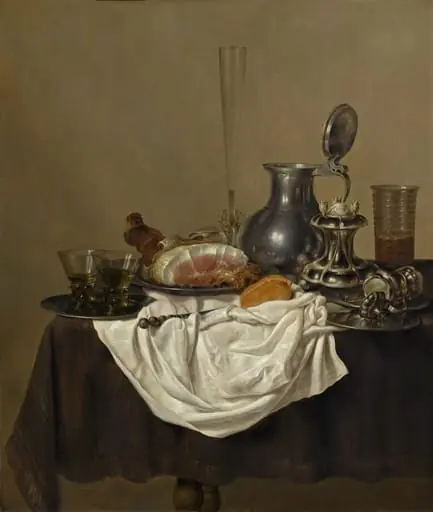
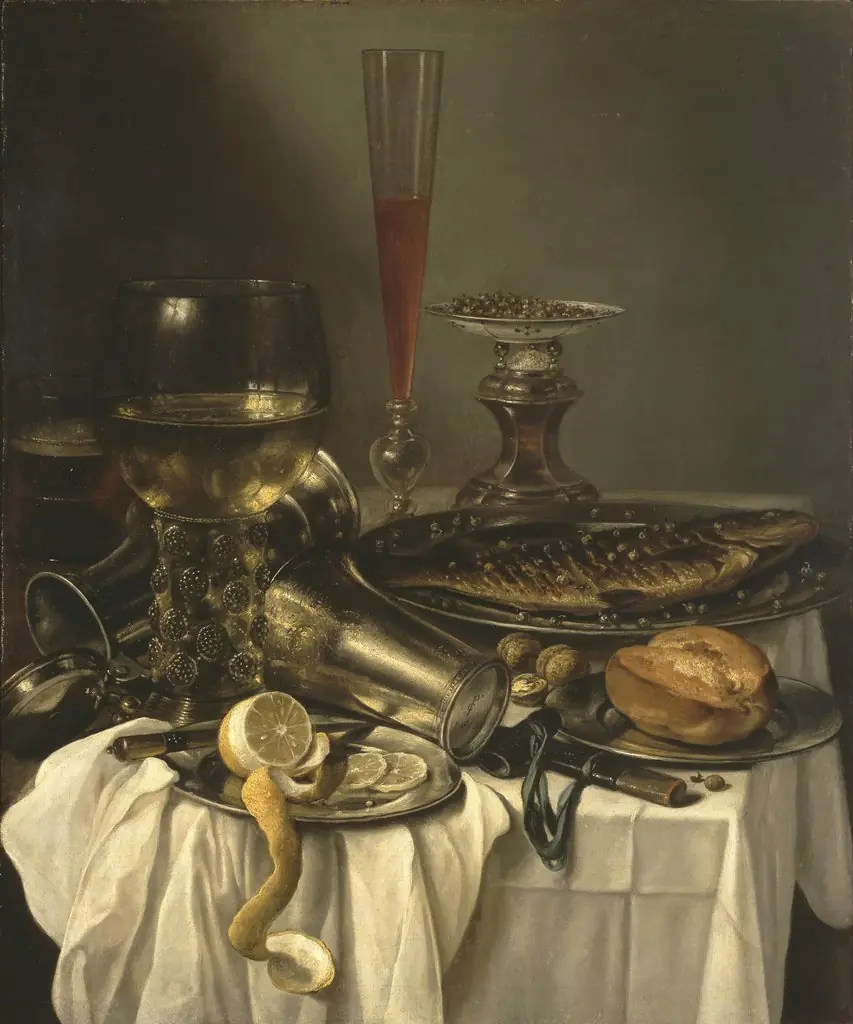
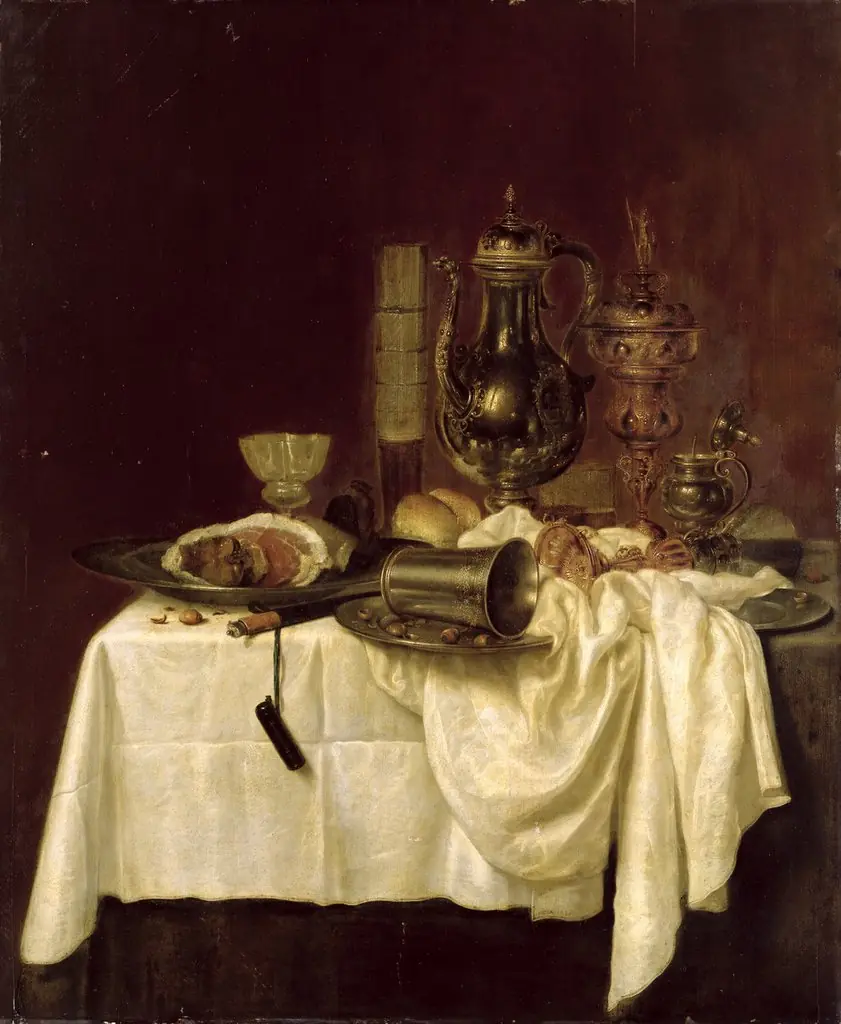
Sumptuous still life is an oil painting by the Dutch Golden Age artist Willem Claesz Heda. It dates from 1638 and is held in the collection of the Hamburger Kunsthalle.
About this work
Overview
Created in 1638 by Haarlem artist Willem Claesz Heda, this oil painting exemplifies the Dutch Golden Age’s focus on still‑life subjects. The work is part of the Hamburger Kunsthalle’s collection and presents a meticulously arranged banquet scene on a white‑draped table.
Subject & Meaning
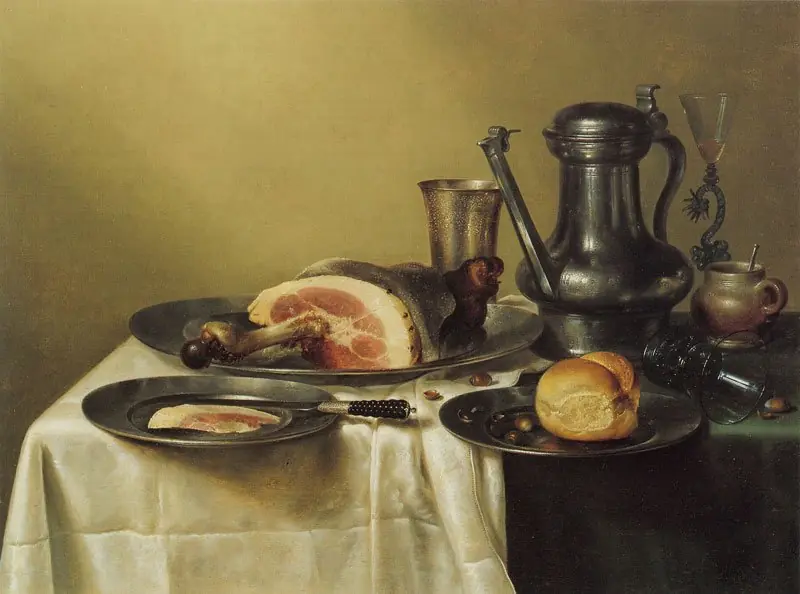
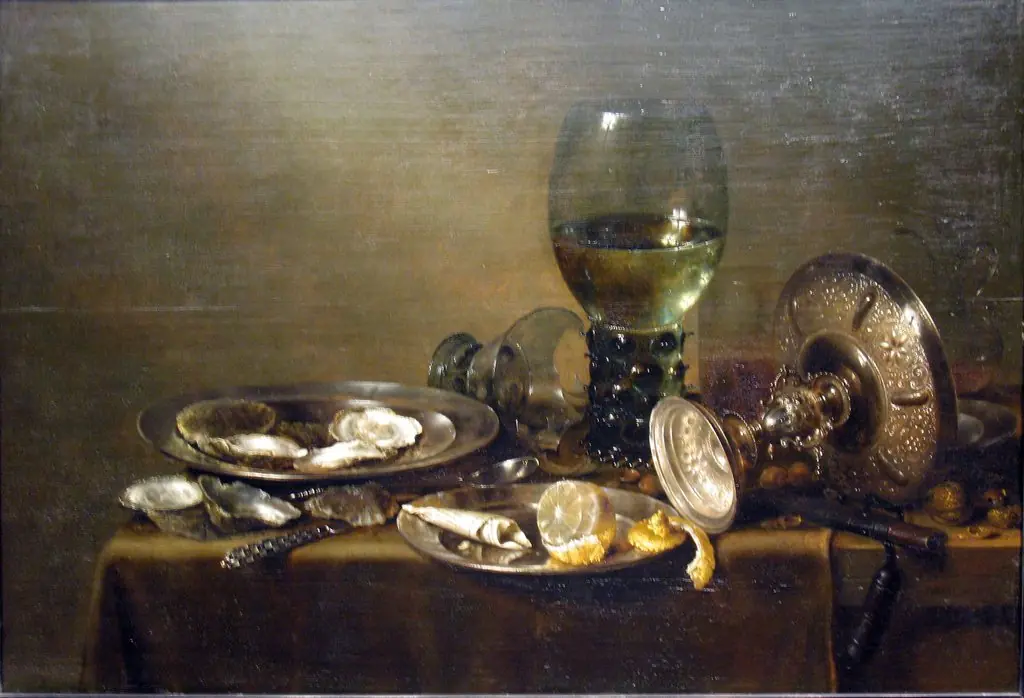
The composition gathers a variety of objects—Chinese Kraak porcelain, a carved wooden salt cellar of the type popularized by Pieter Claesz, a berkemeyer glass, metal pitchers, a roasted chicken, bread, a peeled lemon and scattered nuts—suggesting a moment of affluent domestic consumption. The absence of figures invites contemplation of wealth and the transience of the feast.
Technique & Style
Heda employs a restrained palette and precise rendering of reflective surfaces, characteristic of his late‑breakfast genre. The contrast between the glossy porcelain, polished metal, and textured wood demonstrates his skill in depicting materiality and light on a subdued background.
History & Provenance
Since its execution, the painting has remained within European collections, ultimately entering the Hamburger Kunsthalle. Its provenance reflects the 17th‑century Dutch market for luxurious still‑life works that celebrated both local and imported goods.
Context
During the mid‑1600s, Dutch artists frequently incorporated exotic imports such as Kraak porcelain to signal global trade connections. Heda’s inclusion of such items alongside everyday fare aligns with contemporary trends that merged domestic realism with symbols of international commerce.
Artist & collection

Artist
Willem Claesz Heda was born in Haarlem on December 14, 1594, the son of Claes Pietersz, the city architect, and spent his entire life and career in that city.