Artwork
A Cabinet with Objects of Art
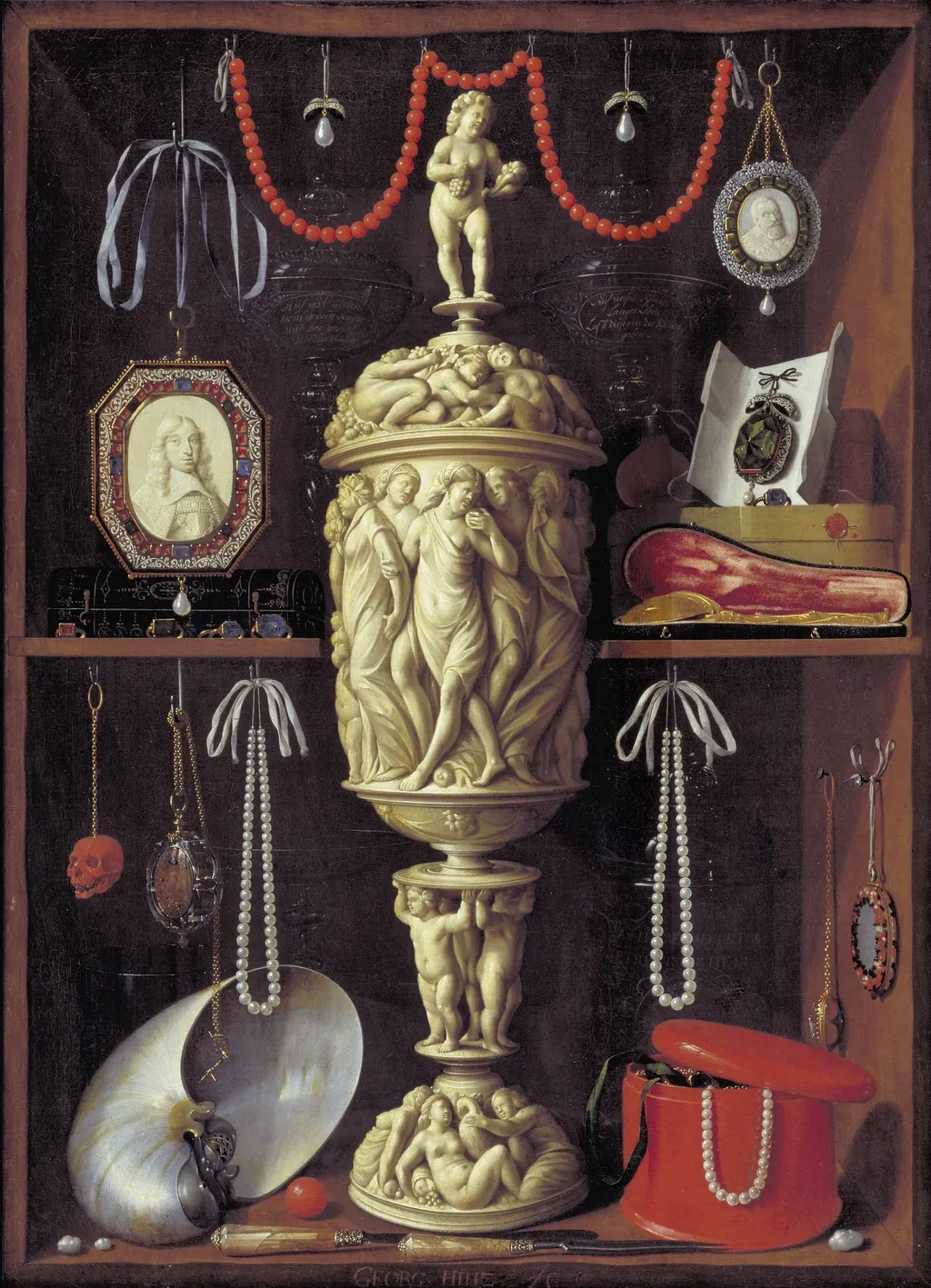
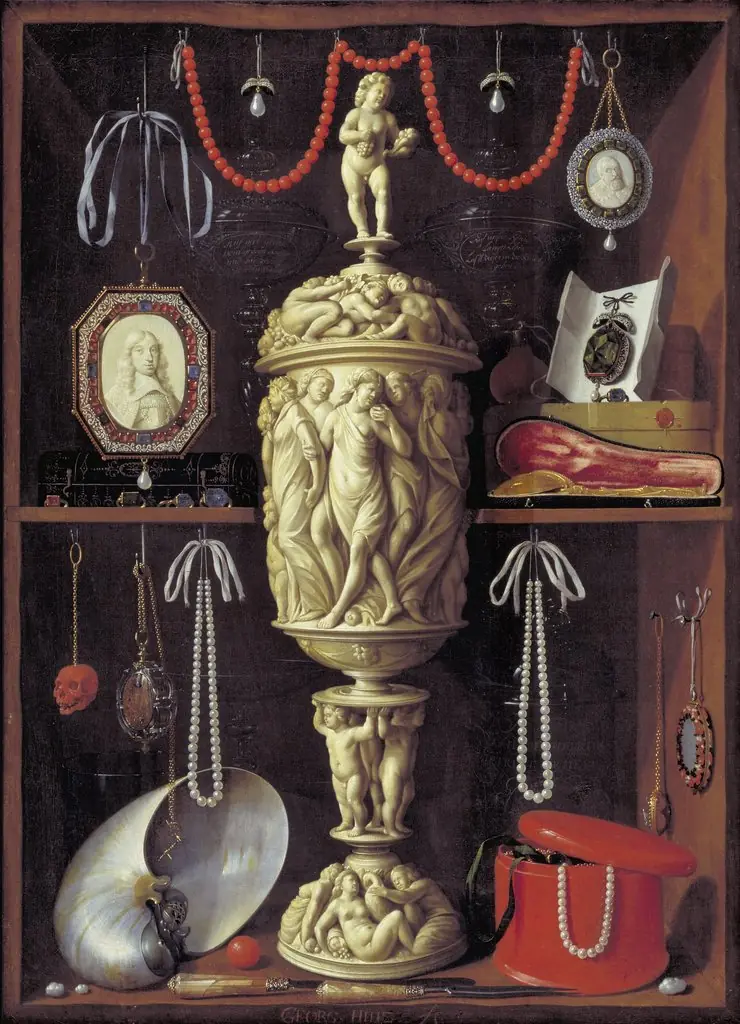
A Cabinet with Objects of Art is a photography by Unknown. It dates from 1650 and is held in the collection of the Statens Museum for Kunst. Created around 1650, this painted cabinet depicts a densely arranged shelf of curiosities.
About this work
Overview
The work belongs to the collection of the Museum of Ethnography and exemplifies a genre that blends still life with symbolic accumulation.
Created around 1650, this painted cabinet depicts a densely arranged shelf of curiosities. The work belongs to the collection of the Museum of Ethnography and exemplifies a genre that blends still life with symbolic accumulation. Rather than depicting a functional piece of furniture, the artist presents a curated assemblage of rare and exotic objects, rendered with meticulous attention to texture and surface.
Subject & Meaning
The composition includes jewelry, miniature portraits, a carved vessel with figurines, and a skull—items associated with wealth, memory, and mortality. Pearls and coral suggest global trade networks, while the skull introduces a memento mori theme. The juxtaposition of personal adornments with symbols of death implies a meditation on transience, common in Northern European art of the period.
Technique & Style
The artist employs chiaroscuro to model each object with precise light and shadow, enhancing their three-dimensionality. Surfaces vary from the glossy sheen of pearls to the matte depth of black lacquer and the warm glow of red coral. Fine brushwork captures intricate details—individual beads, facial features in miniatures, and grain in wood—creating an illusion of tactile presence without overt realism.
History & Provenance
The painting’s early ownership is undocumented, but its subject matter aligns with 17th-century Dutch and Flemish cabinet-of-curiosities traditions. It entered the Museum of Ethnography’s collection in the late 19th or early 20th century, likely acquired as part of a broader interest in visual representations of global artifacts and colonial-era collecting practices.
Context
This work reflects the era’s fascination with natural wonders, foreign goods, and the material culture of distant lands. As European exploration expanded, such objects became symbols of knowledge and status. Paintings like this served not merely as decoration but as visual catalogs of a world increasingly interconnected through trade and conquest.
Legacy
Though not widely known outside specialist circles, the painting contributes to the understanding of how early modern artists engaged with collecting and classification. Its quiet precision influenced later still-life traditions and remains a quiet testament to the cultural curiosity that shaped European visual culture during the Age of Exploration.
Artist & collection

 Domestic Scene
 Giacomo and Cardinal Marco, investing Andrea, Abbot of San Zeno, with his Benefice
 The Nymph of Fontainebleau
 Portrait of a Woman
 Madonna and Child with Saints in the Enclosed Garden
 Venus and Minerva
 Family Group of Four on Sofa
 Wall painting from Room H of the Villa of P. Fannius Synistor at Boscoreale
 Galantar
 Still Life with Ostrich Egg Cup and the Whitfield Heirlooms
 Still Life with Ostrich Egg Cup and the Whitfield Heirlooms
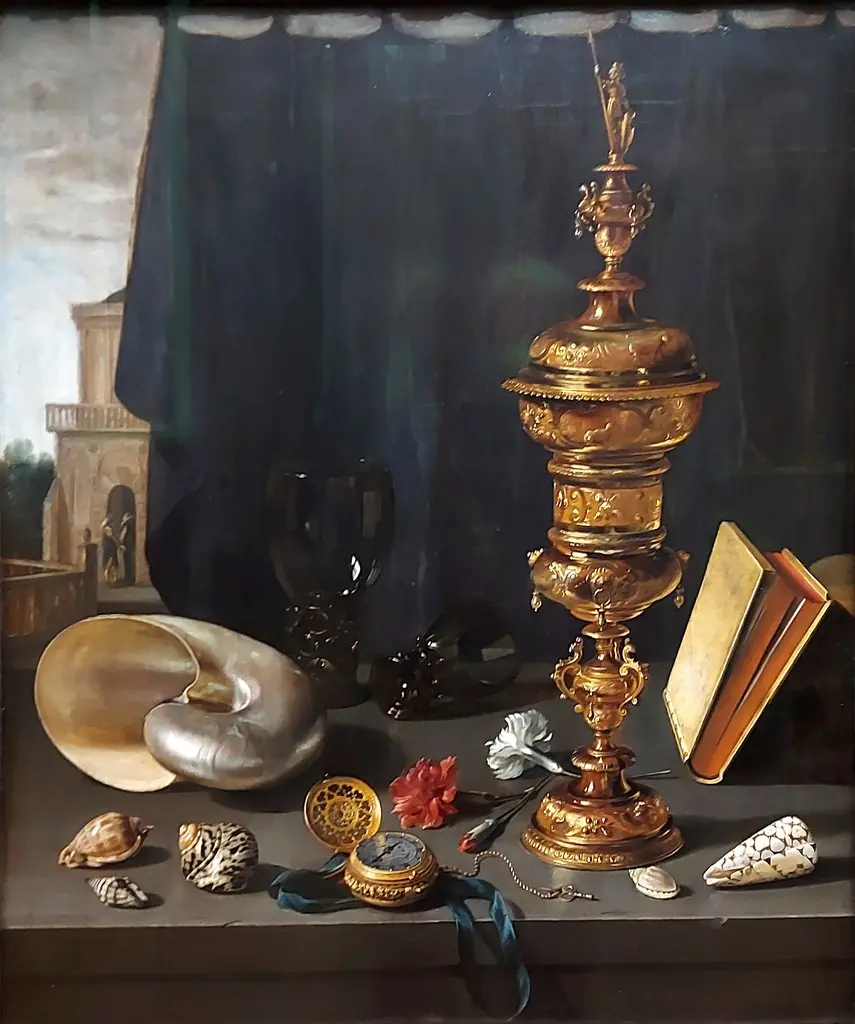 Still Life with a Tall Covered Beaker
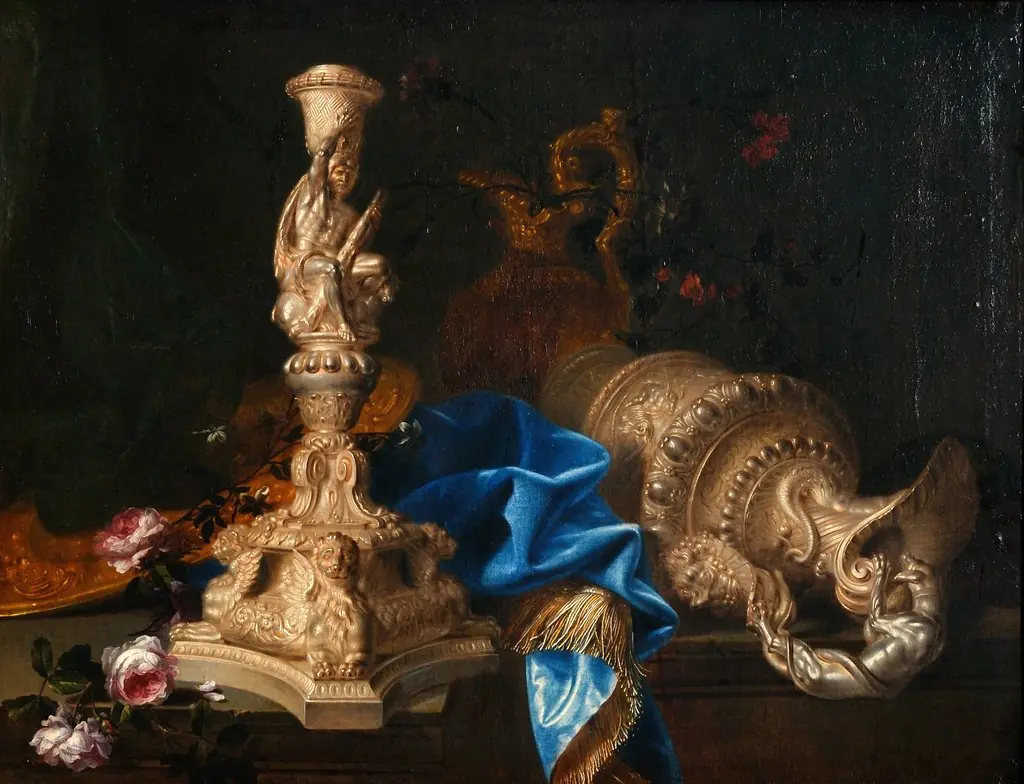 Still life with candlestick of the "Labours of Hercules" series and two ewers
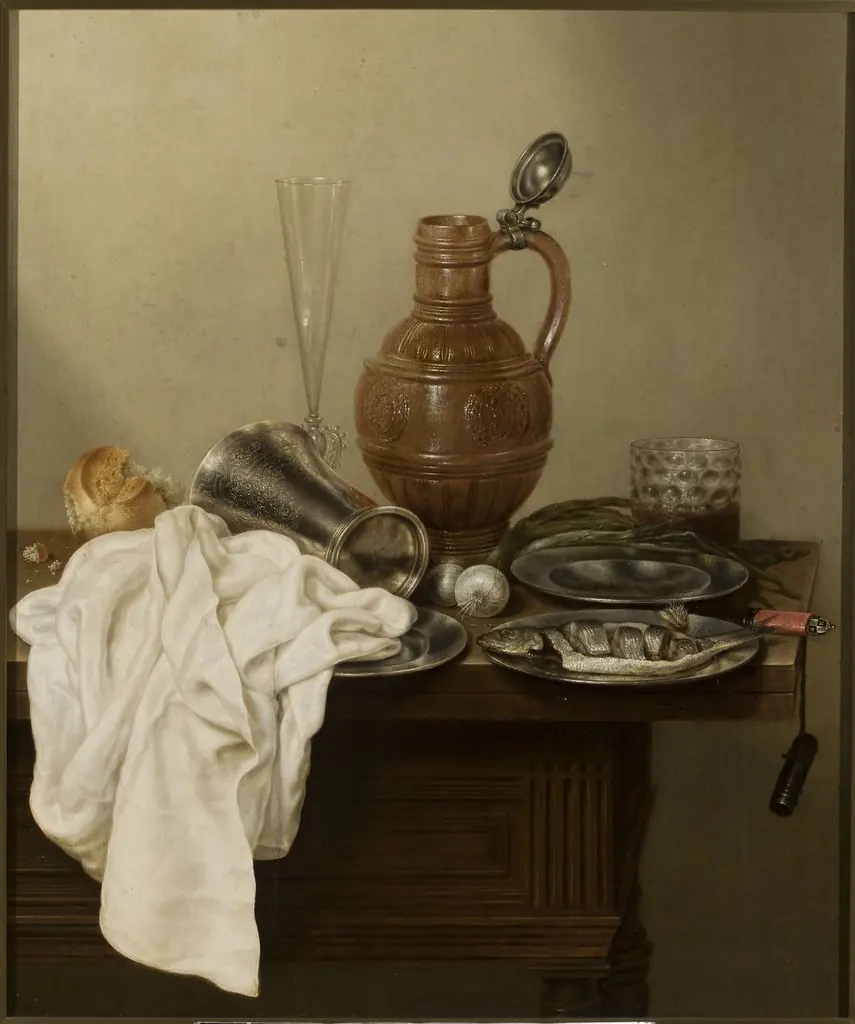 Still life with a herring
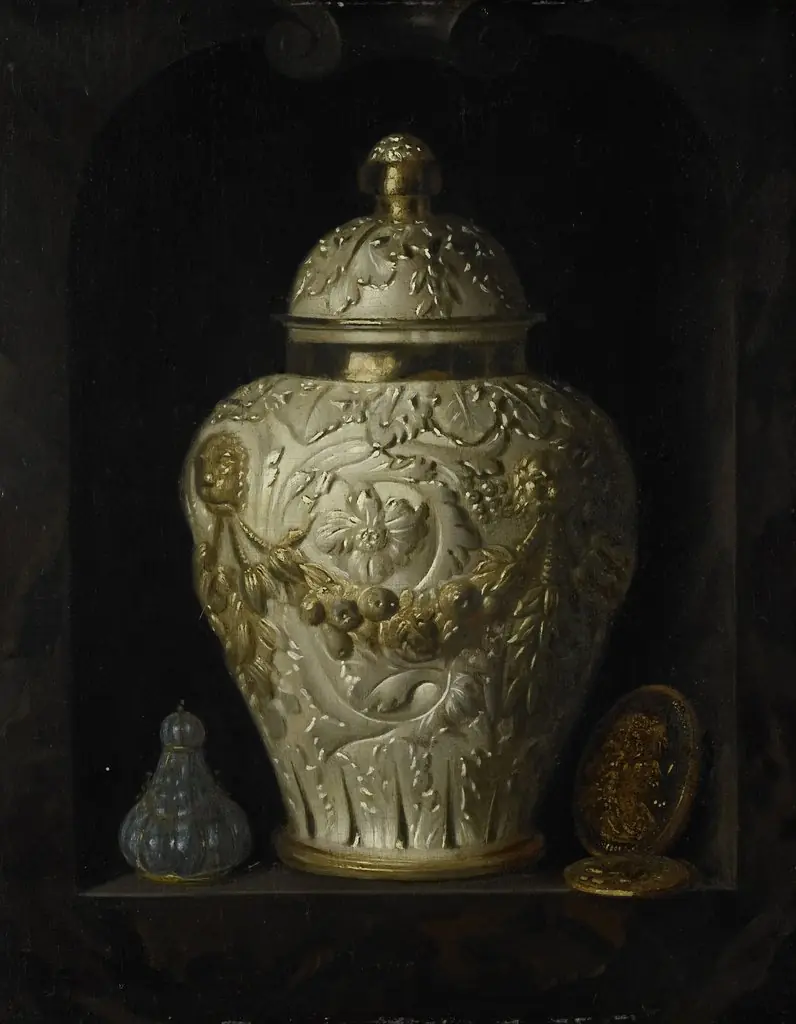 Still Life with a Ginger Pot
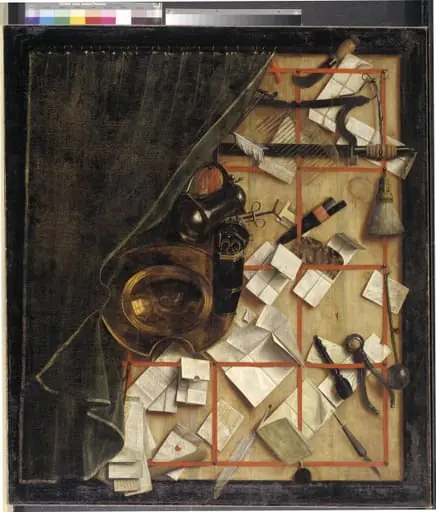 Trompe l'oeil. Letter Rack with a Barber-Surgeon's Instruments
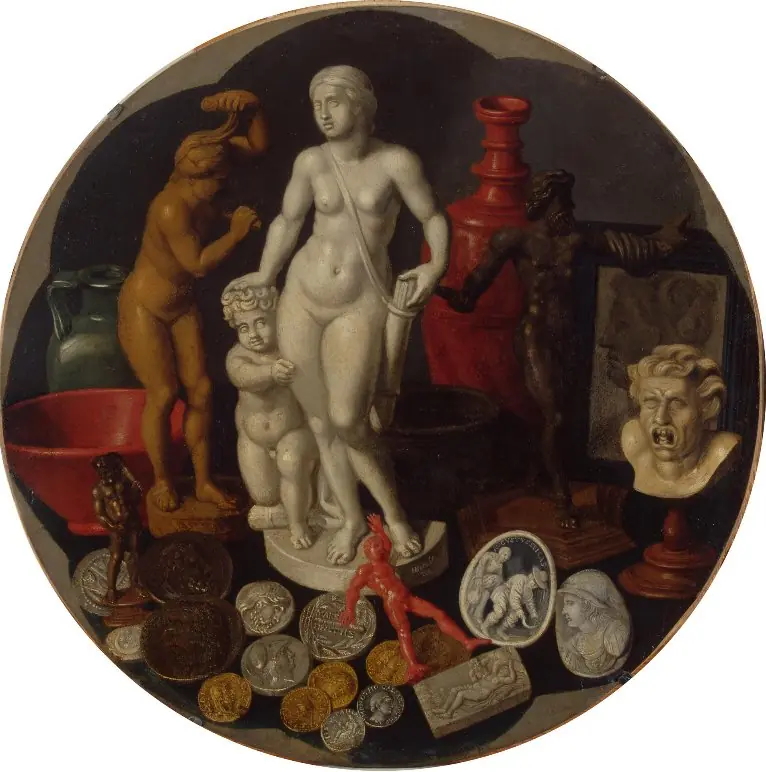 Still Life with a Collection of Curiosities
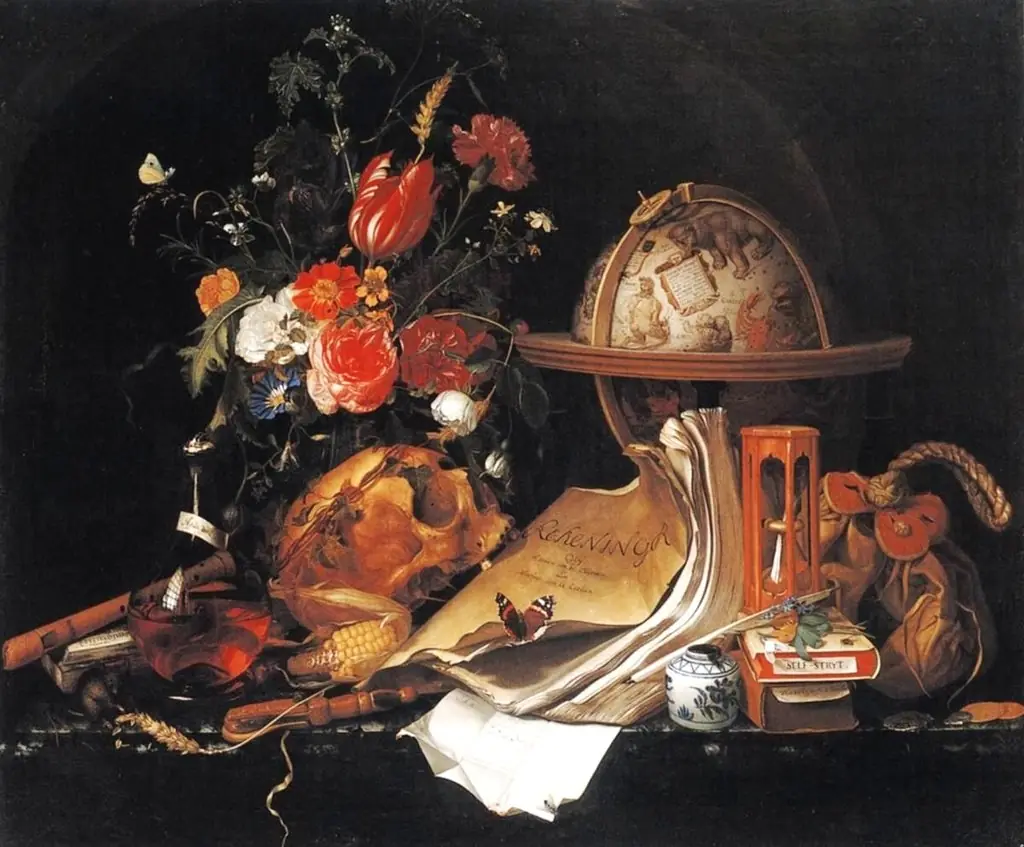 Vanitas still life
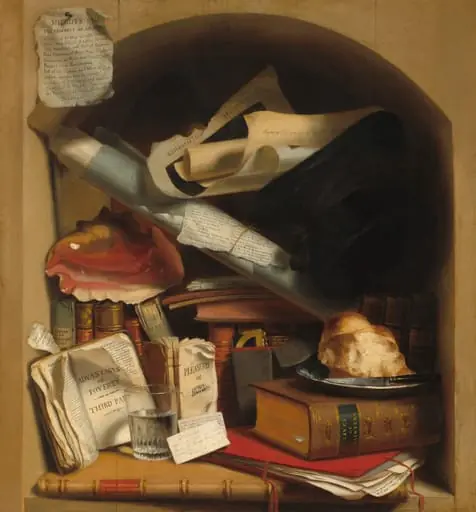 Poor Artist's Cupboard
 A collector's cabinet with ivory cup