Artwork
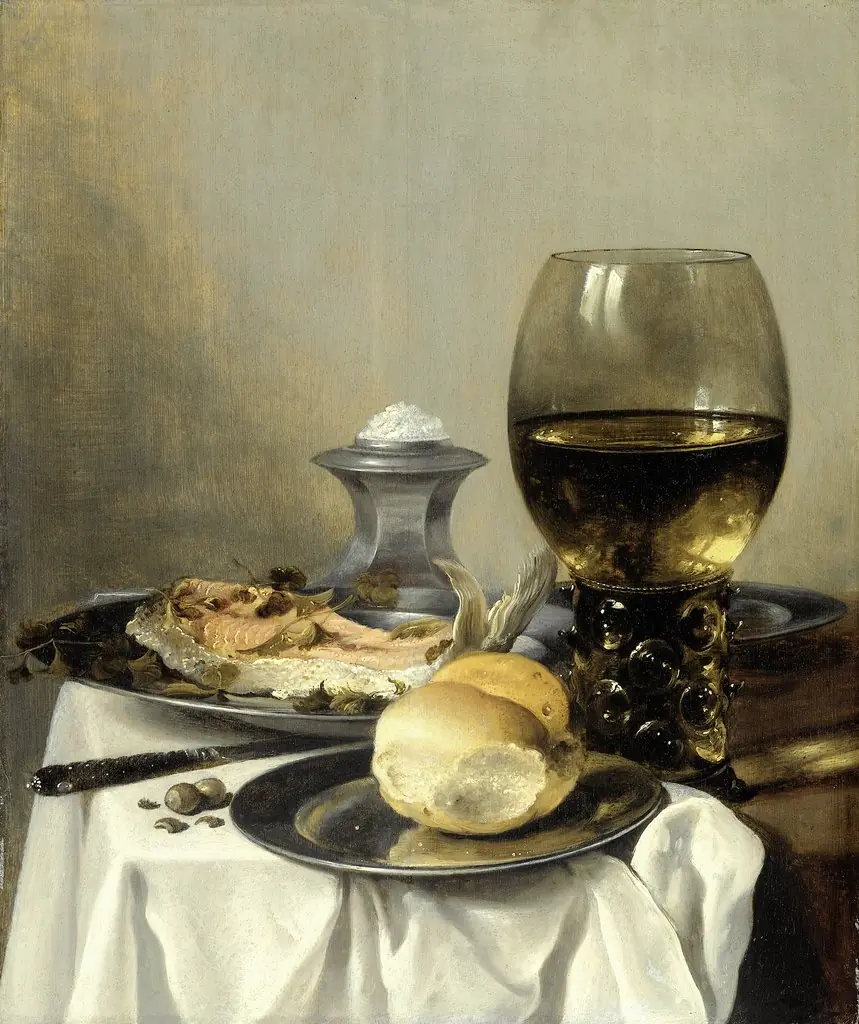
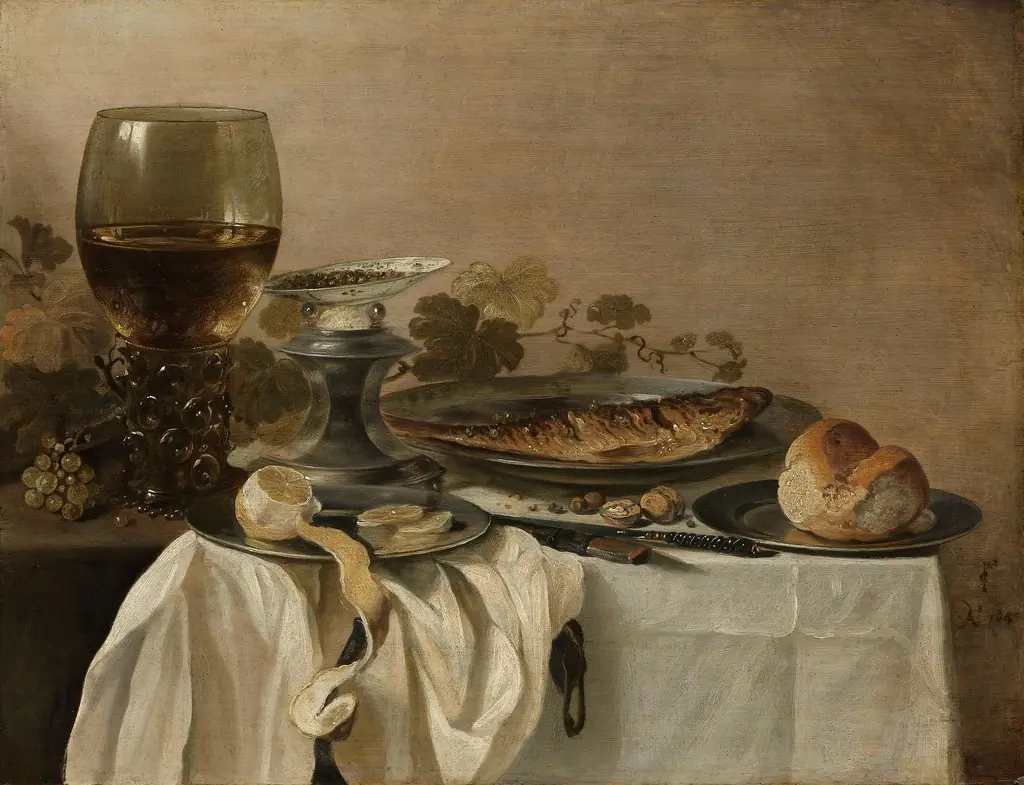
Still Life with Herring, Wine and Bread
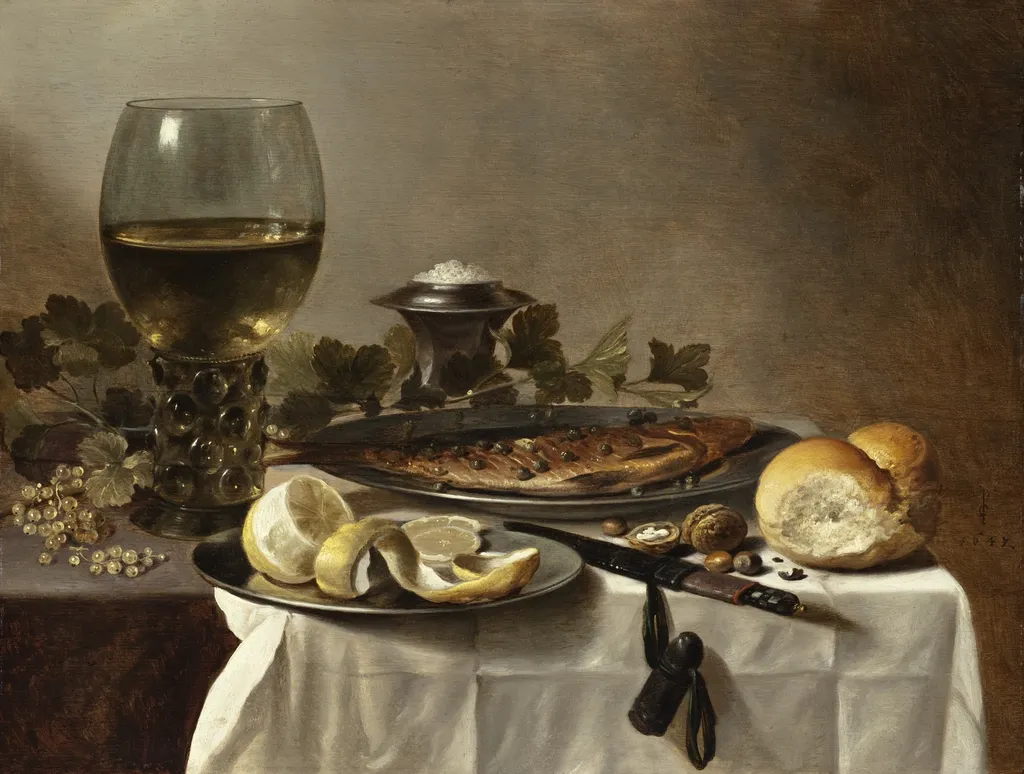
Still Life with Herring, Wine and Bread is an oil painting by the Dutch Golden Age artist Pieter Claesz. It dates from 1647 and is held in the collection of the Los Angeles County Museum of Art.
About this work
Overview
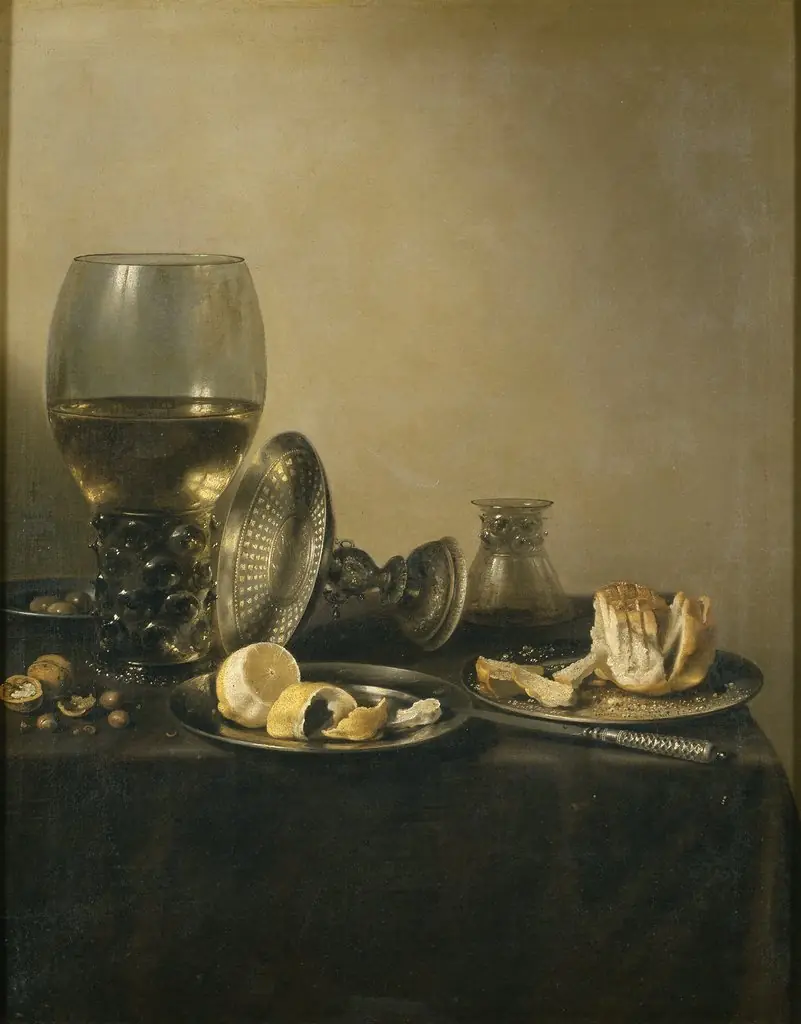
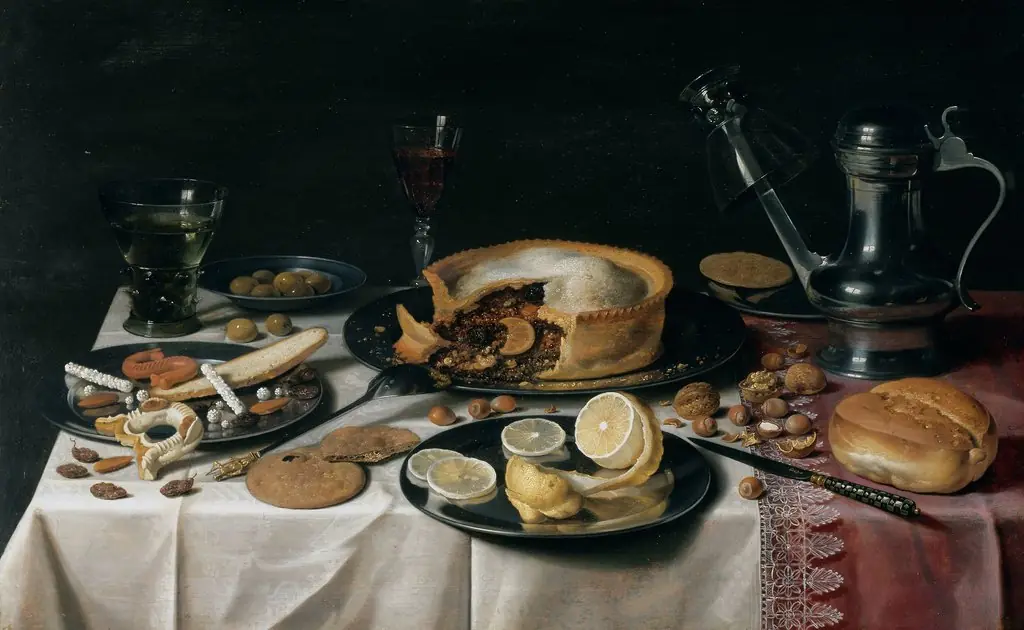
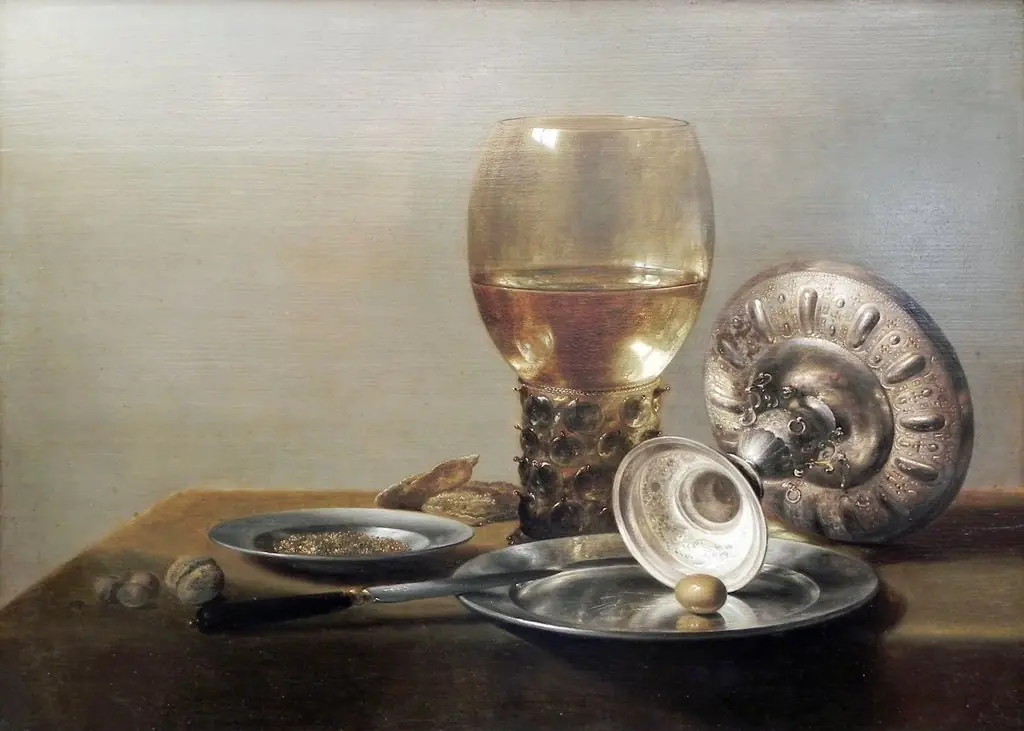
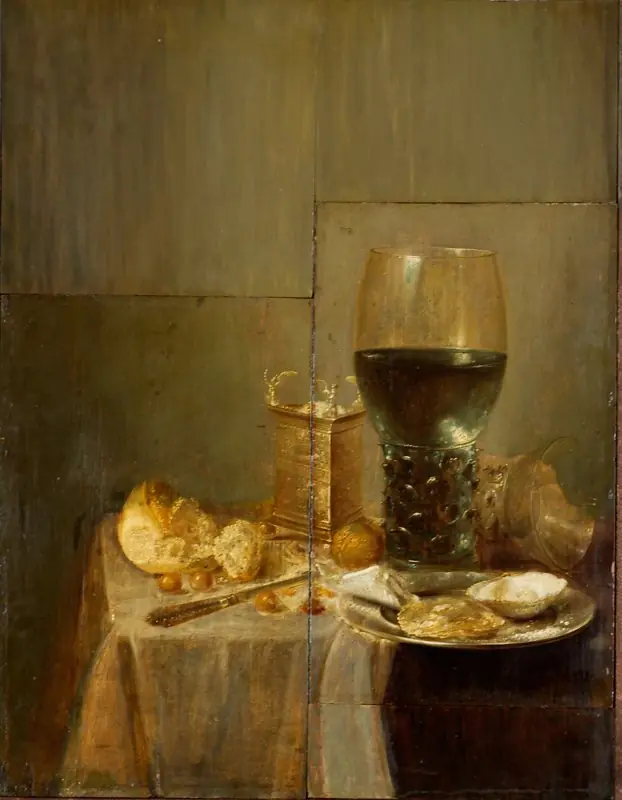
Pieter Claesz’s 1647 oil painting Still Life with Herring, Wine and Bread presents a modest banquet arranged on a darkened tabletop.
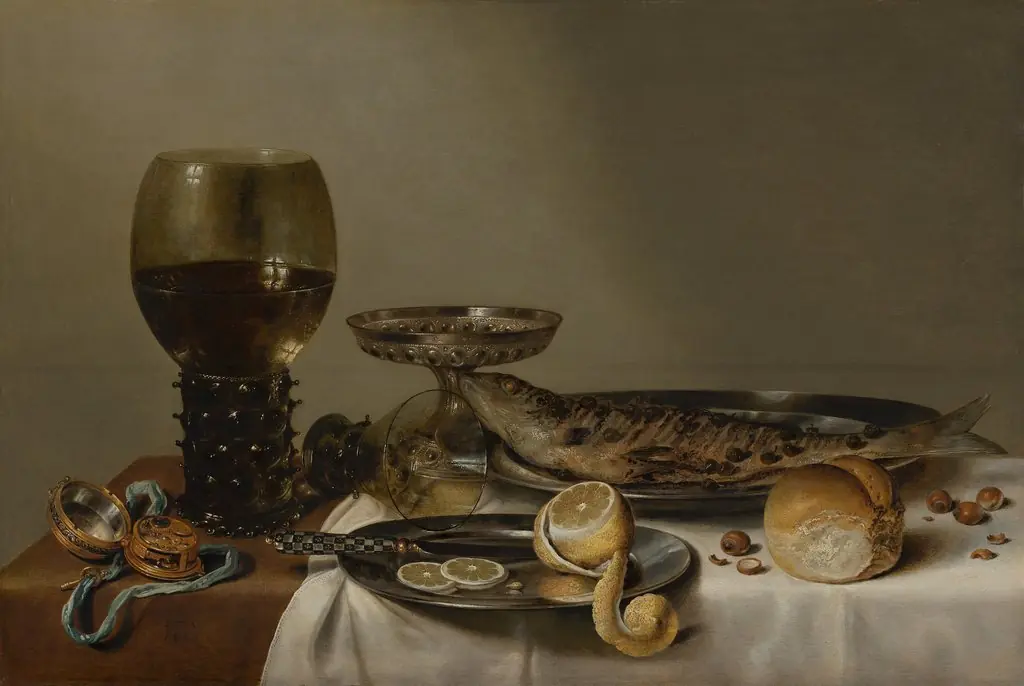
Pieter Claesz’s 1647 oil painting Still Life with Herring, Wine and Bread presents a modest banquet arranged on a darkened tabletop. A silver platter supports a cooked herring, a halved lemon, and several slices of bread, while a tall rummer of white wine, a small lidded salt pot, and a black‑handled knife complete the composition. The work is part of the Los Angeles County Museum of Art’s collection.
Subject & Meaning
The arrangement foregrounds everyday sustenance—fish, bread, and wine—suggesting a moment of quiet consumption. The juxtaposition of the peeled lemon with the glistening wine glass creates a subtle dialogue between acidity and sweetness, while the modest scale of the objects invites contemplation of the transient nature of meals and the pleasures of the table.
Technique & Style
Claesz employs a restrained palette and meticulous brushwork to render textures: the slick sheen of the fish’s skin, the crumbly surface of the bread, and the reflective quality of the glass. Light falls from the left, casting soft shadows that model the forms and enhance the chiaroscuro effect characteristic of Dutch still‑life painting in the mid‑seventeenth century.
History & Provenance
Executed in 1647, the painting remained in private collections for several centuries before entering the Los Angeles County Museum of Art. Documentation traces its ownership through European dealers in the 19th century, culminating in its acquisition by LACMA in the late 20th century, where it has been displayed as part of the museum’s Dutch Baroque holdings.
Context
Created during the Dutch Golden Age, the work reflects the period’s interest in modest, domestic subjects and the moralizing tradition of vanitas. Claesz, known for his sober compositions, often used simple foodstuffs to comment on abundance, temperance, and the fleeting nature of earthly comforts, aligning the painting with contemporary cultural values.
Own this work as a print
Artist & collection
Artist
Pieter Claesz was born in 1596 or 1597 in Berchem, near Antwerp, and moved to Haarlem in the Dutch Republic around 1620.