Artwork
Landscape with a Couple
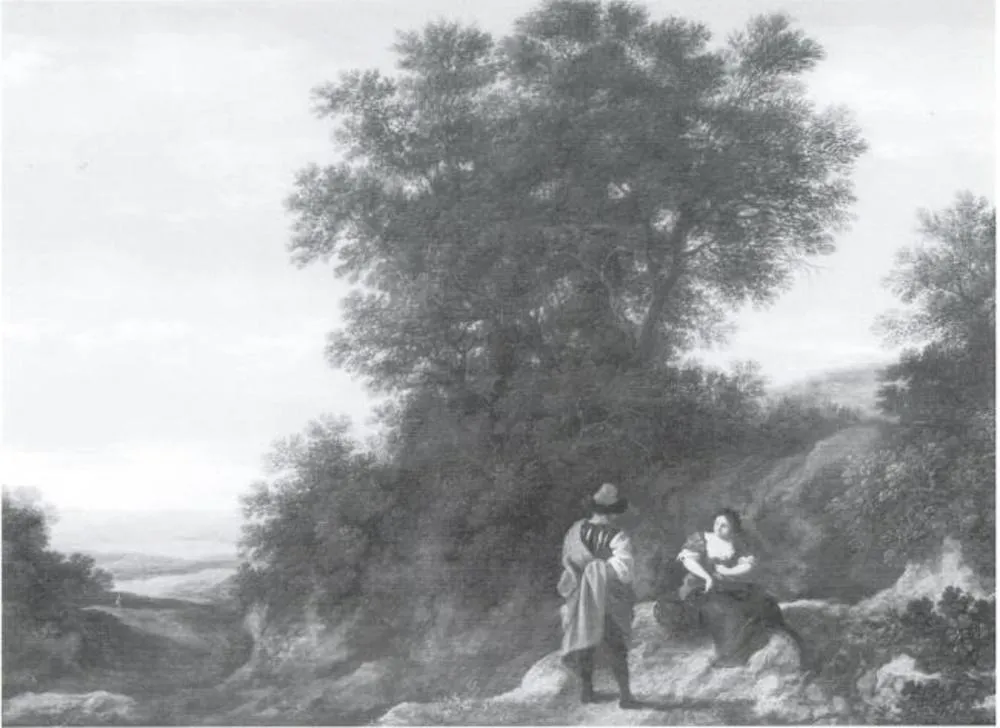
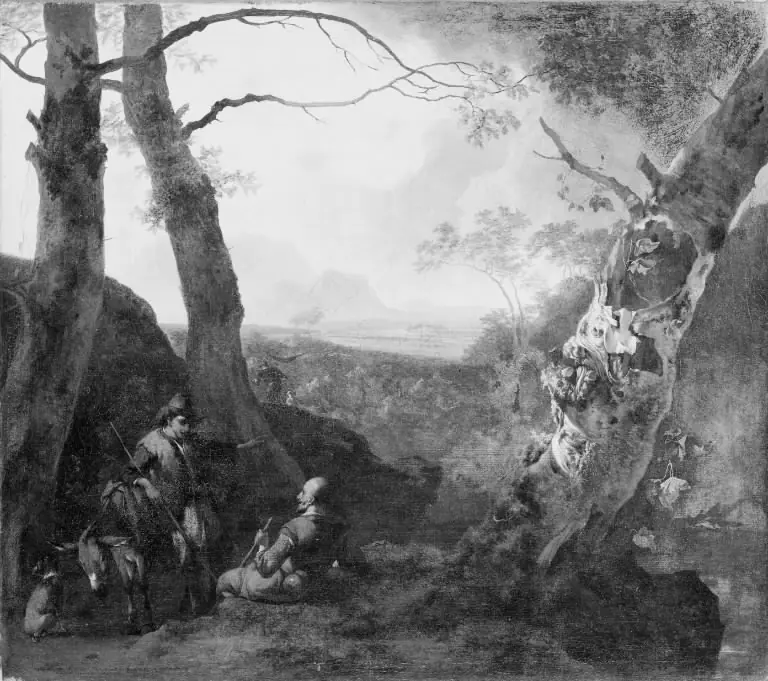
Landscape with a Couple is an oil painting by the Dutch Golden Age artist Pieter de Molijn. It dates from 1635 and is held in the collection of the Nationalmuseum.
About this work
Overview
The painting is now held in the Nationalmuseum’s collection, reflecting its enduring place in the study of 17th-century Northern European art.
Painted in 1635 by Pieter de Molijn, this oil-on-canvas work presents a quiet rural scene typical of Dutch Golden Age landscape painting. De Molijn, born in London to Flemish parents, spent much of his career in Haarlem, where he was admitted to the Guild of St. Luke in 1616. The painting is now held in the Nationalmuseum’s collection, reflecting its enduring place in the study of 17th-century Northern European art.
Subject & Meaning
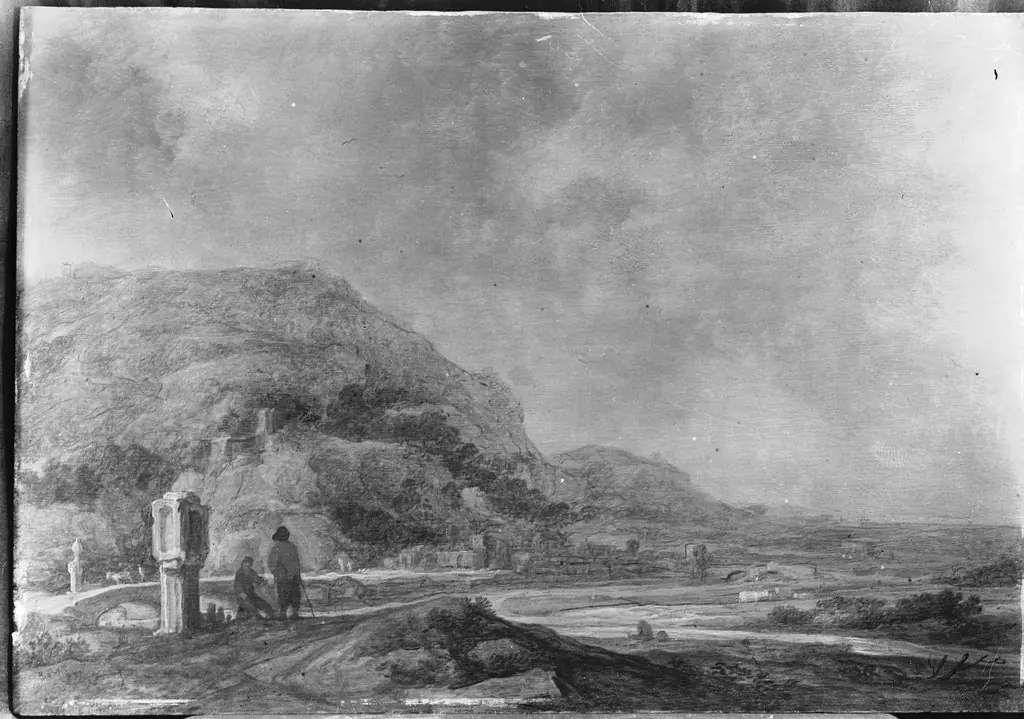
A man and woman stand on a rocky ledge, facing an expansive countryside. The woman is seated, the man beside her, both gazing toward the horizon. Their stillness and orientation suggest contemplation rather than narrative action. The absence of overt symbolism points to a meditation on human presence within nature, a common theme in Dutch landscapes of the period, where figures often serve as quiet anchors to the land.
Technique & Style
De Molijn employs subtle tonal gradations to model the terrain, using soft transitions between light and shadow to suggest atmospheric depth. The brushwork is restrained, favoring muted earth tones and delicate handling of foliage and distant architecture. The composition balances horizontal bands of land, sky, and vegetation, creating a calm, measured rhythm that reflects the artist’s affinity for orderly, observational realism.
History & Provenance
The painting entered the Nationalmuseum’s collection through documented acquisitions in the 19th century, though its earlier ownership remains unclear. It was likely produced for a private patron in Haarlem, where de Molijn’s landscapes were in demand among middle-class collectors. Its survival in good condition reflects careful preservation and its recognition as a representative work of regional landscape tradition.
Context
In 17th-century Holland, landscape painting flourished as a distinct genre, separate from religious or mythological subjects. De Molijn was among the early artists to elevate everyday rural views to artistic prominence. His work aligns with contemporaries like Jacob van Ruisdael, though his style remains more subdued, emphasizing quietude over drama, reflecting the values of Haarlem’s artistic community.
Legacy
De Molijn’s influence extended through his role as a teacher and his integration of landscape into the Haarlem school’s visual language. While less celebrated than later Dutch landscapists, his careful attention to naturalism and compositional restraint helped shape the genre’s development. This painting endures as a modest but significant example of early Dutch landscape painting’s quiet dignity.
Artist & collection
Artist
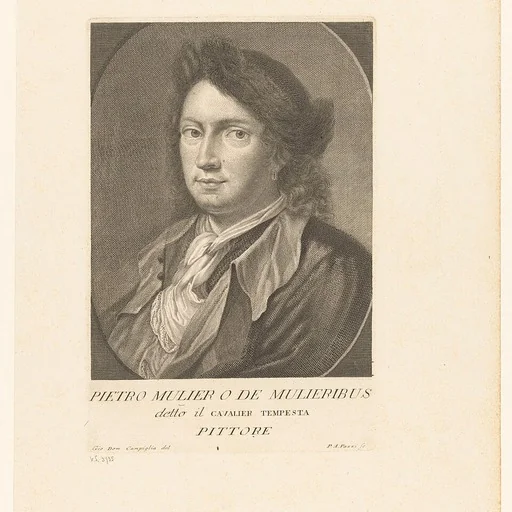
Pieter de Molijn (6 April 1595 in London – 23 March 1661 in Haarlem) was a Dutch Golden Age painter and engraver of English birth and Flemish descent.

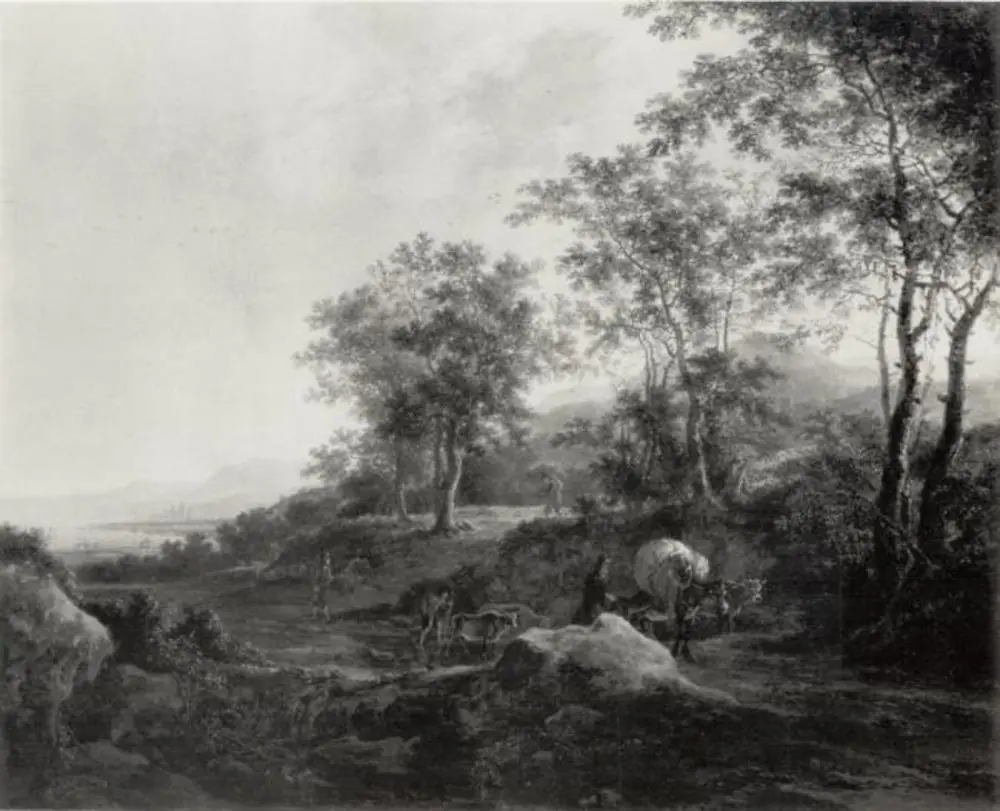 Southern landscape with travellers on a flooded track
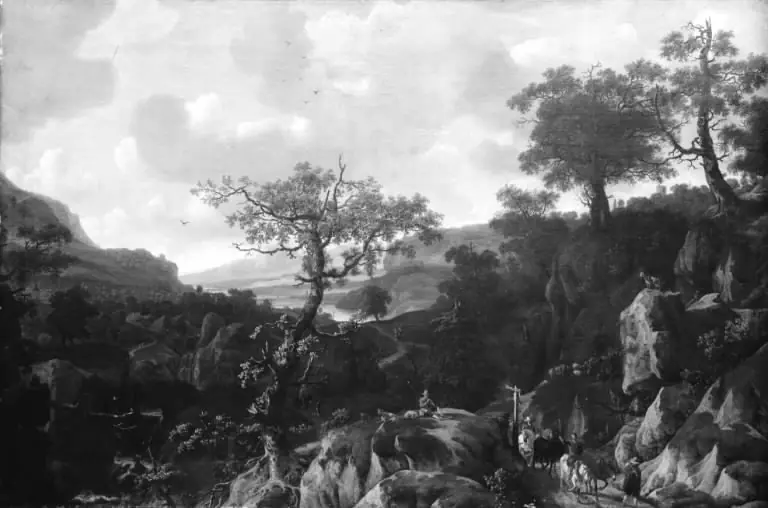 Mountain Landscape
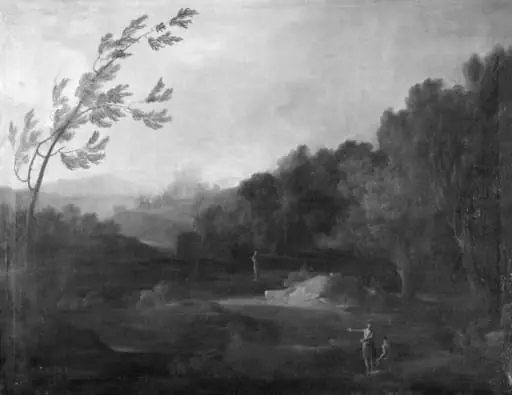 Et skovrigt landskab med udsigt mod bjergene
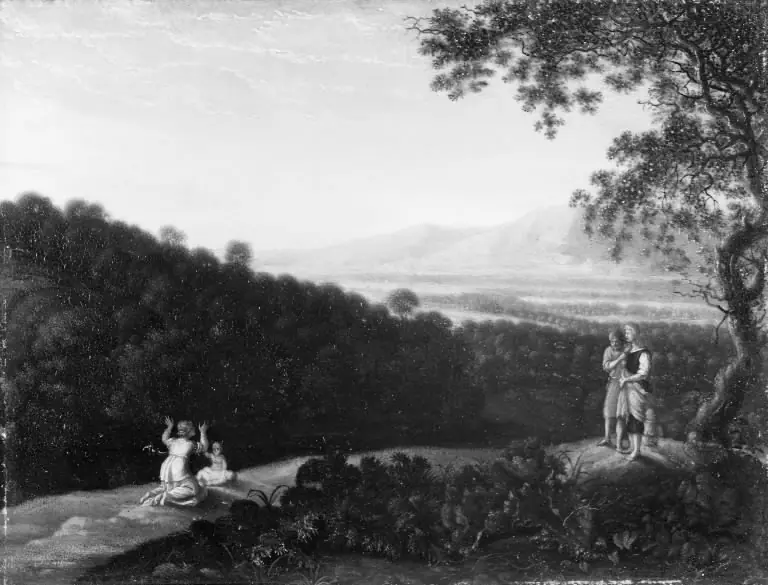 Latona and her Children
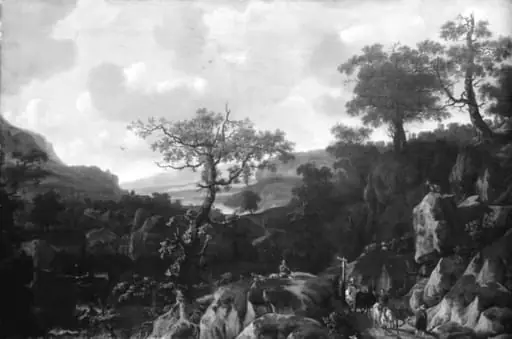 Mountain Landscape
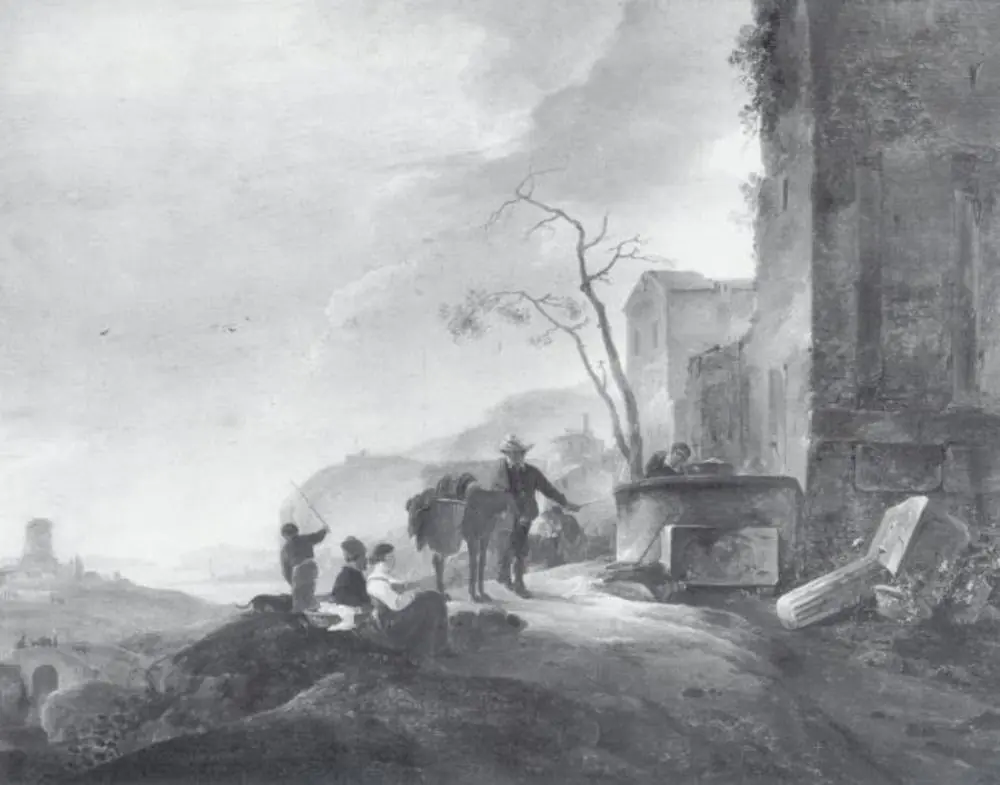 Italian Landscape with Figures at a Fountain among Antique Ruins
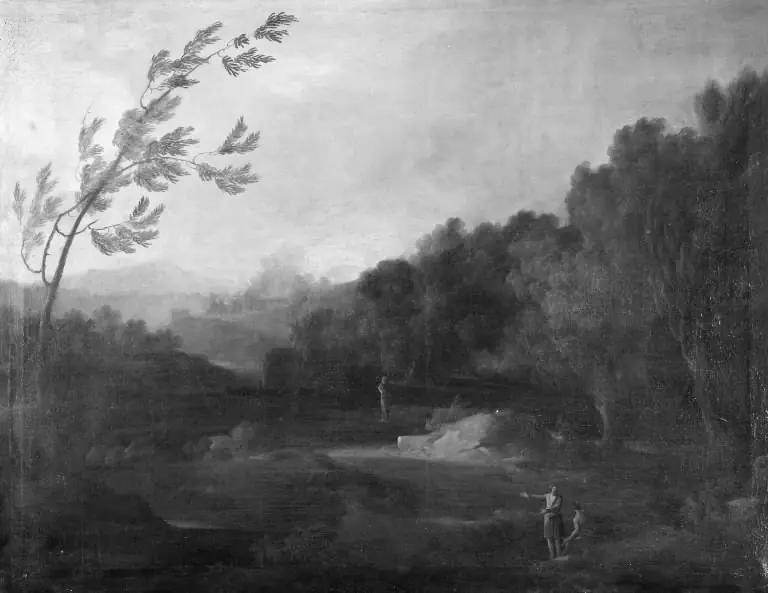 Et skovrigt landskab med udsigt mod bjergene
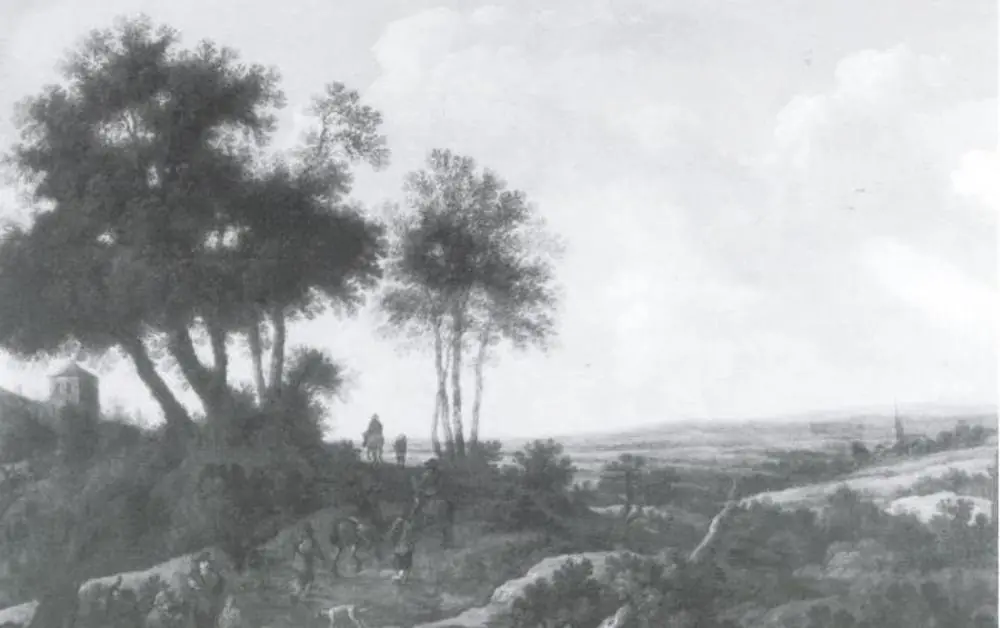
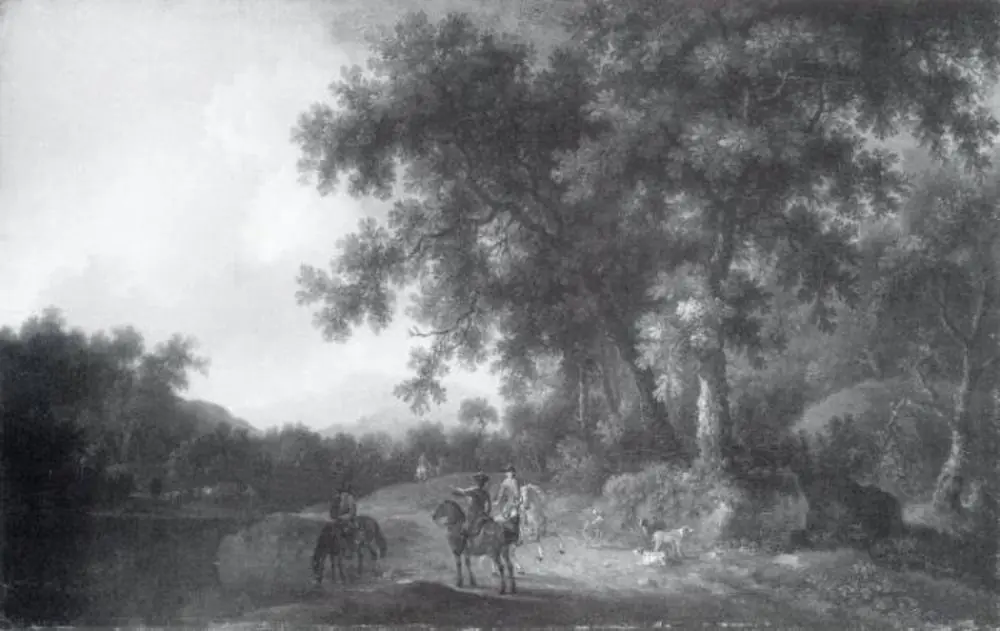 A Hunting Party at the Edge of a Forest
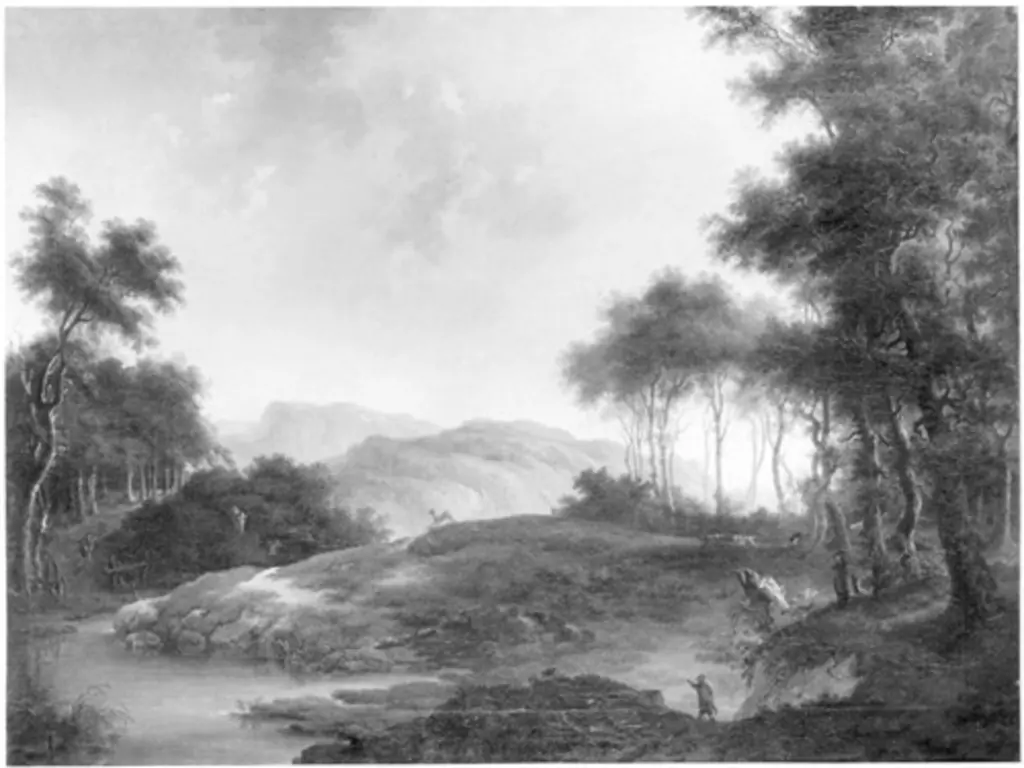 Komponierte Landschaft mit Jägern
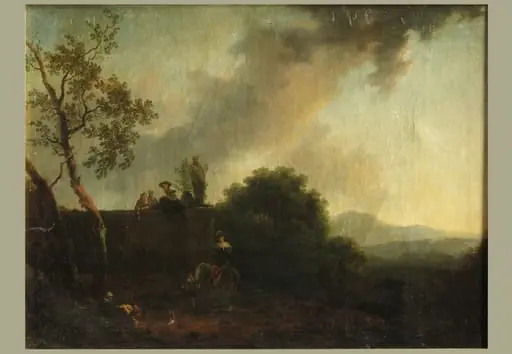 Peisaj cu zidul unei grădini
 Southern Landscape with Herdsmen