Artwork
Dune Landscape
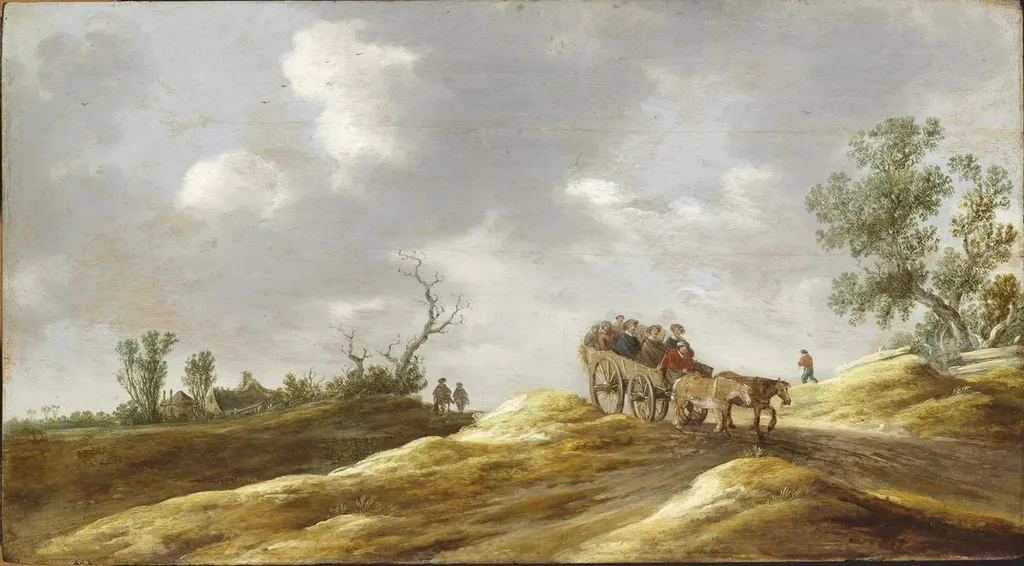
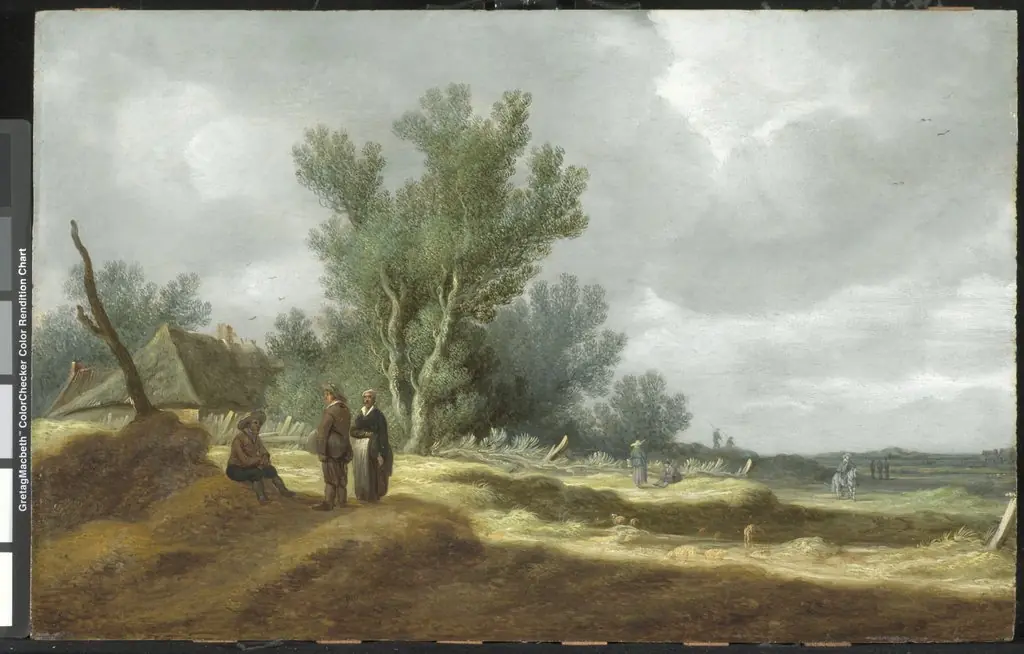
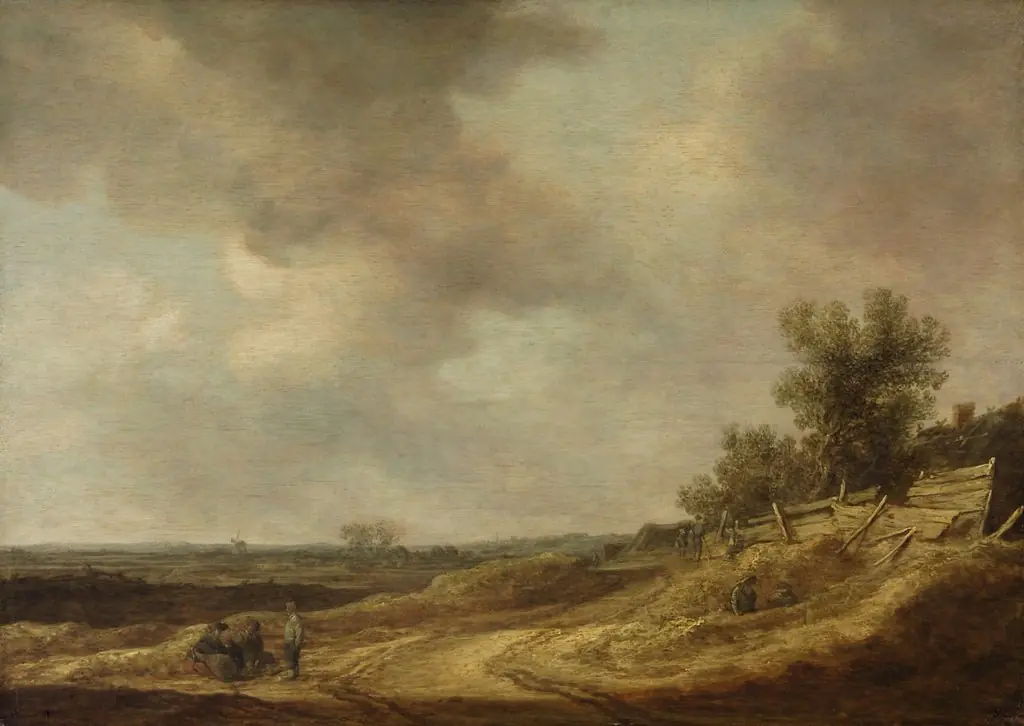
Dune Landscape is an oil painting by the Dutch Golden Age artist Pieter de Neyn. It dates from 1630 and is held in the collection of the Museum of Fine Arts, Budapest.
About this work
Overview
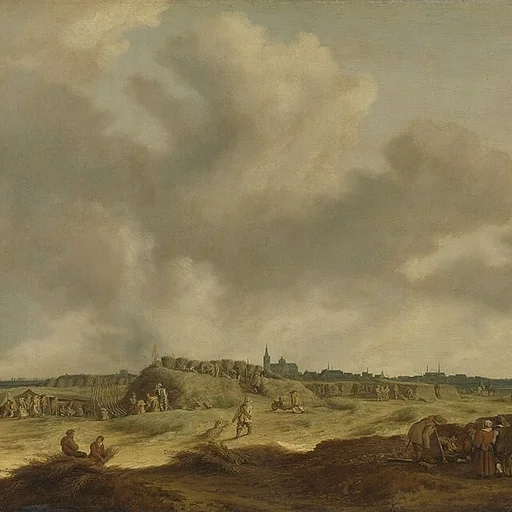
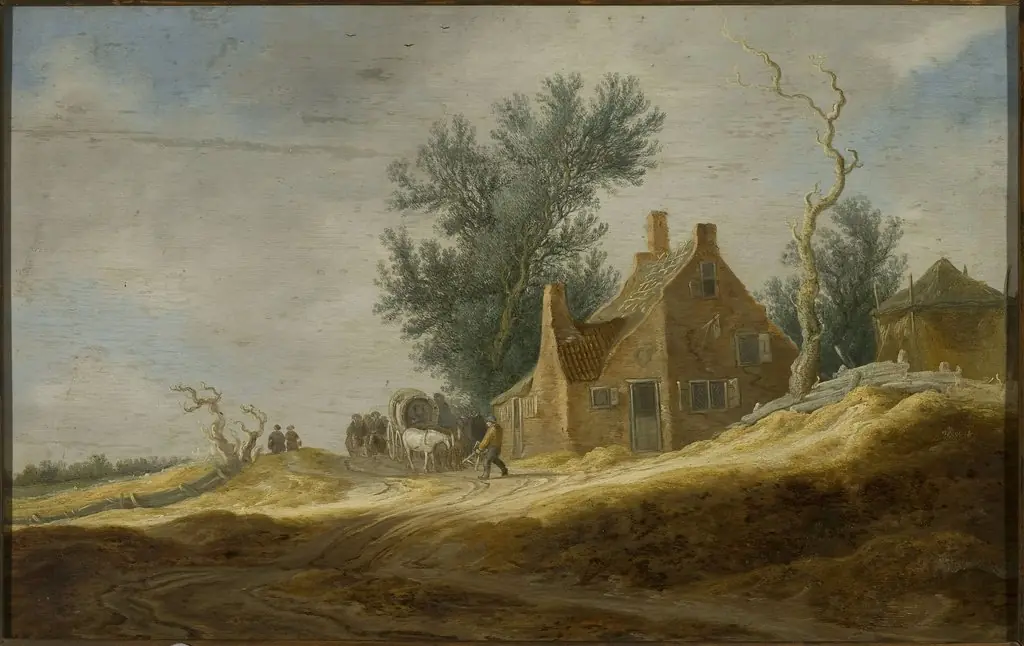
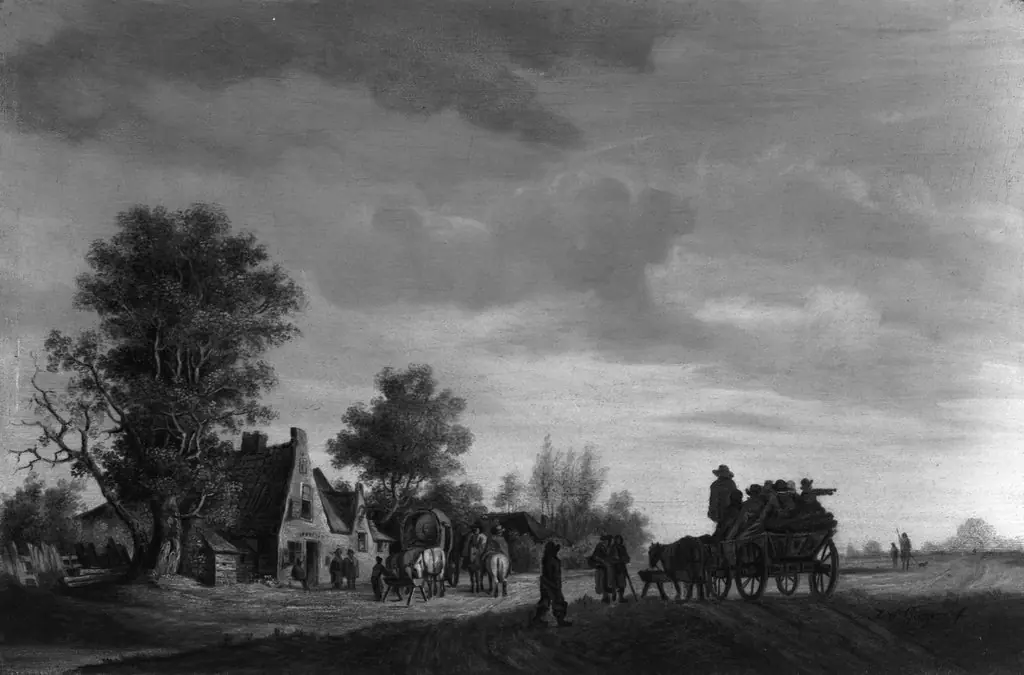
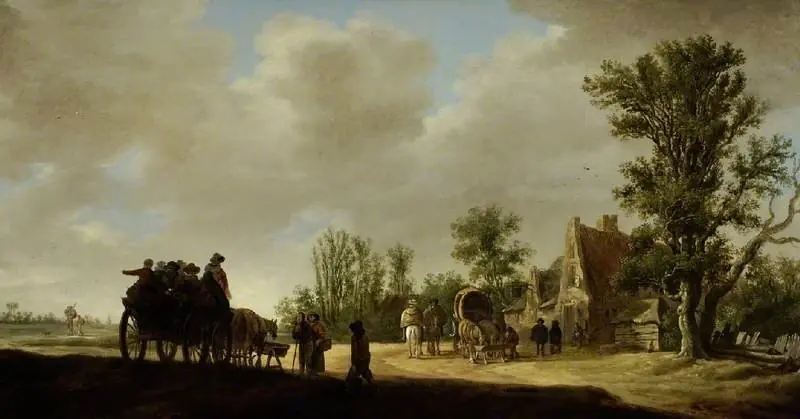
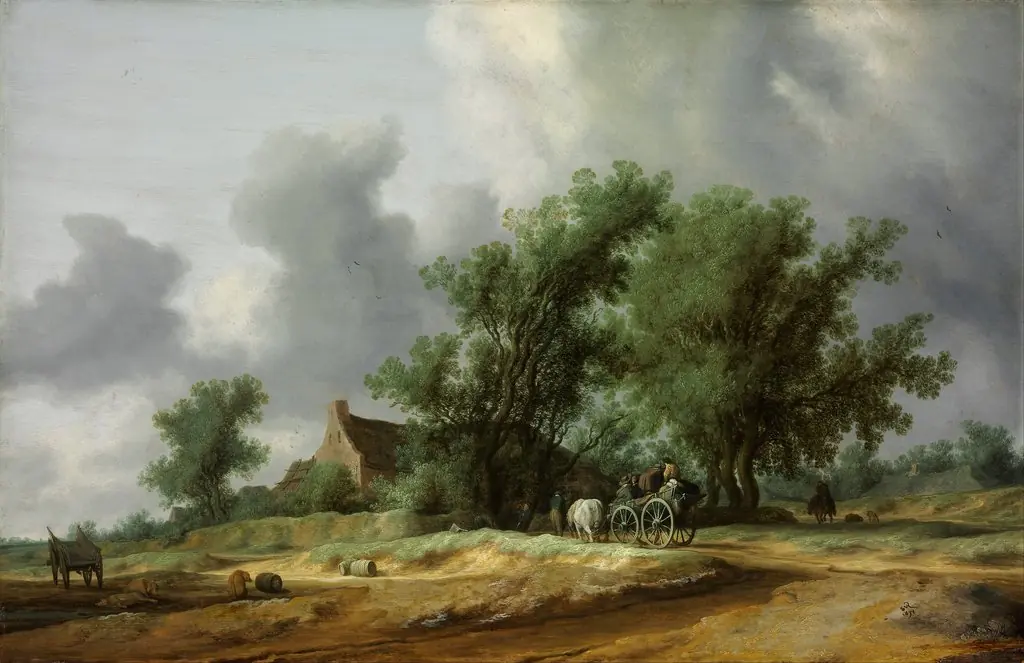
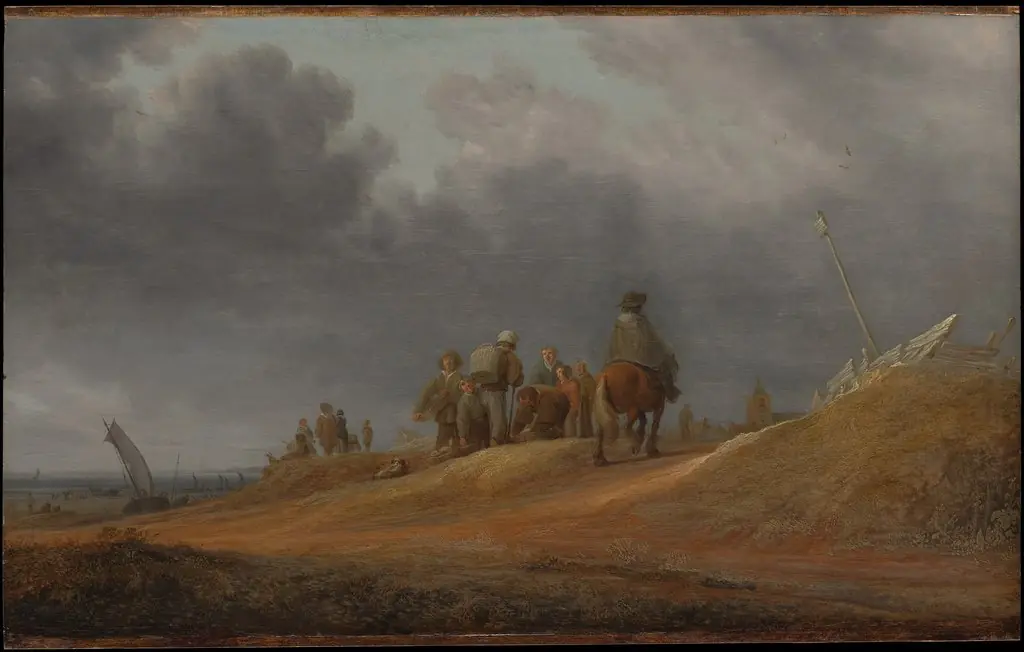
Pieter de Neyn’s oil painting Dune Landscape, dated to 1630, presents a quiet rural scene set upon a sandy rise. The composition centers on a wagon drawn by two horses, moving across the dune toward the right, while a modest group of figures occupies the vehicle. In the distance, a modest house and scattered trees punctuate a sky mottled with clouds, conveying a sense of everyday travel.
Subject & Meaning
The work captures a moment of ordinary life, emphasizing the relationship between humans, their transport, and the natural environment. The wagon and its occupants suggest a routine journey or perhaps a modest trade expedition, while the surrounding dunes and sparse vegetation highlight the challenges of moving through a coastal or inland sandy terrain.
Technique & Style
De Neyn employs chiaroscuro to model forms, using strong contrasts of light and shadow to give volume to the horses and wagon against the lighter, muted dune and sky. The handling of oil paint yields a smooth surface, allowing subtle gradations of tone that enhance the atmospheric depth and lend the scene a tranquil, measured pace.
History & Provenance
Created in the early seventeenth century, Dune Landscape entered the collection of the Museum of Fine Arts in Budapest, where it remains on display. The painting’s provenance prior to its acquisition by the museum is not extensively documented, but its presence in a major European institution reflects its recognized value within Dutch landscape traditions.
Context
The painting belongs to a period when Dutch artists frequently depicted low‑lying, everyday scenes, often focusing on the interaction between people and the land. De Neyn’s choice of a dune setting aligns with contemporary interests in varied topographies, while the inclusion of a wagon and horses underscores the importance of transport in a largely agrarian society.
Artist & collection