Artwork
Moses with the Tables of the Law
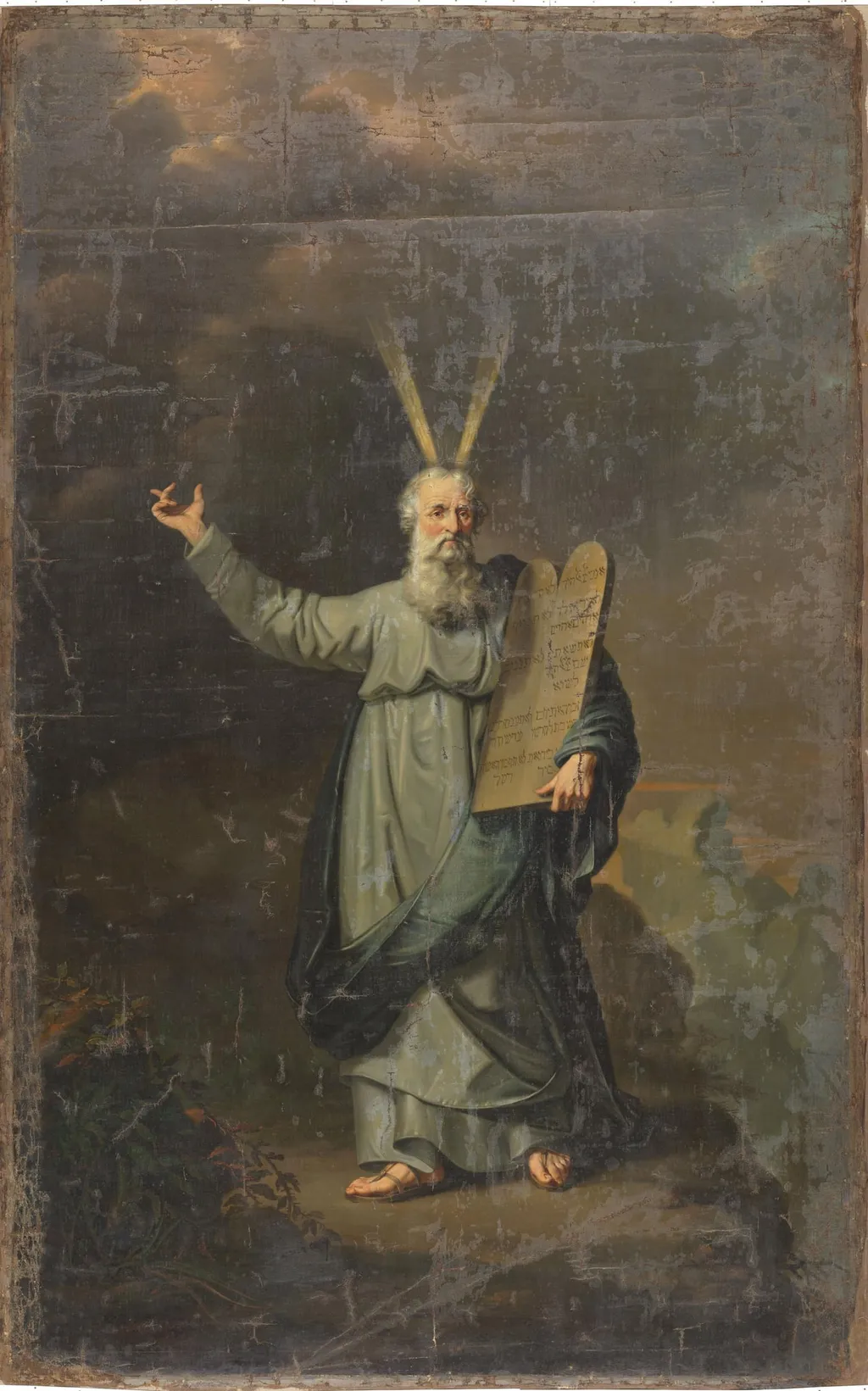
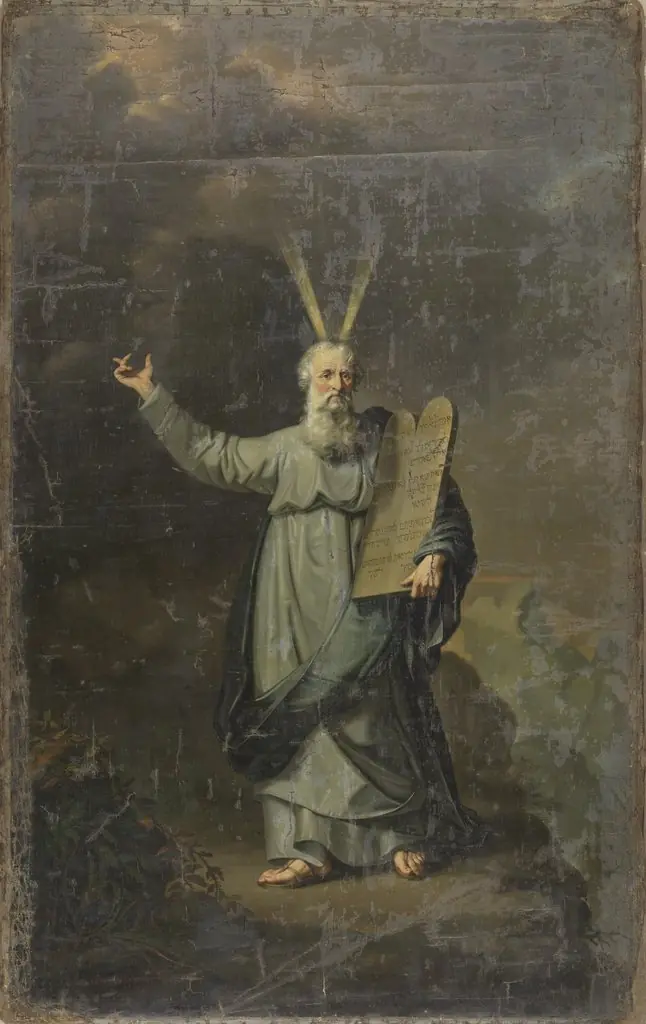
Moses with the Tables of the Law is an unspecified painting by the Biedermeier artist Pieter Gaal. It dates from 1803 and is held in the collection of the Rijksmuseum. An anonymous artist painted this large-scale depiction of Moses standing atop a mountain, holding the stone tablets of the Law.
About this work
Overview
An anonymous artist painted this large-scale depiction of Moses standing atop a mountain, holding the stone tablets of the Law. Created for the provincial court of Zeeland in Middelburg, the work was intended to serve a civic function rather than a devotional one. Its scale and placement in a judicial setting suggest a deliberate alignment between divine authority and earthly justice.
Subject & Meaning
Moses is shown in a moment of solemn authority, facing forward with the tablets clasped in both hands and his right arm raised toward the heavens. The gesture implies divine sanction of law, while the turbulent clouds above evoke the biblical moment at Sinai. For the courthouse audience, the image reinforced the idea that human justice must be grounded in higher moral order.
Technique & Style
Figures are rendered with clear outlines and subdued modeling, emphasizing clarity over emotional intensity.
The painting employs a straightforward, monumental composition with minimal background detail. Figures are rendered with clear outlines and subdued modeling, emphasizing clarity over emotional intensity. The stormy sky is rendered in broad, dark washes, contrasting with the solid, grounded form of Moses. The style reflects a regional Dutch tradition of didactic religious imagery adapted for public institutions.
History & Provenance
Commissioned for the Provinciaal Gerechtshof in Middelburg, the painting remained in situ for centuries, hanging in the chambers where judges deliberated. Its creator remains unidentified, and no documentation survives regarding its commission or execution. Despite its anonymity, the work was preserved through institutional continuity and still occupies its original location.
Context
In 17th-century Zeeland, civic institutions often used religious imagery to legitimize legal authority. Moses as lawgiver was a common symbol in courtrooms across Europe, bridging scriptural tradition with secular governance. This painting reflects a broader trend where biblical narratives were repurposed to underscore the moral foundations of civic life, particularly in Protestant regions.
Legacy
The painting endures as a quiet testament to the intersection of law and moral symbolism in early modern Dutch society. Though unsigned and uncelebrated in art historical narratives, its continued presence in the courthouse underscores its original purpose: to remind those who wielded justice of its transcendent source. It remains a physical link to a time when law was visually framed as sacred duty.
Artist & collection
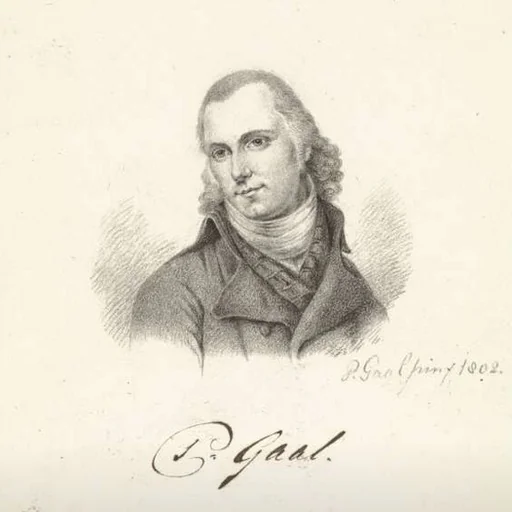
Artist
Pieter Gaal (19 July 1769 in Middelburg – 13/18 January 1819 in Middelburg) was a Dutch painter, the son of Thomas Gaal.