Artwork
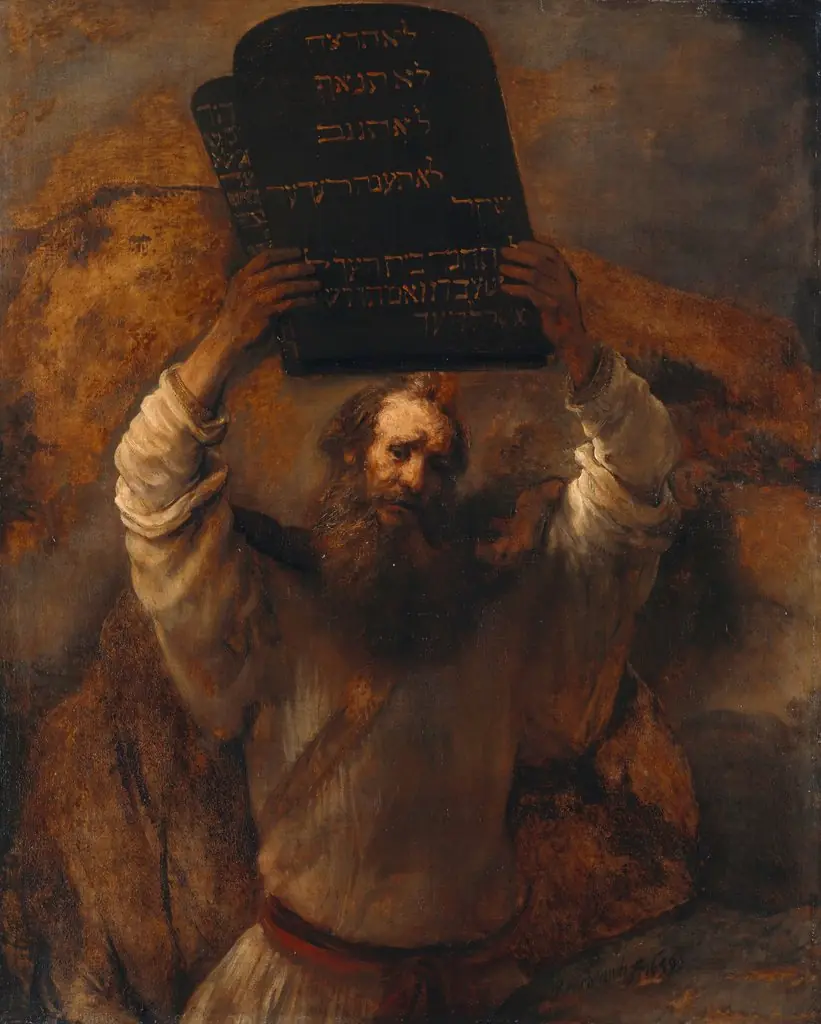
Moses with Ten Commandments
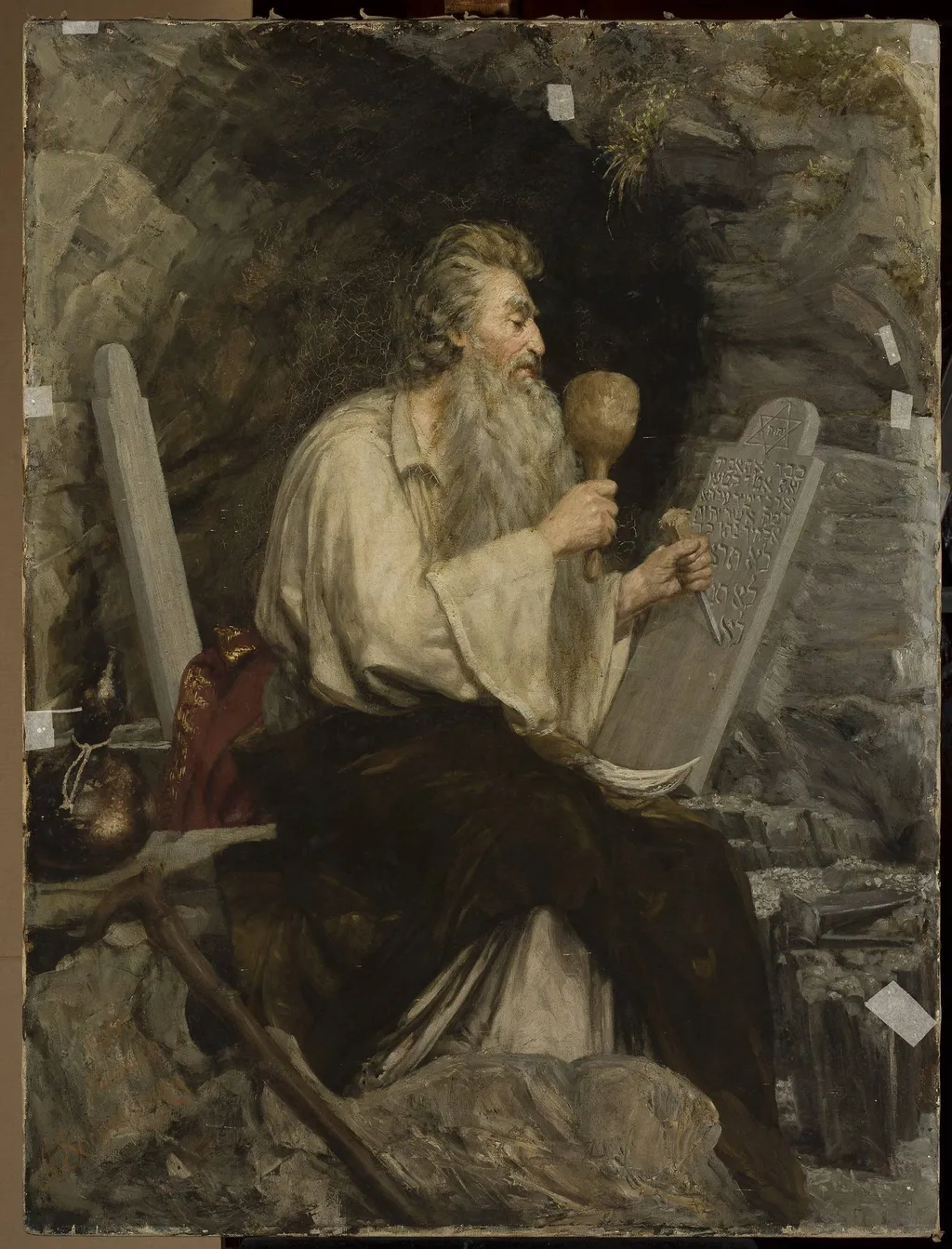
Moses with Ten Commandments is an oil painting by Aleksander Sochaczewski. It dates from 1896 and is held in the collection of the National Museum in Warsaw.
About this work
Overview
Painted in 1896 by Aleksander Sochaczewski, this oil on canvas work portrays Moses holding the stone tablets of the Ten Commandments.
Painted in 1896 by Aleksander Sochaczewski, this oil on canvas work portrays Moses holding the stone tablets of the Ten Commandments. Created during the artist’s later years, the painting reflects his continued engagement with biblical themes after his exile to Siberia following the 1863 Polish uprising. It is now part of the National Museum in Warsaw’s collection, representing a quiet departure from his earlier political subjects.
Subject & Meaning
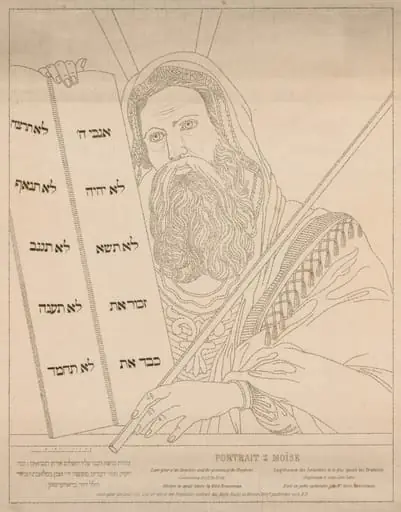
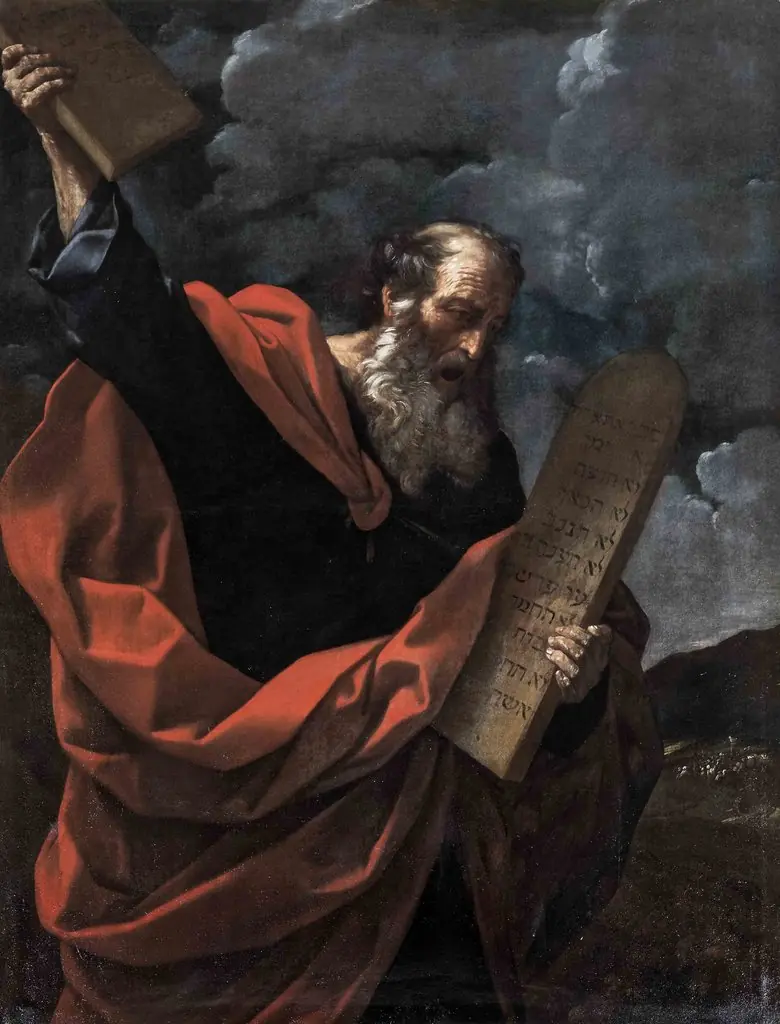
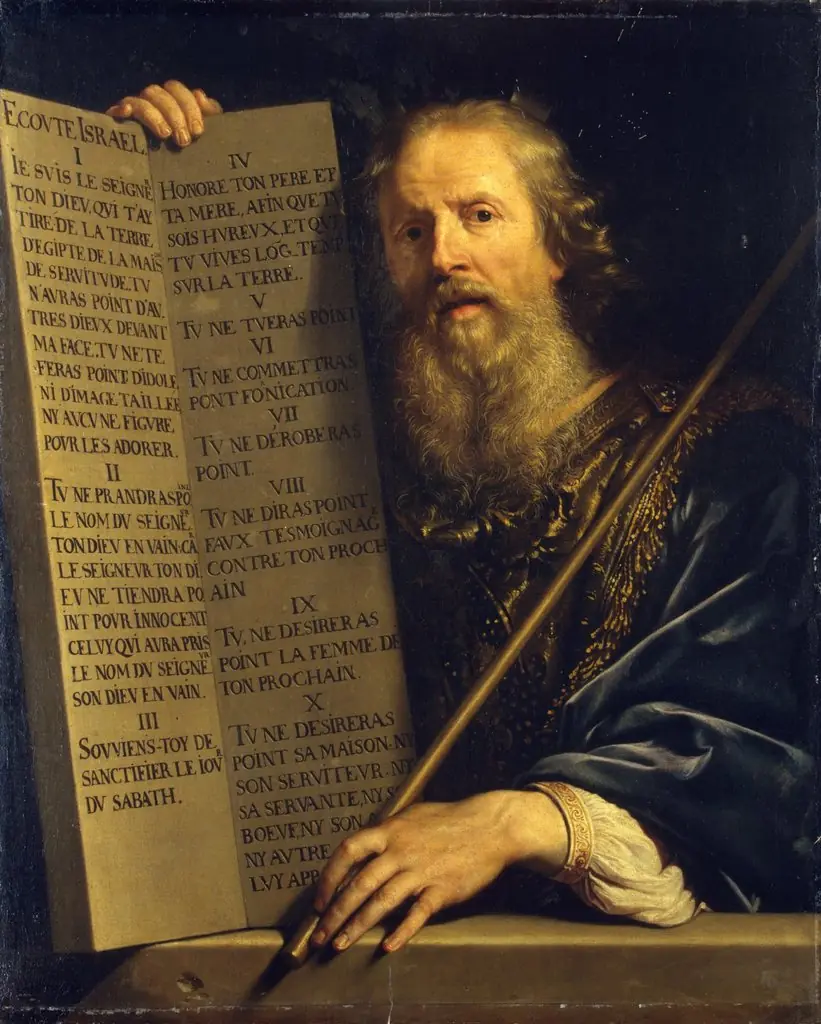
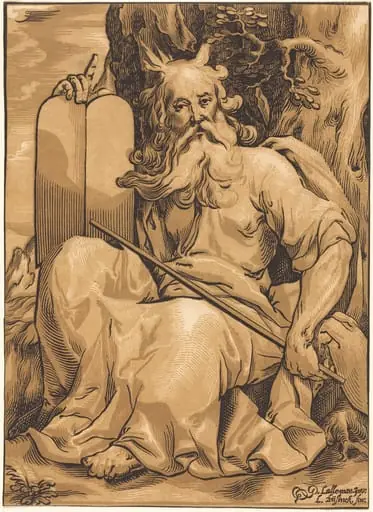
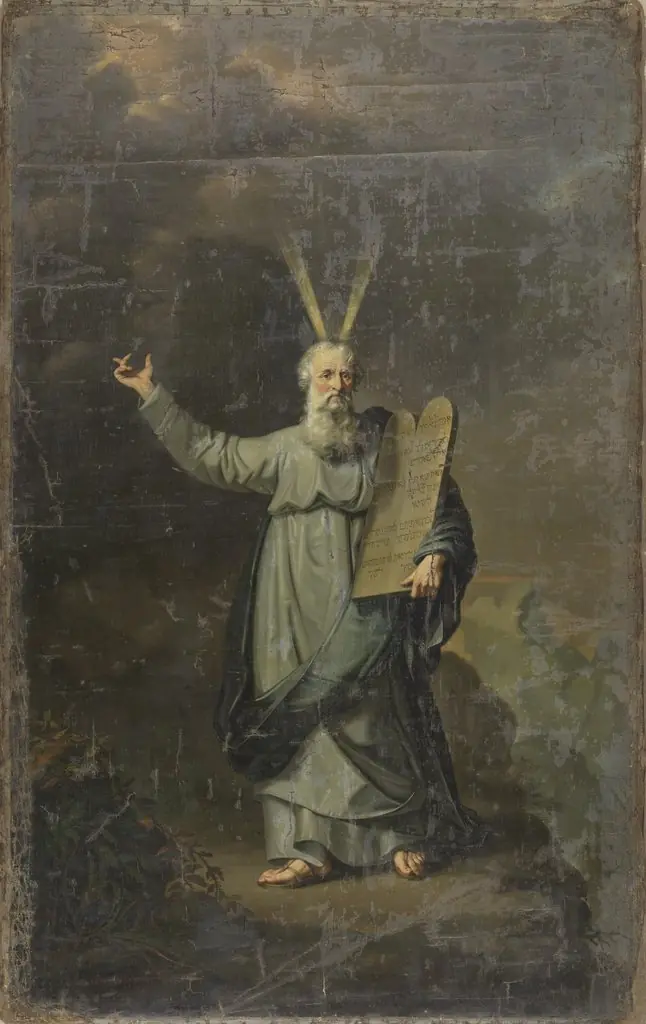
The figure of Moses is depicted as an aged man, bearded and seated in stillness, clutching the sacred tablets in one hand and a wooden mallet in the other. The mallet suggests the act of inscribing or engraving divine law, while the contemplative posture conveys reverence rather than authority. The absence of grandeur or divine light shifts focus to human responsibility in preserving sacred text, emphasizing introspection over spectacle.
Technique & Style
Sochaczewski uses oil paint to render subtle contrasts of light and shadow, drawing attention to Moses’s face and hands. The dark, unadorned background isolates the figure, enhancing the sense of solitude. The texture of the stone tablet and the soft folds of the red cloth behind the chair are rendered with quiet precision, reinforcing a mood of solemnity through restrained brushwork and muted tones.
History & Provenance
Sochaczewski painted this work after returning from Siberian exile, during a period when he turned from political narratives to spiritual subjects. The painting entered the National Museum in Warsaw’s holdings in the early 20th century, where it has remained as part of its collection of Polish 19th-century art. Its provenance reflects the artist’s post-exile life and the museum’s interest in his evolving thematic focus.
Context
Created decades after the failed January Uprising, the painting emerges from a personal and national climate of loss and reflection. While Sochaczewski had previously depicted rebellion and suffering, here he turns to a biblical archetype of law and endurance. The work resonates with a broader 19th-century European trend of reinterpreting religious figures through psychological realism rather than idealized grandeur.
Legacy
Though not widely exhibited outside Poland, the painting stands as a testament to Sochaczewski’s artistic maturity. It reveals a shift from historical narrative to meditative symbolism, influencing later Polish artists who sought to express national identity through introspective, spiritually grounded imagery. Its quiet power endures as a personal and cultural artifact of resilience.
Artist & collection
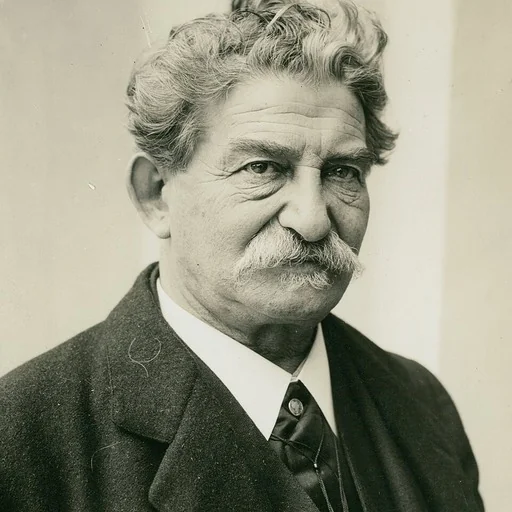
Artist
Aleksander Sochaczewski (pronounced ; March 3, 1843, Iłów — April 15, 1923) was a Polish painter who participated in the Polish January Uprising against the Russian Empire in 1863.