Artwork
A Mounted Cavalier
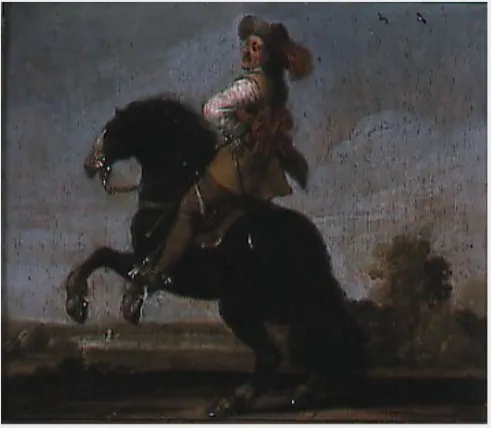
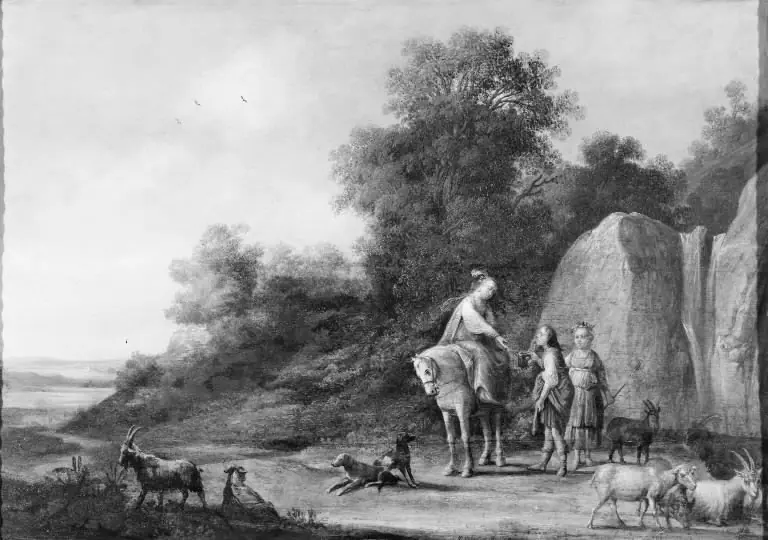
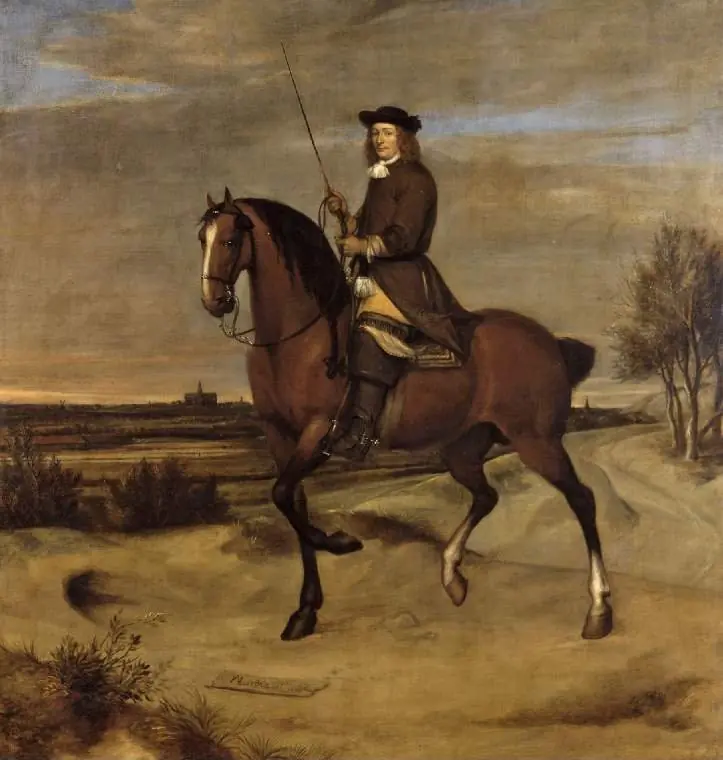
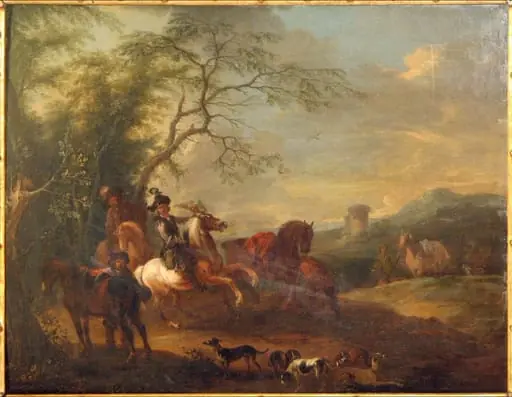
A Mounted Cavalier is an unspecified painting by the Dutch Golden Age artist Pieter Symonsz Potter. It dates from 1640 and is held in the collection of the National Gallery of Ireland.
About this work
Overview
The work resides in the National Gallery of Ireland and exemplifies 17th-century Dutch genre painting with its focus on horsemanship and naturalistic detail.
Painted in 1640 by Pieter Symonsz Potter, this equestrian portrait captures a mounted rider in dynamic motion. The work resides in the National Gallery of Ireland and exemplifies 17th-century Dutch genre painting with its focus on horsemanship and naturalistic detail. The composition emphasizes movement through the horse’s rearing posture and the rider’s controlled stance, suggesting a moment of tension or training.
Subject & Meaning
The figure is a cavalryman, likely a gentleman or officer, depicted mid-motion rather than in formal repose. His attire—white shirt, brown vest, and hat—reflects contemporary military or aristocratic dress. The scene conveys control amid chaos: the rider maintains command of the spirited horse, implying discipline, skill, and social status. No narrative context is given, leaving interpretation open to the viewer’s understanding of equestrian culture.
Technique & Style
Potter employs chiaroscuro to model the forms of horse and rider, enhancing three-dimensionality against a muted, gray sky. Brushwork is precise yet fluid, capturing the texture of fabric, fur, and leather without excessive detail. The background, sparse and atmospheric, directs focus to the central pair. The composition’s diagonal energy, from the horse’s raised forelegs to the rider’s tilted posture, reinforces a sense of arrested motion.
History & Provenance
The painting has been in the National Gallery of Ireland’s collection since at least the 19th century, though its earlier ownership remains undocumented. It was likely acquired as part of a broader interest in Dutch and Flemish equestrian subjects during the Victorian era. No significant alterations or restorations are recorded, and the work retains its original surface and framing.
Context
In mid-17th century the Netherlands, depictions of horses and riders were common, reflecting both military tradition and the cultural value placed on horsemanship among the urban elite. Unlike grand historical scenes, Potter’s work belongs to a quieter tradition of observational portraiture, emphasizing realism over symbolism. Similar subjects appear in the oeuvres of artists like Philips Wouwerman and Adriaen van de Velde.
Legacy
Though not among Potter’s most widely known works, this painting contributes to the understanding of Dutch equestrian imagery beyond battle scenes or hunting. It reflects a broader trend toward intimate, action-oriented depictions of daily life. Its preservation in a major public collection ensures continued study of how Dutch painters rendered movement, control, and the human-animal relationship with quiet authority.
Artist & collection