Artwork
Die Karawane
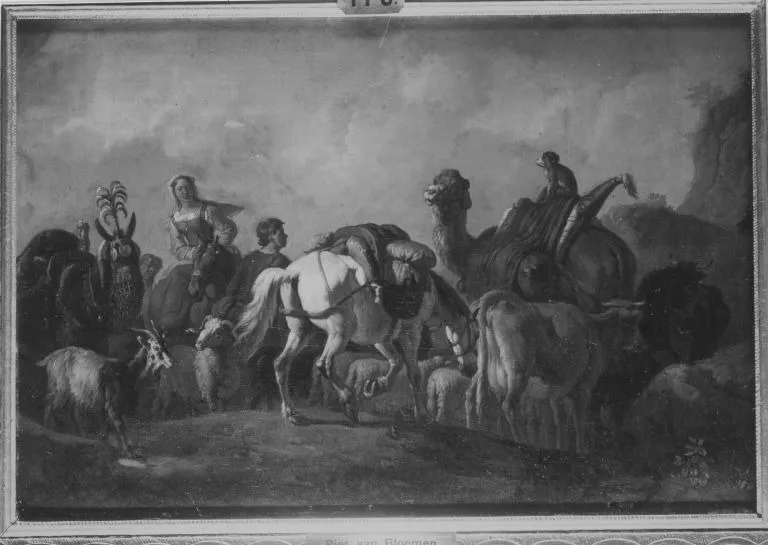
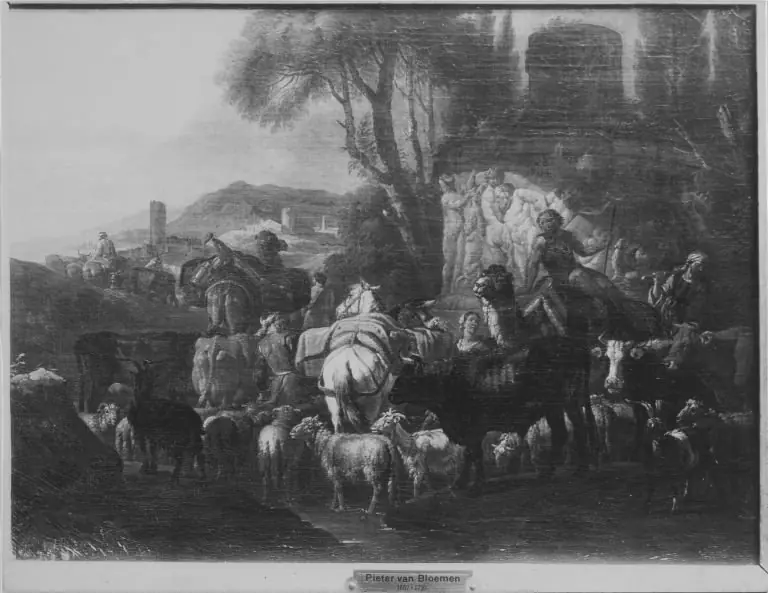
Die Karawane is an unspecified painting by the Flemish Baroque painting artist Pieter van Bloemen. It dates from 1694 and is held in the collection of the Bavarian State Painting Collections.
About this work
Overview
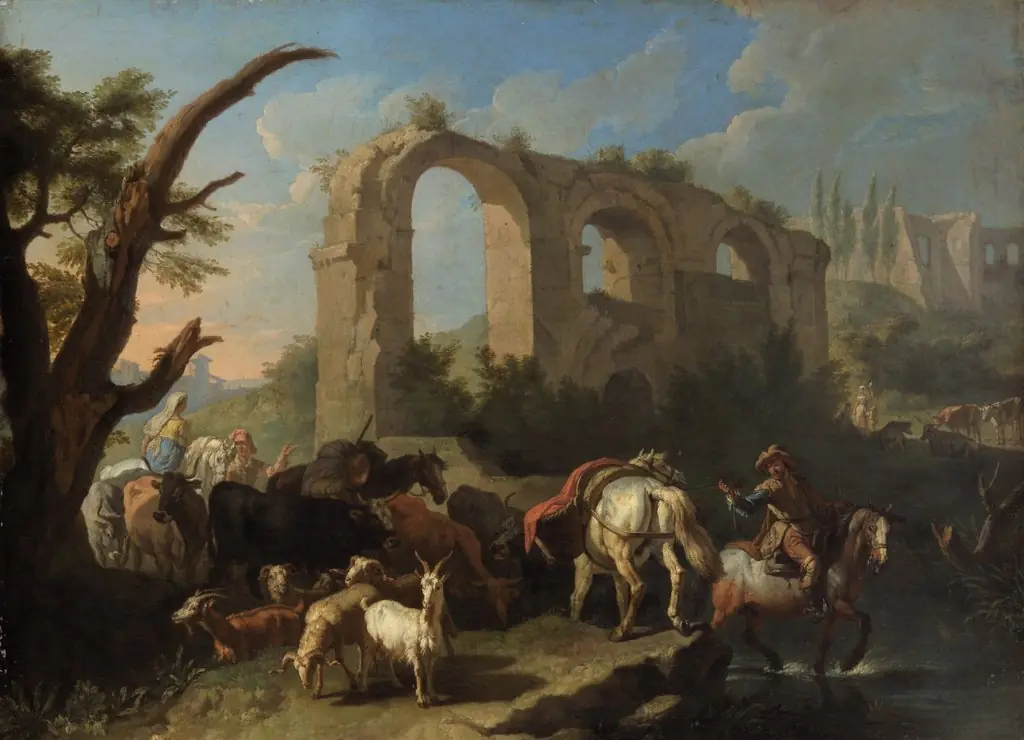
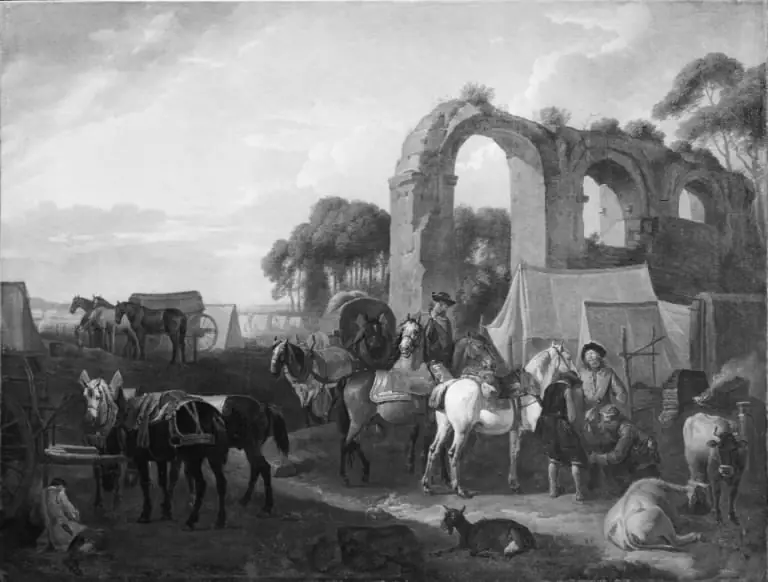
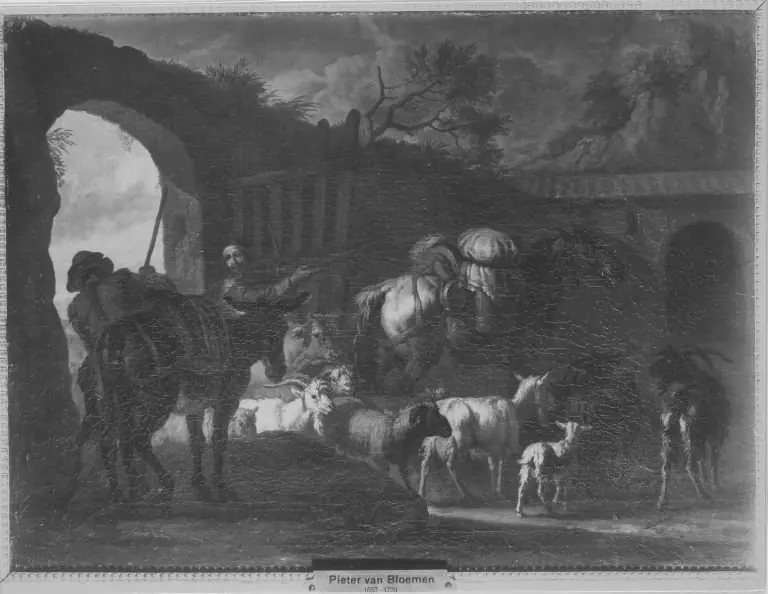
Painted in 1694 by Flemish artist Pieter van Bloemen, *Die Karawane* is a landscape scene populated with travelers and livestock, reflecting the artist’s specialization in animated rural and pastoral settings. The work belongs to a series of Italianate compositions that blend observed naturalism with idealized terrain, characteristic of late 17th-century Flemish painting. It is currently held in the Alte Pinakothek in Munich.
Subject & Meaning
Dressed in period attire, the people and their animals—horses, goats, and sheep—convey a sense of everyday movement across the countryside.
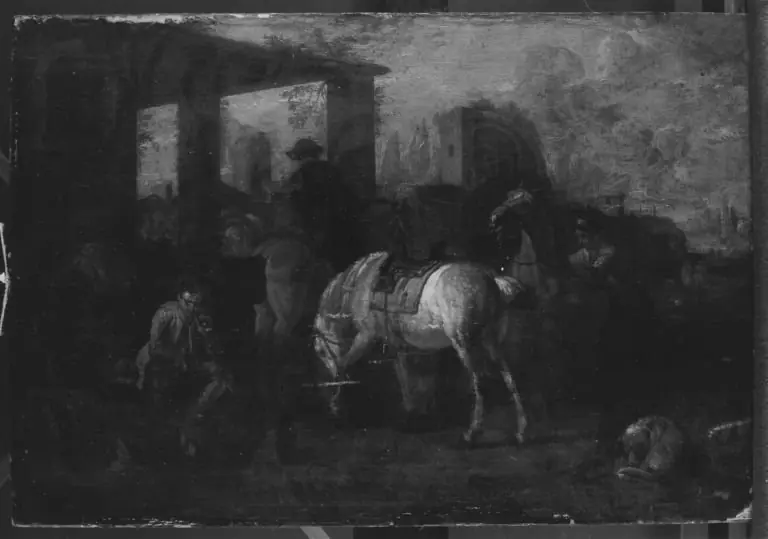
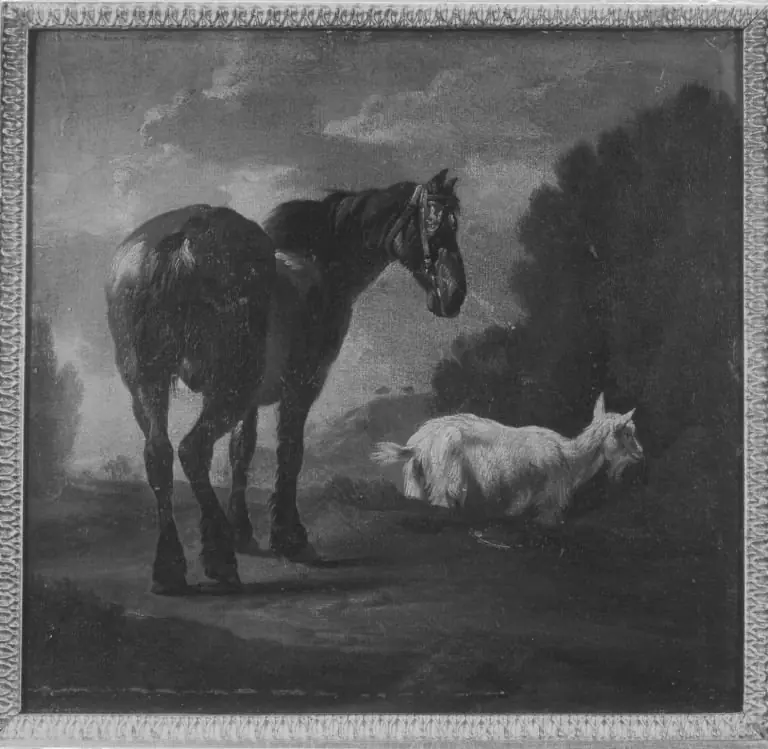
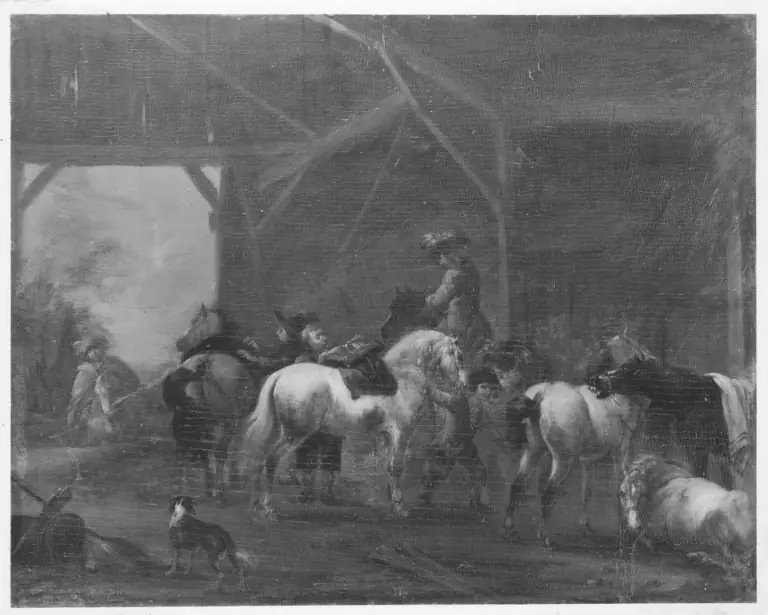
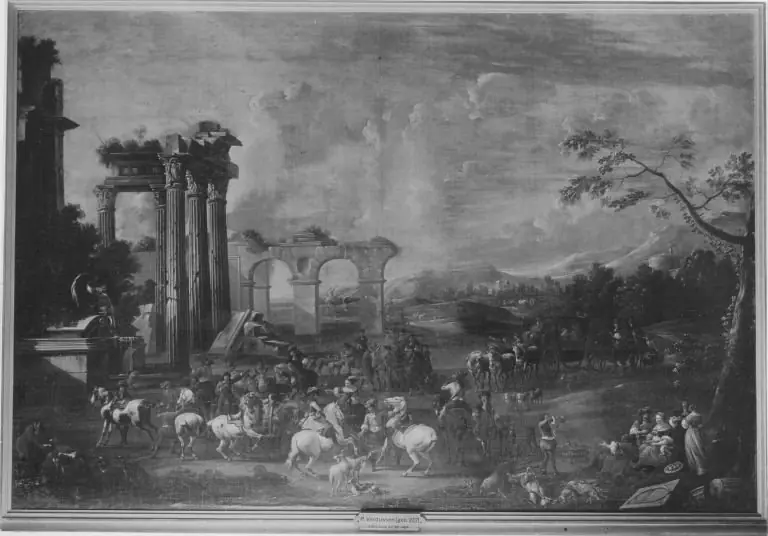
The painting portrays a caravan of figures and animals paused in a sunlit landscape, suggesting a moment of rest during travel. Dressed in period attire, the people and their animals—horses, goats, and sheep—convey a sense of everyday movement across the countryside. Rather than narrating a specific event, the scene evokes the rhythm of seasonal migration and trade, common in southern Europe at the time.
Technique & Style
Van Bloemen employed subtle chiaroscuro to model forms and suggest atmospheric depth, with soft transitions between light and shadow enhancing the texture of wool, leather, and earth. His brushwork is precise yet unobtrusive, allowing the naturalism of the animals and figures to dominate. The composition is organized diagonally, guiding the viewer’s eye from the foreground animals to the distant horizon.
History & Provenance
Created during van Bloemen’s mature period, the painting entered the Alte Pinakothek’s collection in the 19th century, likely through royal or aristocratic acquisitions common in Bavaria at the time. Its attribution has remained consistent, with no significant disputes over authorship. The work reflects the tastes of collectors who favored Flemish genre scenes with naturalistic detail.
Context
Van Bloemen’s Italianate landscapes emerged from a broader Flemish tradition of depicting foreign travel and pastoral life, influenced by artists who had journeyed to Italy. His focus on animals and travelers aligned with contemporary interests in ethnographic observation and the picturesque. The painting fits within a market for decorative, narrative-rich works favored by northern European patrons.
Legacy
Though not widely known outside specialist circles, van Bloemen’s careful rendering of animals and landscape settings influenced later genre painters in the Low Countries. *Die Karawane* remains a representative example of his ability to merge observational accuracy with compositional harmony, preserving a quiet record of pre-industrial mobility in early modern Europe.
Artist & collection
Artist
Pieter van Bloemen, also known as Standaart (bapt. 17 January 1657 – 6 March 1720), first name also spelled Peter or Peeter, was a Flemish painter, draughtsman and printmaker. He was a gifted landscape and animal artist…