Artwork
Mercury and Argus
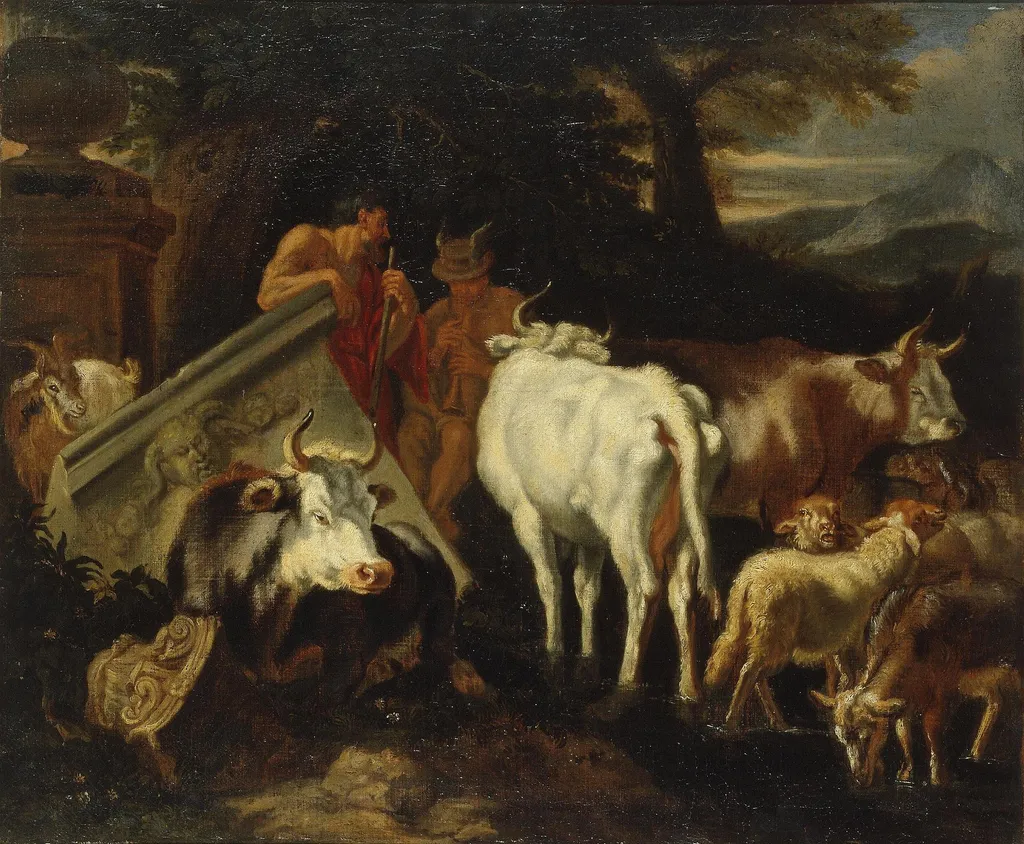
Mercury and Argus is an oil painting by the Rococo painting artist Pieter van Bloemen. It is held in the collection of the Hermitage Museum.
About this work
Overview
Mercury and Argus is an oil painting created by Flemish artist Pieter van Bloemen around 1750, characterized by its Rococo style. The work is part of the State Hermitage Museum's collection.
Subject & Meaning
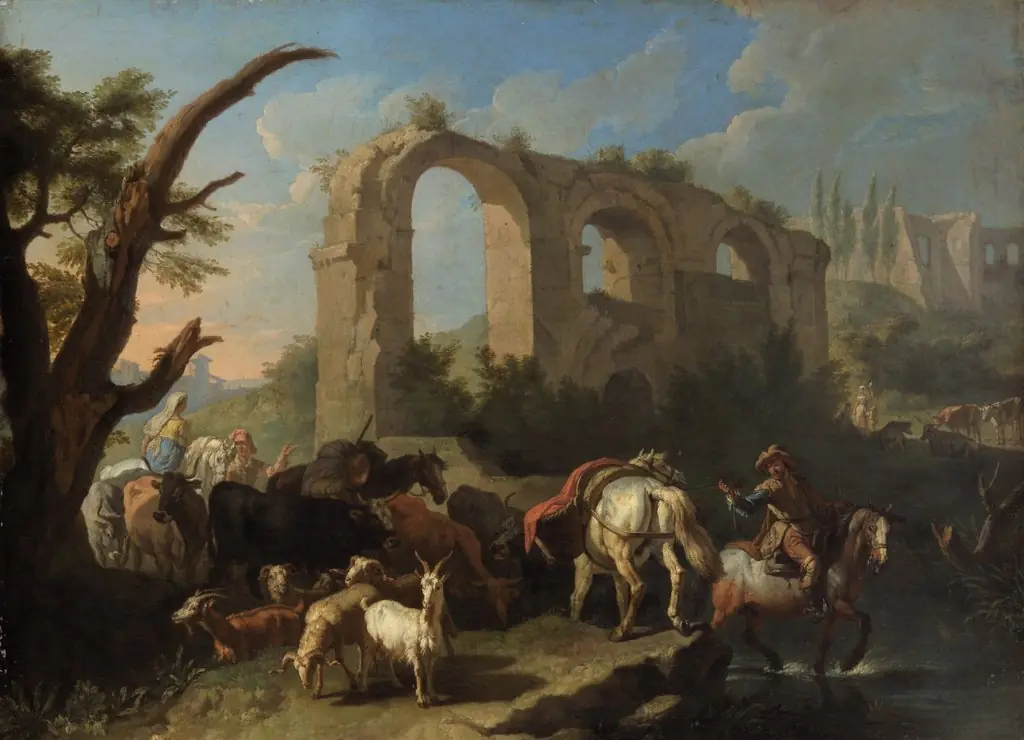
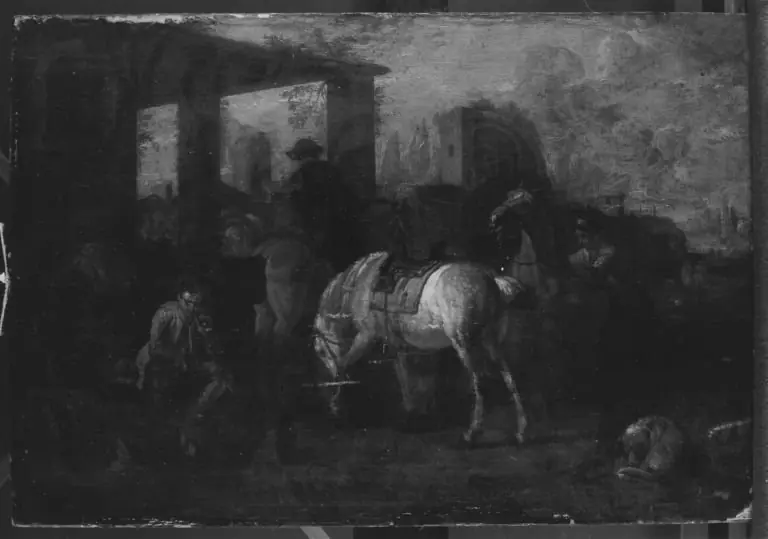
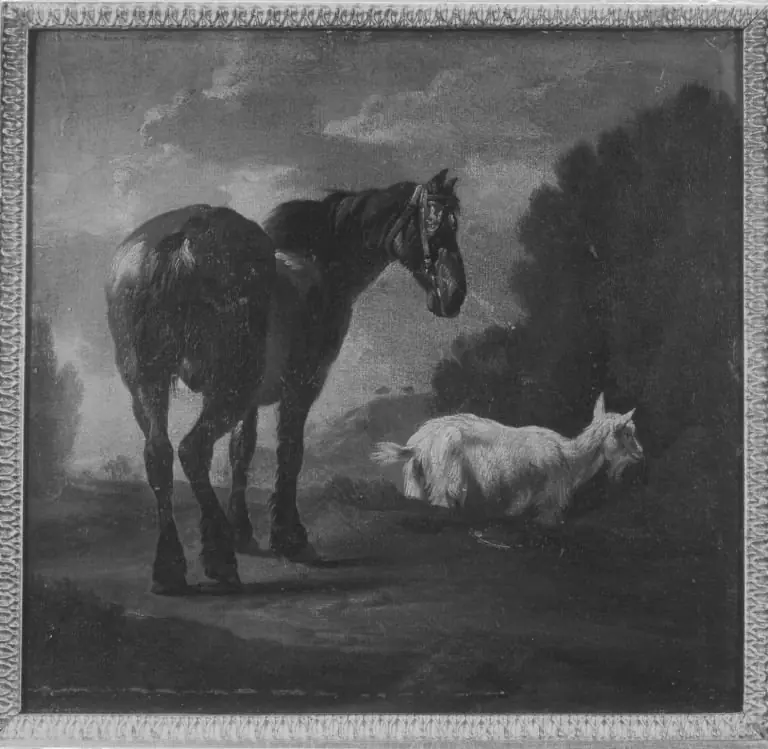
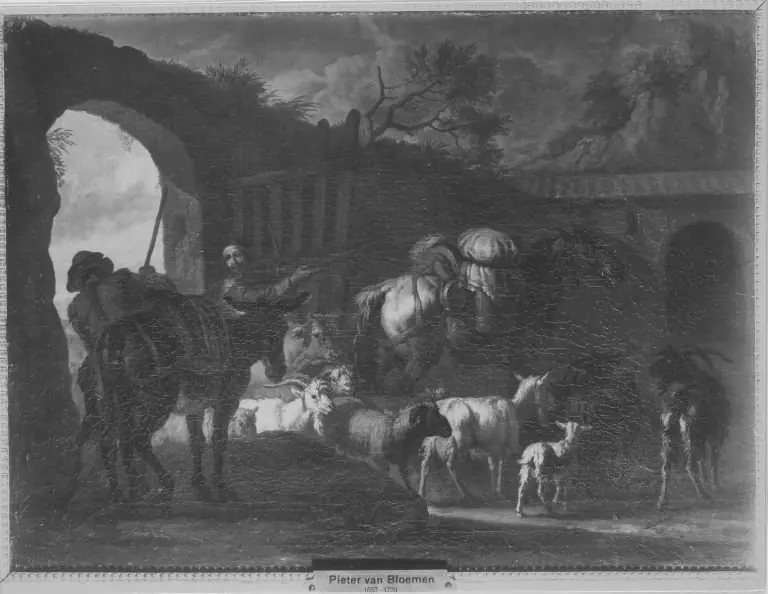
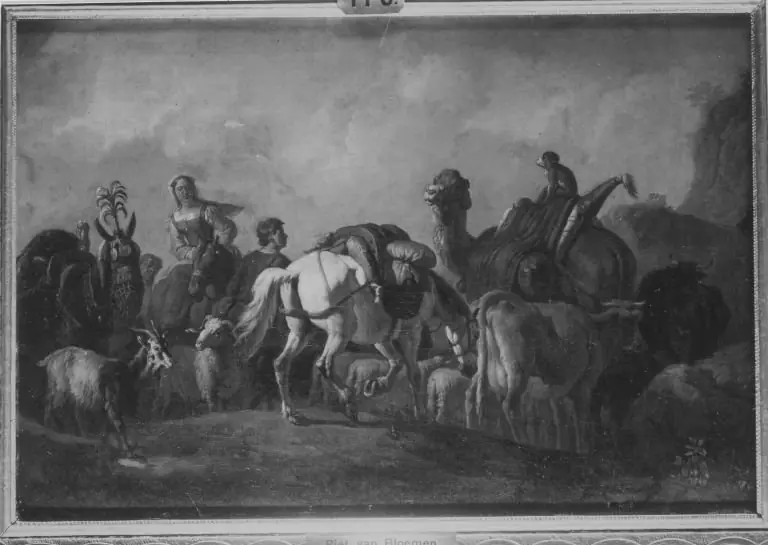
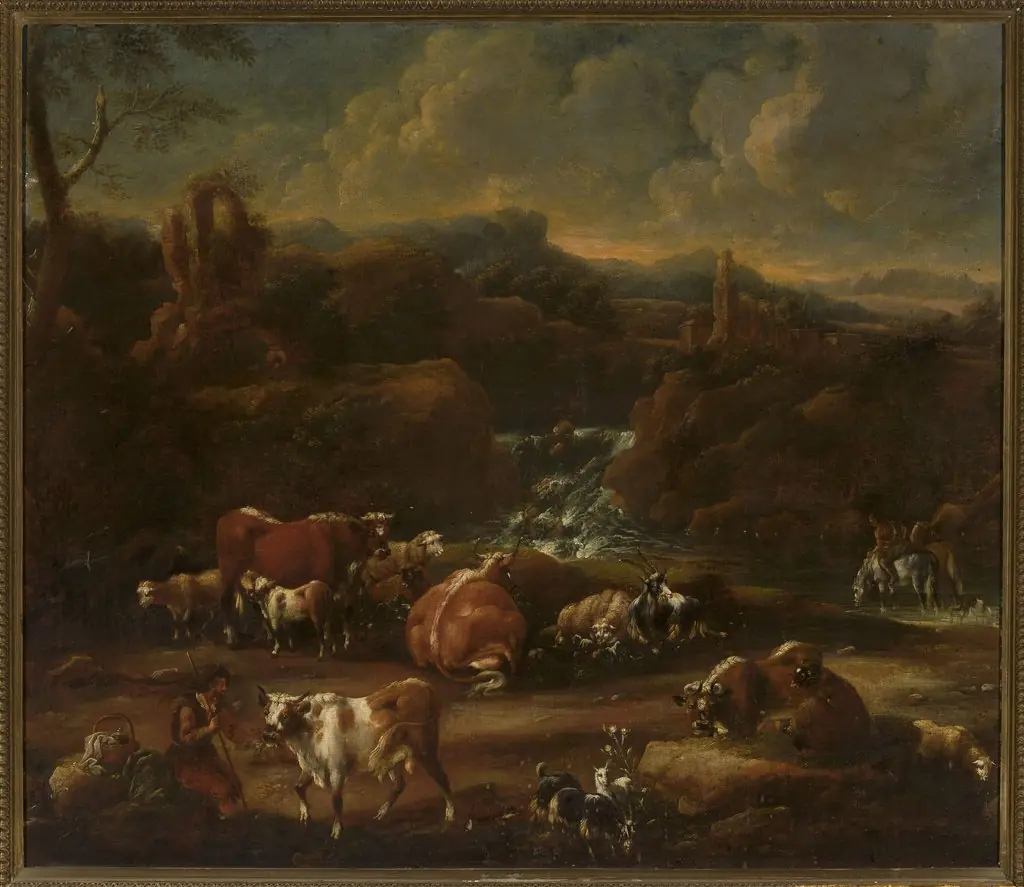
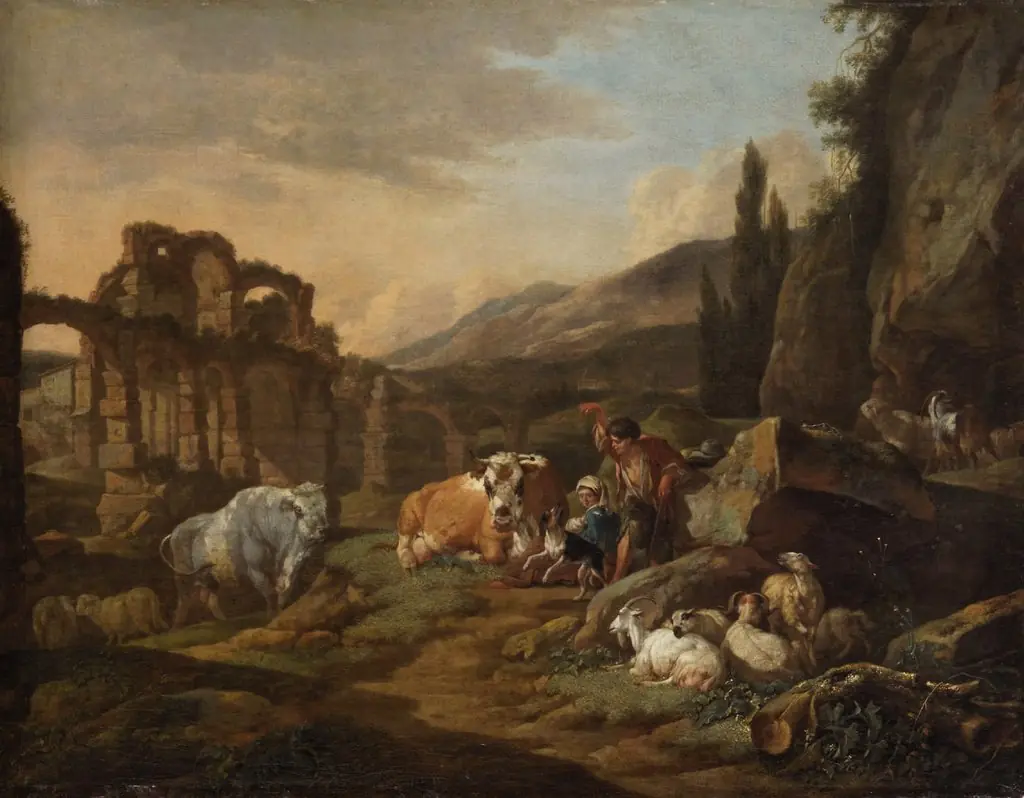
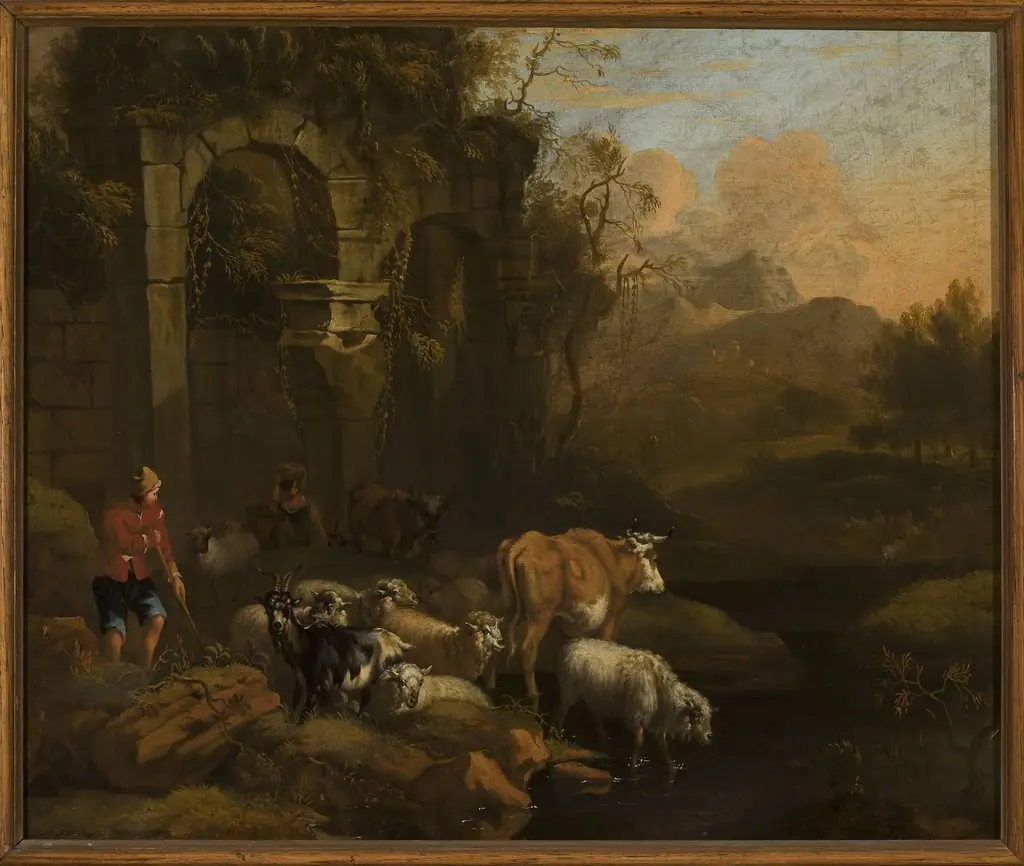
Contrary to its title, the painting primarily depicts a pastoral scene with a herder guiding a mixed group of livestock across a rocky terrain, accompanied by a second, shirtless figure in the background. Mercury, the mythological figure referenced in the title, is not prominently featured in the visible composition, suggesting a potential discrepancy or deeper interpretive layer between the title and the depicted scene.
Technique & Style
Van Bloemen employed strong chiaroscuro techniques, juxtaposing deep shadows with bright, highlighted areas to create visual contrast. This is evident in the herder's wide-brimmed hat and the textured fur of the animals, which are set against a somber, darkening sky.
History & Provenance
Created circa 1750, the painting is now held in the permanent collection of the State Hermitage Museum, though specific details of its acquisition history are not provided here.
Context
While titled after a mythological subject, the painting's focus on everyday pastoral life reflects a common theme in 18th-century Flemish art, blending the mundane with titular nods to classical mythology.
Own this work as a print
Artist & collection
Artist
Pieter van Bloemen, also known as Standaart (bapt. 17 January 1657 – 6 March 1720), first name also spelled Peter or Peeter, was a Flemish painter, draughtsman and printmaker. He was a gifted landscape and animal artist…