Artwork
Still Life with Shells and Insects
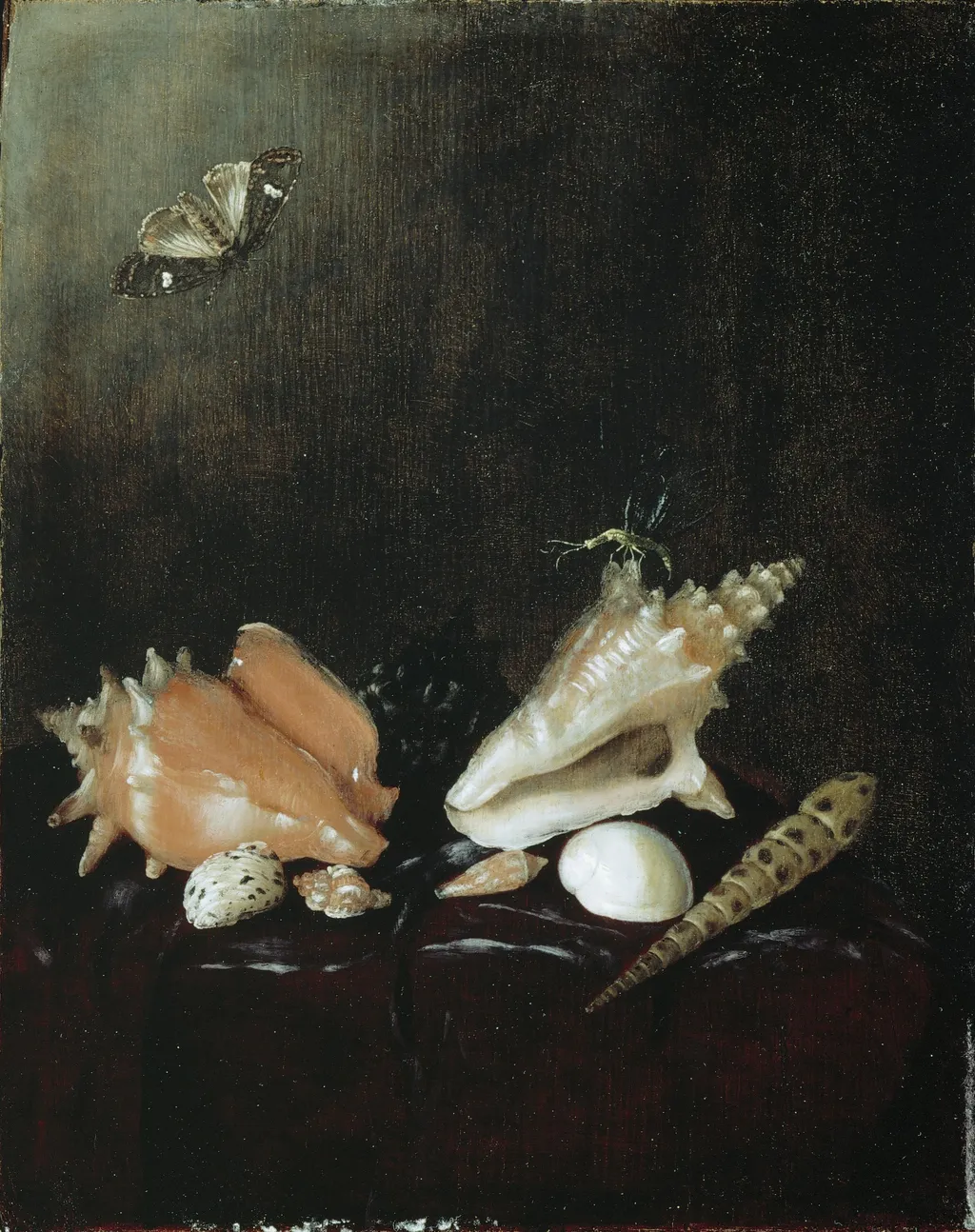
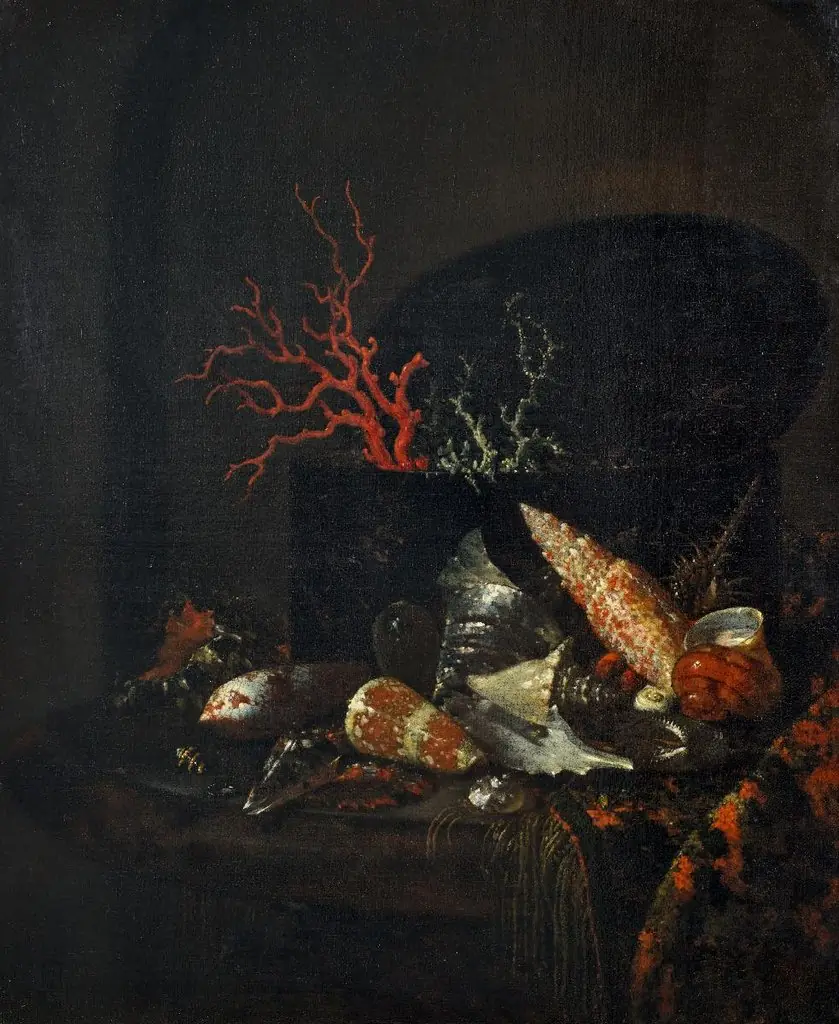
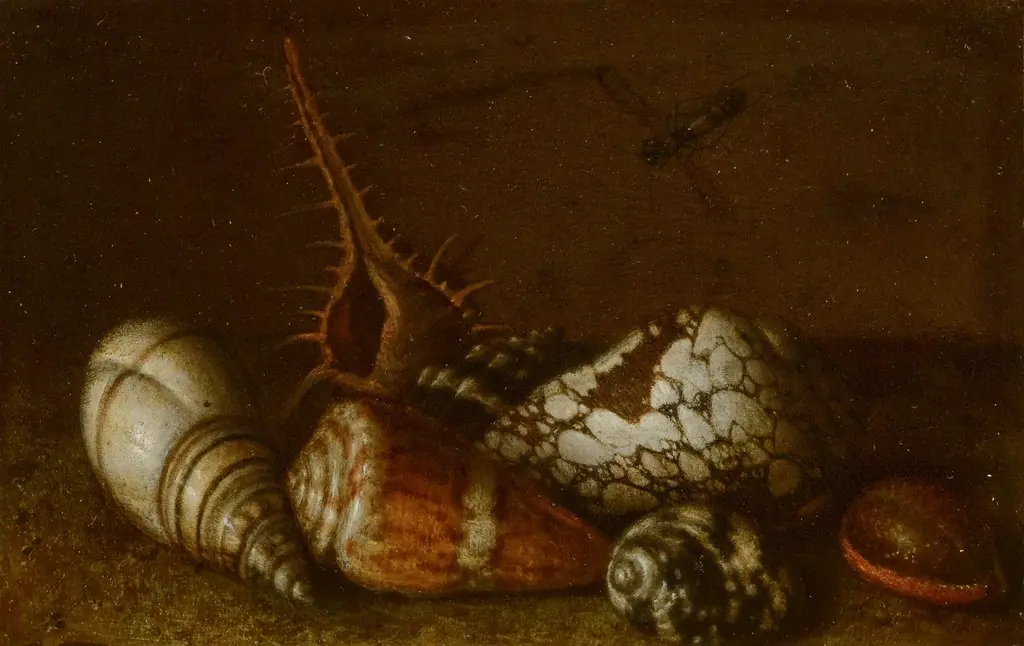
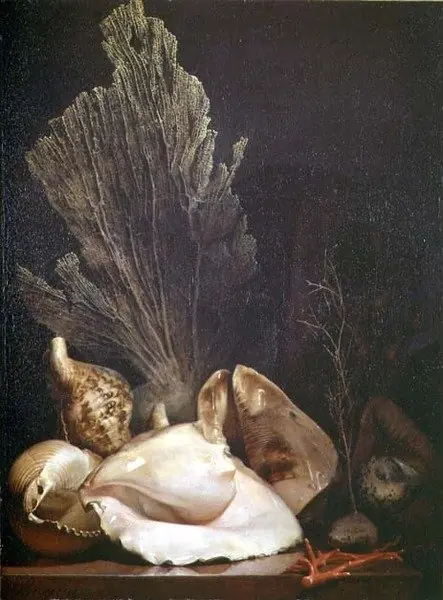
Still Life with Shells and Insects is an unspecified painting by the Dutch Golden Age artist Pieter van de Venne. It dates from 1656 and is held in the collection of the Detroit Institute of Arts.
About this work
Overview
Still Life with Shells and Insects, created by Pieter van de Venne in 1656, is a still life painting housed at the Detroit Institute of Arts.
Subject & Meaning
The painting features a meticulously arranged composition of various shells and insects on a dark, reflective surface. The prominence of shells, particularly two large light-colored ones, and the inclusion of a butterfly in flight and a perched insect, may symbolize the transience of life and the beauty of natural forms, common themes in 17th-century Dutch still life.
Technique & Style
Van de Venne employed chiaroscuro to create depth and dimensionality, leveraging the dark background and reflective table surface. The interplay of light and shadow enhances the textural qualities of the shells and insects, showcasing the artist's skill in capturing naturalistic detail.
History & Provenance
Created in 1656, the painting's early history is not extensively documented, but it is now part of the permanent collection at the Detroit Institute of Arts.
Context
This work reflects the Dutch Golden Age's fascination with still life and the natural world. The focus on everyday, mundane subjects elevated to artistic status was characteristic of the period, often incorporating subtle moral or philosophical themes.
Legacy
While not as widely recognized as some of its contemporaries, 'Still Life with Shells and Insects' contributes to the broader understanding of 17th-century Dutch still-life painting techniques and themes, offering insights into the era's artistic and philosophical preoccupations.
Own this work as a print
Artist & collection