Artwork
Stillleben mit Meerschnecken
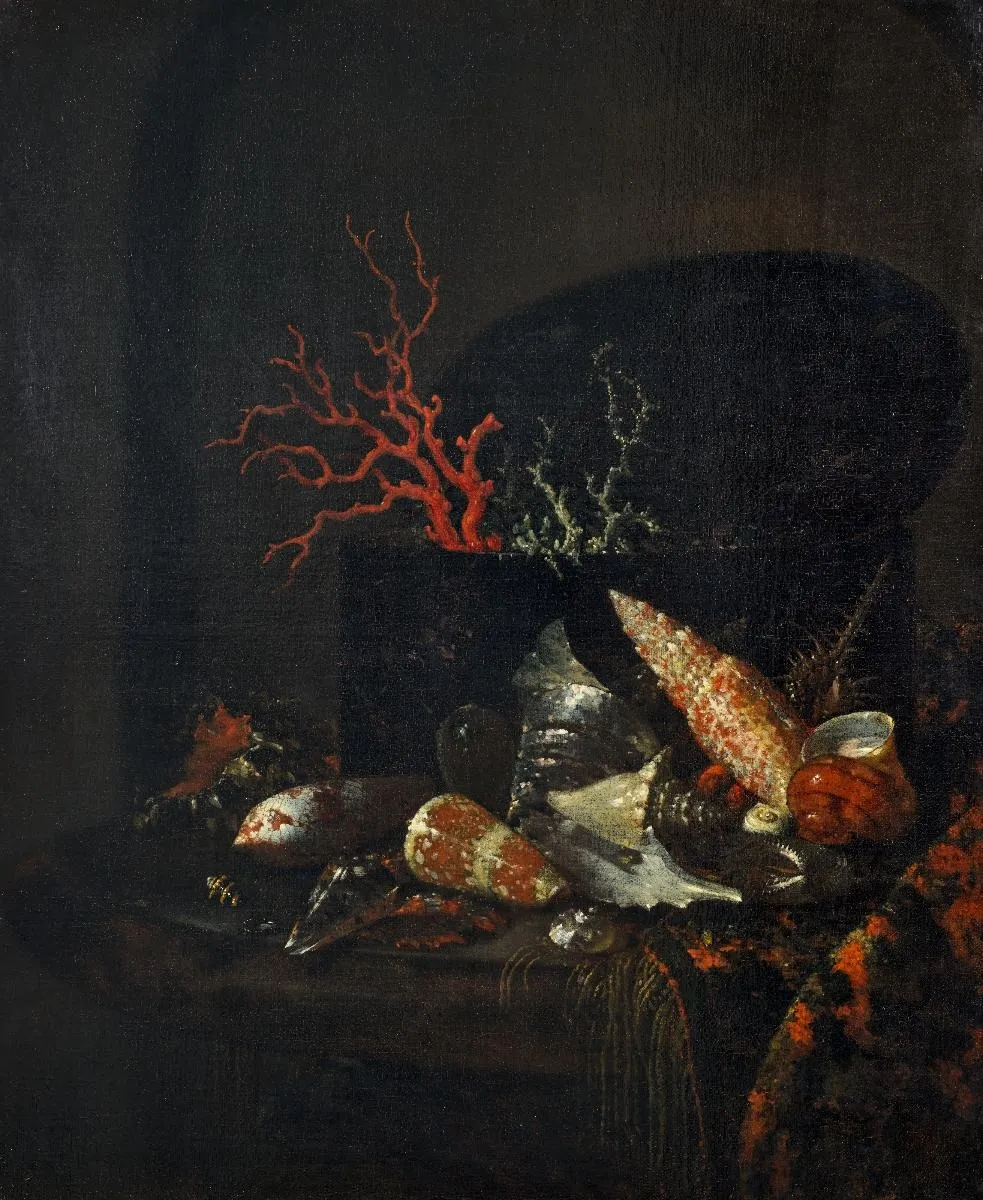
Stillleben mit Meerschnecken is an oil painting by the Dutch Golden Age artist Willem Kalf. It dates from 1652 and is held in the collection of the Kunsthaus Zürich.
About this work
Overview
It presents a quiet arrangement of marine specimens—shells and coral—placed on a surface against a deep, shadowed backdrop.
Painted in 1652 by Willem Kalf, this oil on canvas work belongs to the Dutch Golden Age tradition of still-life painting. It presents a quiet arrangement of marine specimens—shells and coral—placed on a surface against a deep, shadowed backdrop. The composition reflects Kalf’s mature approach, balancing natural forms with a controlled, atmospheric lighting that draws focus to texture and form without overt display.
Subject & Meaning
The painting centers on seashells and coral, objects collected during an era of expanding global trade. Unlike the opulent tableware typical of Kalf’s pronkstilleven, these natural specimens suggest a quieter form of luxury—curiosity and rarity valued for their organic complexity. Their placement, partially overlapping and subtly lit, implies contemplation rather than ostentation, aligning with intellectual interests in natural history prevalent among Dutch collectors.
Technique & Style
Kalf employs chiaroscuro to model each shell’s surface, emphasizing ridges, curves, and translucency with precise brushwork. The light, originating from the left, casts soft gradients across the forms, enhancing their three-dimensionality. Dark tones in the background recede, isolating the objects and heightening their material presence. The rendering avoids embellishment, favoring quiet observation over theatricality, characteristic of his refined aesthetic.
History & Provenance
The painting entered the collection of Kunsthaus Zürich in the 20th century, following a documented lineage through European private holdings. While its early ownership is not fully recorded, its style and date align with Kalf’s known output during his Amsterdam period. It has remained relatively unaltered since its creation, preserving the artist’s original handling of pigment and light.
Context
In mid-17th-century Holland, the collection and study of exotic natural objects flourished alongside scientific inquiry and mercantile expansion. Shells, often brought from Asia and the Americas, were symbols of global connection and intellectual refinement. Kalf’s choice to depict them without gold or porcelain reflects a shift toward appreciating nature’s intrinsic beauty, resonating with emerging naturalist interests beyond mere wealth display.
Legacy
This work exemplifies Kalf’s contribution to elevating still life beyond decoration into a medium for quiet observation. His focus on natural forms, rendered with technical precision and restrained composition, influenced later still-life traditions that valued subtlety over spectacle. Though less celebrated than his banquet scenes, this painting endures as a testament to the artistic potential of ordinary, collected nature.
Artist & collection
Artist
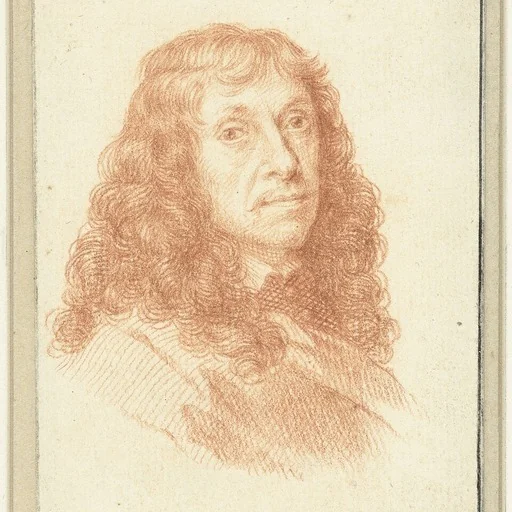
Willem Kalf (1619 – 31 July 1693) was one of the most prominent Dutch still-life painters of the 17th century, the Dutch Golden Age.

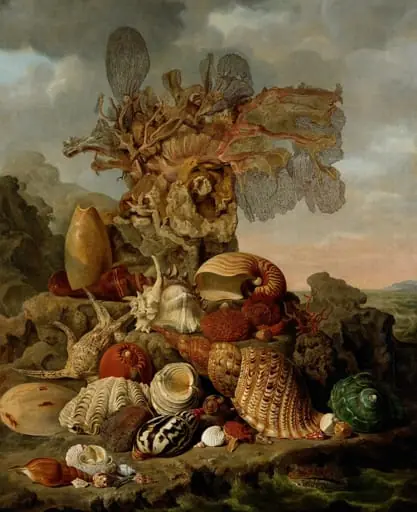 Shells and Marine Plants
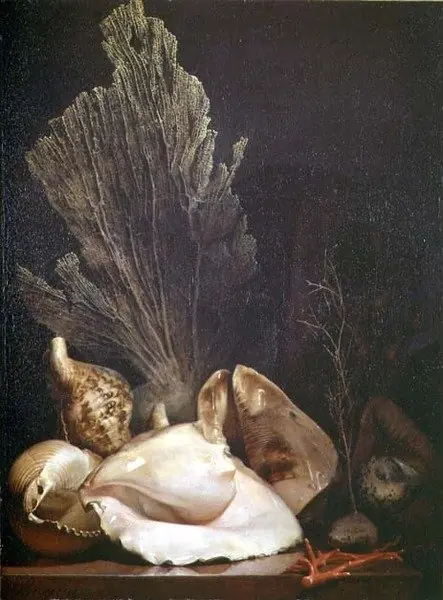 Still Life of Shells and Coral
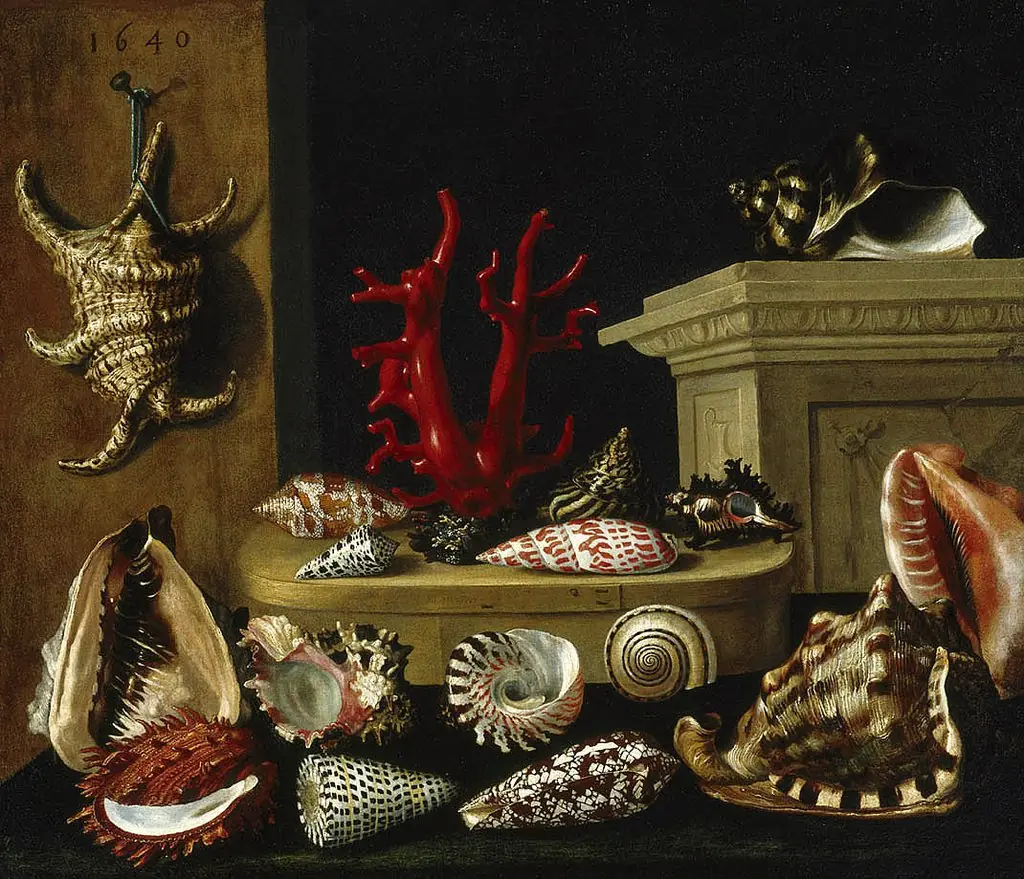 Still life with shells
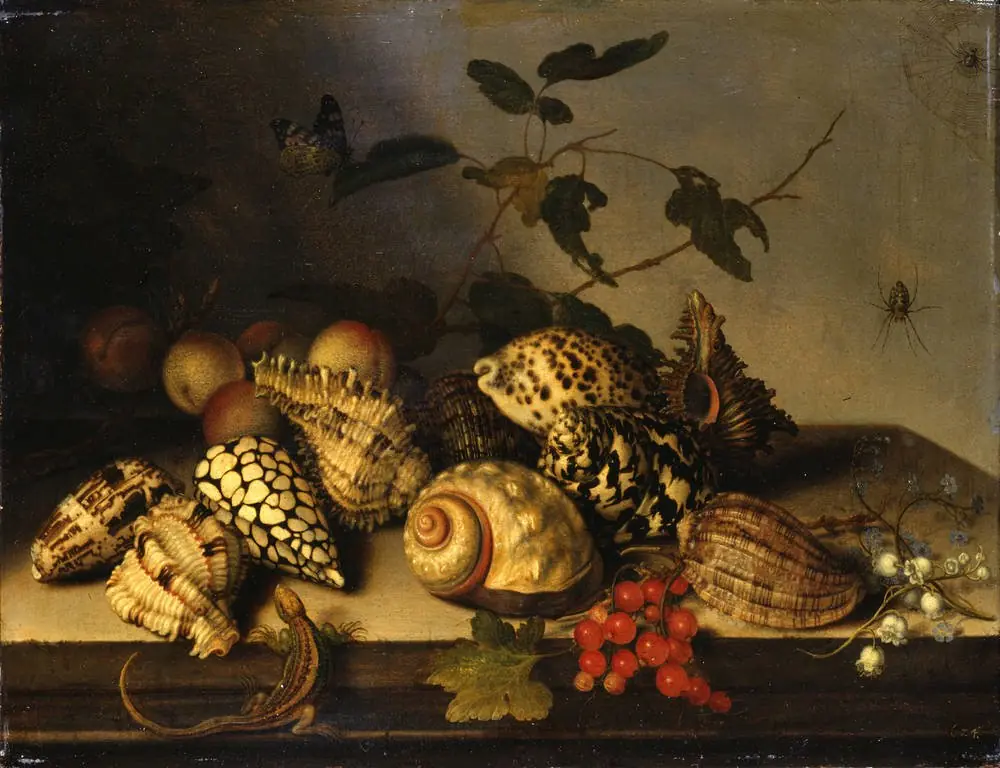 Fruit and Shells
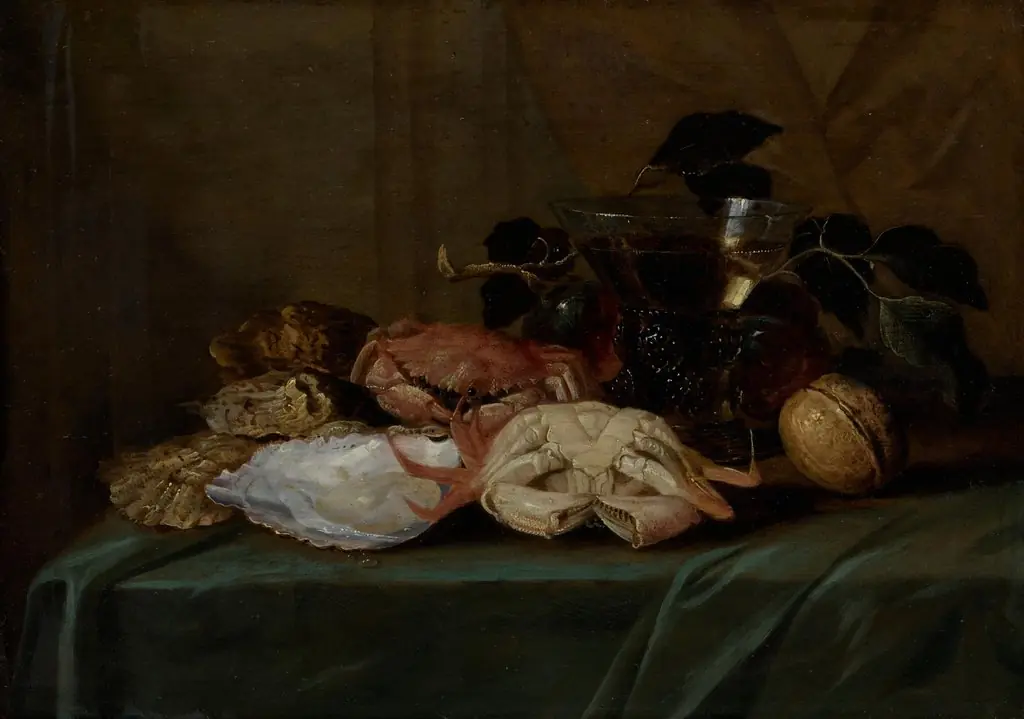 Still Life with Crabs
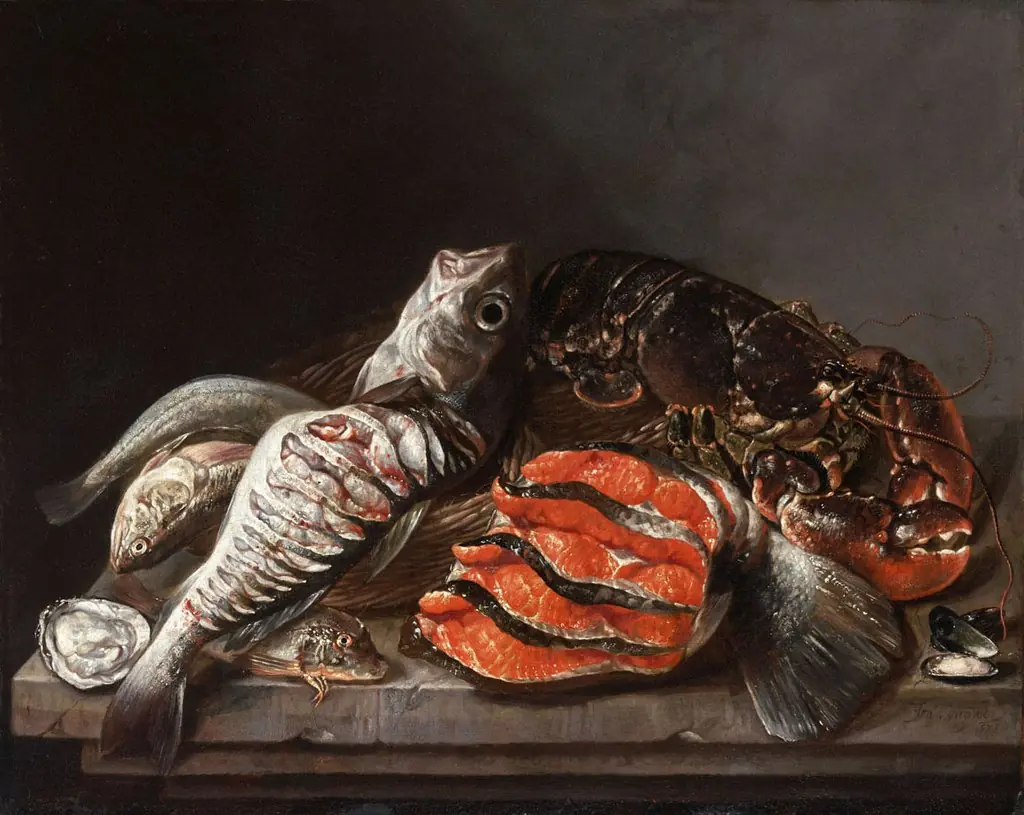 Fish (Still Life)
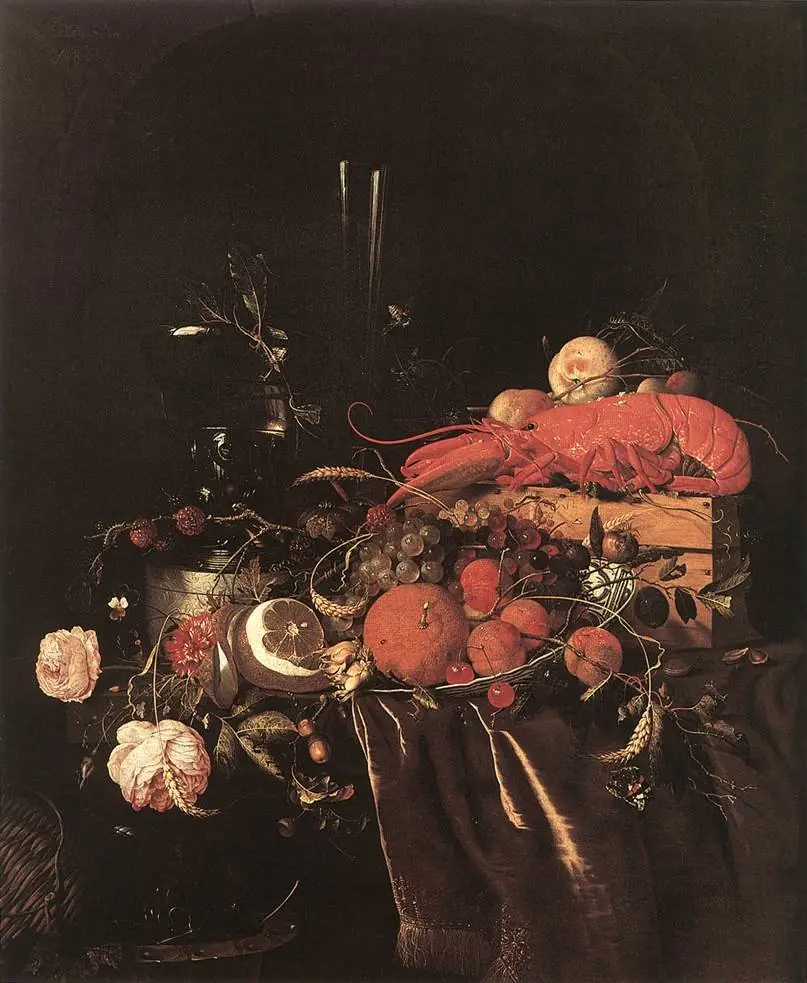 Still-Life with Fruit, Flowers, Glasses and Lobster
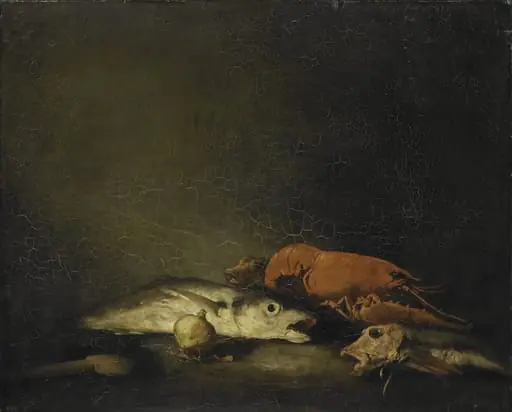 Untitled
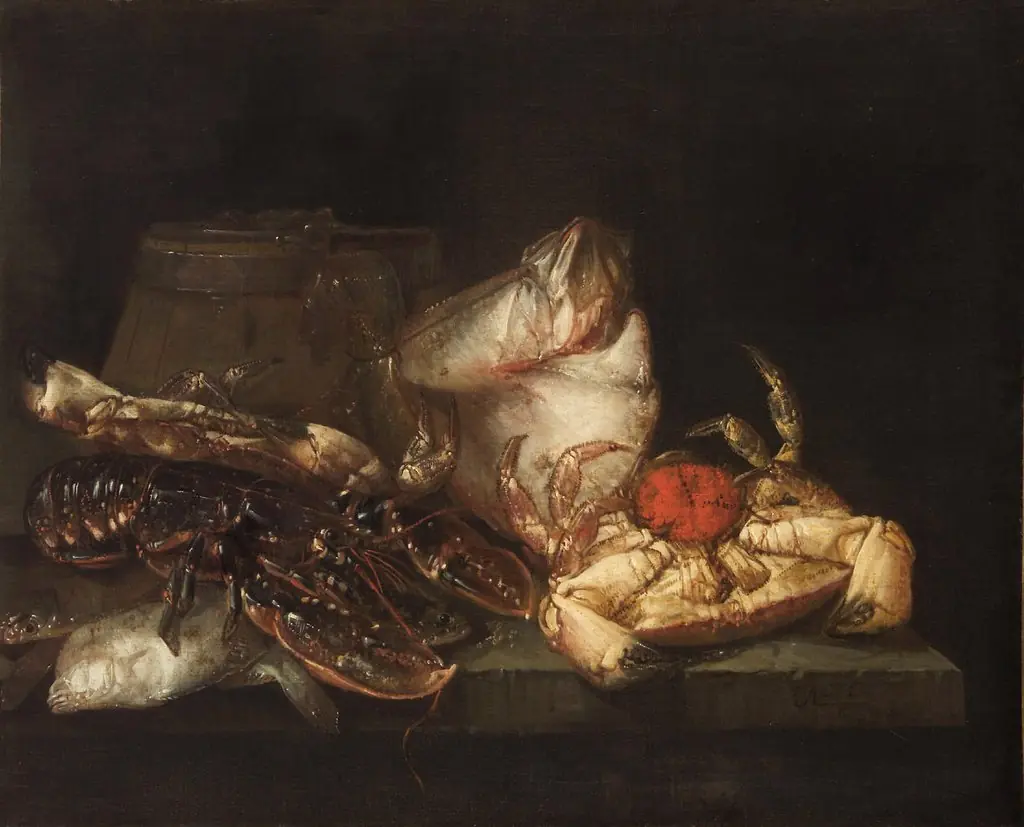 Stilleben mit Fischen und Krebsen
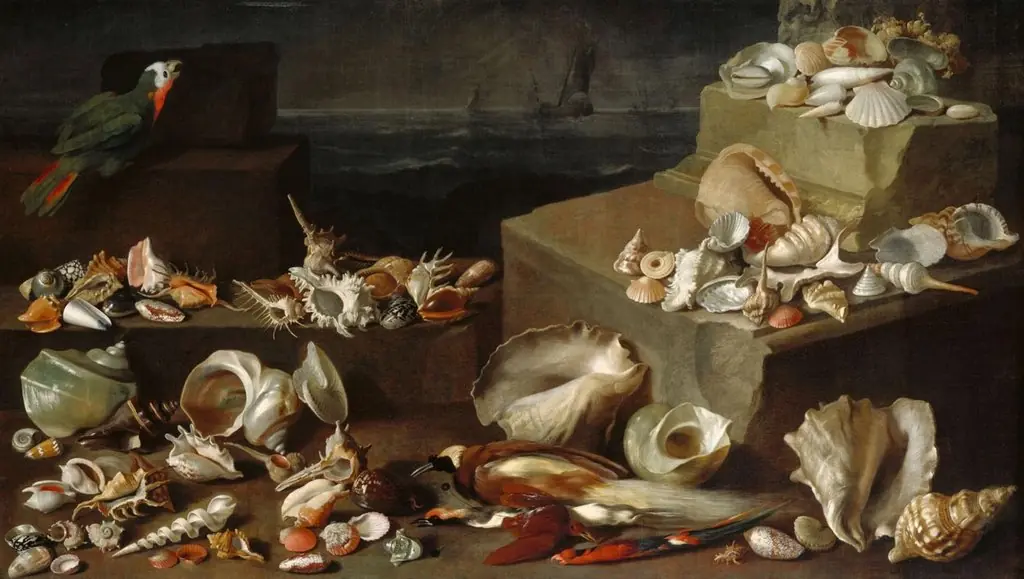 Stillleben mit Meeresschnecken und Muscheln
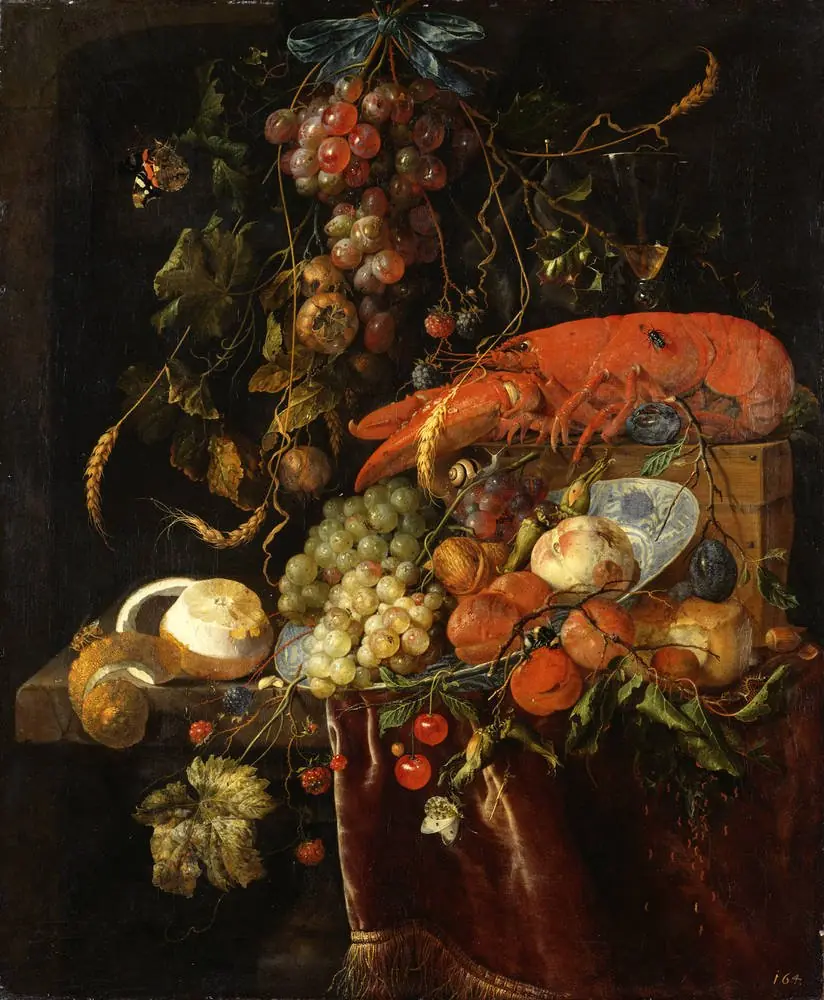 Still Life with a Lobster
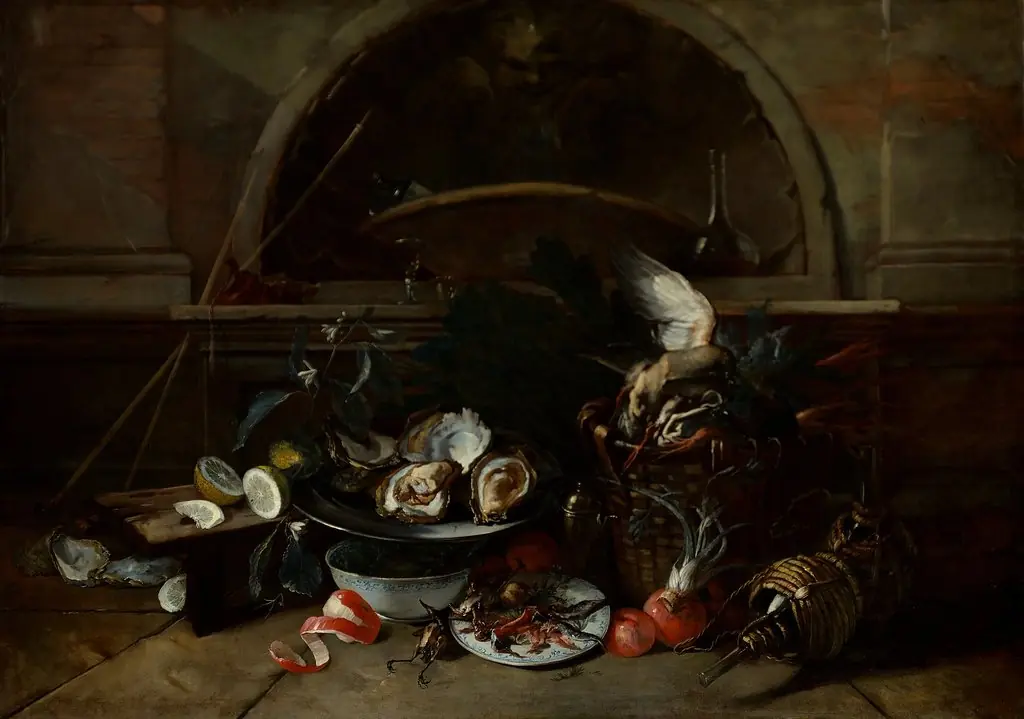 Still Life with Bottles and Oysters