Artwork
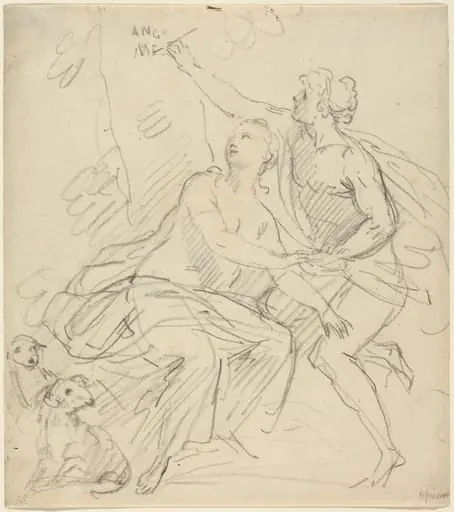
Abraham wrestling with the Angel
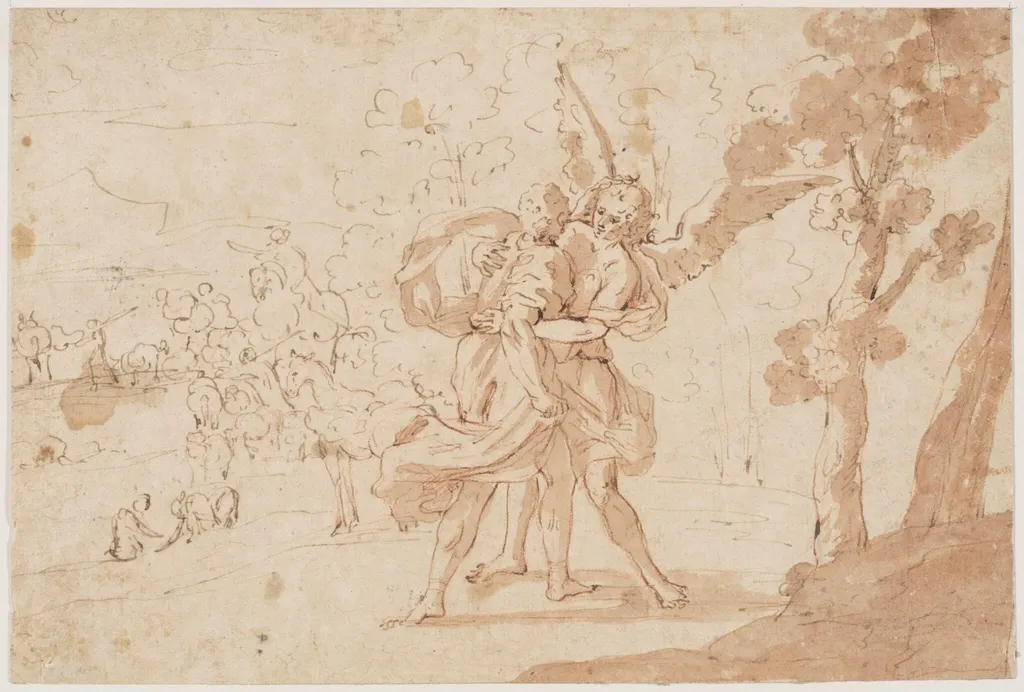
Abraham wrestling with the Angel is a drawing by the Baroque artist Andrea Schiavone. It is held in the collection of the Victoria and Albert Museum.
About this work
Overview
Rendered in ink and wash, the composition centers on a tightly entwined pair of figures, their bodies locked in exertion.
This drawing by Andrea Schiavone illustrates the biblical moment when Abraham wrestles with a divine messenger. Rendered in ink and wash, the composition centers on a tightly entwined pair of figures, their bodies locked in exertion. The scene is stripped of elaborate detail, focusing instead on the physical tension between human and celestial being, with minimal background elements to ground the encounter in a quiet, ambiguous landscape.
Subject & Meaning
The scene references Genesis 32, where Jacob—often conflated with Abraham in later interpretations—struggles with an angel until blessed. Schiavone’s depiction emphasizes the physicality of spiritual confrontation, portraying the angel not as a serene emissary but as a force resisting human persistence. The struggle becomes a metaphor for faith tested through endurance, where divine will is not imposed but negotiated through bodily effort.
Technique & Style
Schiavone employs fluid ink lines and subtle washes to model form and suggest movement. Cross-hatching defines musculature and fabric folds, while lighter tones imply the angel’s wings and distant terrain. The drawing’s economy of means heightens its immediacy; there is no ornamentation, only the essential contours of struggle. The hand appears confident, with rhythmic strokes that mirror the figures’ exertion.
History & Provenance
Created in the mid-16th century, the work belongs to Schiavone’s period of active draftsmanship in Venice. It likely served as a preparatory study or independent devotional image. The drawing passed through private collections before entering a public collection in the 19th century, where it was cataloged among Italian Renaissance drawings. Its attribution has remained consistent, supported by stylistic parallels to his other works.
Context
In mid-1500s Venice, religious subjects were frequently explored through intimate drawings, often for personal meditation or as studies for larger commissions. Schiavone, influenced by Titian and Michelangelo, favored dynamic compositions that emphasized motion and emotional intensity. This drawing reflects a broader trend among Venetian artists to translate biblical drama into visceral, human terms, moving beyond idealized forms toward psychological realism.
Legacy
Though not widely exhibited, the drawing remains a significant example of Schiavone’s draftsmanship and his ability to convey spiritual conflict through physical gesture. It contributes to the understanding of how Renaissance artists interpreted sacred narratives not as static icons but as moments of embodied struggle. Its preservation offers insight into the role of drawing as both artistic practice and devotional tool in 16th-century Italy.
Artist & collection
Artist
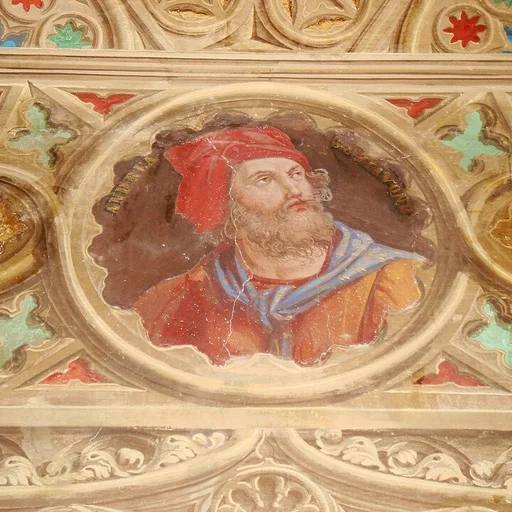
Andrea Meldolla (Croatian: Andrija Medulić), also known as Andrea Schiavone or Andrea lo Schiavone, literally "Andrew the Slav", (c.

 The Return of the Spies from the Promised Land
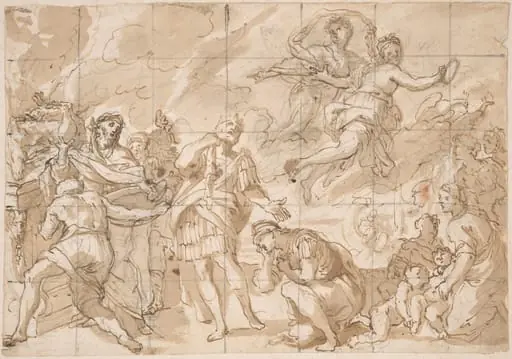 The Sacrifice of Iphigenia
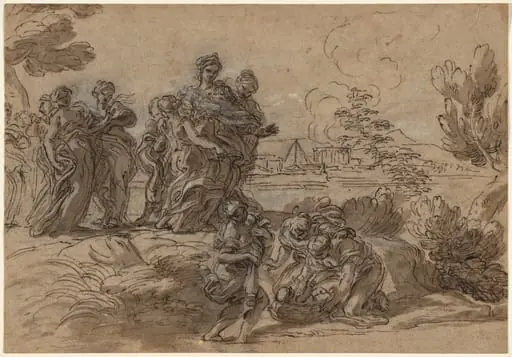 The Finding of Moses
![Biblical Scene [verso], by Sebastiano Ricci](https://artifactworldgallery.com/img/sebastiano-ricci--biblical-scene-verso--d33f1e2abb3d29f7-w320.webp) Biblical Scene [verso]
Biblical Scene [verso]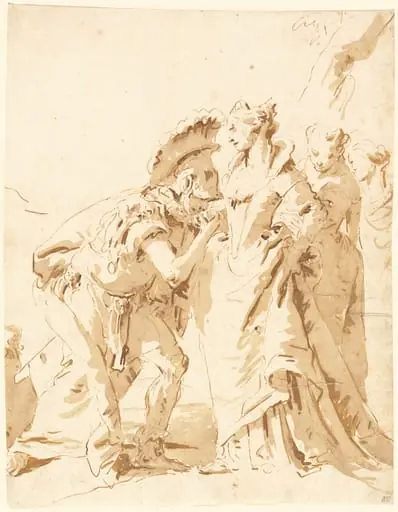 The Meeting of Antony and Cleopatra
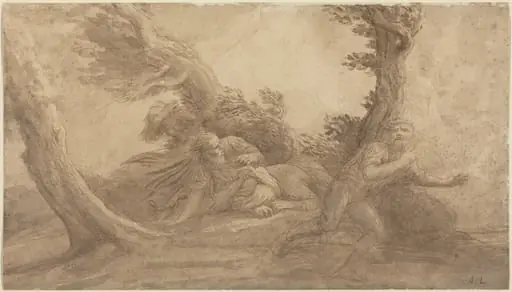 Clap of Thunder
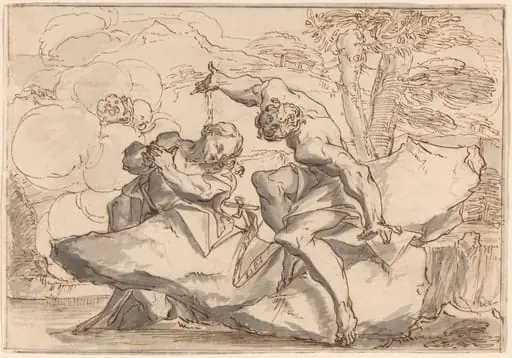 The Baptism of Christ
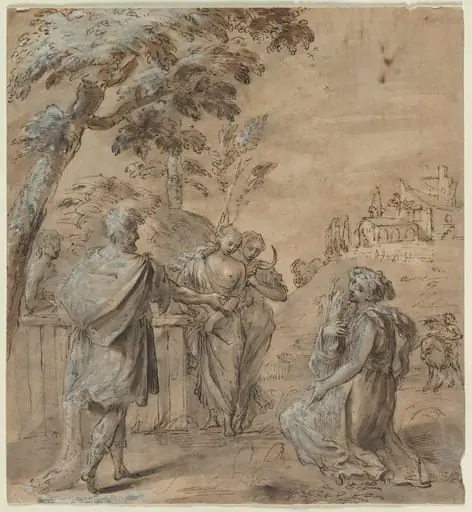 Ruth and Boaz (recto)
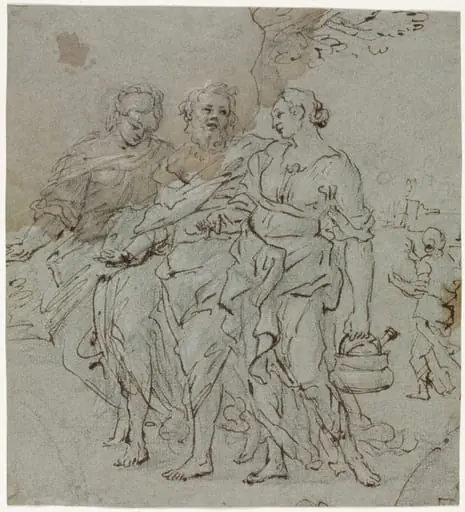 Lot and His Daughters (recto)
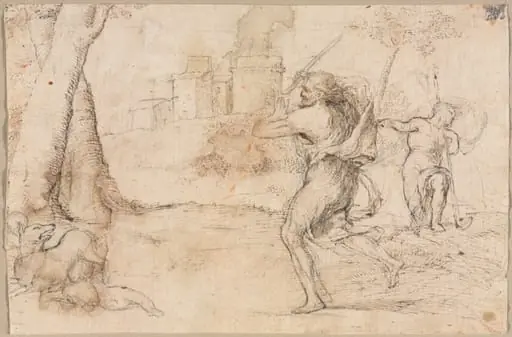 Romulus and Remus Found by Faustulus (recto)
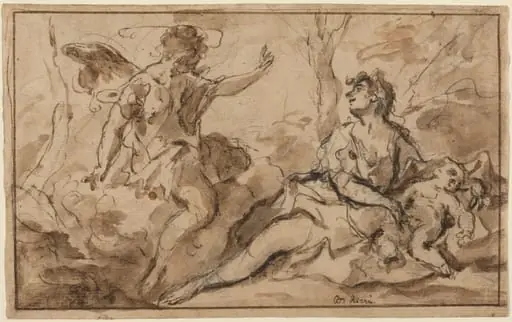 The Angel Appearing to Hagar and Ishmael
 Angelica and Medoro