Artwork
Poulton-le-fylde, near Blackpool
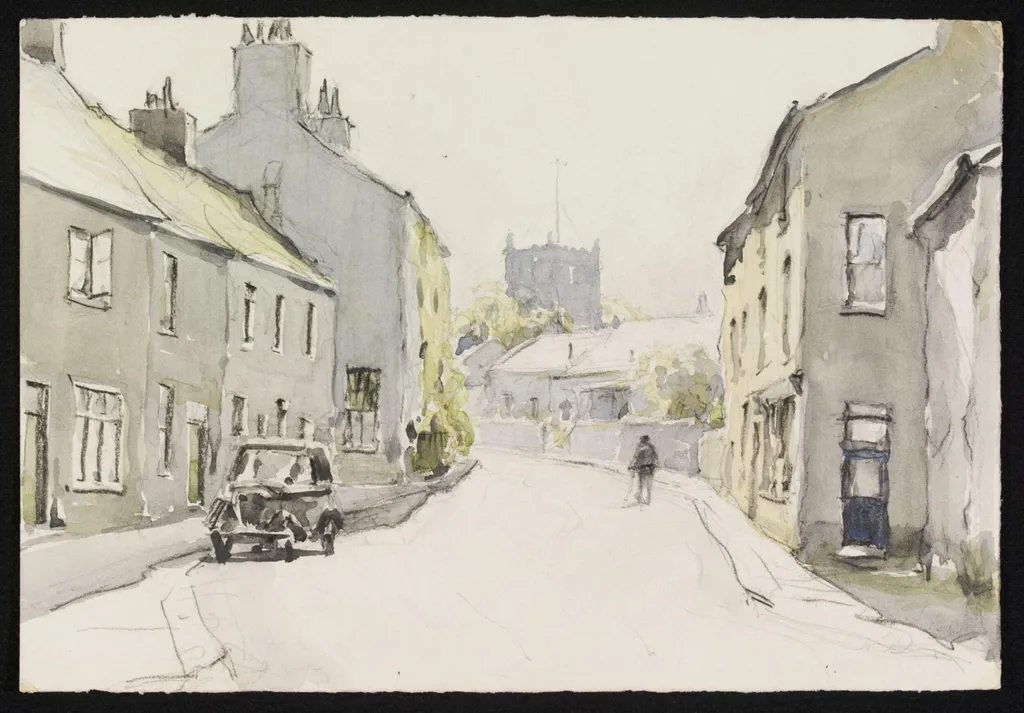
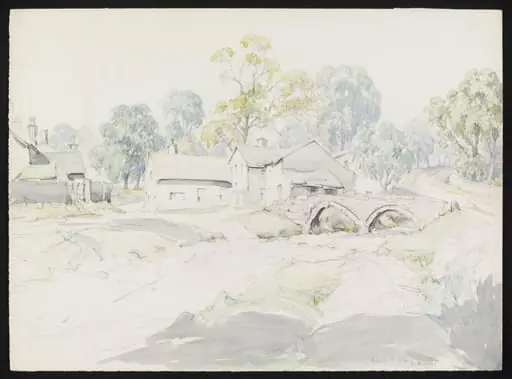
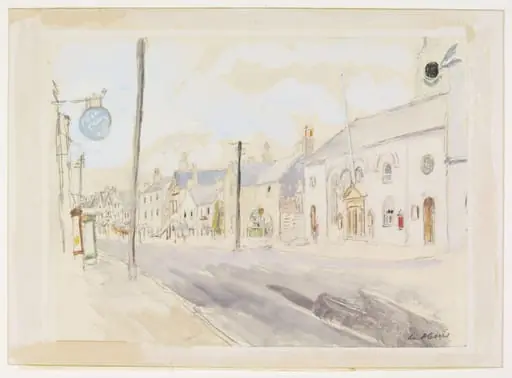
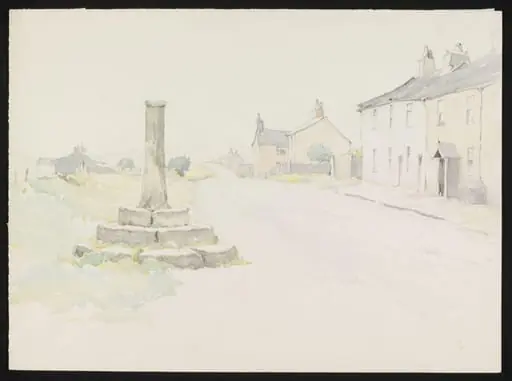
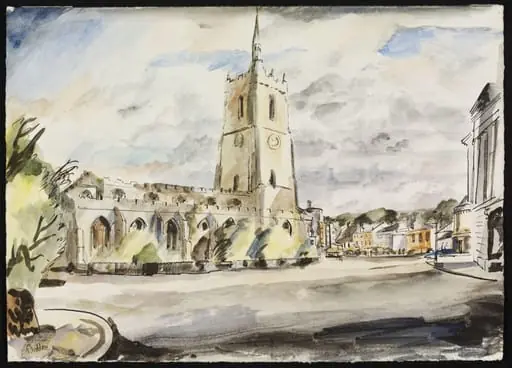
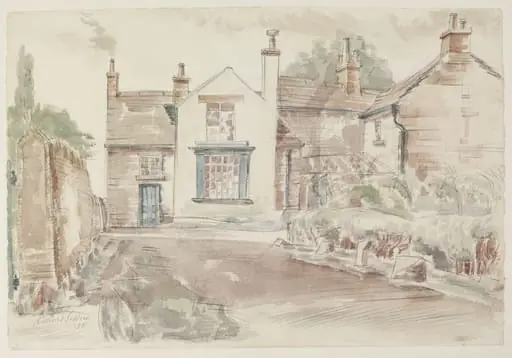
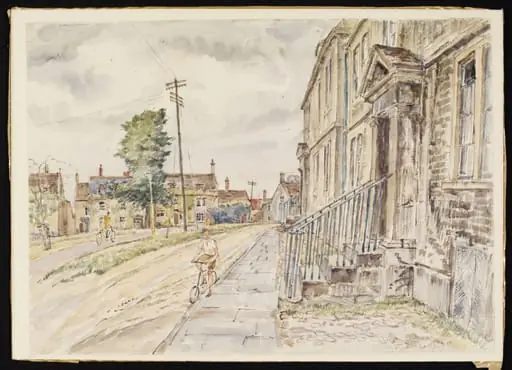
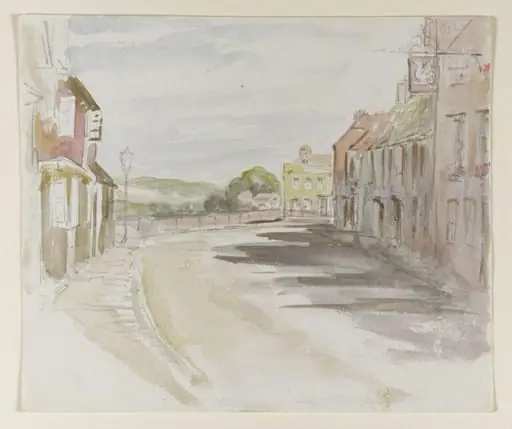
Poulton-le-fylde, near Blackpool is a watercolor work on paper by Pile. It dates from 1943 and is held in the collection of the Victoria and Albert Museum.
About this work
Overview
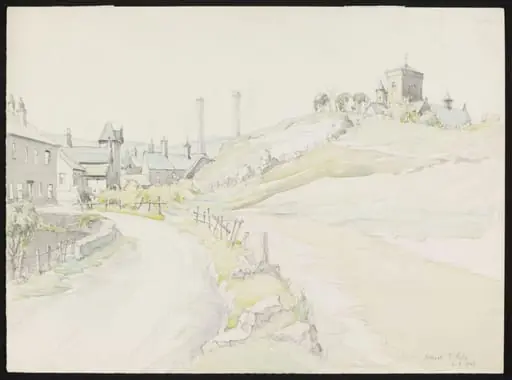
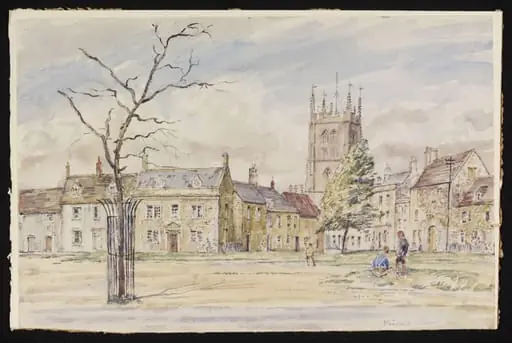
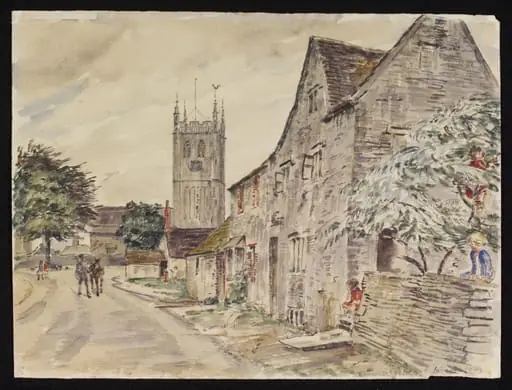
This 1943 watercolour by artist Pile portrays a tranquil street in Poulton‑le‑Fylde, near Blackpool. The composition captures modest two‑storey stone houses flanking a narrow road, a parked automobile, and a solitary pedestrian, with a castle‑like structure rising above a small town square in the background.
Subject & Meaning
The scene emphasizes everyday domestic architecture and the quiet rhythm of a small English town during wartime, suggesting continuity and stability amid broader national upheaval.
Technique & Style
Executed in soft, muted tones, the watercolour employs delicate washes that render the stone façades, dark trim and modest windows with a subdued, timeless atmosphere. The limited palette reinforces the calm, unembellished character of the street.
History & Provenance
The work forms part of the Recording Britain project, a wartime initiative funded by the Pilgrim Trust and overseen by Sir Kenneth Clark. The scheme commissioned artists to document England’s built environment and landscapes, producing over 1,500 pieces by 97 contributors.
Context
Recording Britain aimed to preserve visual records of the nation’s heritage as bombings and social change threatened traditional settings. While focused on England, the program excluded Northern Ireland and covered only select Welsh counties, with a parallel effort organized for Scotland.
Artist & collection