Artwork
The Presentation in the Temple
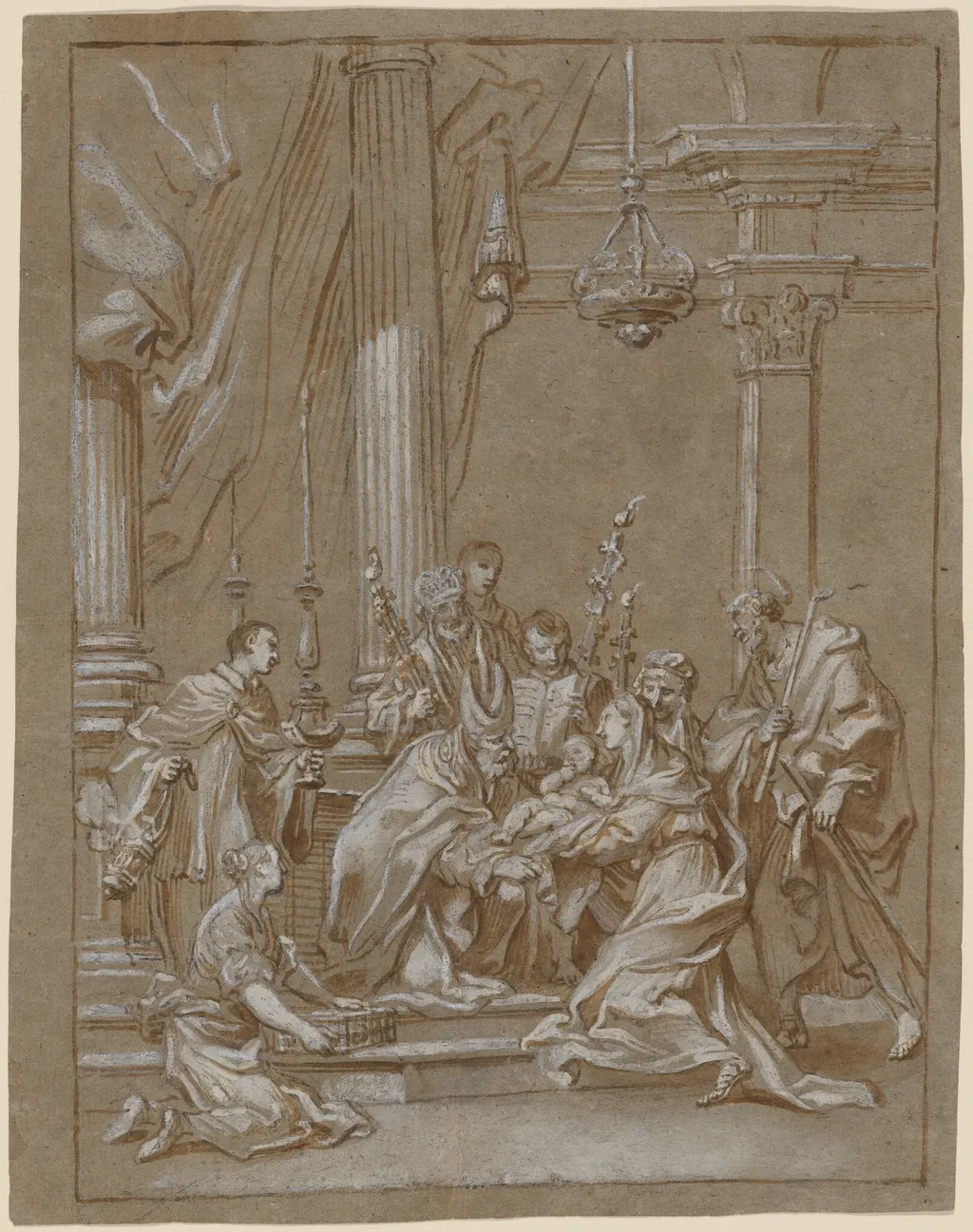
The Presentation in the Temple is a gouache drawing by the Baroque artist Paolo Gerolamo Piola. It dates from 1722 and is held in the collection of the National Gallery of Art.
About this work
Overview
This drawing, created around 1722 by Paolo Gerolamo Piola, depicts the biblical scene of the Presentation in the Temple.
This drawing, created around 1722 by Paolo Gerolamo Piola, depicts the biblical scene of the Presentation in the Temple. Executed in pen and brown ink with brown wash and white gouache highlights on blue-green laid paper, it reflects the artist’s mastery of tonal contrast and delicate texture. The work is part of the National Gallery of Art’s collection in Washington, D.C., and exemplifies the refined draftsmanship typical of early 18th-century Italian graphic art.
Subject & Meaning
The scene illustrates the moment when Mary and Joseph present the infant Jesus at the Temple in Jerusalem, as described in the Gospel of Luke. A central figure, Mary, kneels on the temple steps, holding the child, while figures in flowing robes observe the ritual. The presence of the elderly Simeon, who recognizes the child as the Messiah, is implied through gesture and composition, emphasizing themes of devotion, prophecy, and divine fulfillment.
Technique & Style
Piola employed layered brown ink washes to model form and depth, accented with opaque white gouache to suggest highlights on fabric and skin. The blue-green paper provides a muted tonal foundation, enhancing the warmth of the ink and the luminosity of the highlights. The controlled use of line and shading creates a sense of spatial recession and tactile volume, characteristic of Baroque draftsmanship focused on emotional clarity and visual rhythm.
History & Provenance
The drawing was likely made as a preparatory study or independent devotional work during Piola’s later career in Genoa. It entered the National Gallery of Art’s collection in the 20th century, having passed through private European holdings. Its preservation in good condition reflects its value as a refined example of Genoese graphic art from the early 1700s, though its exact commission or original context remains undocumented.
Context
Piola worked within a Genoese artistic tradition that blended Flemish precision with Italian emotional expressiveness. During the early 18th century, religious subjects remained central to artistic production, even in drawings intended for private contemplation. This work aligns with contemporaneous devotional imagery favored by clerical patrons and reflects the continued influence of Counter-Reformation ideals in Ligurian art.
Legacy
Though not widely exhibited, this drawing contributes to the understanding of Piola’s graphic output and the role of preparatory studies in Baroque religious art. It exemplifies how artists used monochromatic media to explore composition and light before executing larger works. Its presence in a major American museum ensures continued scholarly attention to Genoese drawing practices of the period.
Artist & collection

Artist
Paolo Gerolamo Piola (1666–1724) was an Italian Baroque painter, residing mainly in Genoa. His father, Domenico Piola, was a prominent Genoese painter. Paolo Gerolamo was very active painting sacred subjects and frescoes.

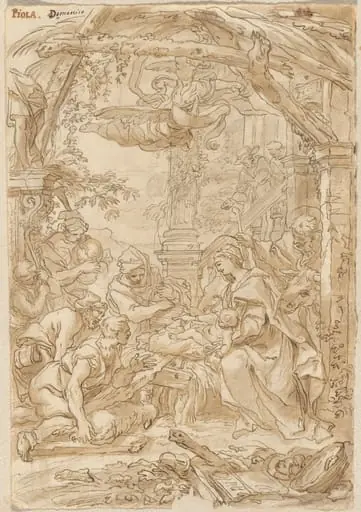 The Adoration of the Shepherds
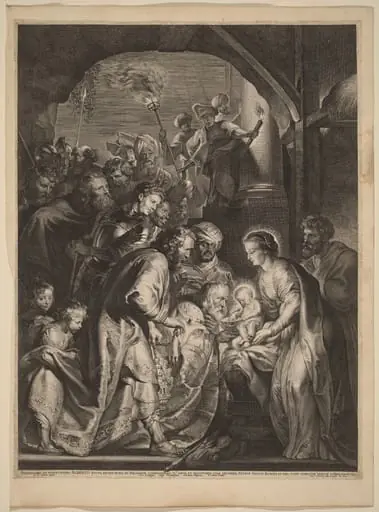 The Adoration of the Magi
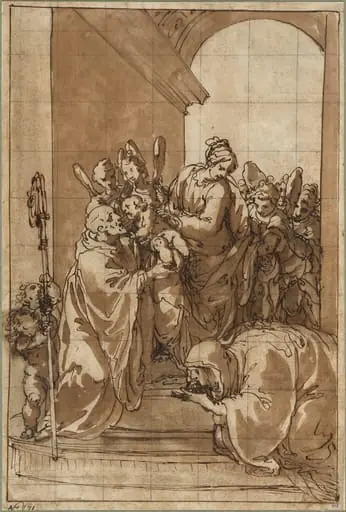 Madonna and Child with Angels, Saint Benedict, and Saint Scholastica
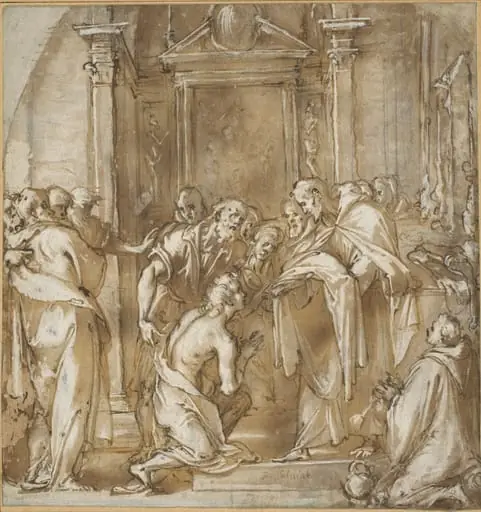 Saint Vincent Ferrer Taking His Vestments
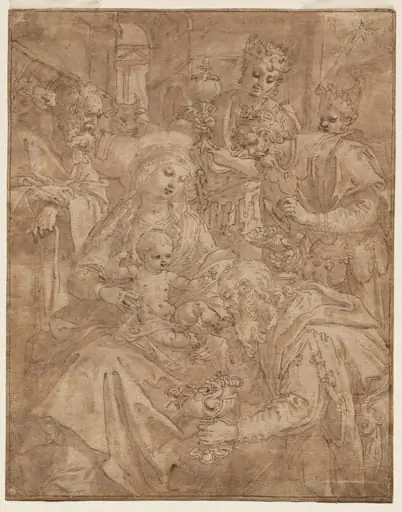 Adoration of the Magi
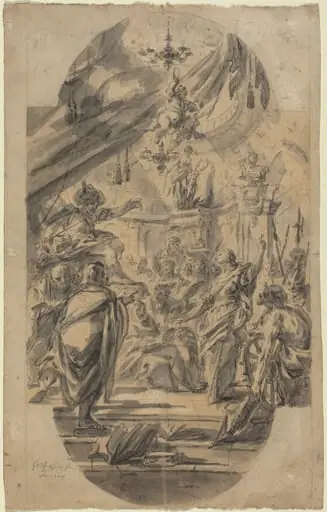 The Disputation of Saint Catherine of Alexandria
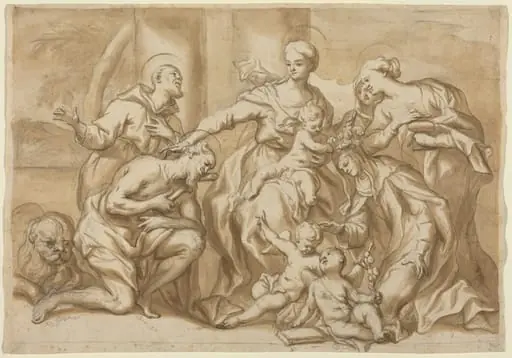 Madonna Surrounded by Saints
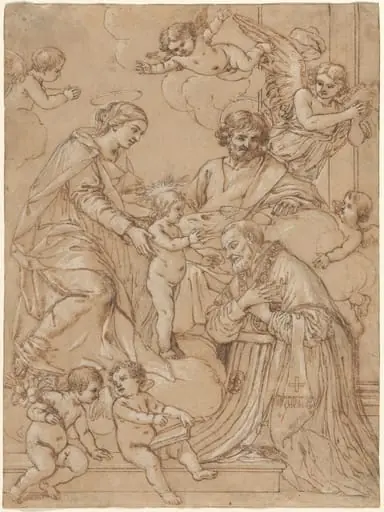 The Holy Family with Saint Philip Neri in Adoration, an Angel, and Putti
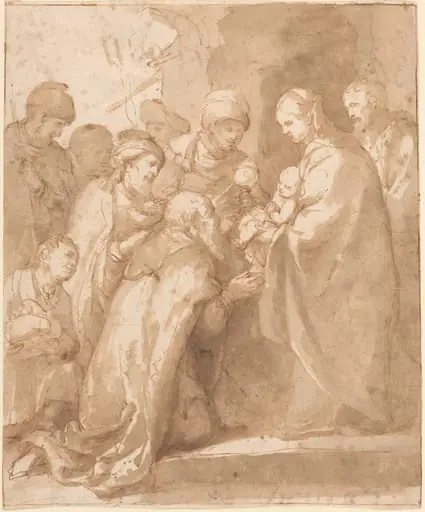 The Adoration of the Magi
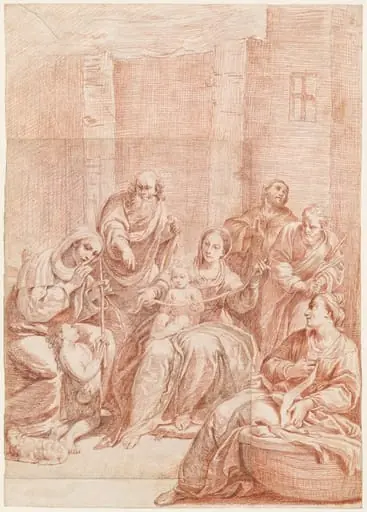 The Holy Family
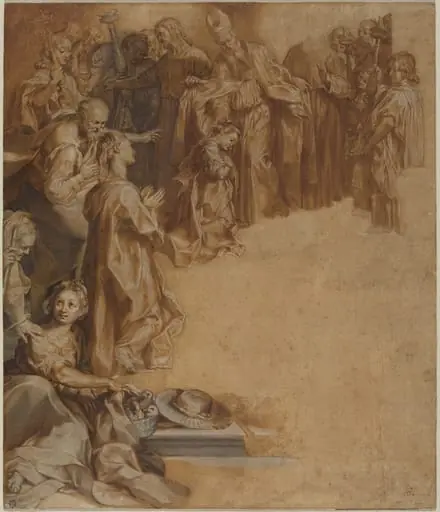 The Presentation of the Virgin in the Temple
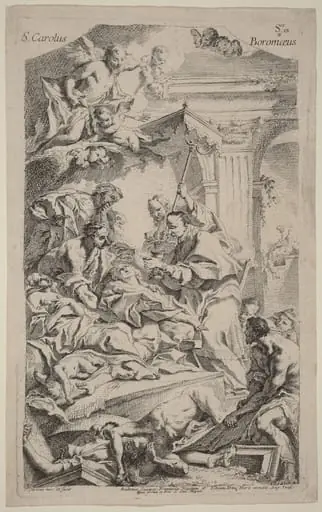 San Carlo Borromeo Giving Last Communion to Victims of the Plague