Artwork
The Holy Family
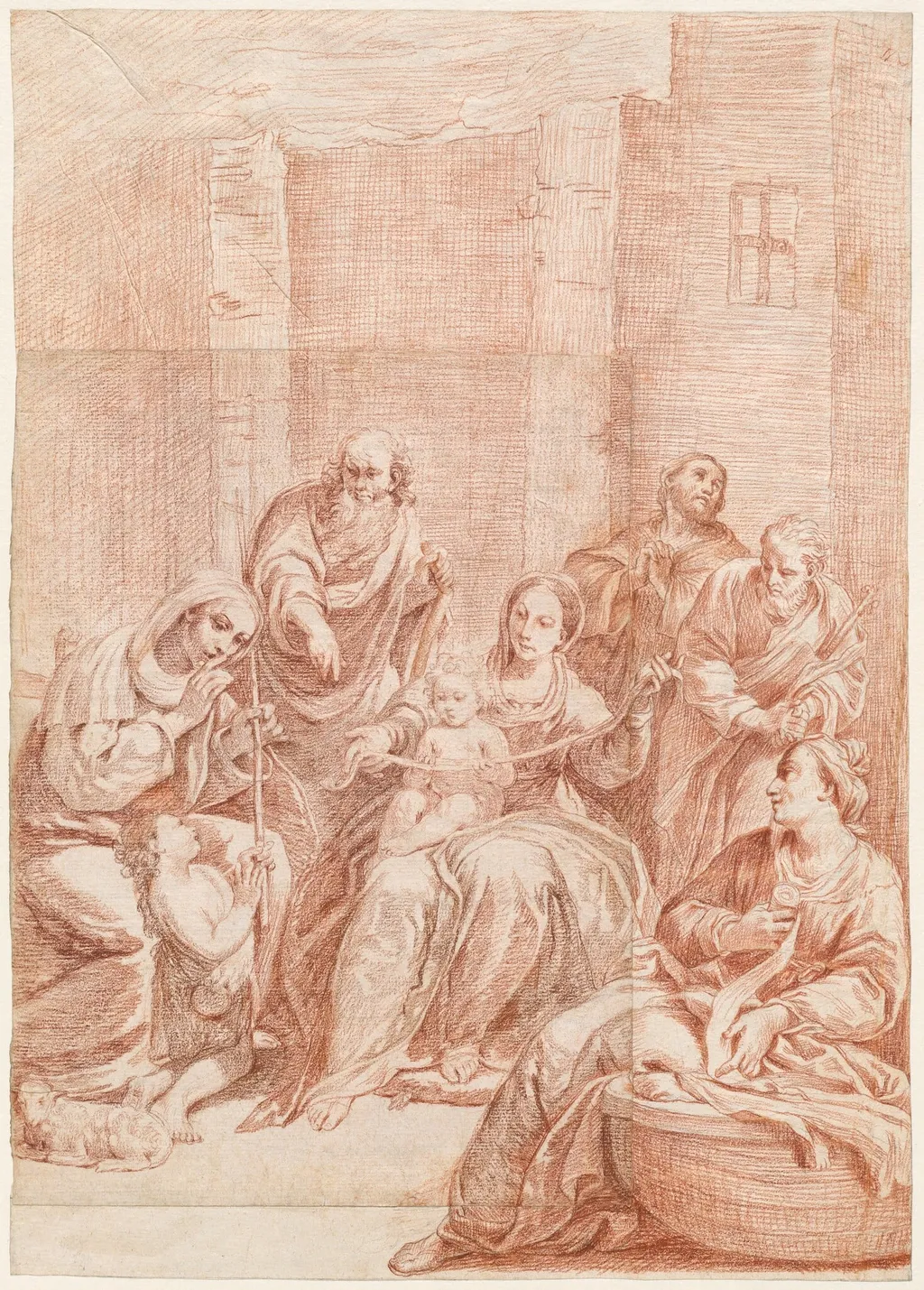
The Holy Family is a chalk drawing by the Baroque artist Giuseppe Maria Crespi. It dates from 1690 and is held in the collection of the National Gallery of Art.
About this work
Overview
Created circa 1690, this drawing by Giuseppe Maria Crespi depicts the Holy Family in a quiet, intimate moment. Executed in red chalk over faint black chalk underdrawing, it is composed across three joined sheets of laid paper. The work exemplifies Crespi’s skill in drawing, a medium he used frequently alongside his painted output, which spanned religious, portrait, and everyday scenes.
Subject & Meaning
The composition centers on the Virgin Mary, the infant Christ, and Saint Joseph, arranged in a tender, domestic grouping.
The composition centers on the Virgin Mary, the infant Christ, and Saint Joseph, arranged in a tender, domestic grouping. Rather than emphasizing grandeur, Crespi focuses on quiet familial bonds, suggesting a moment of rest or contemplation. This approach reflects a devotional tradition that valued personal connection over theatrical spectacle, aligning with Counter-Reformation ideals of accessible piety.
Technique & Style
Crespi employed red chalk for its warmth and fluidity, layering it over delicate black chalk lines to define form and shadow. The use of three joined paper sheets allowed for a larger scale while maintaining the spontaneity of sketch-like execution. His handling is sensitive and restrained, favoring soft modeling over sharp definition, characteristic of Bolognese draftsmanship of the period.
History & Provenance
The drawing’s early ownership is undocumented, but it entered a major European collection by the 19th century. Its survival in good condition suggests careful preservation, likely by collectors who valued drawings as autonomous works. No significant alterations or restorations are recorded, preserving the artist’s original hand and paper joins.
Context
In late 17th-century Bologna, religious imagery remained central to artistic production, even as secular themes gained ground. Crespi, known as Lo Spagnuolo, navigated both spheres with equal fluency. This drawing reflects a broader trend among Bolognese artists to treat sacred subjects with psychological nuance and naturalistic detail, distancing themselves from High Baroque grandiosity.
Legacy
Though Crespi is better known for his paintings, this drawing illustrates his mastery of linear expression and emotional restraint. It stands as a representative example of Italian draftsmanship from the period, influencing later collectors and artists who appreciated the intimacy and technical finesse of preparatory works. Its survival underscores the growing appreciation for drawings as independent artistic statements.
Artist & collection

Artist
Giuseppe Maria Crespi (14 March 1665 – 16 July 1747), nicknamed Lo Spagnuolo ('The Spaniard'), was an Italian late Baroque painter of the Bolognese School.

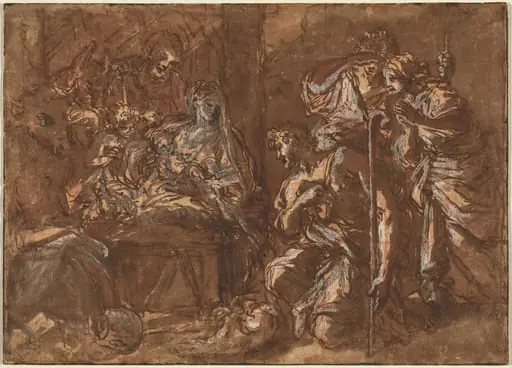
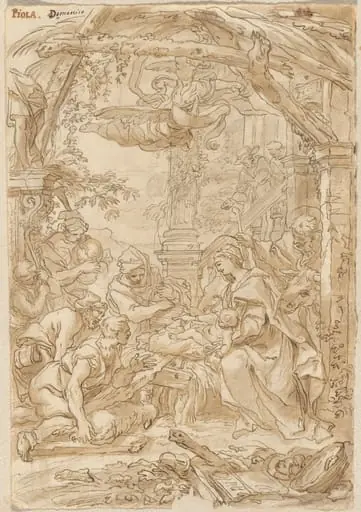 The Adoration of the Shepherds
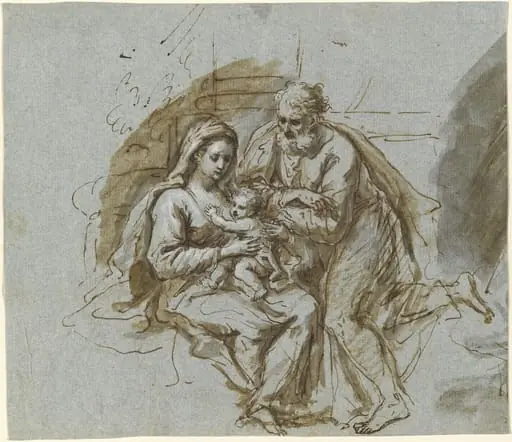 The Holy Family
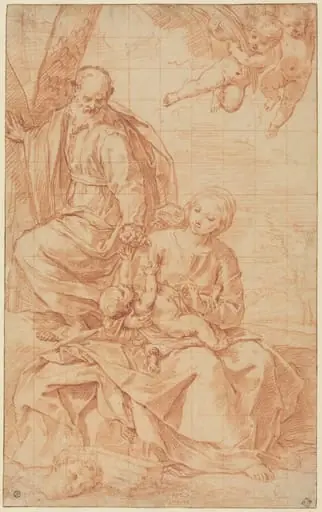 The Rest on the Flight into Egypt, or The Miracle of the Palm Tree
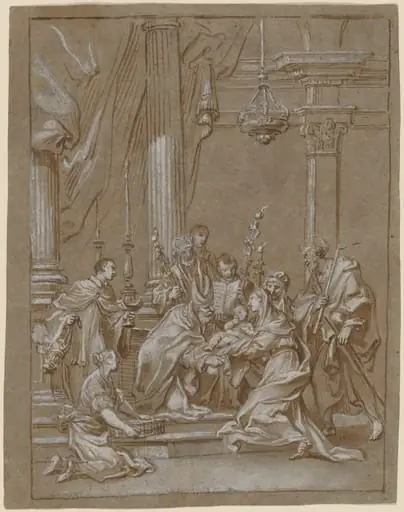 The Presentation in the Temple
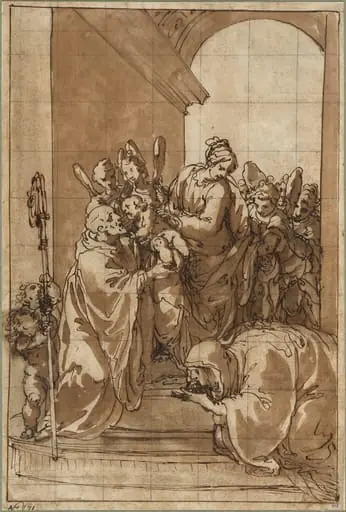 Madonna and Child with Angels, Saint Benedict, and Saint Scholastica
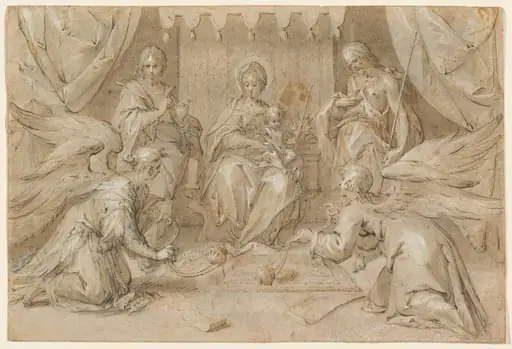 The Madonna Enthroned with Saint John the Baptist and Saint John the Evangelist
![Madonna and Child with Saints John and Joseph [recto], by Italian 17th Century](https://artifactworldgallery.com/img/italian-17th-century--madonna-and-child-with-saints-john-and-joseph-recto--9af1da01f3814a36-w320.webp) Madonna and Child with Saints John and Joseph [recto]
Madonna and Child with Saints John and Joseph [recto]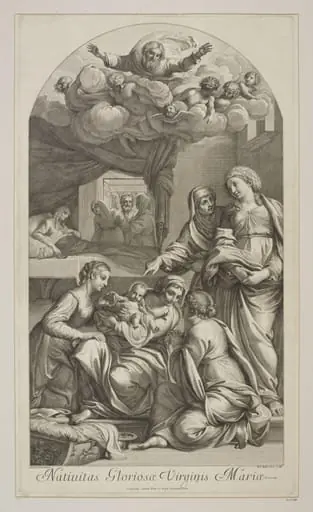 Birth of the Virgin
![Jacob and Rebecca before Isaac [recto], by French 18th Century](https://artifactworldgallery.com/img/french-18th-century--jacob-and-rebecca-before-isaac-recto--5393ee8d0dceb48c-w320.webp) Jacob and Rebecca before Isaac [recto]
Jacob and Rebecca before Isaac [recto]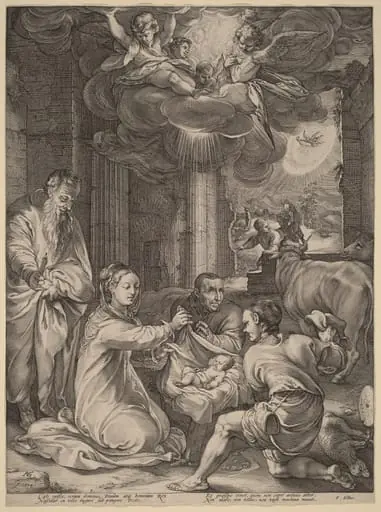 The Adoration of the Shepherds
 The Adoration of the Shepherds
 The Adoration of the Magi