Artwork
The Pier with a Lamp
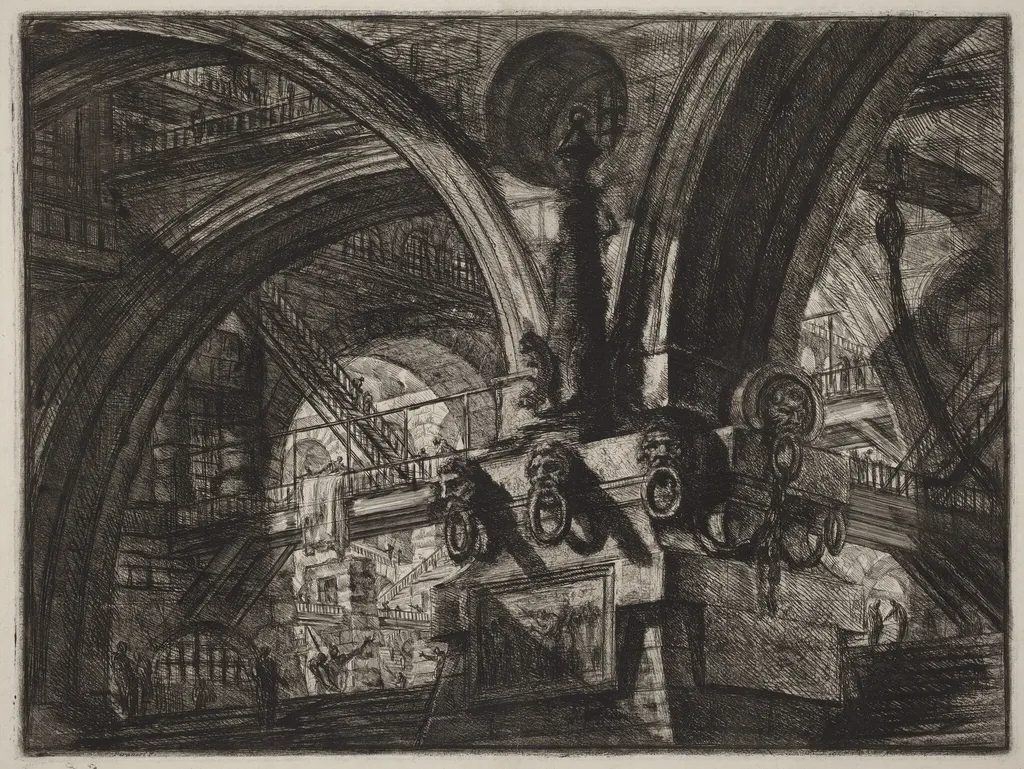
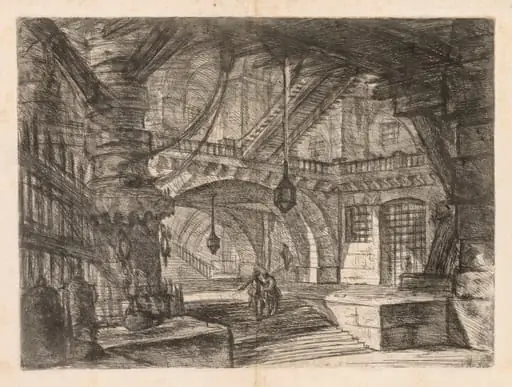
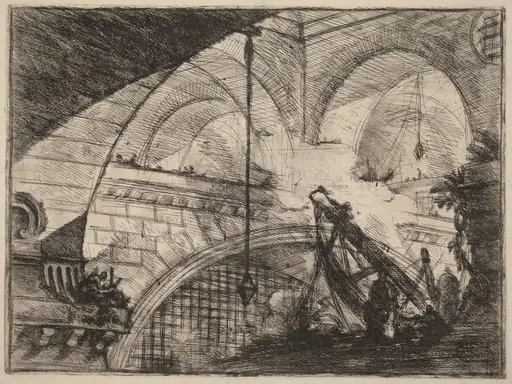
The Pier with a Lamp is an ink print by the Romanticist artist Giovanni Battista Piranesi. It is held in the collection of the National Gallery of Art.
About this work
Overview
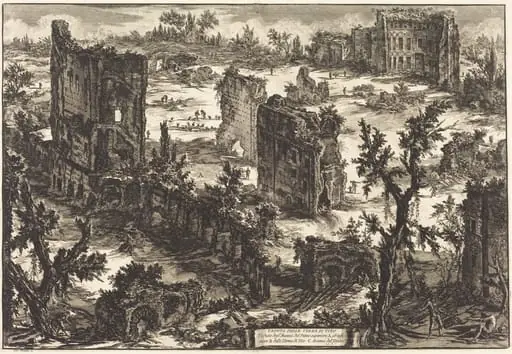
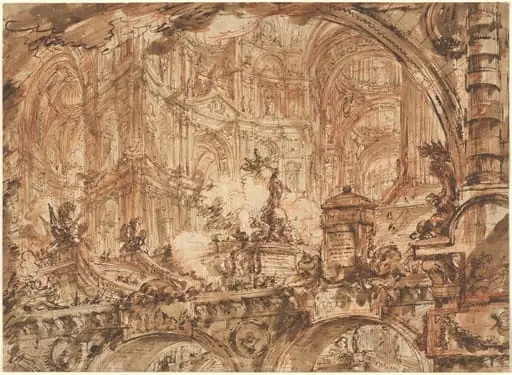
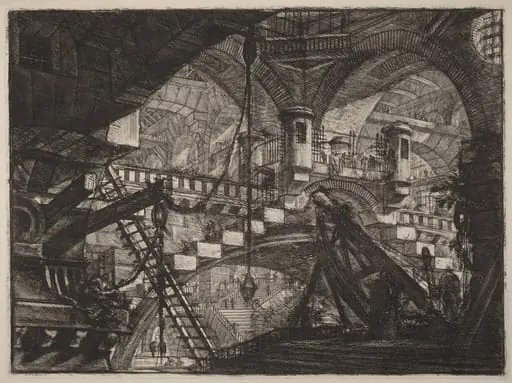
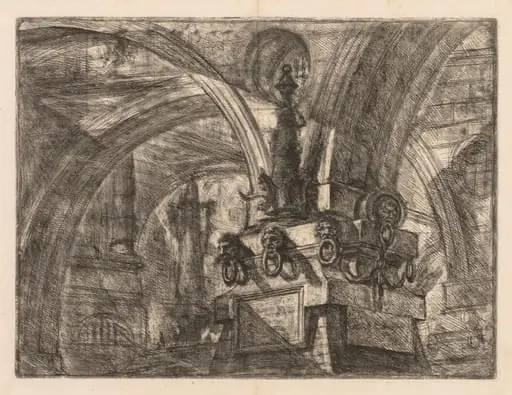
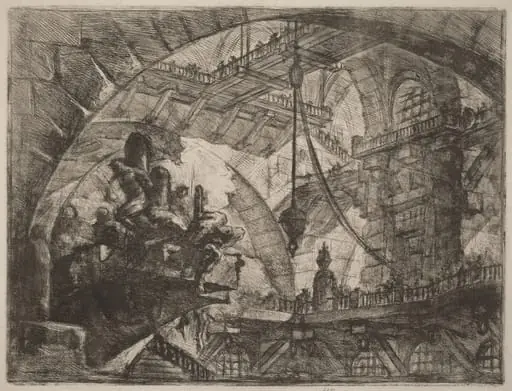
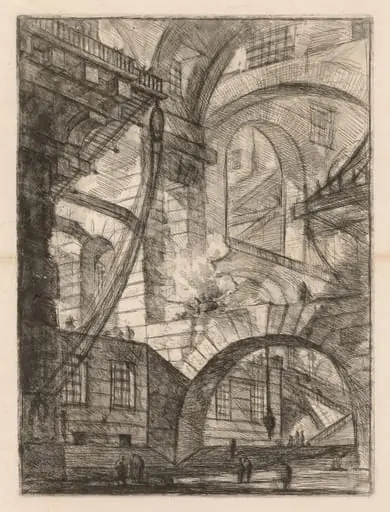
Giovanni Battista Piranesi’s print *The Pier with a Lamp* dates from the 1780s. Executed as a complex intaglio work, it combines etching, engraving, a sulphur‑based tint (or open‑bite aquatint) and burnishing to achieve a richly layered surface. The image presents a solitary pier illuminated by a single lamp, set amid a dense assemblage of ruined arches and columns that recede into darkness.
Subject & Meaning
Small, indistinct figures are scattered throughout, emphasizing the scale of the ruins and the isolation of the illuminated point.
The composition juxtaposes a lone, clearly defined lamp post against a chaotic backdrop of crumbling classical architecture. The winding pathway, half‑obscured by shadow, suggests a journey through a forgotten past, while the solitary light may symbolize guidance or revelation amid decay. Small, indistinct figures are scattered throughout, emphasizing the scale of the ruins and the isolation of the illuminated point.
Technique & Style
Piranesi employed multiple intaglio processes: fine etched lines define structural details, while broader, open‑bite areas create atmospheric washes of tone. Burnishing adds localized highlights, particularly on the lamp post, giving it a polished, three‑dimensional quality. The interplay of crisp linear rendering and smudged shading produces depth and a sense of overwhelming architectural density, characteristic of Piranesi’s dramatic, almost theatrical visual language.
History & Provenance
The print was produced in the later phase of Piranesi’s career, when he was already renowned for his series of Roman vedute and his imaginative *Carceri* (prisons). Though specific ownership records are scarce, the work circulated among collectors of antiquarian prints in the late eighteenth century and appears in several catalogues of Piranesi’s oeuvre compiled after his death.
Context
Created during a period of renewed interest in classical antiquity, the image reflects the Enlightenment fascination with ruins as symbols of both historical grandeur and moral decay. Piranesi’s background as an archaeologist and architect informs the meticulous rendering of architectural elements, while his penchant for dramatic, night‑time scenes aligns the work with his broader exploration of light, shadow, and the sublime in the built environment.
Artist & collection
Artist
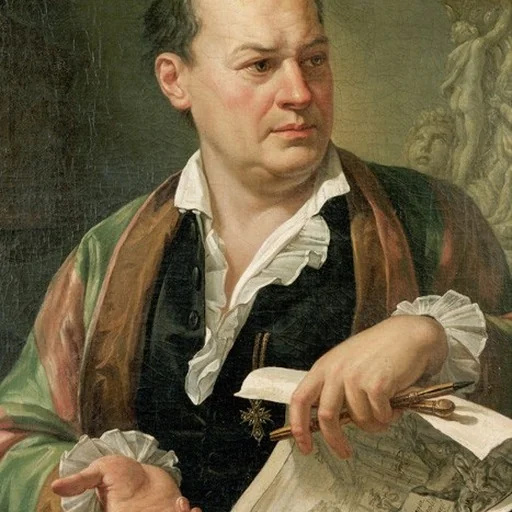
Giovanni Battista (or Giambattista) Piranesi (Italian pronunciation: ; also known as simply Piranesi; 4 October 1720 – 9 November 1778) was an Italian classical archaeologist, architect, and artist, famous for his…