Artwork
The Arch with a Shell Ornament
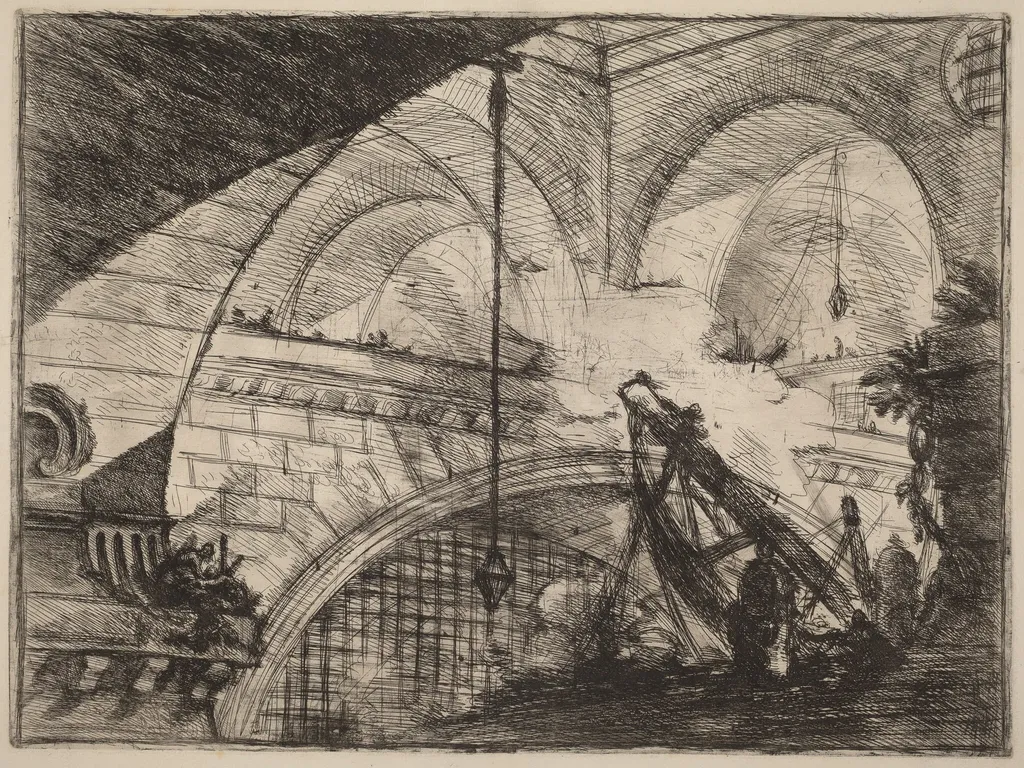
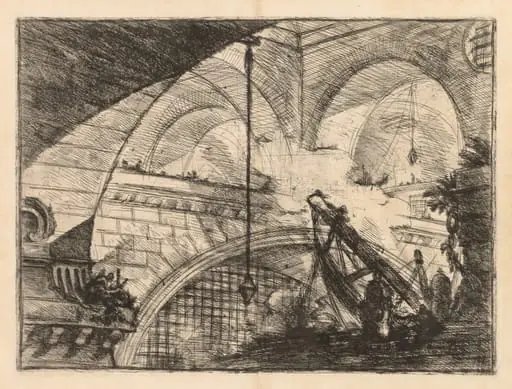
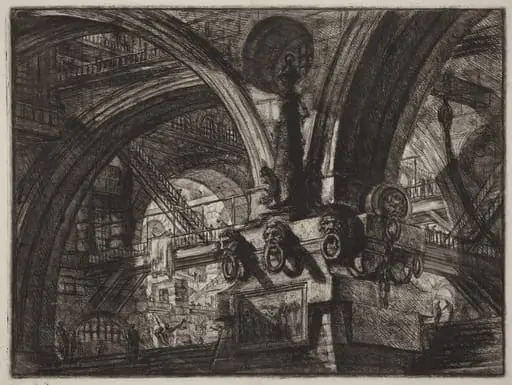
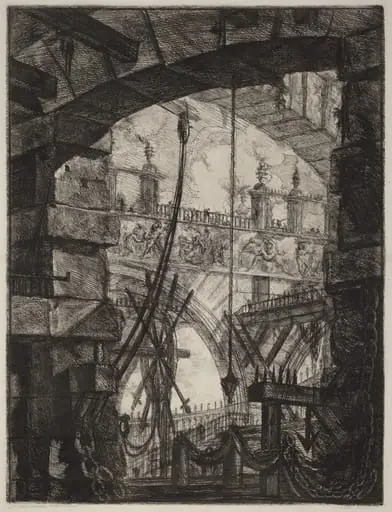
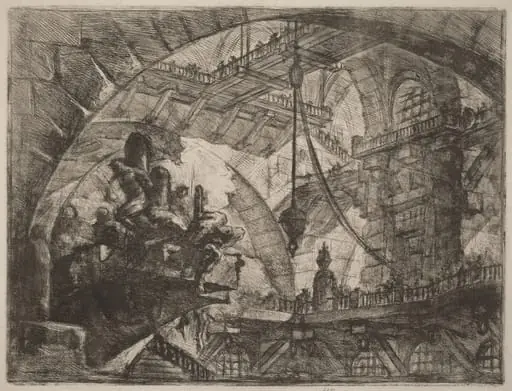
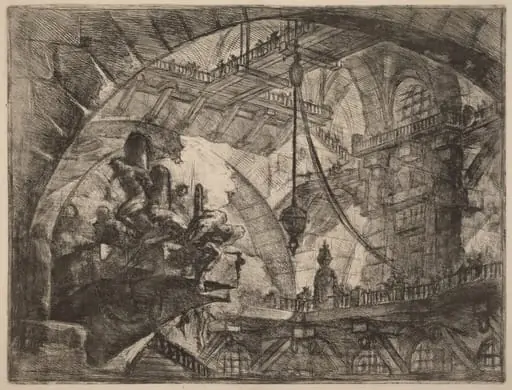
The Arch with a Shell Ornament is an ink print by the Baroque artist Giovanni Battista Piranesi. It dates from 1750 and is held in the collection of the National Gallery of Art.
About this work
Overview
Created in 1750, *The Arch with a Shell Ornament* is a print by Giovanni Battista Piranesi, combining etching, engraving, drypoint, and sulphur tint techniques.
Created in 1750, *The Arch with a Shell Ornament* is a print by Giovanni Battista Piranesi, combining etching, engraving, drypoint, and sulphur tint techniques. It belongs to a series of architectural studies that document Roman structures with meticulous precision. The work reflects Piranesi’s dual role as archaeologist and artist, capturing not just form but the material presence of ancient ruins through layered mark-making.
Subject & Meaning
The print centers on a monumental arch crowned by a carved shell, a classical decorative element often associated with water, fertility, or sacred space. The shell’s placement at the apex suggests symbolic weight, possibly referencing Roman civic or religious architecture. Surrounding foliage grounds the structure in a natural setting, implying the interplay between built heritage and the landscape that reclaimed it over time.
Technique & Style
Piranesi employed multiple intaglio methods to achieve rich tonal variation and texture. Etching defined the arch’s contours, while drypoint added dense, velvety lines for shadow and depth. Sulphur tint created atmospheric gradations, and scratching introduced fine surface details. The result is a tactile rendering that emphasizes the weight and weathering of stone, aligning with a Baroque sensibility for dramatic contrast and intricate surface treatment.
History & Provenance
The print emerged from Piranesi’s early years in Rome, where he documented antiquities to support his architectural theories and attract patrons. It was likely part of a larger body of work circulated among European collectors and scholars interested in Roman antiquity. Its survival in multiple institutional collections attests to its early recognition as a significant example of 18th-century printmaking.
Context
In mid-18th-century Rome, antiquarian interest was intensifying, fueled by Grand Tour travelers and Enlightenment scholarship. Piranesi’s prints responded to this demand by blending archaeological accuracy with artistic interpretation. His focus on ornament—like the shell—highlighted decorative systems often overlooked by earlier antiquarians, positioning him as a bridge between documentation and imaginative reconstruction.
Legacy
Piranesi’s approach to architectural printmaking influenced generations of artists and architects, particularly in how texture and scale could convey historical presence. *The Arch with a Shell Ornament* exemplifies his method of elevating minor decorative elements to subjects of study, shifting focus from monumental ruins to the craftsmanship embedded within them. His techniques became benchmarks for later topographical and archaeological illustration.
Artist & collection

Artist
Giovanni Battista (or Giambattista) Piranesi (Italian pronunciation: ; also known as simply Piranesi; 4 October 1720 – 9 November 1778) was an Italian classical archaeologist, architect, and artist, famous for his…