Artwork
The Smoking Fire
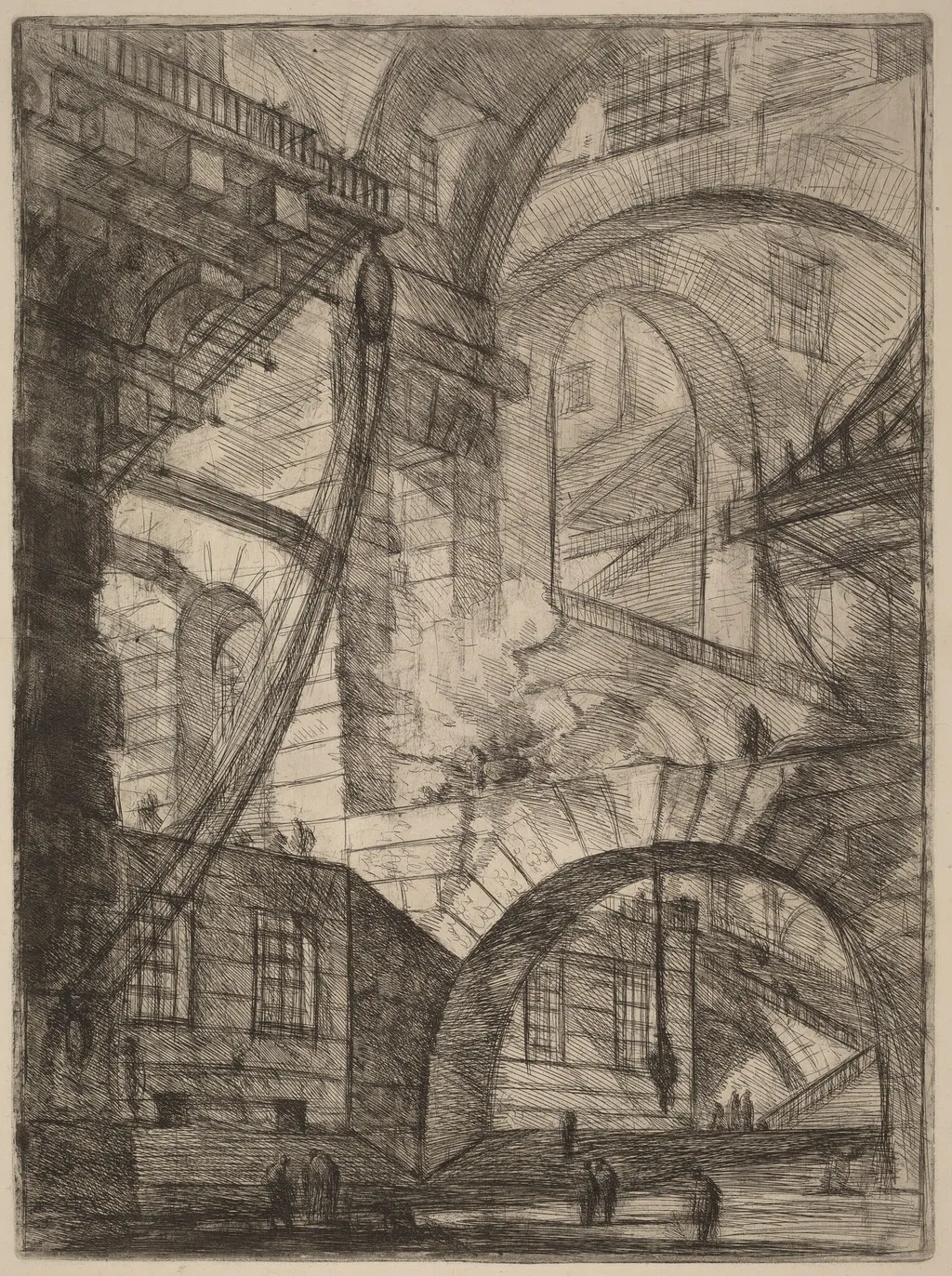
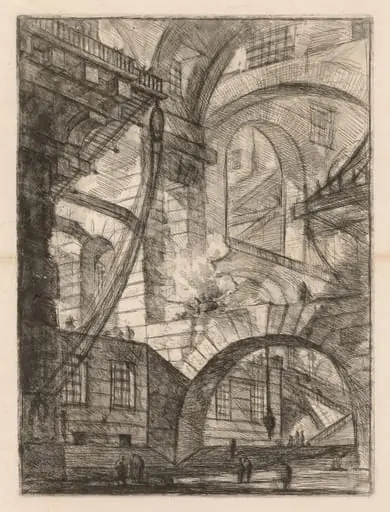
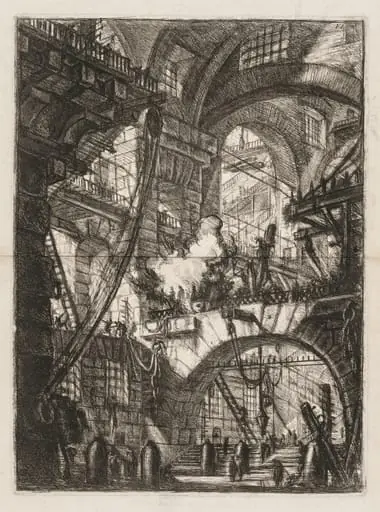
The Smoking Fire is an ink print by the Baroque artist Giovanni Battista Piranesi. It dates from 1750 and is held in the collection of the National Gallery of Art.
About this work
Overview
Created in 1750, *The Smoking Fire* is a print by Giovanni Battista Piranesi, the Italian scholar‑architect renowned for his detailed depictions of Rome and fantastical prison interiors. Executed through a combination of etching, engraving, sulphur tint (or open bite) and burnishing, the work showcases the artist’s interest in dense architectural compositions and the manipulation of light and shadow.
Subject & Meaning
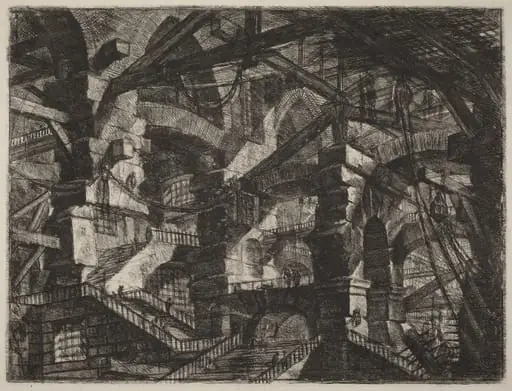
Stairways, arches, bridges and tunnel‑like forms intertwine, producing a sense of spatial congestion that obscures streets and figures.
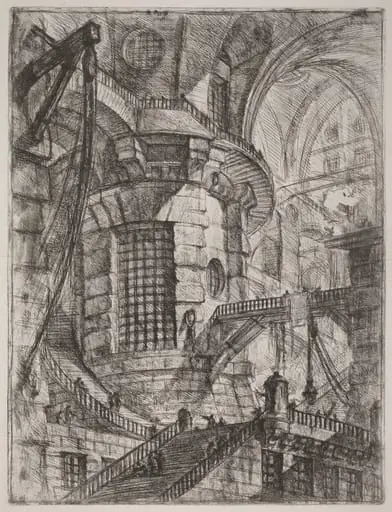
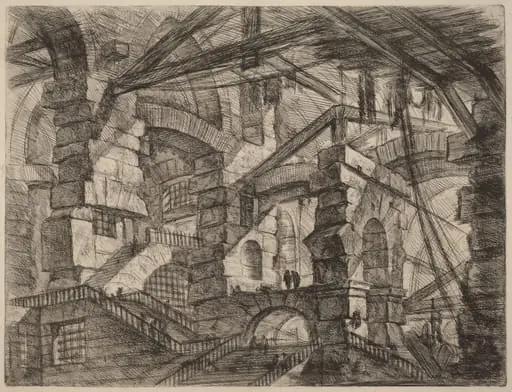
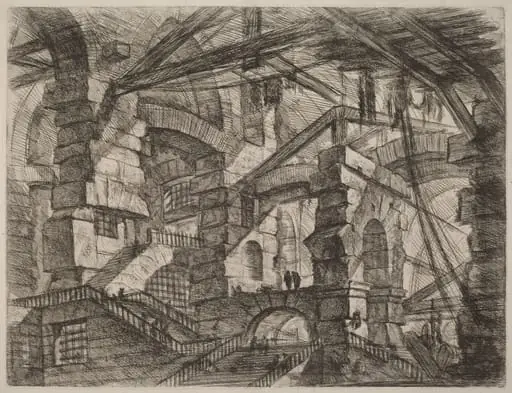
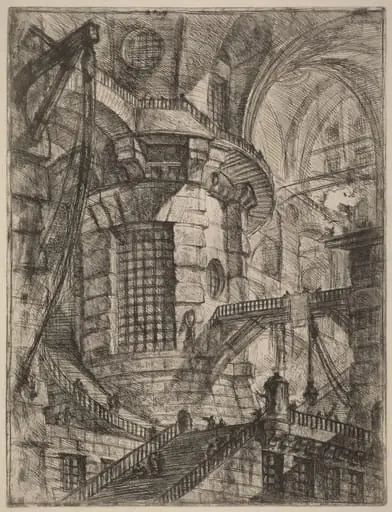
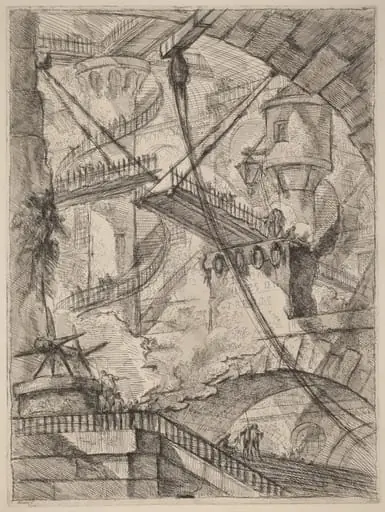
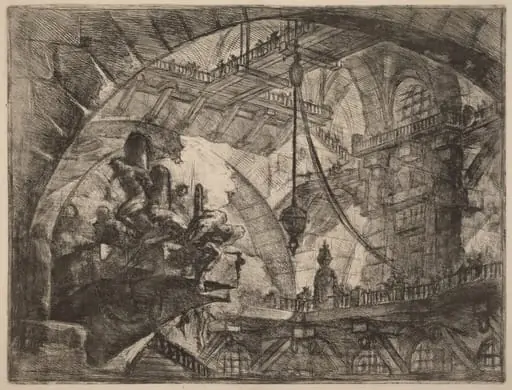
The image presents a labyrinthine urban tableau where structures overlap in a tightly packed arrangement. Stairways, arches, bridges and tunnel‑like forms intertwine, producing a sense of spatial congestion that obscures streets and figures. The chaotic density suggests a meditation on the overwhelming complexity of built environments, a theme recurrent in Piranesi’s imagined architectural fantasies.
Technique & Style
Piranesi employed multiple printmaking processes in a single plate: traditional line etching and engraving for precise contours, a sulphur tint or open bite to achieve deep, velvety shadows, and burnishing to smooth and highlight surfaces. This layered approach allows a rich tonal range, emphasizing the interplay of light, smoke, and architectural detail that defines the composition.
Context
During the mid‑18th century Piranesi was expanding his repertoire beyond documentary views of Roman antiquities to speculative, often nightmarish cityscapes. *The Smoking Fire* reflects this shift, merging his archaeological expertise with imaginative reconstruction, and aligns with contemporary Enlightenment interests in the sublime and the psychological impact of monumental space.
Legacy
The print exemplifies Piranesi’s experimental spirit, influencing later generations of architects and artists who explored the expressive potential of print media. Its complex visual density anticipates Romantic and later modernist preoccupations with urban overload, and it remains a reference point for studies of atmospheric effects in graphic art.
Own this work as a print
Artist & collection
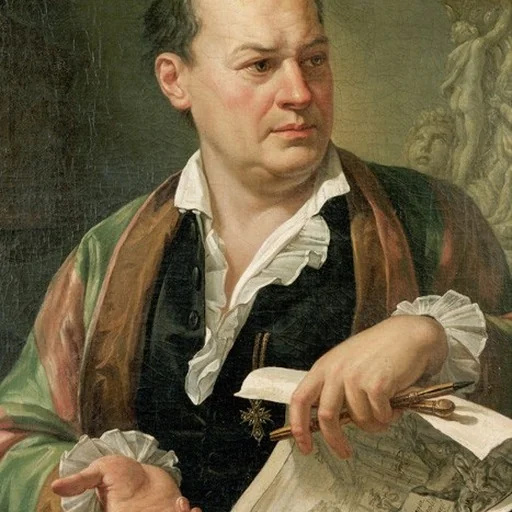
Artist
Giovanni Battista (or Giambattista) Piranesi (Italian pronunciation: ; also known as simply Piranesi; 4 October 1720 – 9 November 1778) was an Italian classical archaeologist, architect, and artist, famous for his…