Artwork
The Round Tower
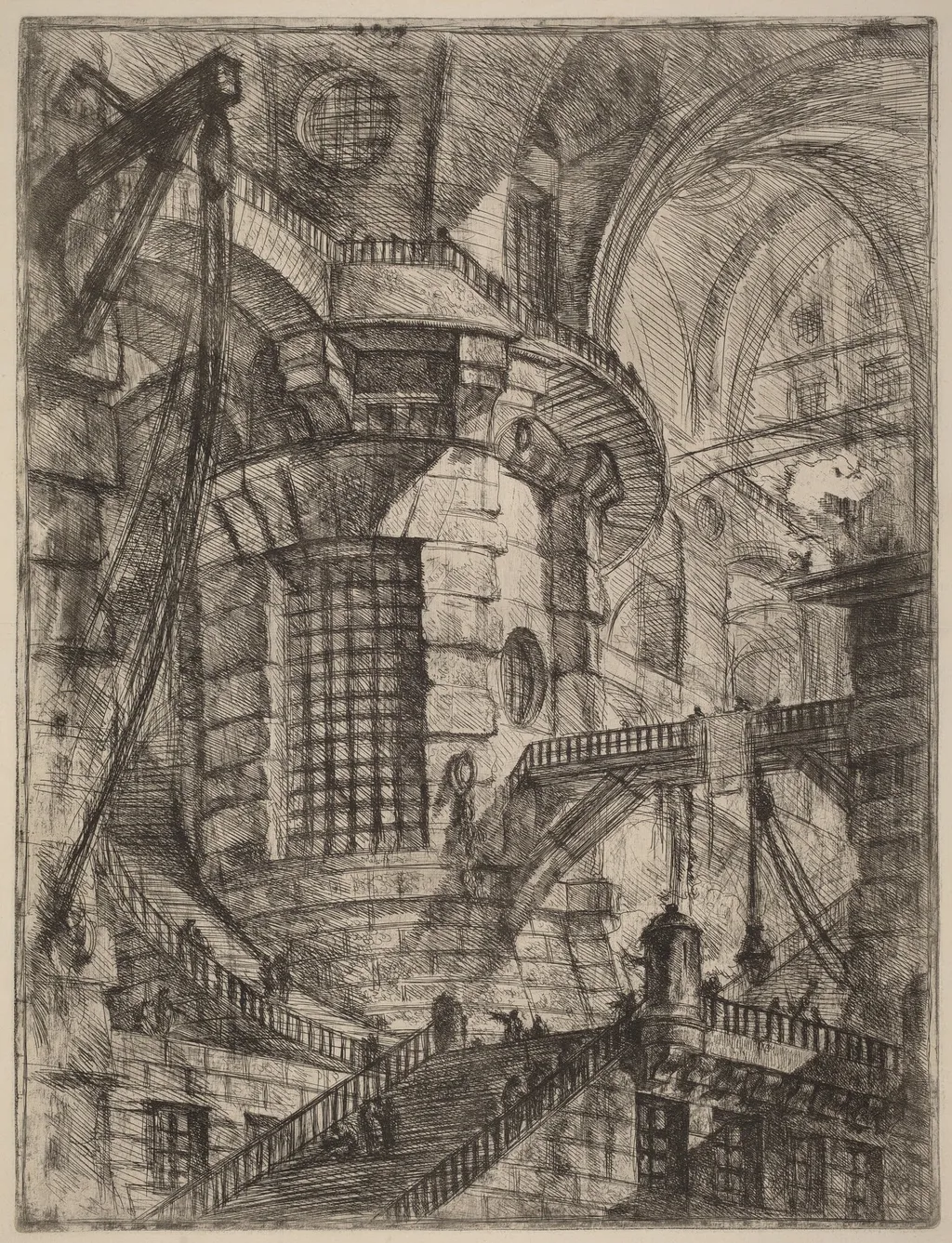
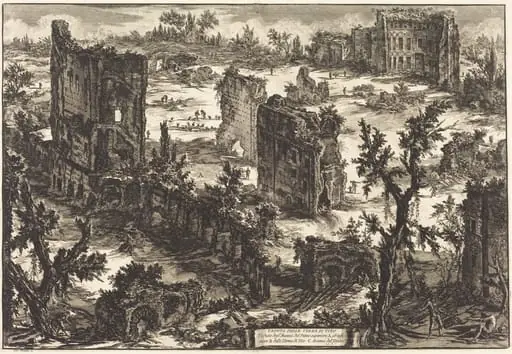
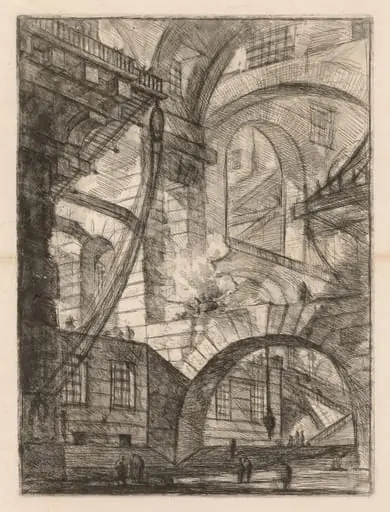
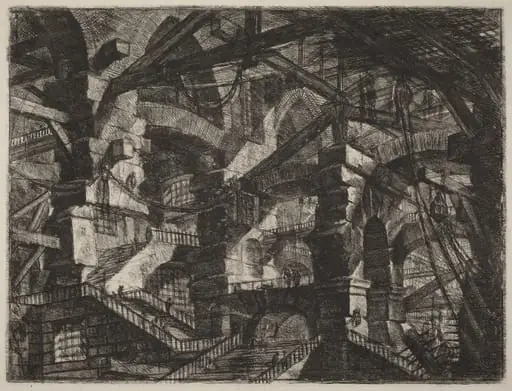
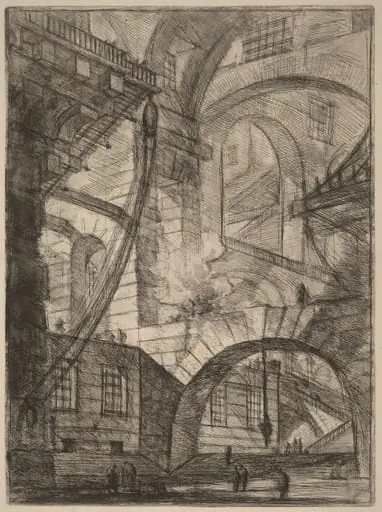
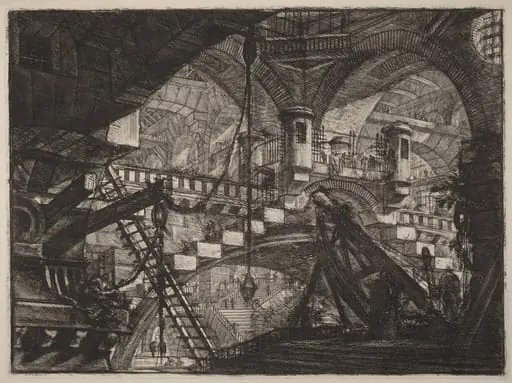
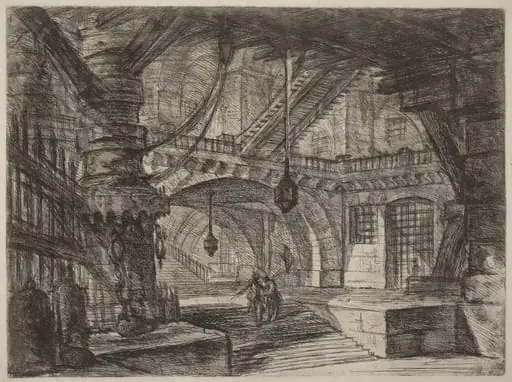
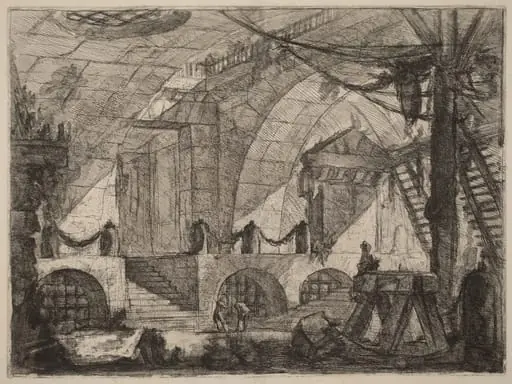
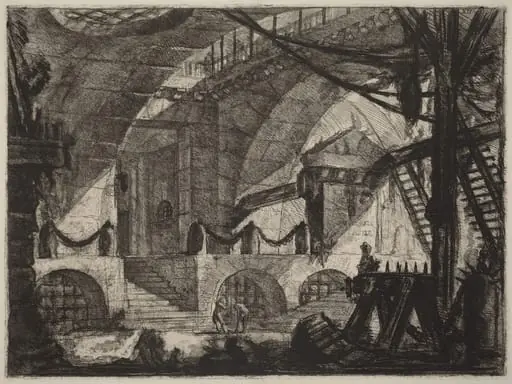
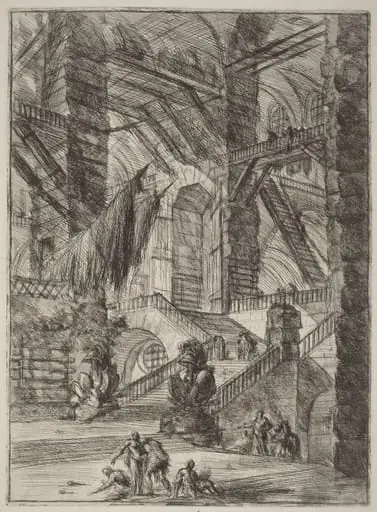
The Round Tower is an ink print by the Baroque artist Giovanni Battista Piranesi. It dates from 1750 and is held in the collection of the National Gallery of Art.
About this work
Overview
Created in 1750, *The Round Tower* is a print by Giovanni Battista Piranesi that combines etching, engraving, sulphur tint (open bite) and burnishing techniques. It belongs to his series of images that portray ancient Roman architecture alongside imagined structures, reflecting his dual interests in archaeology and fantastical design.
Subject & Meaning
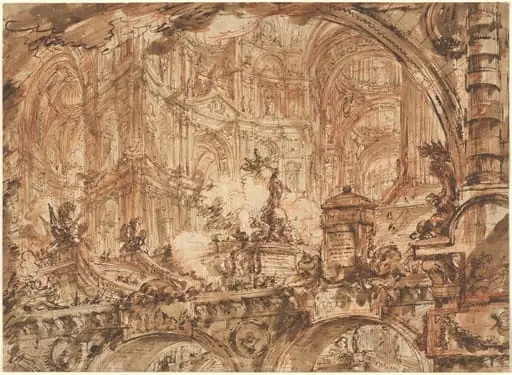
The composition presents an interior space of a circular tower, rendered with multiple levels, a spiraling staircase, and a lofty domed ceiling. Archways and balconies populate the scene, populated by figures that suggest human activity within the architectural setting, emphasizing both structural complexity and the lived experience of such spaces.
Technique & Style
Piranesi employs a highly detailed, realistic approach, using strong chiaroscuro to model depth and drama. The combination of etching and engraving allows precise line work, while the sulphur tint or open bite creates rich tonal variations, and burnishing adds subtle highlights that enhance the three‑dimensional illusion.
History & Provenance
The print is part of Piranesi’s broader oeuvre of Roman antiquarian studies, produced during his mature period when he was documenting and re‑imagining the city’s monumental heritage. It was circulated among collectors of architectural prints in the mid‑18th century, contributing to his reputation as a chronicler of Rome’s built environment.
Context
At the time of its creation, Piranesi was engaged in a dialogue between empirical observation of ancient ruins and the imaginative reconstruction of lost or speculative architecture. *The Round Tower* reflects this tension, juxtaposing accurate architectural detail with a fantastical interior that would have appealed to contemporary Enlightenment interests in antiquity and the sublime.
Legacy
The work continues to be studied for its blend of archaeological rigor and inventive vision, influencing later architectural illustrators and serving as a reference point for the visual culture of ruins and imagined monumental spaces.
Own this work as a print
Artist & collection
Artist
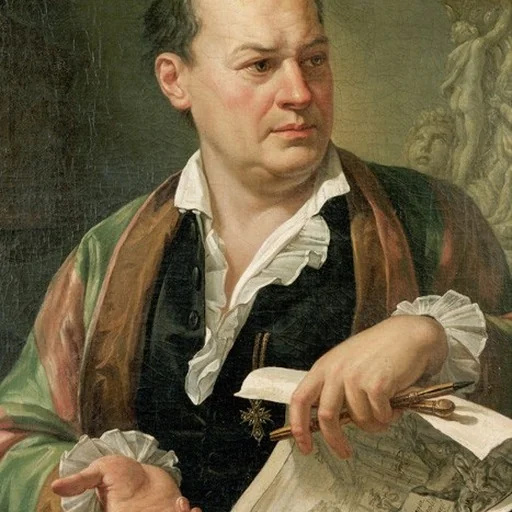
Giovanni Battista (or Giambattista) Piranesi (Italian pronunciation: ; also known as simply Piranesi; 4 October 1720 – 9 November 1778) was an Italian classical archaeologist, architect, and artist, famous for his…