Artwork
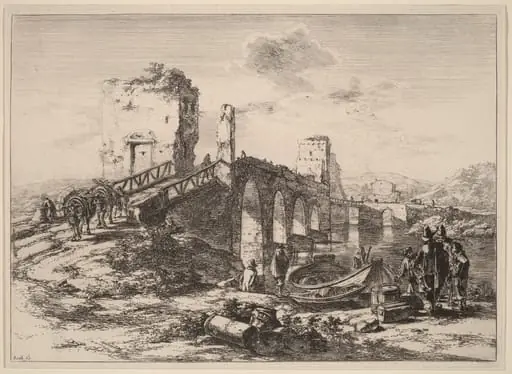
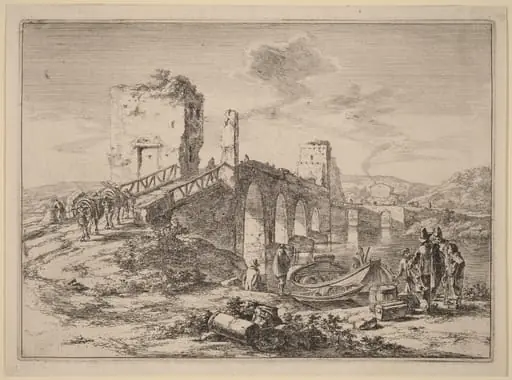
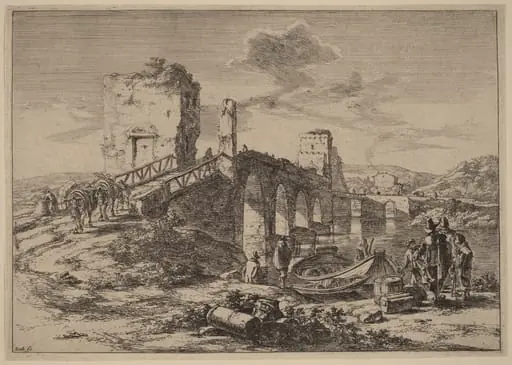
Veduta del Ponte Salario
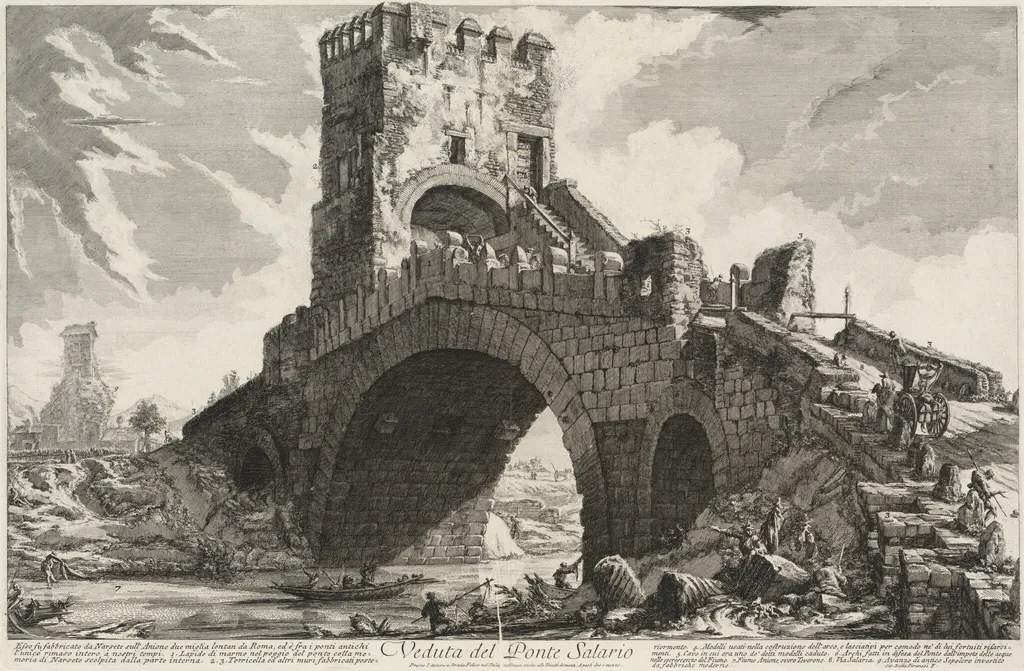
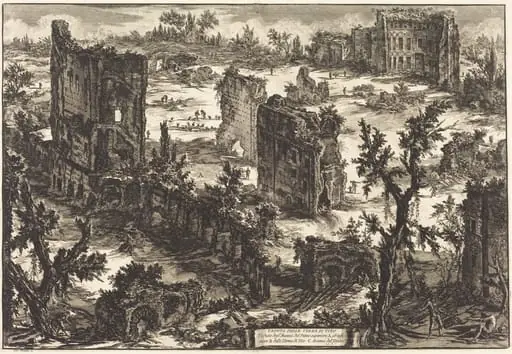
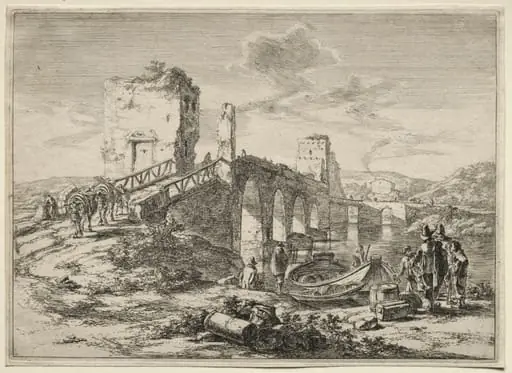
Veduta del Ponte Salario is an ink print by the Romanticist artist Giovanni Battista Piranesi. It dates from 1756 and is held in the collection of the National Gallery of Art.
About this work
Overview
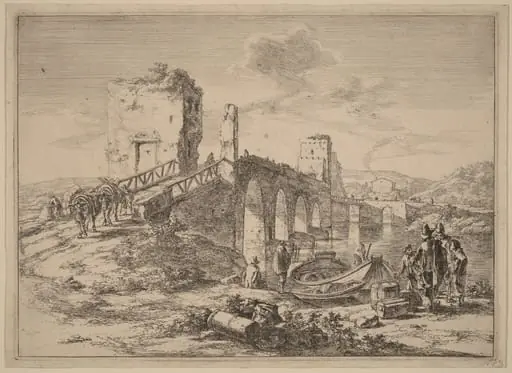
Giovanni Battista Piranesi’s 1756 etching presents a view of the Ponte Salario, a stone bridge spanning the Aniene River near Rome. The print captures the bridge’s three large arches, a fortified tower above the roadway, and the surrounding rugged terrain, populated by tiny figures and boats that convey scale.
Subject & Meaning
The composition emphasizes the bridge’s monumental solidity, suggesting the enduring strength of Roman engineering. By populating the scene with diminutive travelers and animals, Piranesi highlights the structure’s imposing presence within its natural landscape.
Technique & Style
Executed in the etching medium, the work demonstrates Piranesi’s precise line work and attention to architectural detail. His approach aligns with the veduta tradition, prioritising topographical accuracy while rendering the texture of stone and water through fine incisions.
History & Provenance
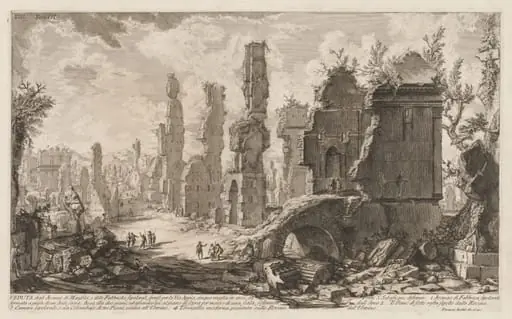
Created during Piranesi’s prolific period of documenting Roman monuments, the print reflects his dual role as archaeologist and artist. It was produced as part of his broader series of Roman views, which circulated among collectors interested in antiquarian subjects.
Context
The Ponte Salario, an important crossing on the Via Salaria, linked Rome to the northern countryside. In the 18th century, such infrastructural relics attracted scholarly attention, and Piranesi’s depiction contributed to contemporary interest in the preservation and study of ancient Roman architecture.
Artist & collection

Artist
Giovanni Battista (or Giambattista) Piranesi (Italian pronunciation: ; also known as simply Piranesi; 4 October 1720 – 9 November 1778) was an Italian classical archaeologist, architect, and artist, famous for his…