Artwork
Fantastic River Landscape with Ruins and a Castle
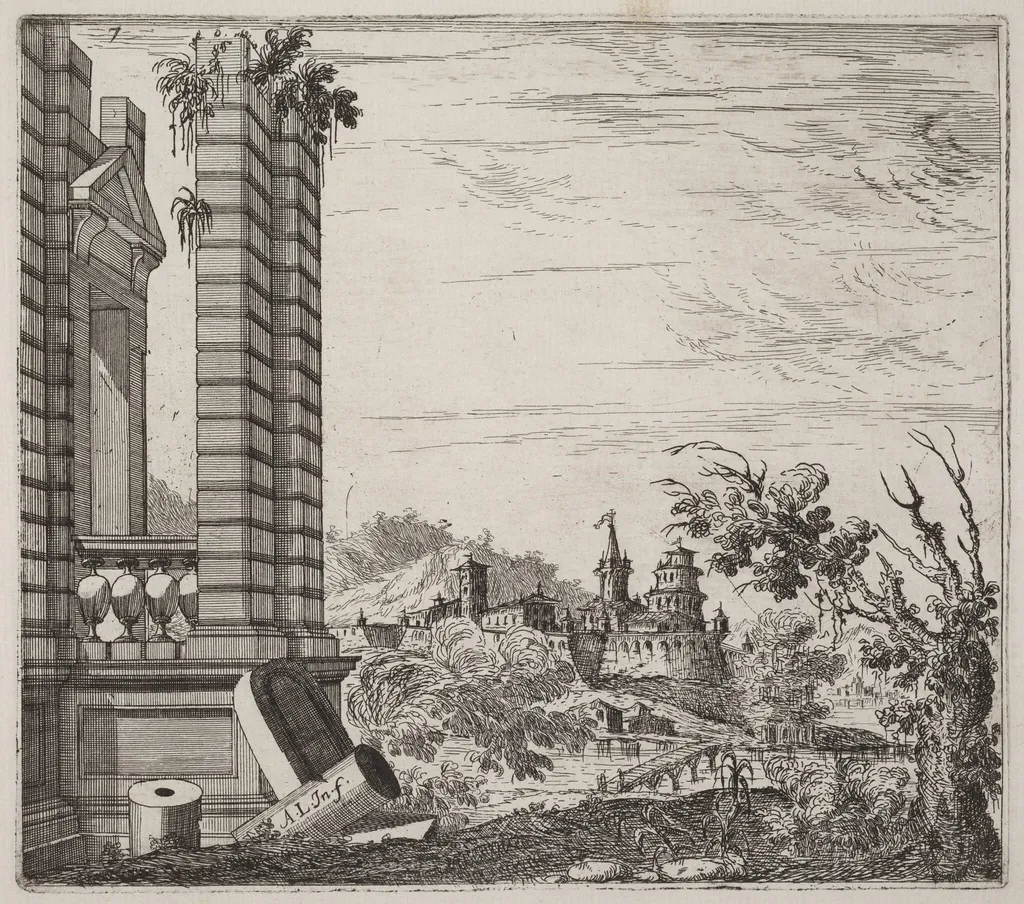
Fantastic River Landscape with Ruins and a Castle is an ink print by the Baroque artist Giuseppe Antonio Landi. It dates from 1753 and is held in the collection of the National Gallery of Art.
About this work
Overview
Giuseppe Antonio Landi’s 1753 print, titled Fantastic River Landscape with Ruins and a Castle, is an etched and engraved image on laid paper.
Giuseppe Antonio Landi’s 1753 print, titled Fantastic River Landscape with Ruins and a Castle, is an etched and engraved image on laid paper. The composition presents a narrow, elongated tower on the left, a winding river that passes a decaying castle with a broken spire, and densely tangled trees framing the banks. The scene is rendered in a dramatic, almost theatrical manner, emphasizing the contrast between architecture and untamed nature.
Subject & Meaning
The work juxtaposes human-made structures—an isolated tower and a crumbling fortress—with the restless river and wild vegetation, suggesting the transience of civilization against the enduring forces of the landscape. The stormy sky and turbulent water heighten a sense of instability, inviting viewers to contemplate the fragility of built heritage when confronted with nature’s power.
Technique & Style
Landi combined etching and engraving to achieve a range of tonal values. Fine cross‑hatching creates deep shadows on the ruins, while broader, more fluid lines suggest the choppy water and tangled foliage. The use of laid paper, with its characteristic ribbed texture, adds subtle depth, and the overall composition reflects the 18th‑century taste for picturesque, almost fantastical scenery.
History & Provenance
Created in 1753, the print belongs to the later period of Landi’s career, when he was active in both architectural design and printmaking. Though specific ownership records are scarce, the work has appeared in several European collections of 18th‑century prints, indicating its circulation among connoisseurs of the picturesque genre.
Artist & collection


 Architectural Fantasy with Classical Ruins and Vernacular Buildings
 Alcune Prospettive
 Architectural Fantasy with a Fountain, Classical Ruins, and a Bridge
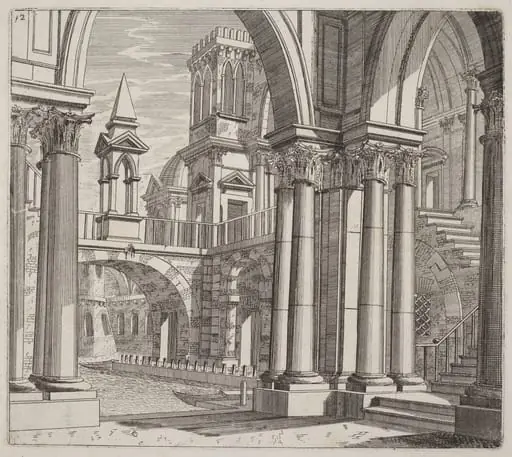 Architectural Fantasy with Buildings, Stairways, and Portals beside a Canal
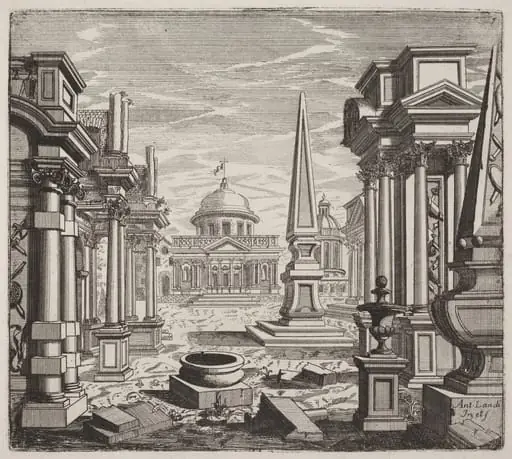 Architectural Fantasy with Obelisks, Ruins, and a Piazza
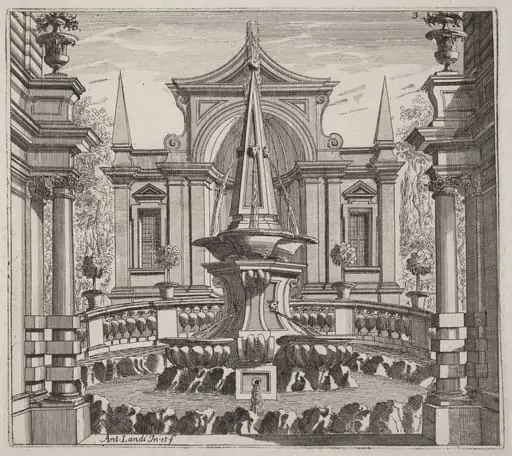 Fantastic Garden with a Fountain and a Garden Pavilion
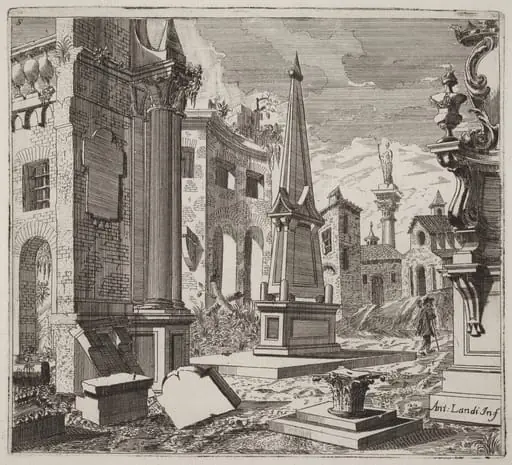 Fantastic Townscape with Ruins
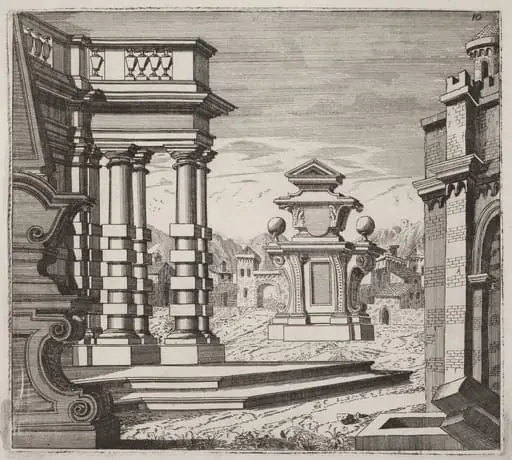 Architectural Fantasy with Portals and Monuments
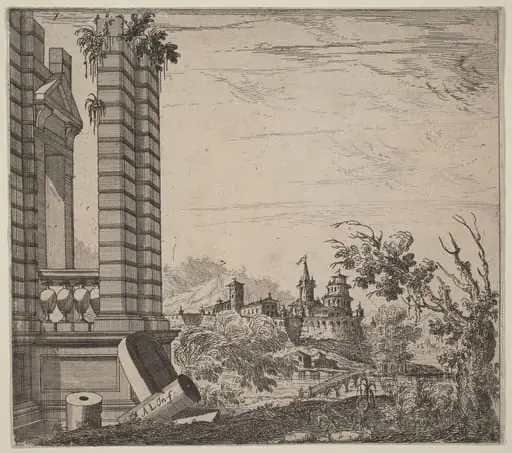 Landscape with Ruins
![Landscape with Tower and Two Ruined Pillars [left], by Canaletto](https://artifactworldgallery.com/img/canaletto--landscape-with-tower-and-two-ruined-pillars-left--60d58ba162fec5aa-w320.webp) Landscape with Tower and Two Ruined Pillars [left]
Landscape with Tower and Two Ruined Pillars [left]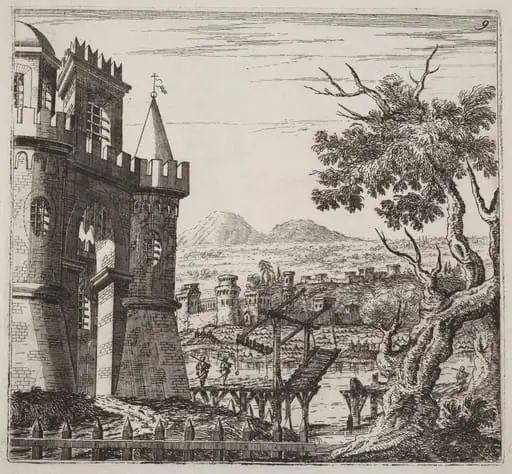 Landscape with a Castle and a Drawbridge
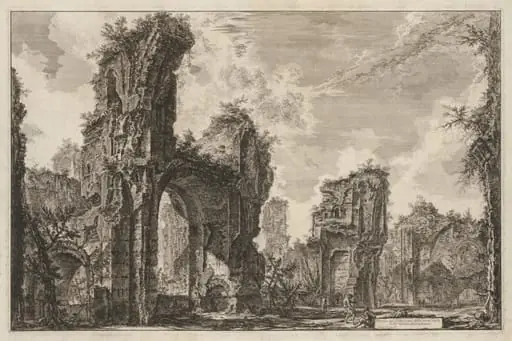 Views of Rome: Rovine del Sisto o sia della gran sala delle Terme Antoniniane
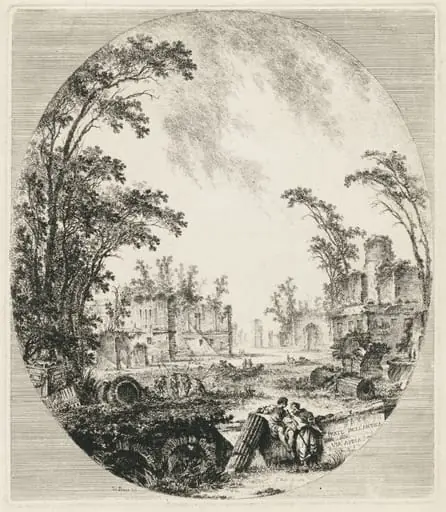 Parte dell'antica via Appia (Section of the Old Appian Way)
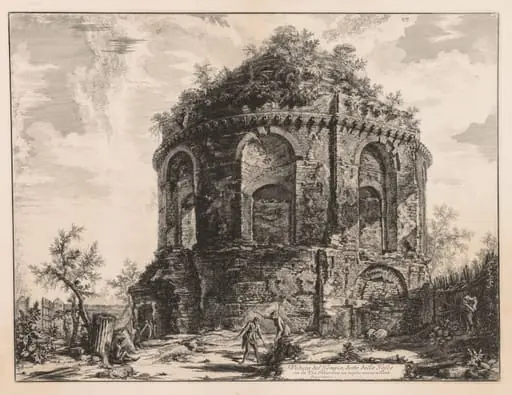 Views of Rome: The So-called Tempio della Tosse, near Tivoli
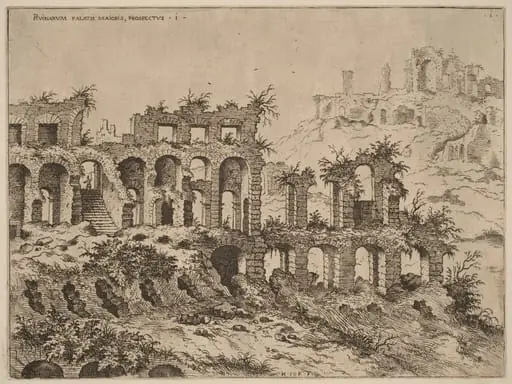 View of the Colosseum with the Palatine in the Background