Artwork
The Ponte Molle
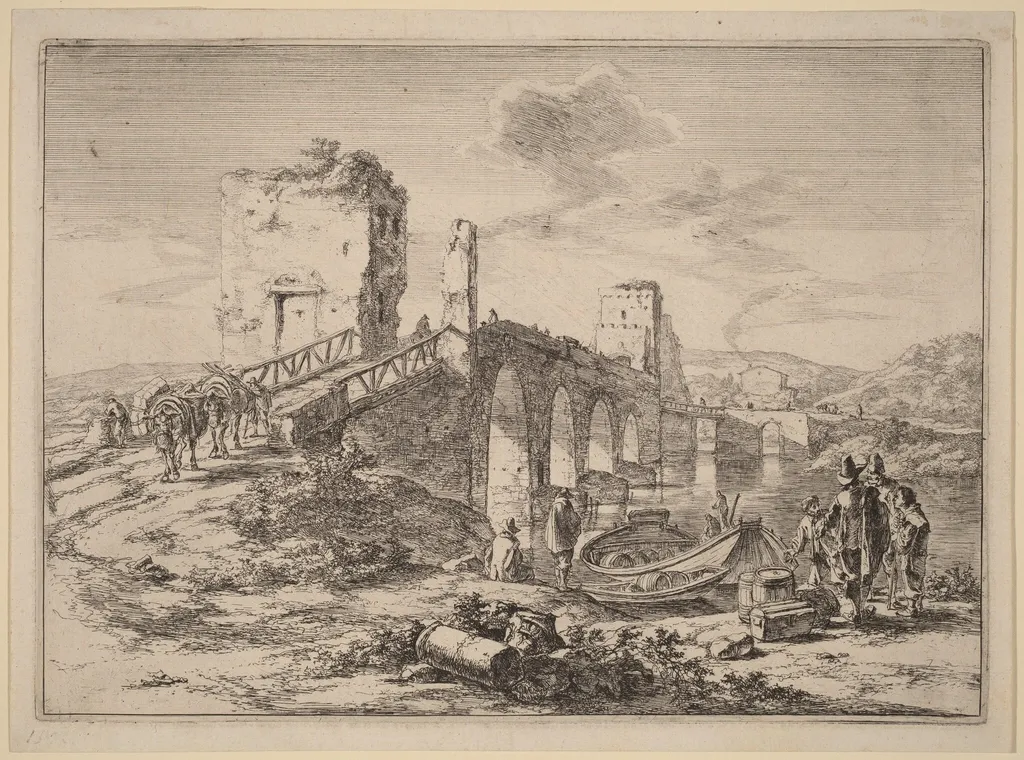
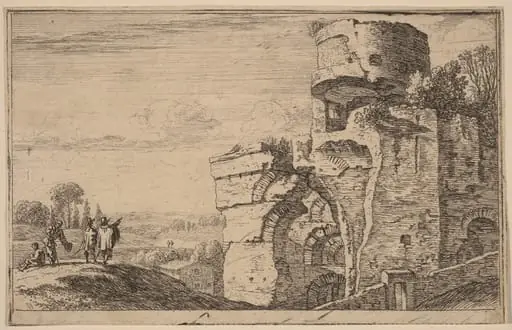
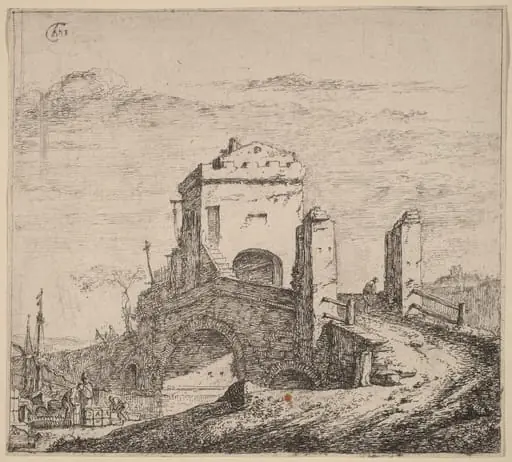
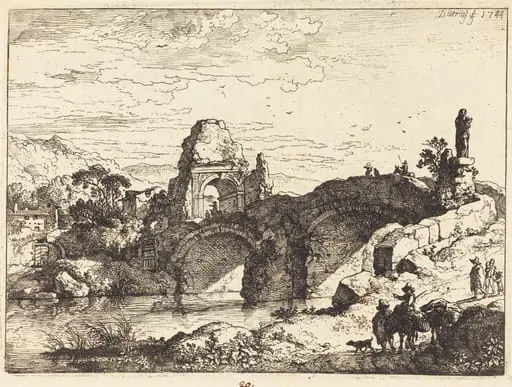
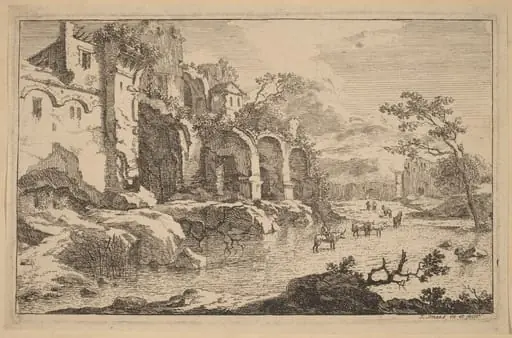
The Ponte Molle is an ink print by the Baroque artist Jan Both. It is held in the collection of the National Gallery of Art. Jan Dirksz Both created this etching around 1640, not 1700, as part of a broader Dutch engagement with Italian landscapes.
About this work
Overview
His work bridges Northern precision with Southern atmosphere, translating Roman ruins and river life into delicate ink lines.
Jan Dirksz Both created this etching around 1640, not 1700, as part of a broader Dutch engagement with Italian landscapes. Though Dutch by birth, he spent formative years in Italy, absorbing its topography and light. His work bridges Northern precision with Southern atmosphere, translating Roman ruins and river life into delicate ink lines. The Ponte Molle, a real structure near Rome, becomes a stage for quiet human activity rather than a monument.
Subject & Meaning
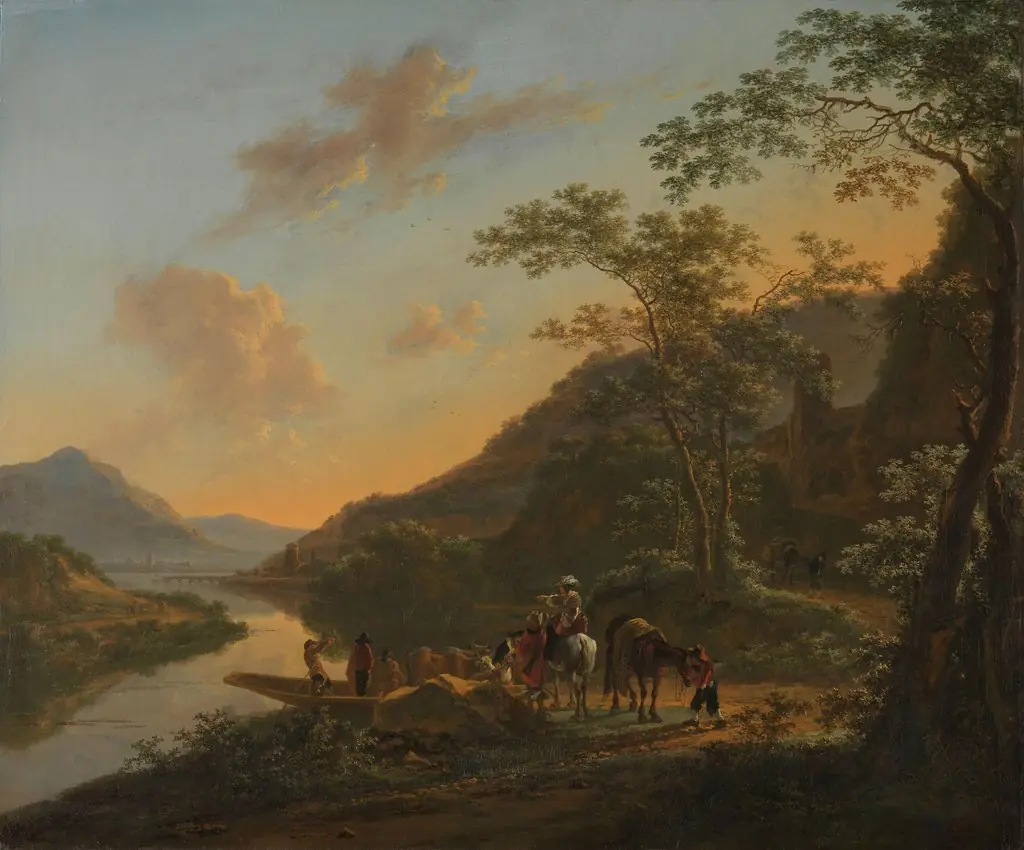
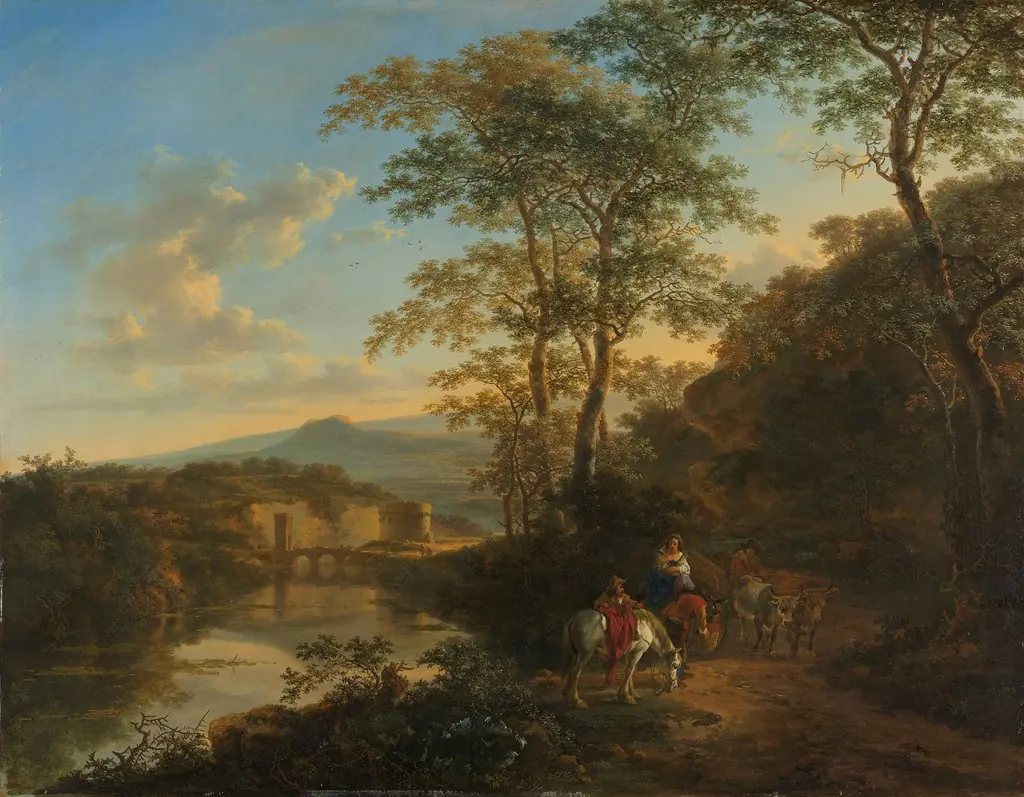
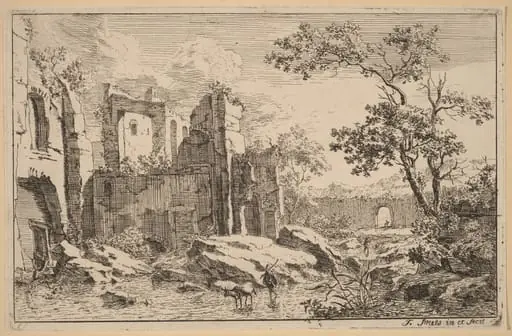
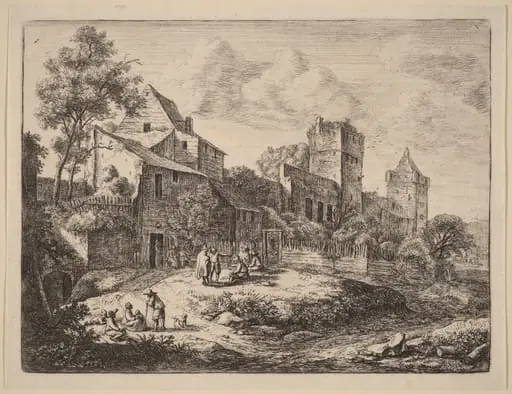
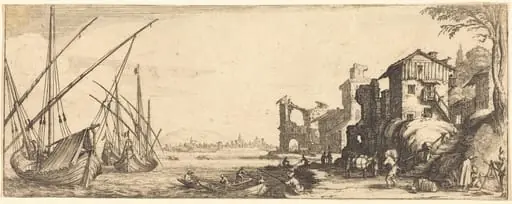
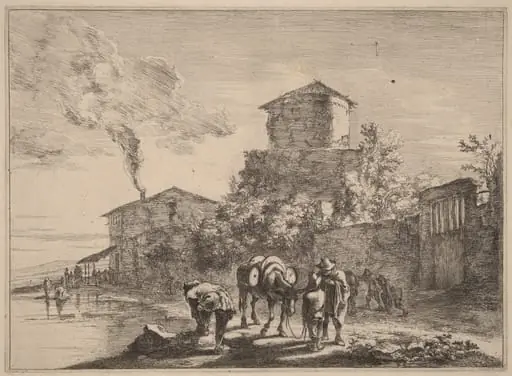
The scene captures daily labor along the Tiber: a cart drawn by horses, laborers unloading barrels from a boat, and figures moving along the riverbank. The crumbling buildings and solitary tower suggest decay amid ongoing use. No grand narrative is present—only the rhythm of work and transit. The bridge, neither heroic nor ruined, functions as a quiet connector between land and water, life and passage.
Technique & Style
Both employed fine, incised lines to model form and suggest texture without shading. The choppy river is rendered with rapid, overlapping strokes; figures and fabrics are defined by economical contours. Architectural details emerge through layered hatching, while atmospheric depth is achieved by varying line density. The absence of tone relies entirely on contrast and rhythm to convey volume and movement.
History & Provenance
The print was made during Both’s return to the Netherlands after his Italian sojourn, likely intended for collectors interested in Italianate views. It circulated among Northern patrons who valued topographical accuracy blended with poetic mood. No record of its earliest ownership survives, but similar etchings by Both appear in 17th-century Dutch collections, indicating modest commercial success.
Context
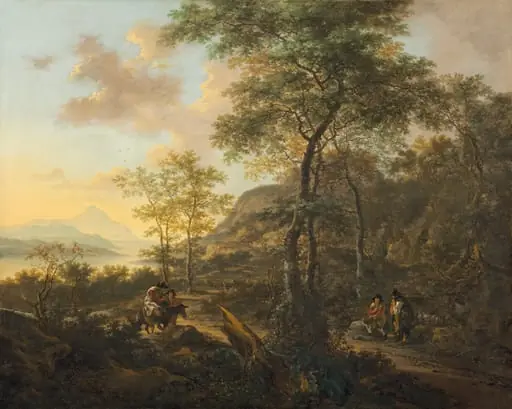
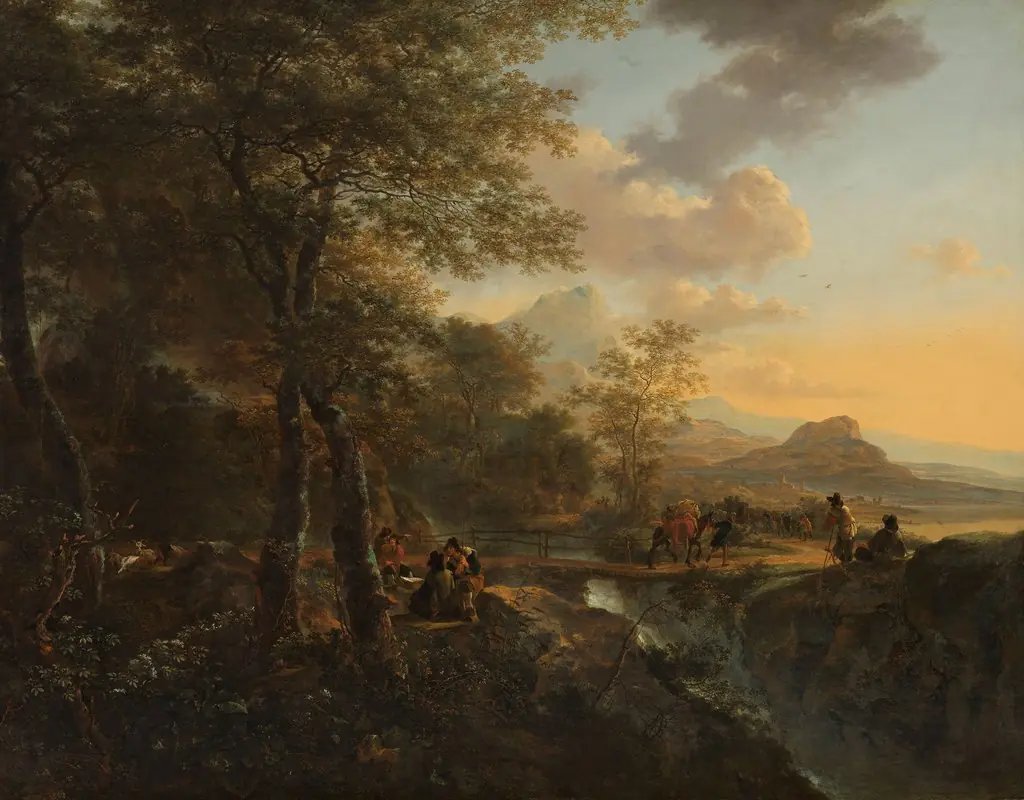
Both belonged to a generation of Dutch artists who traveled to Italy and brought back sketches and impressions. His work responded to demand for idealized yet believable foreign landscapes, distinct from pure topography or mythological scenes. The Ponte Molle reflects a trend: not romanticizing ruins, but observing them as part of lived, working environments.
Legacy
Both’s etchings influenced later Dutch printmakers who pursued Italian subjects, though his style remained less dramatic than contemporaries like Salvator Rosa. His focus on ordinary activity within ancient settings offered a quieter alternative to grand historical narratives. Today, his prints are studied for their nuanced handling of light, structure, and human presence in landscape.
Artist & collection

Artist
Jan Dirksz Both was a Dutch painter, draughtsman, and etcher, who made an important contribution to the development of Dutch Italianate landscape painting.