Artwork
Paysanne bêchant (Peasant Laboring)
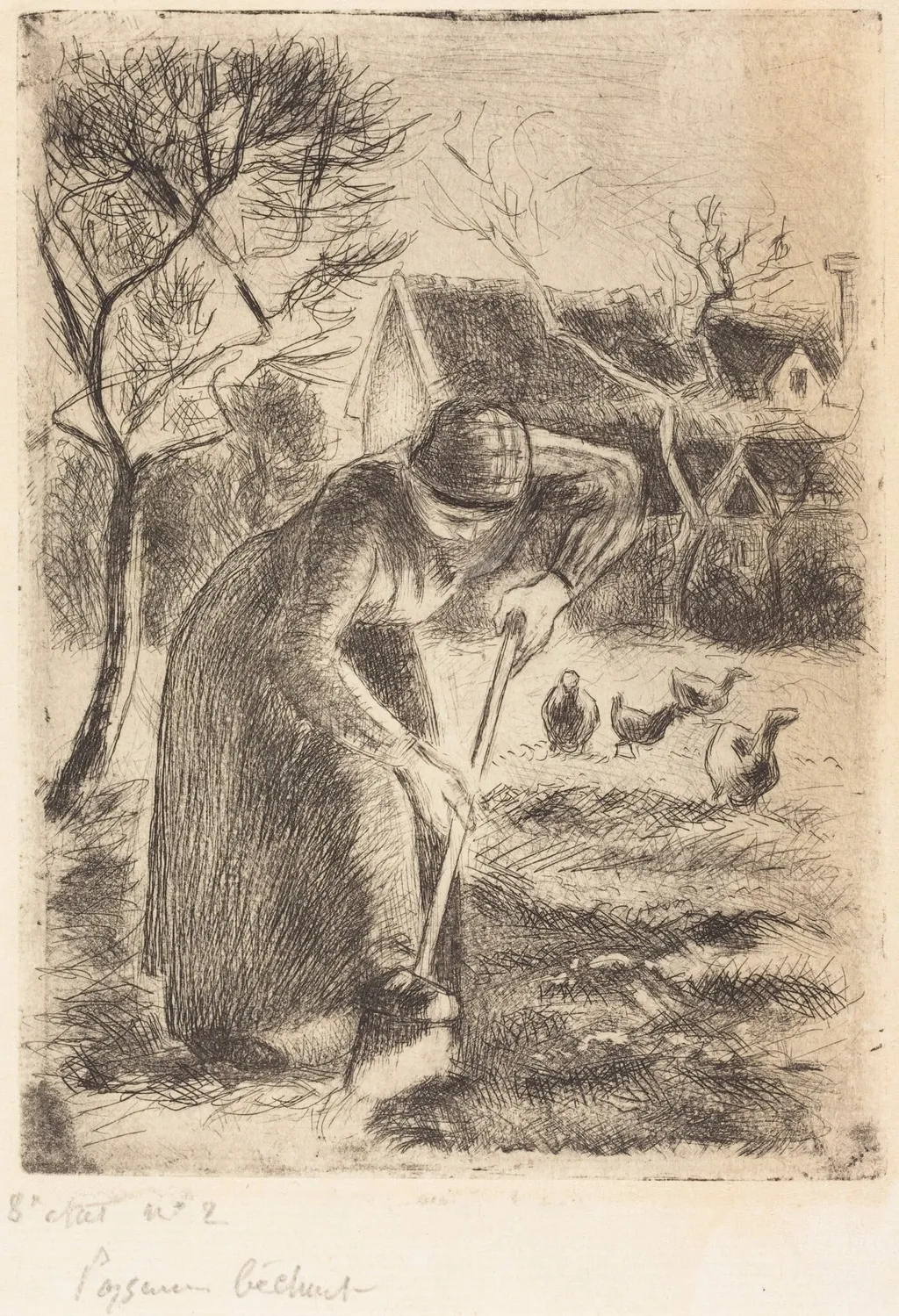
Paysanne bêchant (Peasant Laboring) is a graphite print by the Impressionist artist Camille Pissarro. It dates from 1890 and is held in the collection of the National Gallery of Art.
About this work
Overview
Created in 1890, this print by Camille Pissarro combines etching, aquatint and graphite on laid paper. The work measures the everyday toil of a rural laborer, rendered in a restrained palette that emphasizes the physical act of digging against a distant village landscape.
Subject & Meaning
The composition centers on a solitary peasant seen from behind, bent over a furrow with a spade. The figure’s dark attire stands out against the lighter field, while a modest settlement recedes in the background, suggesting the interdependence of agricultural work and community life.
Technique & Style
Pissarro employs the line work of etching together with the tonal washes of aquatint, enhanced by graphite touches that add subtle shading. The laid paper surface contributes a textured feel, and the muted tonal range creates a quiet, contemplative atmosphere.
History & Provenance
Executed toward the end of Pissarro’s career, the print reflects his continued interest in rural subjects during the 1890s. It remains part of the artist’s print oeuvre, documented in catalogues of his late works and held in several public collections.
Artist & collection


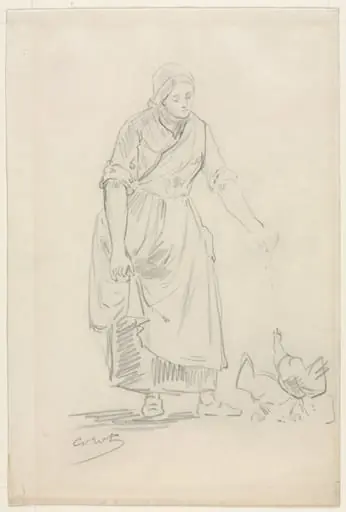 Peasant Girl Feeding Chickens
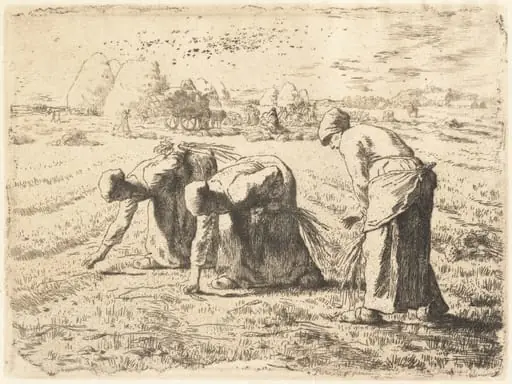 The Gleaners (Les Glanenses)
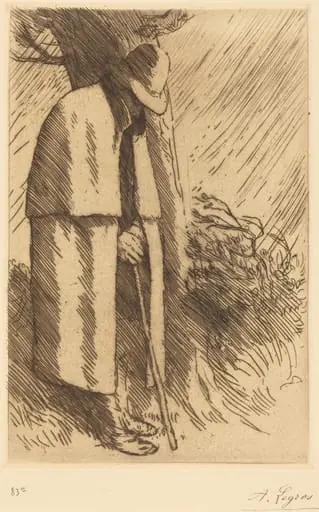 Traveler taking Shelter (Le voyageur a l'abri)
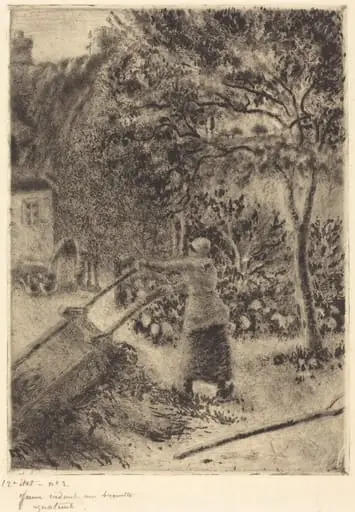 A Woman Emptying a Wheelbarrow (Femme vidant une brouette)
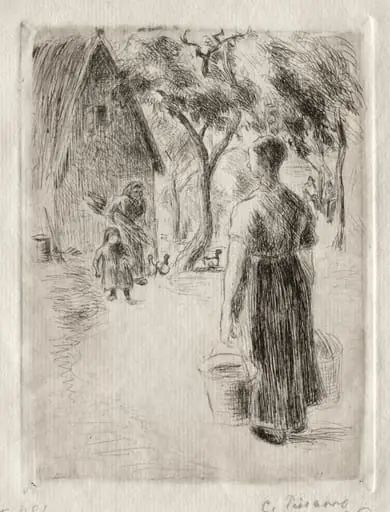 Peasant Woman Carrying Buckets
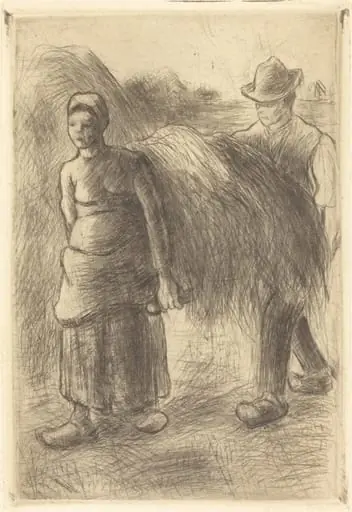 Peasants Carrying Hay (Paysans portant du foin)
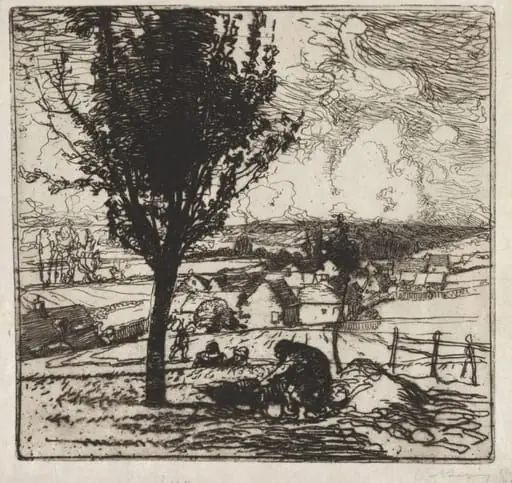 Veu de Jouy-le-Moutier
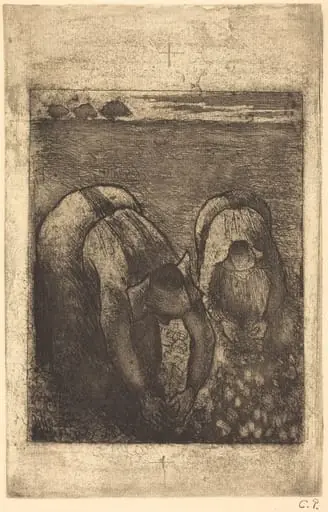 Peasants in a Field of Beans (Paysannes dans un champ de haricots)
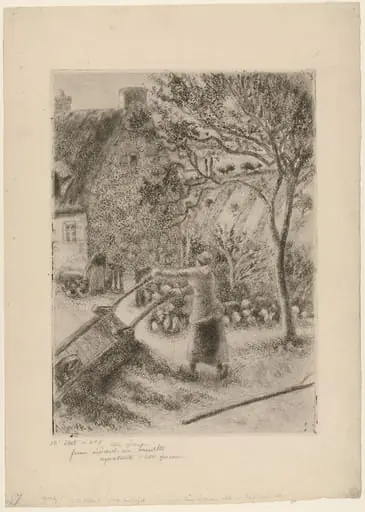 Untitled
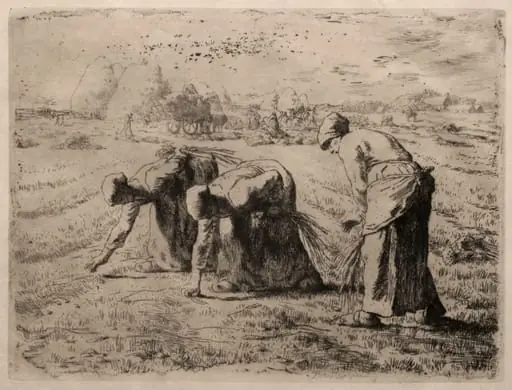 The Gleaners
![Pea Harvesters [recto], by Camille Pissarro](https://artifactworldgallery.com/img/camille-pissarro--pea-harvesters-recto--0c75830c5f3a07a4-w320.webp) Pea Harvesters [recto]
Pea Harvesters [recto]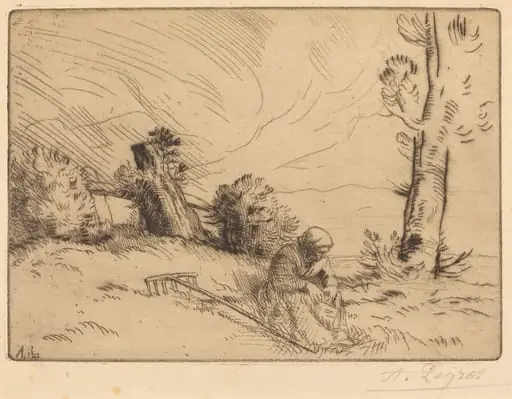 Peasant Woman Seated near a Hedge (Paysanne assise pres d'une haie)