Artwork
Sanctus Jacobus Major
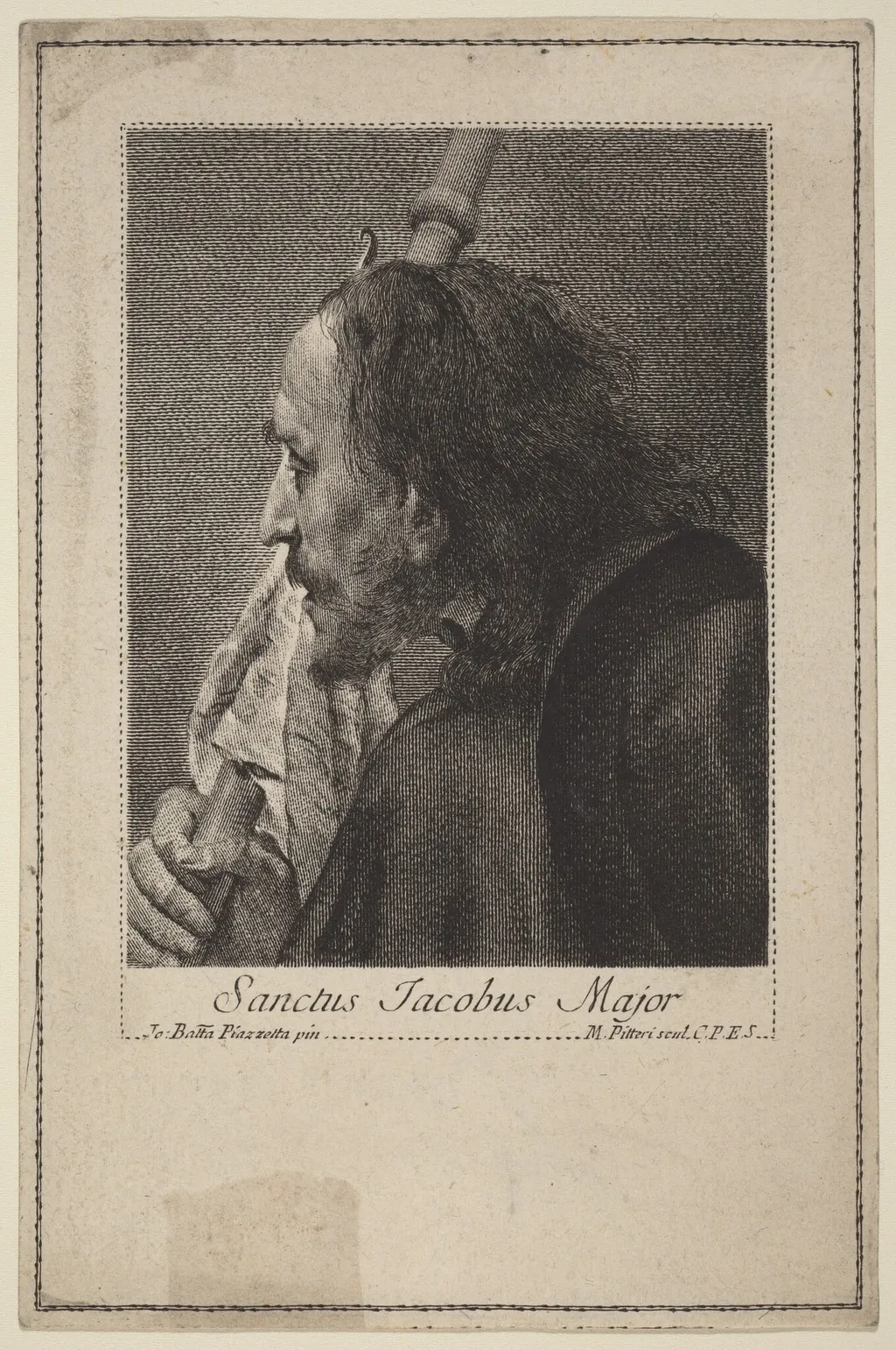
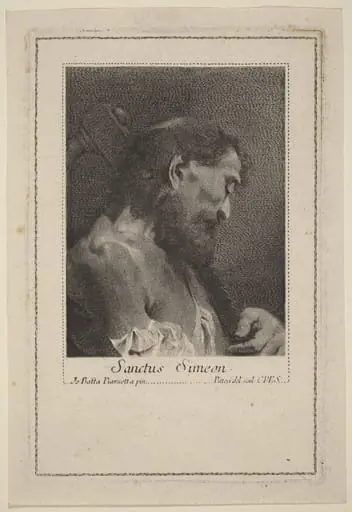
Sanctus Jacobus Major is an ink print by the Baroque artist Marco Alvise Pitteri. It dates from 1744 and is held in the collection of the National Gallery of Art.
About this work
Overview
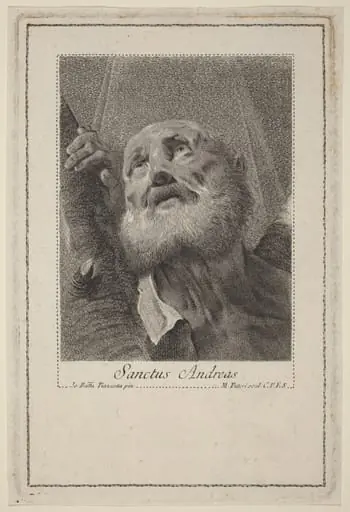
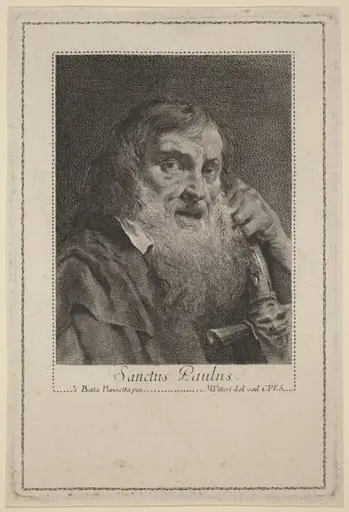
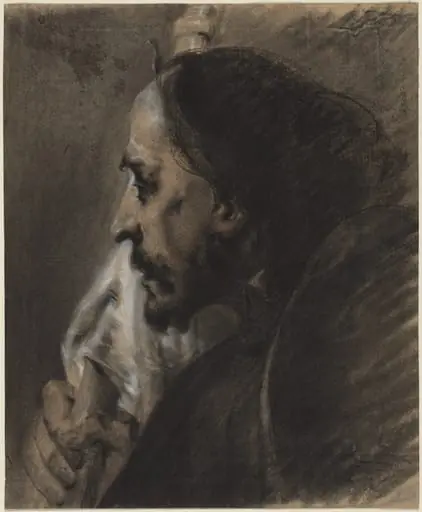
The print presents a solitary male figure rendered in profile, his long hair and beard framing a dark, flowing robe.
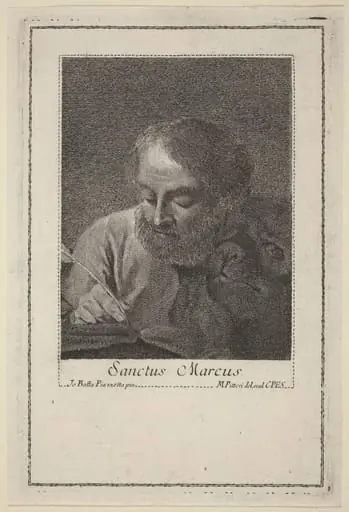
Sanctus Jacobus Major is a copper engraving executed in 1744 by the Venetian artist Marco Alvise Pitteri. The print presents a solitary male figure rendered in profile, his long hair and beard framing a dark, flowing robe. In his right hand he holds a staff, a conventional attribute of ecclesiastical authority. The composition is confined to a single, tightly cropped figure, emphasizing the individual’s solemn presence.
Subject & Meaning
The subject is identified as Saint James the Greater, a prominent apostolic figure in Christian tradition. The long hair, beard, and clerical robe, together with the staff, signal his sanctified status and role as a pilgrim or missionary. The profile orientation and restrained gesture convey a contemplative dignity, inviting viewers to reflect on the saint’s spiritual journey and martyrdom.
Technique & Style
Pitteri employs the fine line work characteristic of mid‑eighteenth‑century Baroque engraving. Cross‑hatching and stippling create subtle gradations of light and shadow, giving the fabric and hair a tactile realism. The intricate textures and precise rendering of the staff demonstrate the artist’s mastery of the burin, while the overall composition retains the dramatic chiaroscuro typical of the period’s printmaking.
History & Provenance
Created in 1744, the print was likely produced for devotional circulation among the faithful or as part of a series of saintly portraits. Marco Alvise Pitteri, active in Venice, was known for his collaborations with religious publishers. Surviving copies are held in several European print collections, indicating the work’s distribution across ecclesiastical and private contexts during the late Baroque era.
Artist & collection