Artwork
Sanctus Matteaus
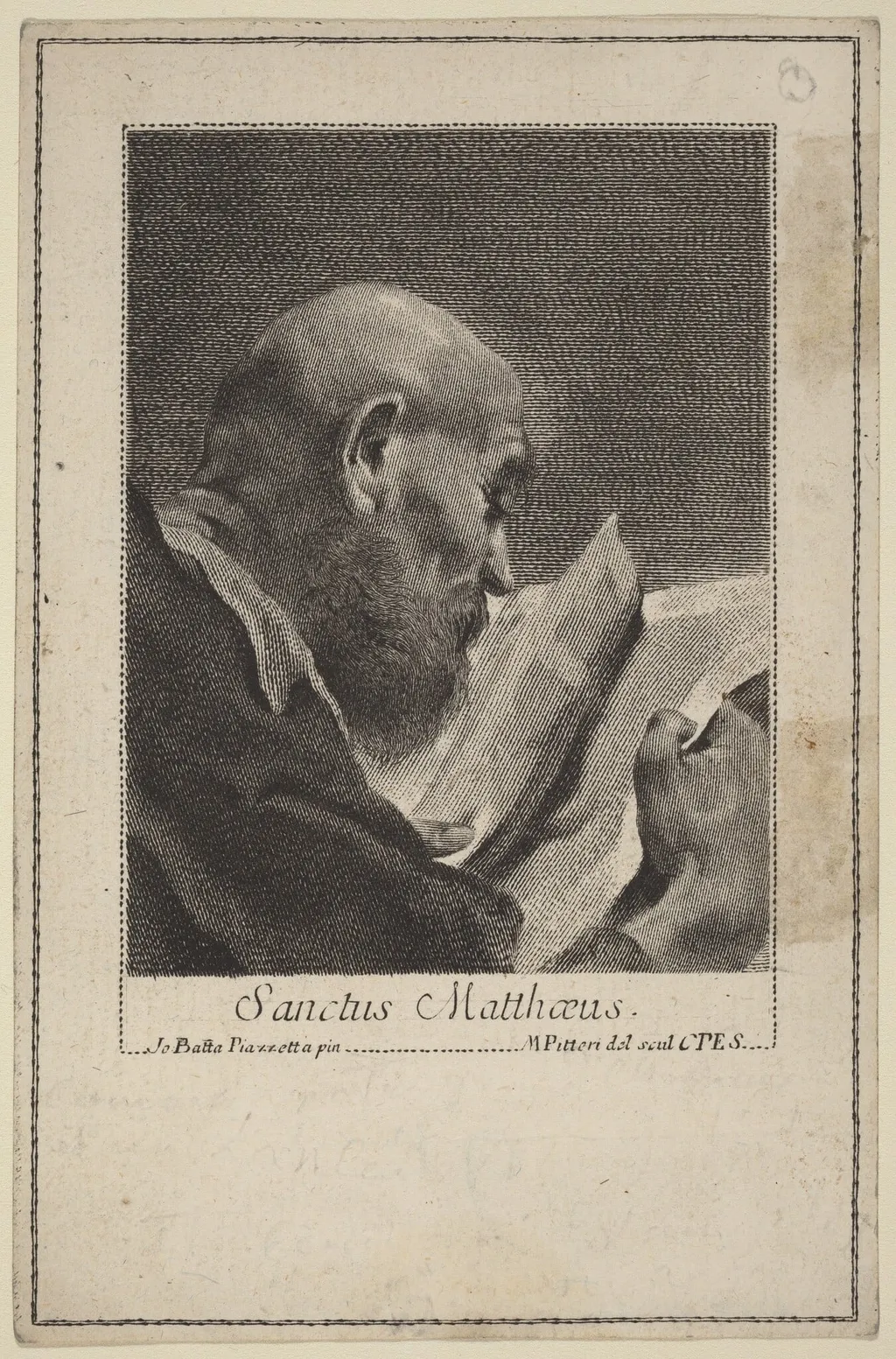
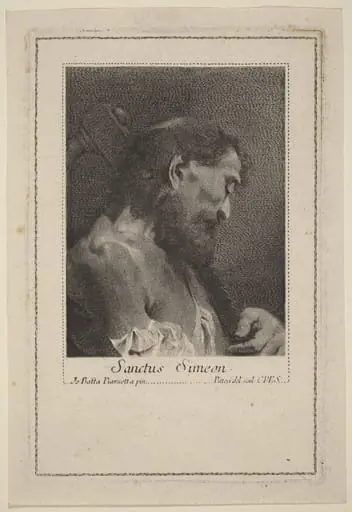
Sanctus Matteaus is an ink print by the Baroque artist Marco Alvise Pitteri. It dates from 1744 and is held in the collection of the National Gallery of Art.
About this work
Overview
Rendered in stark black-and-white, the image shows a bearded man with curled hair, his gaze directed downward and slightly to the side.
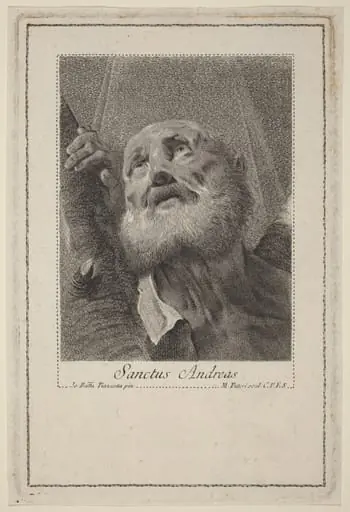
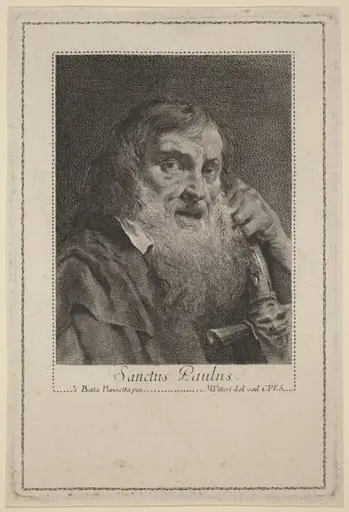
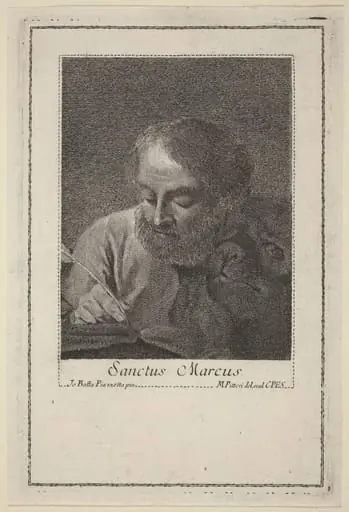
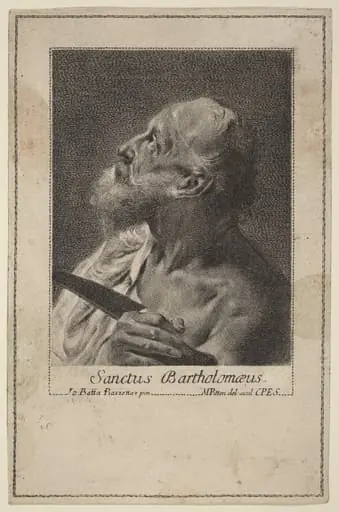
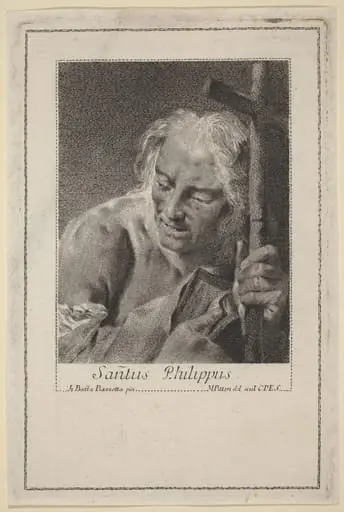
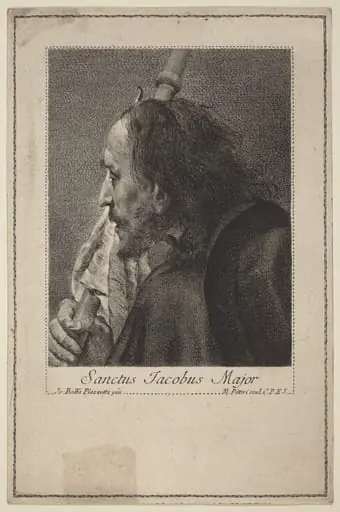
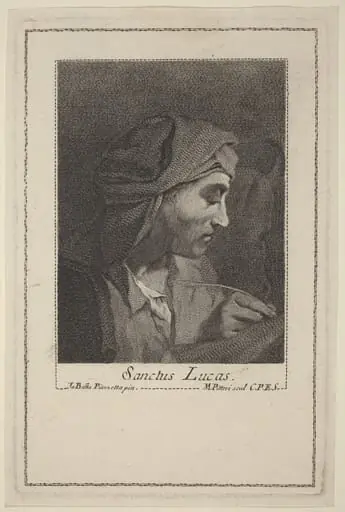
Marco Alvise Pitteri’s 1744 engraving presents a solitary figure identified by the inscription *Sanctus Matteaus*. Rendered in stark black-and-white, the image shows a bearded man with curled hair, his gaze directed downward and slightly to the side. He is draped in a loose, flowing robe that conceals his shoulders and chest, set against an unadorned background marked only by faint line work suggesting fabric folds.
Subject & Meaning
The inscription identifies the sitter as Saint Matthew, one of the four Evangelists. The contemplative posture, with hands gently folded, evokes either the act of writing a Gospel or a moment of prayerful reflection, aligning with traditional iconography that associates Matthew with the authoring of the New Testament.
Technique & Style
Pitteri employed the engraving method, incising fine lines into a metal plate to produce the print. The work demonstrates precise line control, using cross‑hatching to model the facial features and the drapery’s texture. The limited tonal range and restrained background focus attention on the figure’s expression and attire.
History & Provenance
Created in 1744, the print originates from the Venetian workshop of Pitteri, a noted 18th‑century engraver. While specific ownership records are scarce, the piece reflects the period’s devotional print market, where images of saints were circulated for private contemplation and liturgical use.
Artist & collection