Artwork
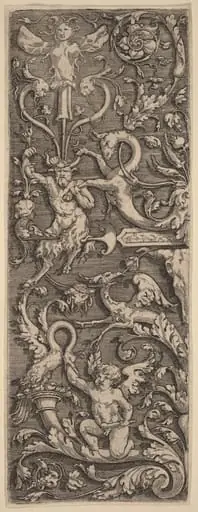
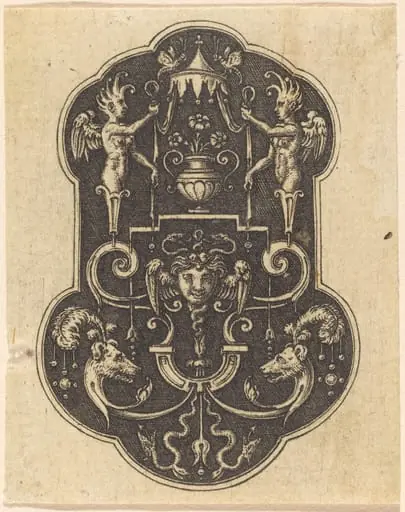
Upright Ornament with Two Sirens
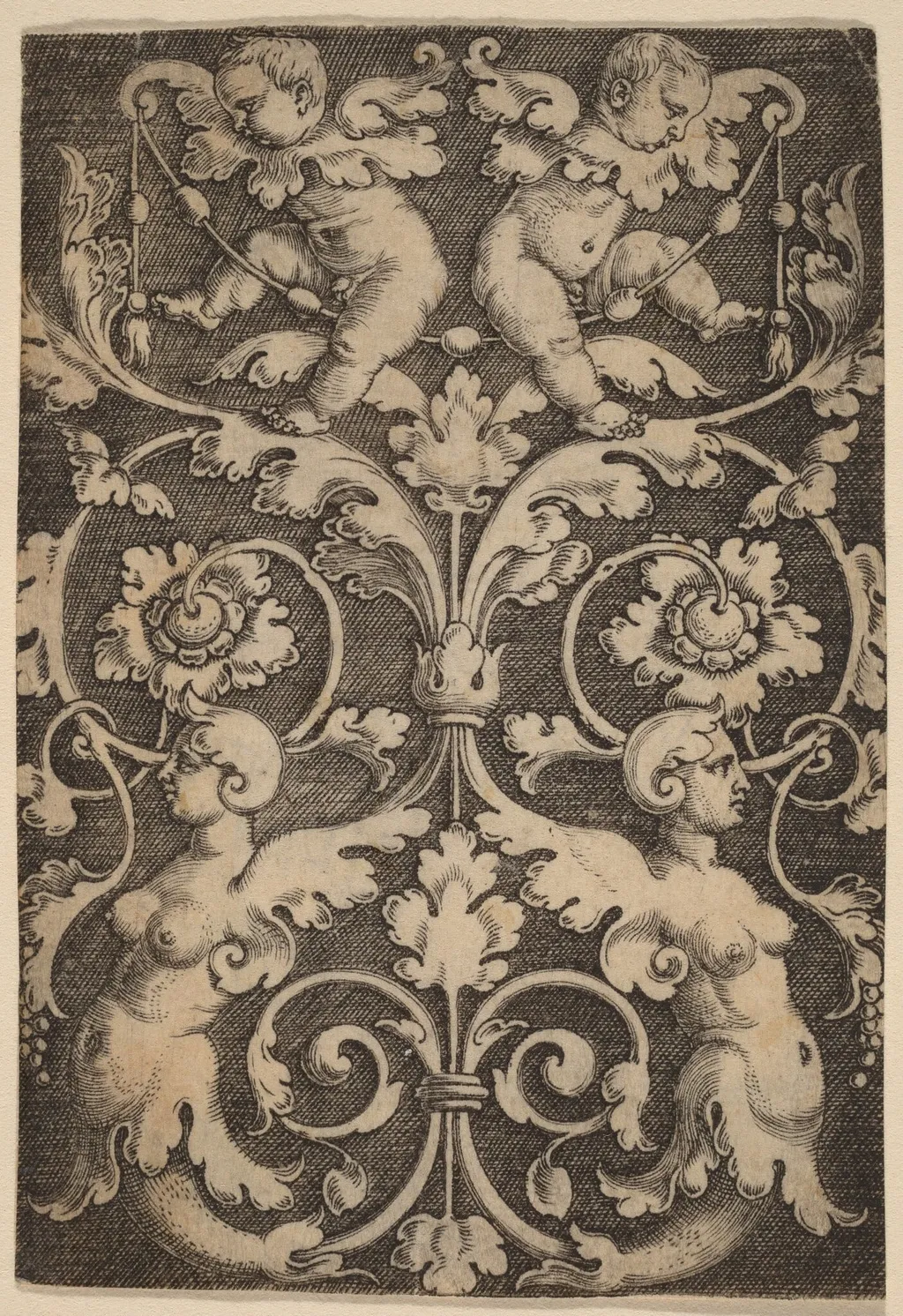
Upright Ornament with Two Sirens is an ink print by the Renaissance artist Master of the Horse Heads. It dates from 1506 and is held in the collection of the National Gallery of Art.
About this work
Overview
Upright Ornament with Two Sirens is a black‑and‑white engraving executed on laid paper in 1506. Attributed to the anonymous workshop known as the Master of the Horse Heads, the print measures roughly a modest size and presents a densely patterned ornamental composition typical of early‑sixteenth‑century printmaking.
Subject & Meaning
The central motif features two small, half‑human, half‑fish figures—sirens—emerging from a tangle of vines and blossoms. Their concealed gazes suggest a playful interaction between mythic creatures and the surrounding foliage, reflecting Renaissance fascination with classical mythology and the decorative potential of hybrid forms.
Technique & Style
The work demonstrates the fine line work characteristic of copper‑plate engraving, with multiple layers of incised lines creating a stark contrast against the dark background. The intricate vegetal scrollwork and the precise rendering of the sirens’ features illustrate the artist’s skill in achieving delicate detail within a limited monochrome palette.
History & Provenance
Created in the early 1500s, the print belongs to a body of ornamental designs circulated among workshops and collectors in Northern Europe. Though the Master of the Horse Heads remains unidentified, the piece is documented in several early catalogues of Renaissance prints and has appeared in museum collections focused on print history.
Context
During the Renaissance, ornamental engravings served both decorative and instructional purposes, often used as pattern books for goldsmiths, woodworkers, and textile designers. The inclusion of mythological figures such as sirens aligns the work with contemporary humanist interests in reviving classical motifs within decorative arts.
Artist & collection