Artwork
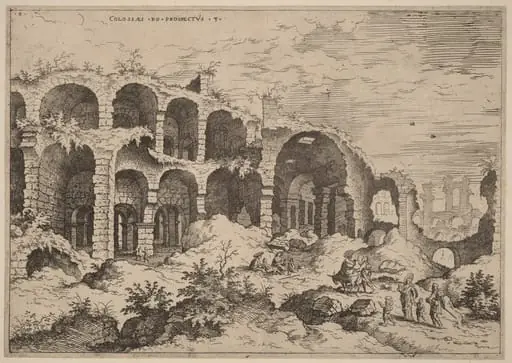
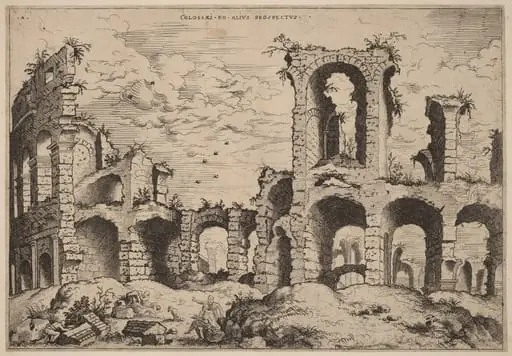
Colossaei. Ro. Prospectus. 3 (Third View of the Colosseum in Rome)
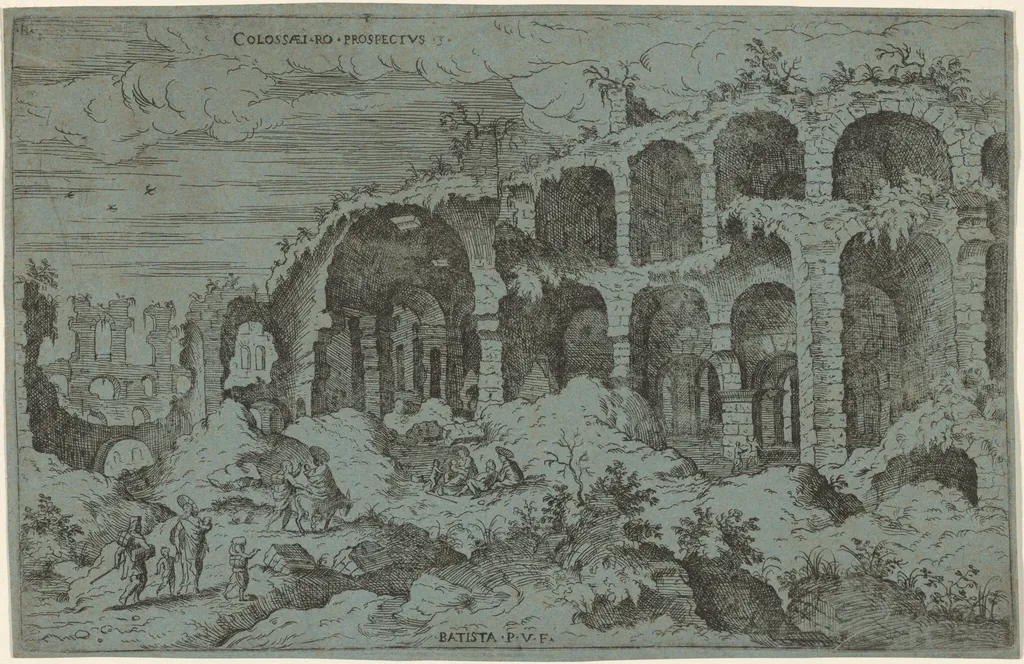
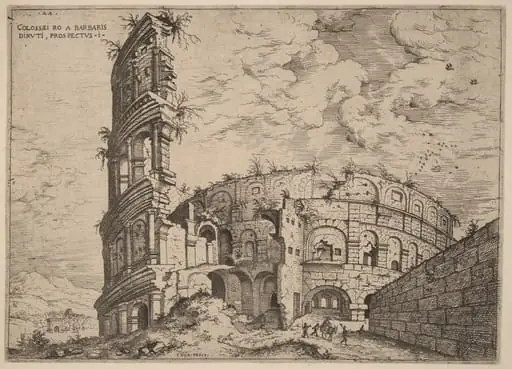
Colossaei. Ro. Prospectus. 3 (Third View of the Colosseum in Rome) is an ink print by the Renaissance artist Giovanni Battista Pittoni. It dates from 1561 and is held in the collection of the National Gallery of Art.
About this work
Overview
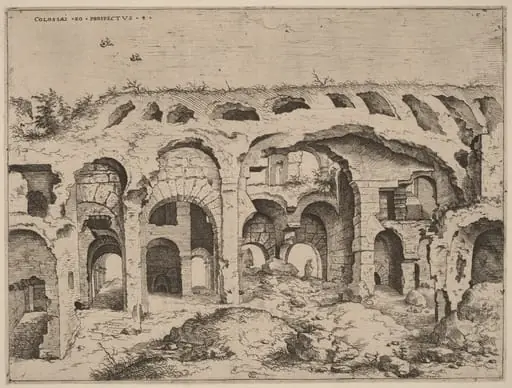
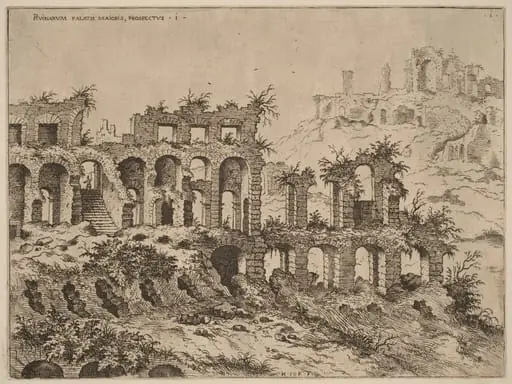
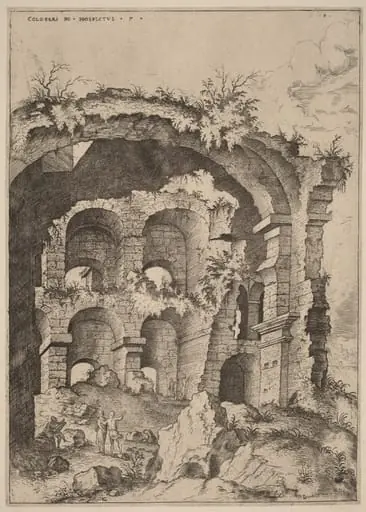
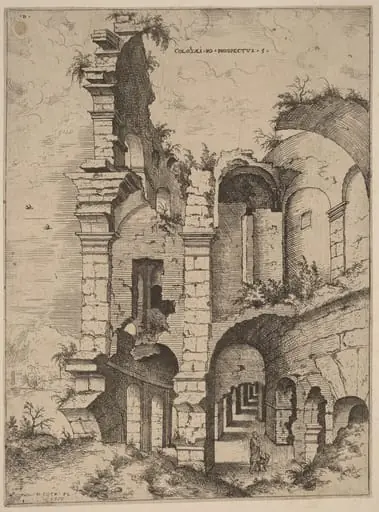
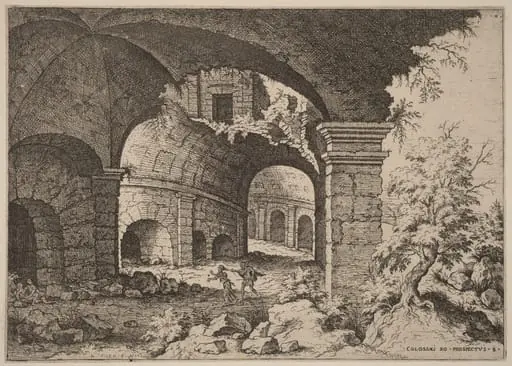
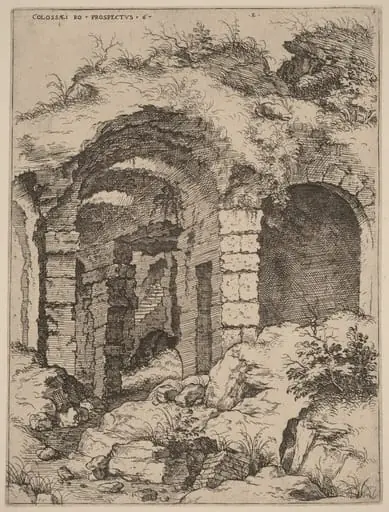
Giovanni Battista Pittoni’s etching titled “Colossaei. Ro. Prospectus. 3” presents a third perspective on Rome’s Colosseum. Executed around 1561, the print captures the ancient amphitheater amid a bustling foreground populated by figures and foliage, while a muted sky looms overhead. Rendered on blue laid paper, the work balances architectural precision with atmospheric depth.
Subject & Meaning
The composition foregrounds everyday activity—travelers, vendors, and plant life—contrasting with the monumental stone arches of the Colosseum. This juxtaposition underscores the continuity between Rome’s imperial past and its contemporary urban life, inviting viewers to contemplate the endurance of classical structures within a living cityscape.
Technique & Style
Pittoni employed fine line etching to delineate each arch, column, and stone block, achieving a tactile sense of texture. The blue laid paper lends a subtle tonal shift, enhancing the chiaroscuro effect. The meticulous rendering and balanced perspective reflect Renaissance ideals of proportion, anatomical accuracy, and reverence for antiquity.
History & Provenance
Created in the mid‑sixteenth century, the print forms part of a series of views of Roman monuments intended for a market of collectors fascinated by the city’s heritage. While specific ownership records are scarce, the work has been documented in several European print collections, confirming its circulation among connoisseurs of the period.
Context
During the Renaissance, renewed interest in classical architecture prompted artists to produce detailed studies of ancient sites. Pittoni’s etching aligns with this trend, serving both as a documentary record of the Colosseum’s appearance in the 1500s and as an artistic exploration of perspective and spatial organization.
Artist & collection