Artwork
Halberdier and Two Pikemen
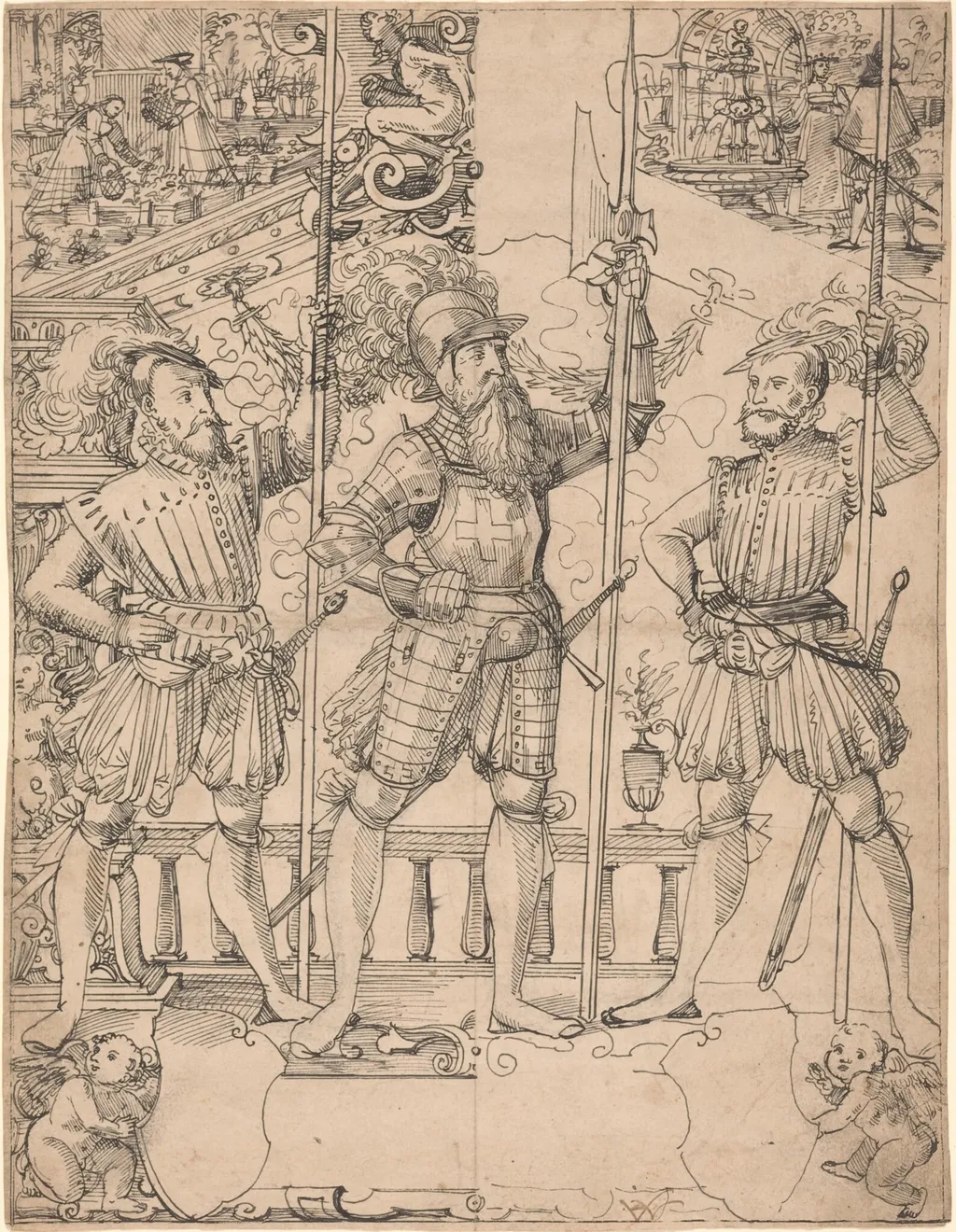
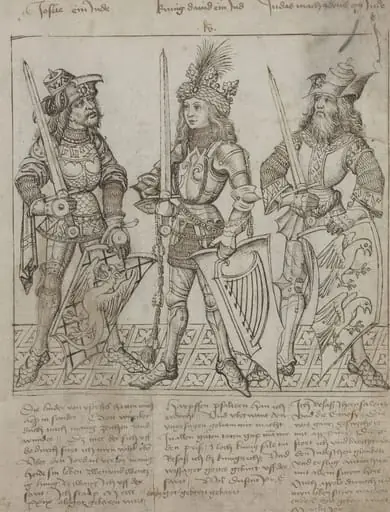
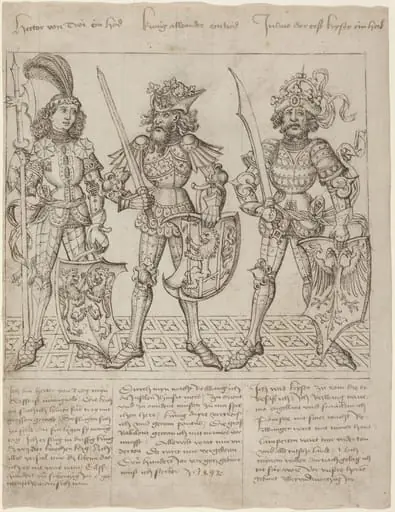
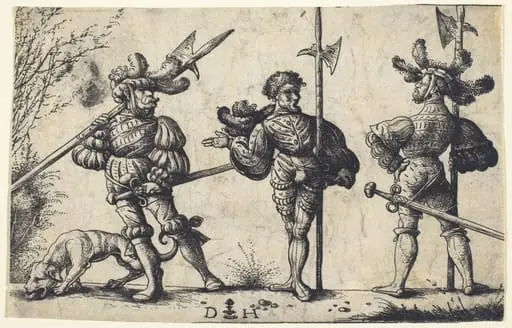
Halberdier and Two Pikemen is an ink drawing by the Renaissance artist Hans Jakob Plepp. It dates from 1576 and is held in the collection of the National Gallery of Art.
About this work
Overview
Its refined line work and subtle tonal gradations suggest it was made as a study or presentation piece, rather than a preliminary sketch.
Created in 1576 by Hans Jakob Plepp, this drawing captures three armed figures in a monumental architectural setting. Executed in pen and black ink over black chalk on laid paper, the work reflects the precision and observational rigor characteristic of late Renaissance draftsmanship. Its refined line work and subtle tonal gradations suggest it was made as a study or presentation piece, rather than a preliminary sketch.
Subject & Meaning
The central figure, a halberdier, stands flanked by two pikemen, their postures formal and synchronized. Their attire—elaborate doublets, belts, and headwear—signals status, possibly as guards or ceremonial retainers. The grand staircase behind them implies a palace or institutional space, reinforcing themes of order, authority, and military hierarchy within a structured environment.
Technique & Style
Plepp employed black chalk for broad tonal foundations, then refined contours and textures with fine pen lines. The rendering of fabric folds, metal hardware, and stone carvings demonstrates meticulous attention to materiality. Shading is controlled and layered, avoiding dramatic contrasts in favor of quiet modulation, aligning with Northern Renaissance ideals of clarity and detail over expressive intensity.
History & Provenance
The drawing’s early history is undocumented, but its survival in good condition suggests it was preserved within a collector’s circle. It bears no inscriptions or seals, making its original commission or purpose uncertain. It entered institutional holdings in the 20th century, where it is now recognized as a representative example of 16th-century German draftsmanship.
Context
In the late 1500s, military figures were frequently depicted in drawings as studies of costume, posture, and weaponry, often for courtly or civic use. Plepp’s work aligns with a tradition in German-speaking regions of documenting armor and personnel with documentary precision, reflecting both artistic interest and the practical needs of courtly record-keeping.
Legacy
Though Plepp is not widely known today, this drawing endures as a quiet testament to the skill of lesser-documented Renaissance draftsmen. It contributes to the understanding of how military imagery was visually codified in early modern Europe, offering insight into the intersection of art, function, and social hierarchy in the period.
Artist & collection