Artwork
Port at Amsterdam
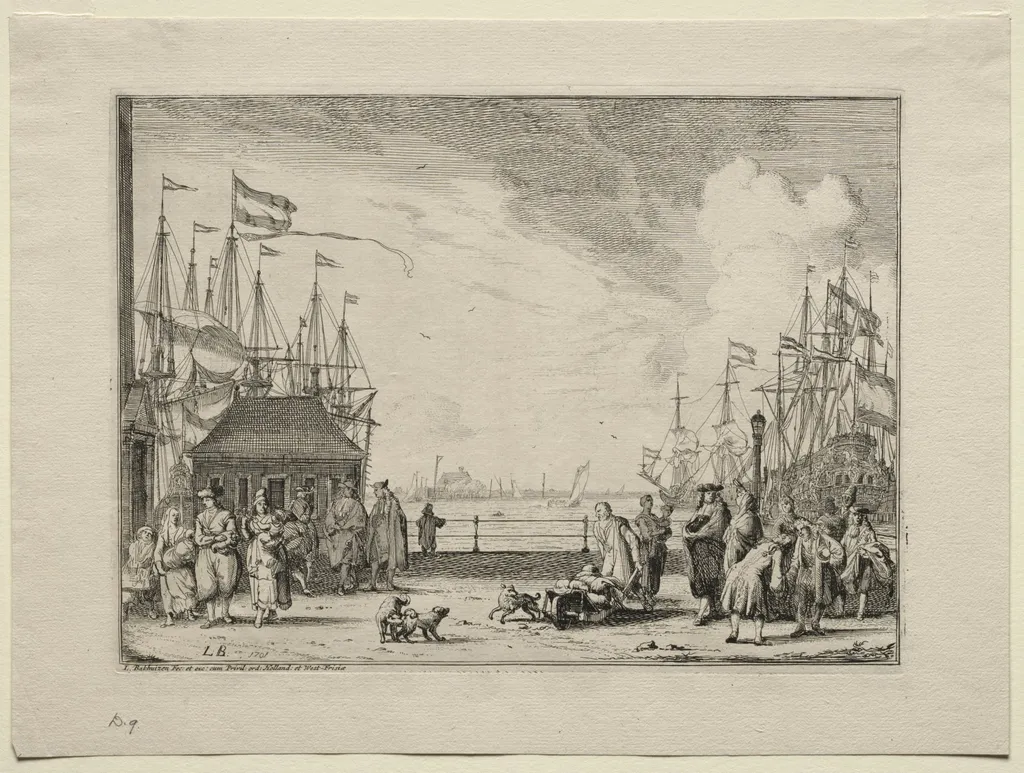
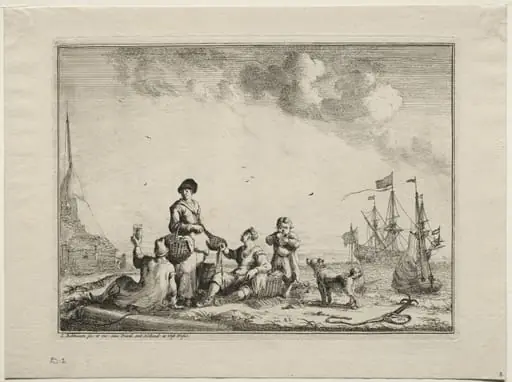
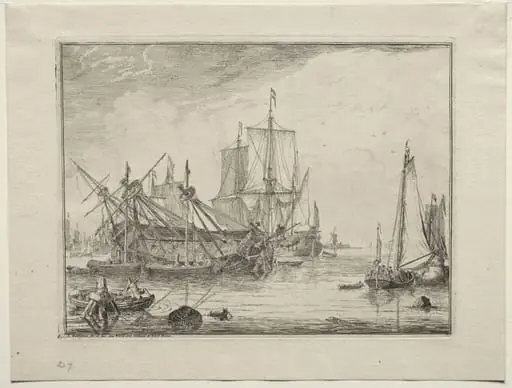
Port at Amsterdam is a work on paper by the Baroque artist Ludolf Bakhuizen. It dates from 1701 and is held in the collection of the Cleveland Museum of Art.
About this work
Overview
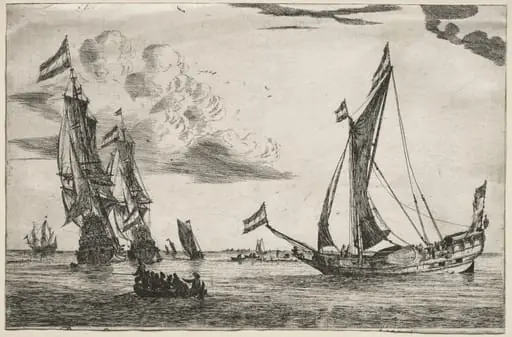
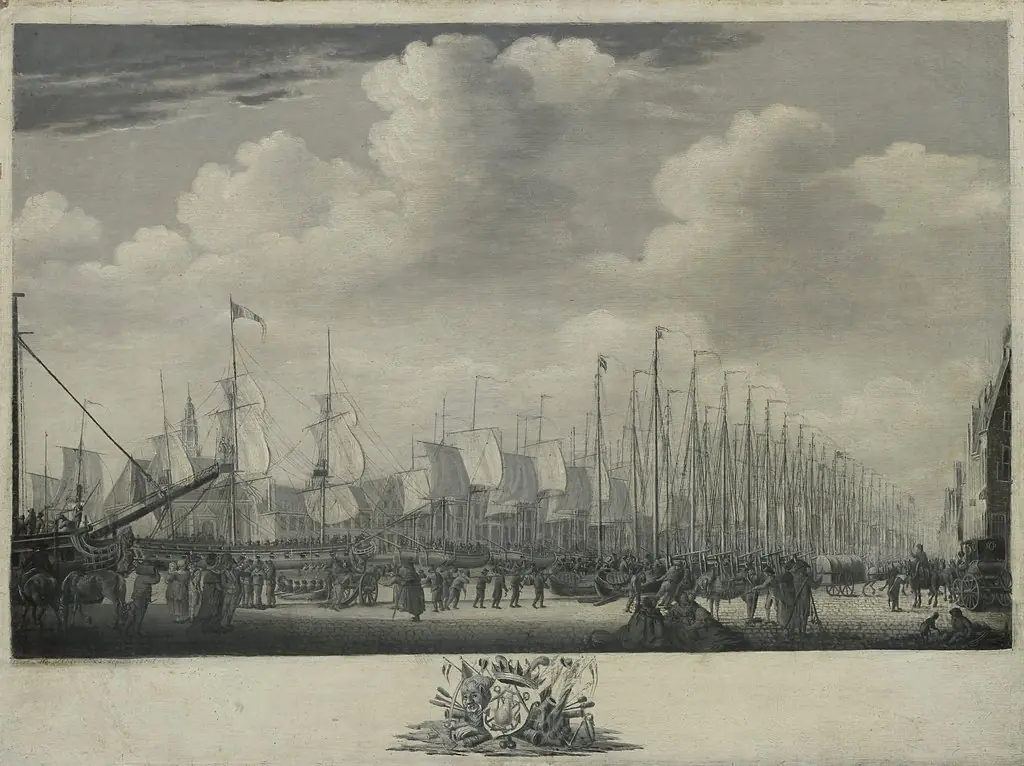
Port at Amsterdam, an etching by Ludolf Backhuysen from 1701, captures a vibrant scene of maritime activity in its titular location. Now part of The Cleveland Museum of Art's collection, the work showcases the artist's ability to convey dynamic everyday life within a bustling harbor.
Subject & Meaning
The etching focuses on the interplay between the port's commercial vessels and the people integral to its operation. Tall, multi-masted ships with flags share the scene with individuals in period attire, engaged in various tasks, alongside roaming dogs, highlighting the harmony between labor and daily life.
Technique & Style
Backhuysen employed meticulous lines and shading techniques to achieve a sense of depth and movement, characteristics aligned with the artistic sensibilities of the late Baroque period, which emphasized dynamic energy and detailed realism.
History & Provenance
Created in 1701, Port at Amsterdam is attributed to Ludolf Backhuysen. Its current residence is The Cleveland Museum of Art, though specific details of its journey to the museum are not provided in the available information.
Context
Produced during the Dutch Golden Age, a period of significant maritime and economic prosperity for the Netherlands, the etching reflects the importance of ports like Amsterdam to the country's wealth and influence.
Artist & collection
Artist
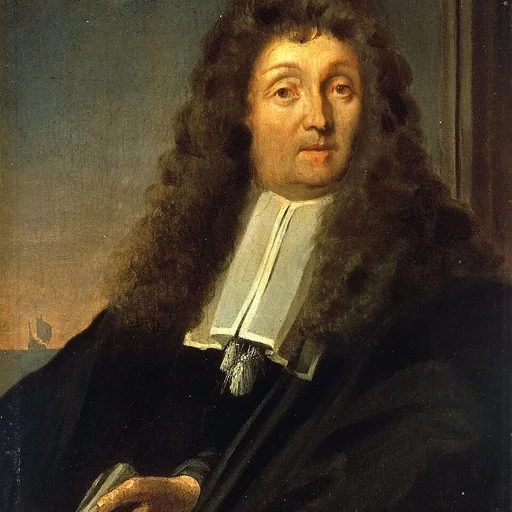
Ludolf Bakhuizen (28 December 1630 or 1632 – 7 November 1708) was a German-born Dutch painter, draughtsman, calligrapher and printmaker.

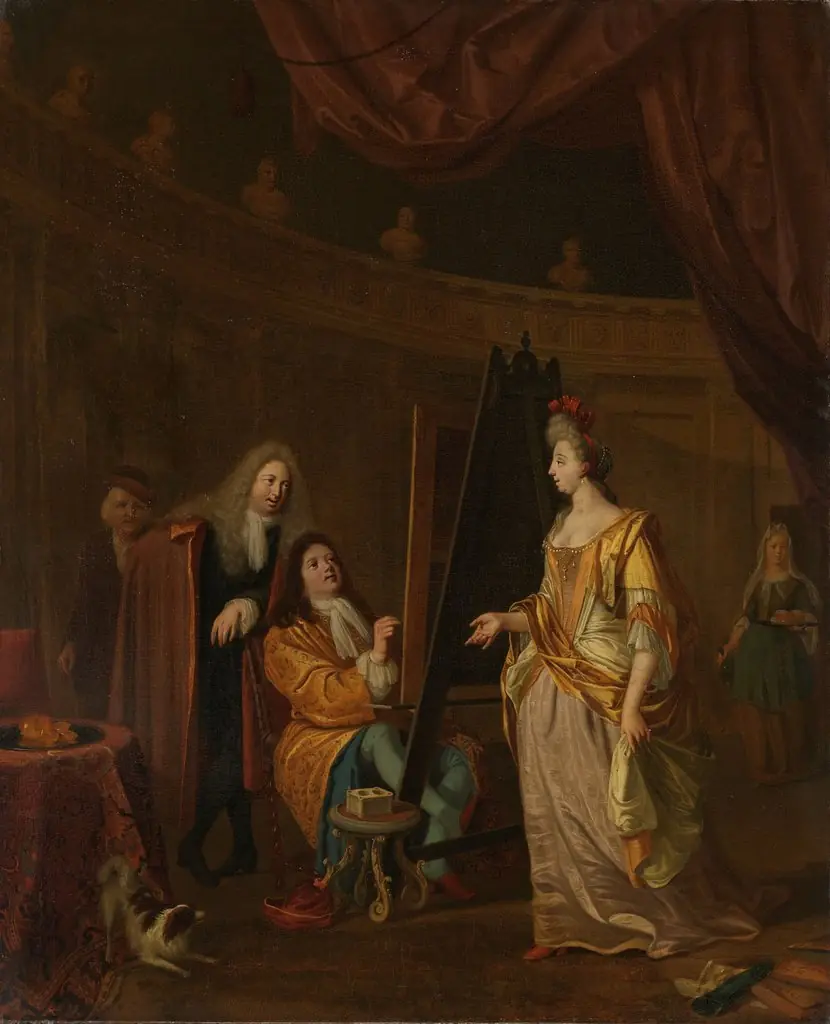 An artist in his studio, painting the portrait of a lady
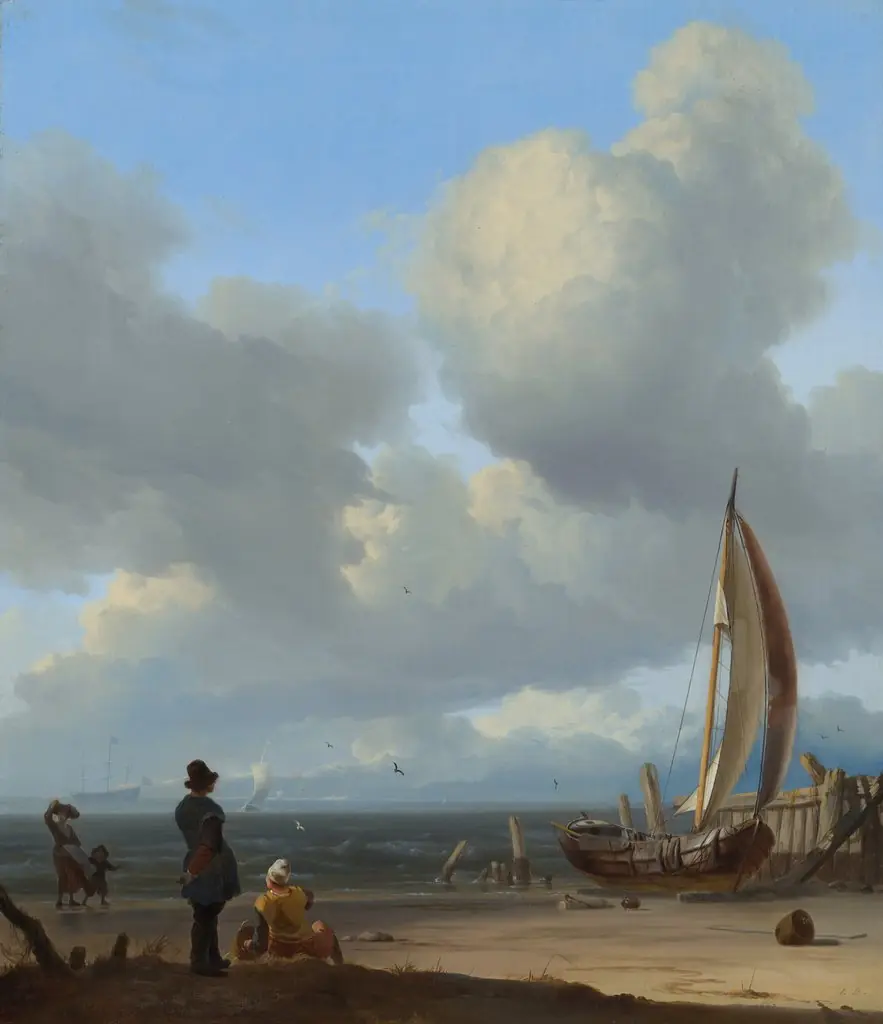 An extensive seascape with figures by a boat on a shore near Huisduinen
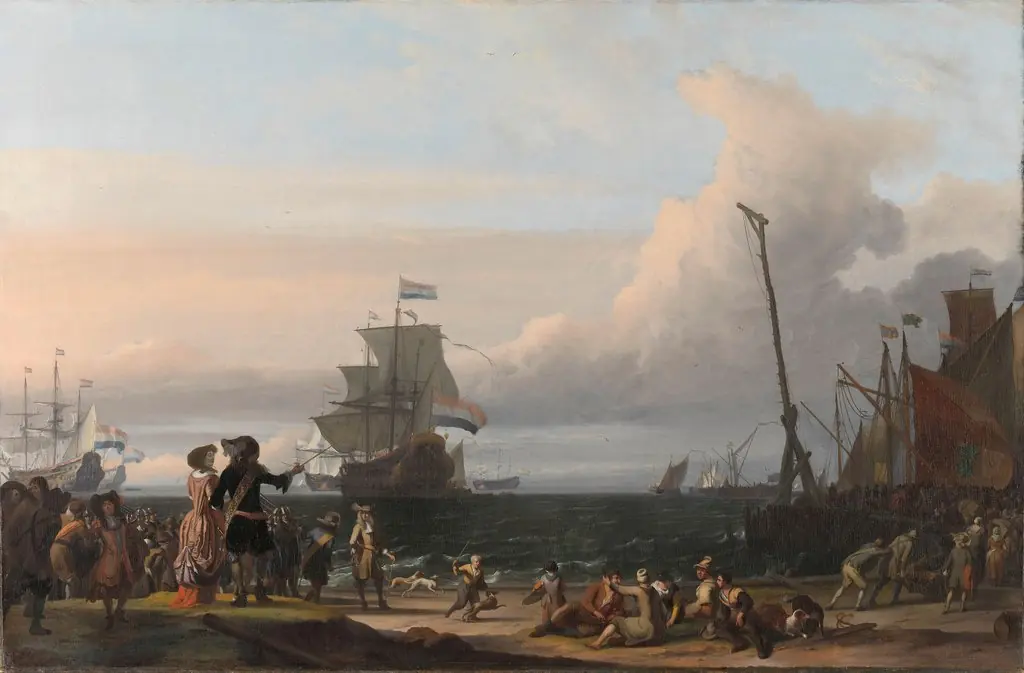 Dutch ships in the roads of Texel; in the middle the 'Gouden Leeuw,' the flagship of Cornelis Tromp
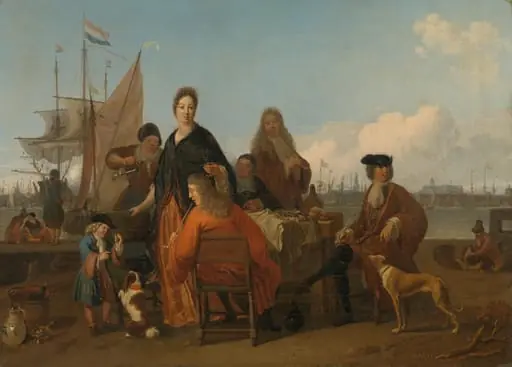 The Bakhuysen and de Hooghe Families dining at the Mosselsteiger (Mussel Pier) on the Y, Amsterdam
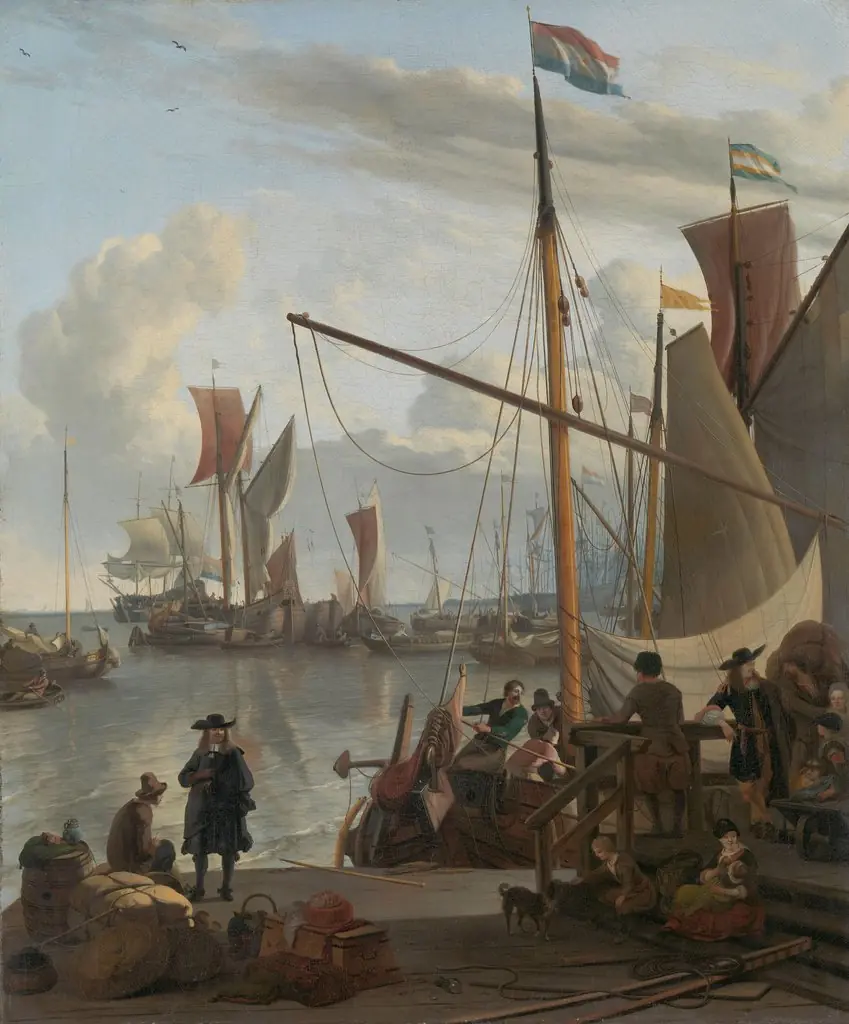 The Y at Amsterdam, seen from the Mosselsteiger (mussel pier)
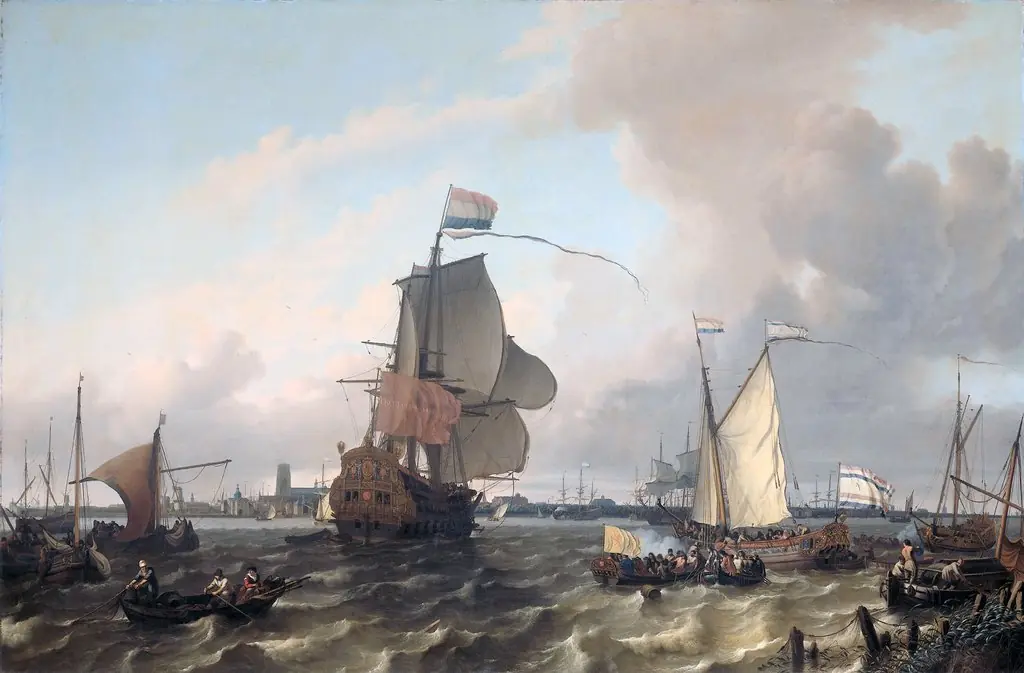 The Man-of-War Brielle on the River Maas off Rotterdam
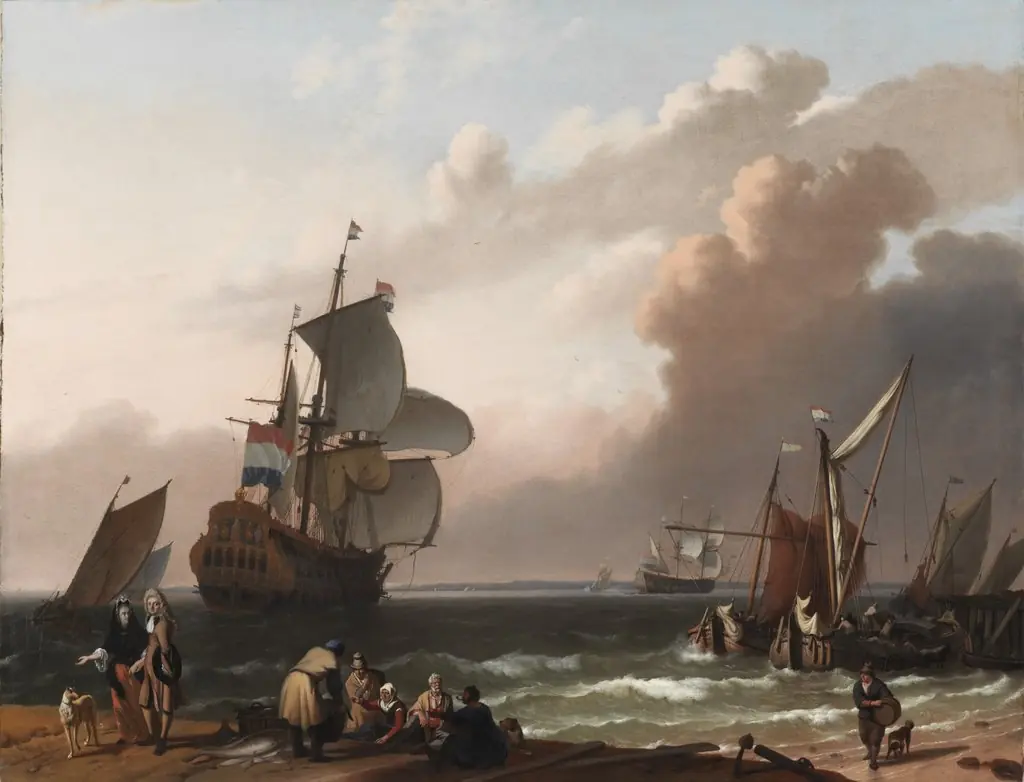 Warship and Dutch Sailboats near the Shore
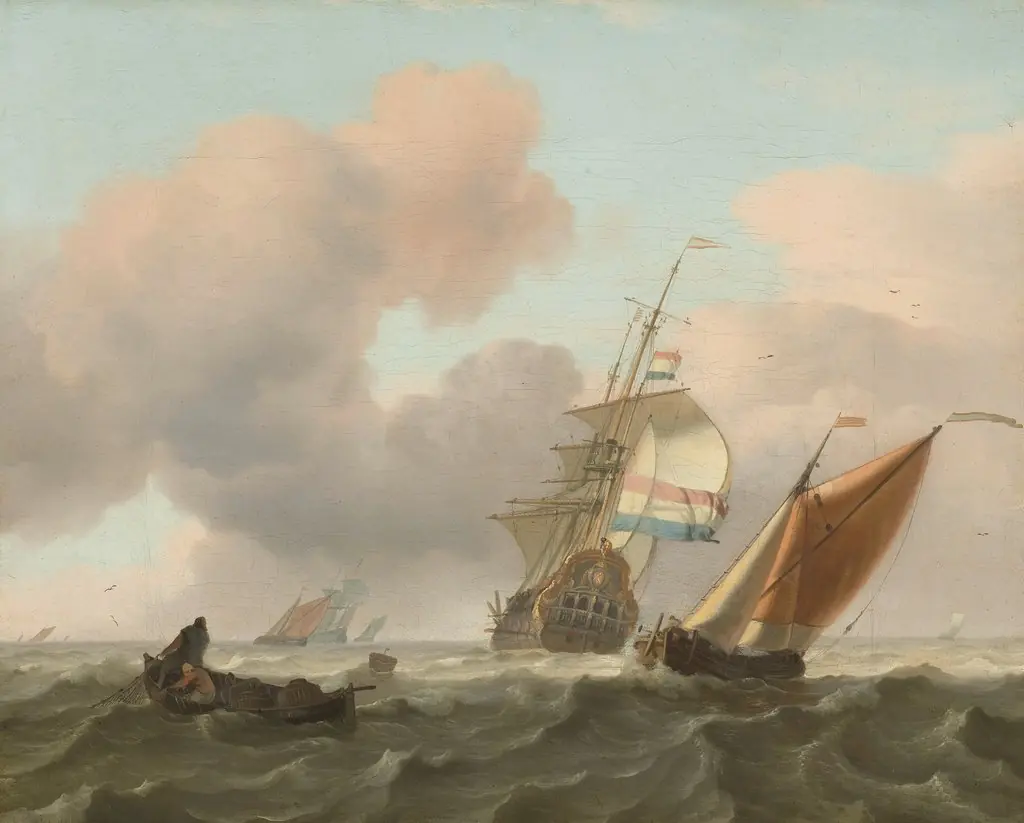 Rough sea with Ships