Artwork
Bacchanal
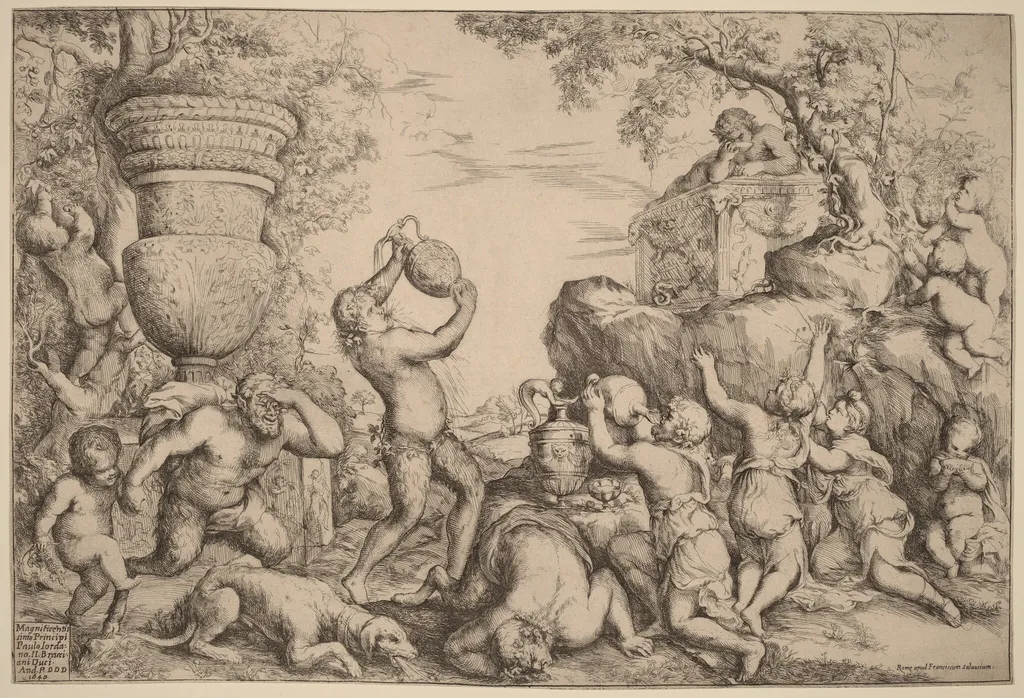
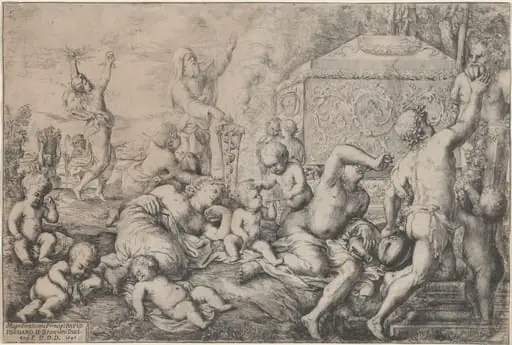
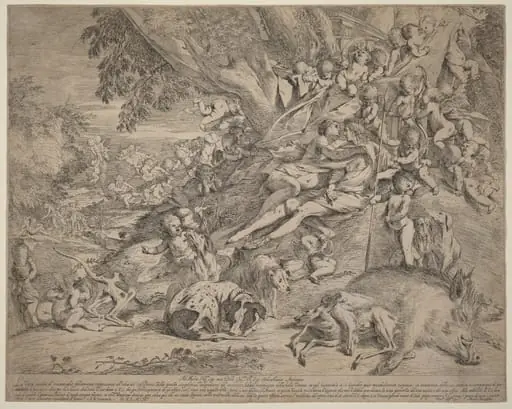
Bacchanal is an ink print by the Baroque artist Giovanni Andrea Podestà. It dates from 1640 and is held in the collection of the National Gallery of Art.
About this work
Overview
Giovanni Andrea Podestà, an Italian painter‑engraver active in Rome during the early to mid‑17th century, produced the print titled Bacchanal in 1640. Executed on laid paper, the work combines etching and engraving techniques to render a lively gathering of figures in a classical landscape.
Subject & Meaning
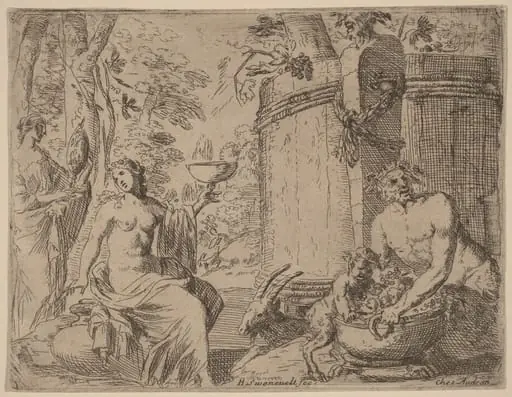
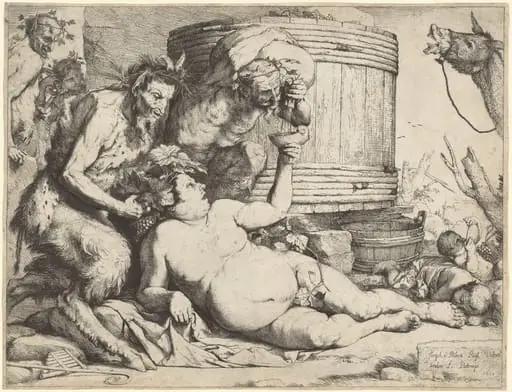
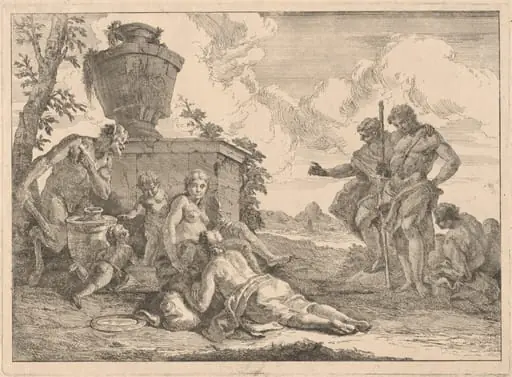
The composition shows a group of children playing around a large urn, some holding jugs while others recline on the ground. The scene conveys a festive, almost ritualistic atmosphere, echoing the mythic bacchanalian celebrations that were popular in classical-themed art.
Technique & Style
Podestà employs a blend of etching and engraving, allowing for both delicate line work and deeper, richer tones. The contrast of light and shadow creates a sense of depth, while the detailed rendering of clothing and objects reflects the Baroque interest in texture and movement.
Context
The print draws on the Arcadian idylls of Nicolas Poussin, whose bacchanal scenes were themselves inspired by Titian’s mythological revelries. Podestà’s treatment thus situates the work within a lineage of 17th‑century interpretations of classical festivity.
Artist & collection

Artist
Giovanni Andrea Podestà or Giovanni Andrea Podesta (1608 – c. 1674) was an Italian painter and engraver who was active primarily in Rome. His principal subject matter is children playing in landscapes with classical…